

National conservation area growing by 4,000-plus acres in western Colorado
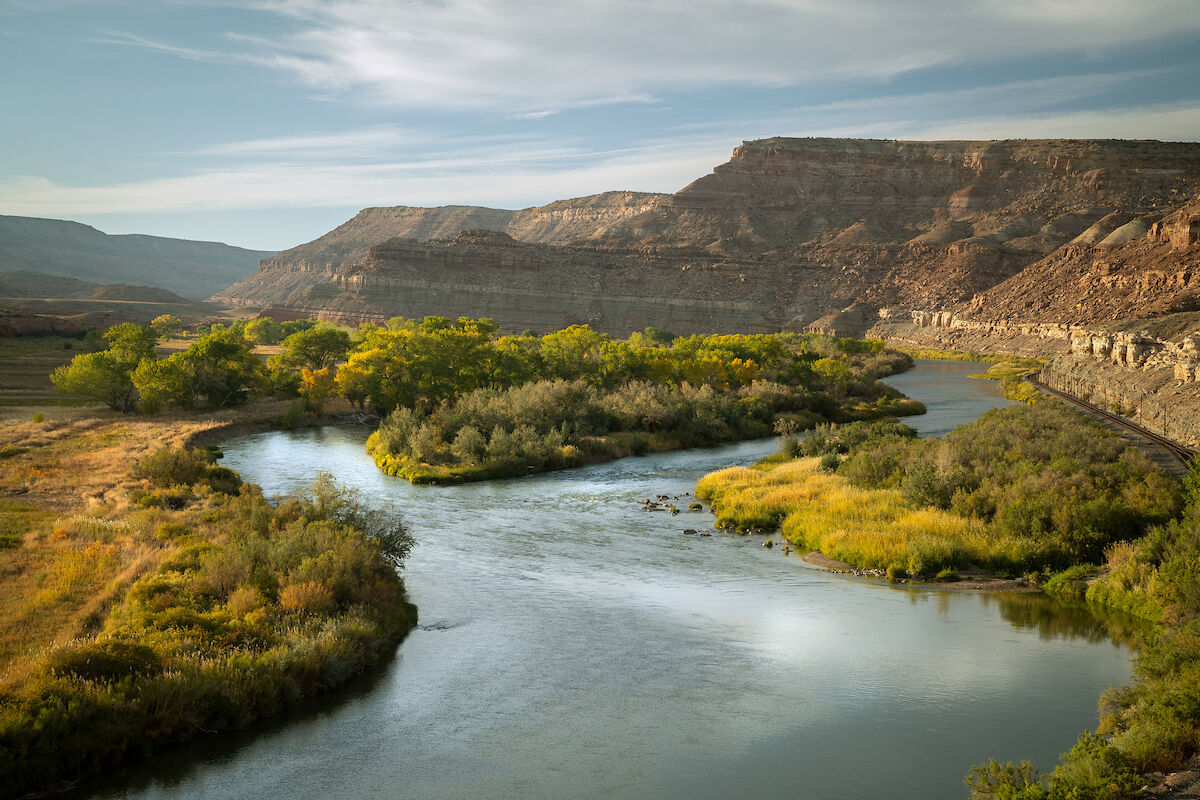
A formerly private, sweeping swath of western Colorado is growing a public, red rock wonderland.
Spanning 4,000-plus acres, Escalante Ranch has been transferred to the Bureau of Land Management and incorporated into Dominguez-Escalante National Conservation Area, The Conservation Fund recently announced. The announcement described the land south of Grand Junction as “encompass(ing) some of Colorado’s most dramatic scenery and important natural resources” — spanning remote, Gunnison River-cut canyonlands of the Uncompahgre Plateau.
The ranch went up for sale in 2023. And “The Conservation Fund acted quickly to prevent this vital landscape from being subdivided and developed,” the organization recalled in announcing the transfer.
Now the land was publicly available, Colorado Canyons Association posted on its website, while noting about 900 acres would be off-limits under an agricultural lease. The advocacy group similarly celebrated the BLM acquisition as an “incredible conservation win” that “protects miles of canyon, river, wildlife habitat and cultural history while expanding public access to one of the most spectacular landscapes in western Colorado.”
Colorado Canyons Association added: “Public ownership also protects the property from future subdivision or development for residential, commercial or resort uses — something that has occurred along portions of the northern boundary of the conservation area.”
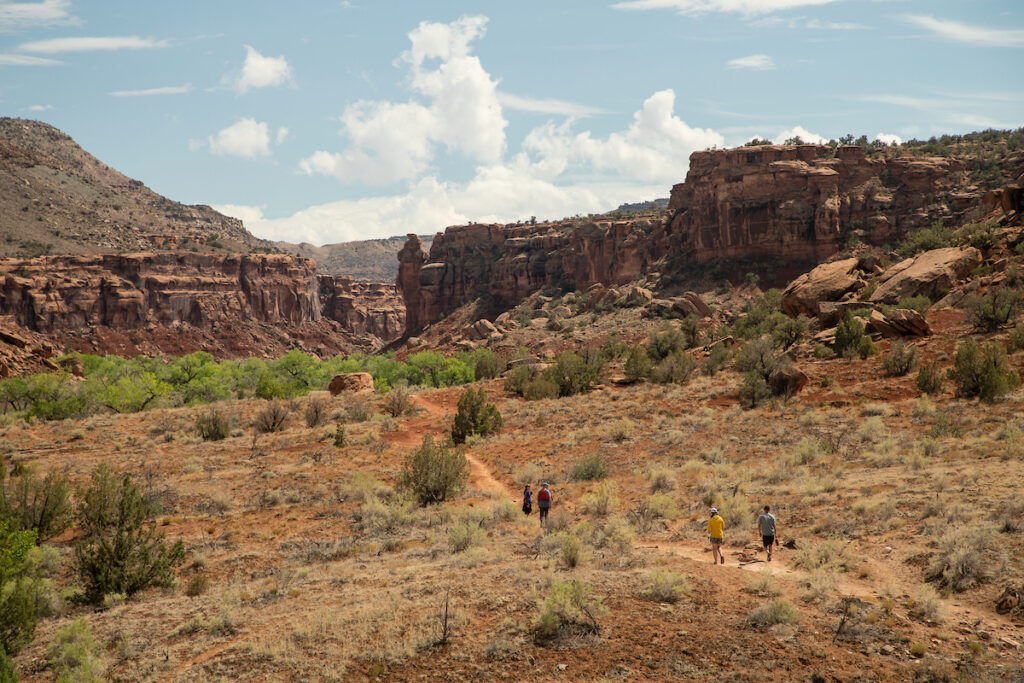
Amid Dominguez-Escalante National Conservation Area’s surrounding 210,172 acres, Escalante Ranch had been eyed as a vast inholding that “would create a more contiguous landscape and would consolidate land ownership,” the BLM explained in an environmental review finalized in 2024.
At that time, The Conservation Fund was under contract with the ranch’s owner. The organization would sell back to the BLM upon the land manager securing $6.9 million from the Land and Water Conservation Fund — key to the $12 million purchase also supported by Great Outdoors Colorado and other granters.
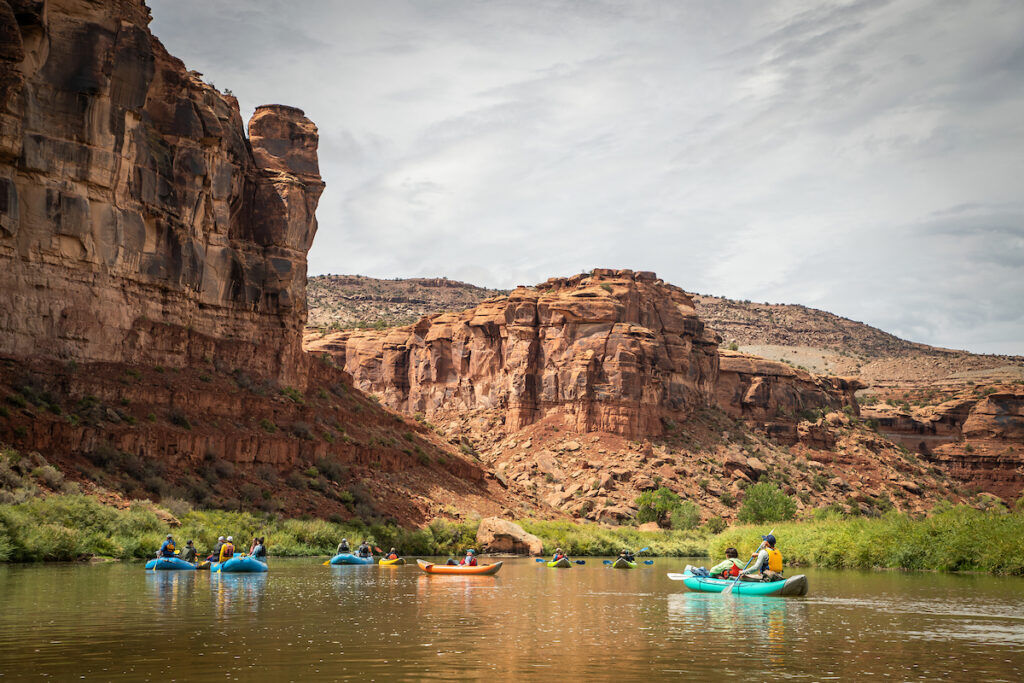
Escalante Ranch, too, had been eyed among hikers, rock climbers, anglers and boaters familiar with the broader wilds. Colorado Canyons Association sees the acquisition as “improving access to approximately 80,000 acres of adjacent public lands.”
In letters sent to the BLM during its environmental review, The Wilderness Society was among other groups that supported the acquisition as “a tremendous benefit to our shared public lands, for people today and future generations.” Others praised the “magical” nature of the surrounding Escalante Canyon, which “offers unparalleled beauty, wildlife habit, historic treasures and recreational opportunities,” one wrote. Climbers sounded particularly excited about the acquisition, seeing the move as opening up some of the best rock on the Western Slope.
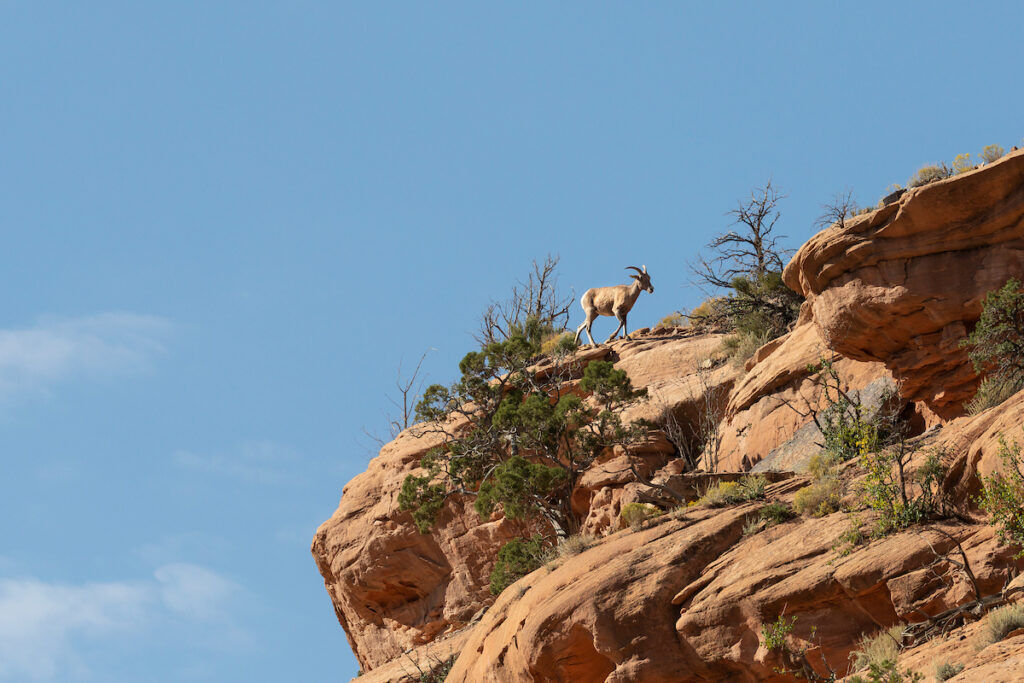
But others sounded concerned about recreation disrupting wildlife such as desert bighorn sheep and threatening petroglyphs and other archaeological sites. And officials from Mesa and Delta sounded concerned about new ownership disrupting a historic cattle operation and significant economic driver.
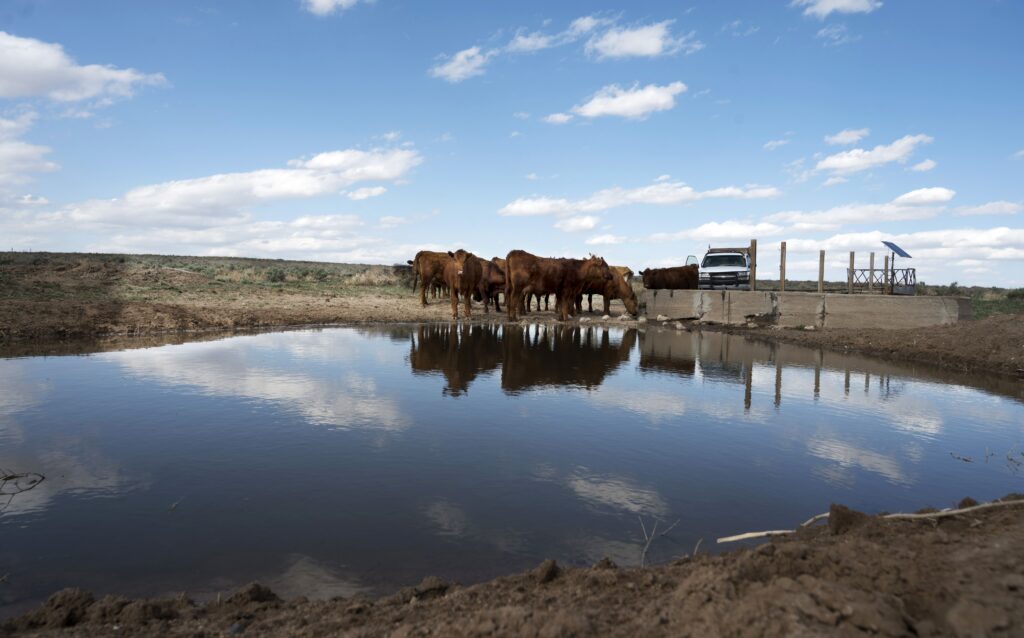
In response, the BLM said it “acknowledges the importance of the agriculture industry” and “recognizes the economic contributions that Escalante Ranch makes to the surrounding community.” The BLM noted the century-old cattle operation supporting 1,400 head in recent years, “representing over 3 percent of the total number of cattle and calves in Delta County.”
For now under the ongoing lease, irrigation can continue around 900 acres of pasture and hay fields. “Despite the acquisition of the Ranch, agriculture will continue to contribute to economic output, jobs and labor earnings in the region,” the BLM wrote.
In response to that concern and several others, the BLM emphasized it “would invite robust community engagement, including through cooperating agency and public involvement, in the development of interim and long-term management.”
Current management “would fall short of the stewardship which makes these parcels so valuable to Colorado’s wildlife,” a Colorado Parks and Wildlife representative wrote to the BLM, going on to say “CPW is uniquely positioned to manage or assist with the management of these interests into the future.”
In 2024, the BLM published the Dominguez-Escalante National Conservation Area Business Plan that, akin to CPW’s model, envisioned fees at some sites to help pay for maintenance and recreation development. The plan estimated more than 114,000 people visit the national conservation area every year, with increases expected over the next decade.


Colorado House Democrats focus on rising prison costs amid declining crime rates during budget discussion
Marissa Ventrelli
marissa.ventrelli@coloradopolitics.com
Updated 14 hours ago
Colorado’s House Democrats pressed budget writers Tuesday over a nearly $70 million increase for the Department of Corrections, questioning why the state plans to add 941 prison beds and explore new prison capacity at a time when crime rates are...

Inside the GOP caucus: Colorado legislator explains why a bigger budget still means cuts
Marianne Goodland
marianne.goodland@coloradopolitics.com
Updated 12 hours ago
Tasked with explaining a budget driven by rising caseloads, shifting federal dollars and a $1.5 billion shortfall, Joint Budget Committee member Rep. Rick Taggart spent Tuesday’s Republican caucus meeting detailing why the 2026–27 spending plan appears larger on paper, even...
Senate-passed farmworkers overtime bill easily clears Colorado House committee
Marianne Goodland
marianne.goodland@coloradopolitics.com
Updated 13 hours ago
A proposal to ease Colorado’s overtime requirements for agricultural employers cleared a key House committee Monday, setting up a broader fight over whether the state should scale back a labor policy adopted just five years ago. The House Agriculture, Water...
Public comment period opens as federal review targets Colorado’s wolf reintroduction program
Marianne Goodland
marianne.goodland@coloradopolitics.com
Updated 13 hours ago
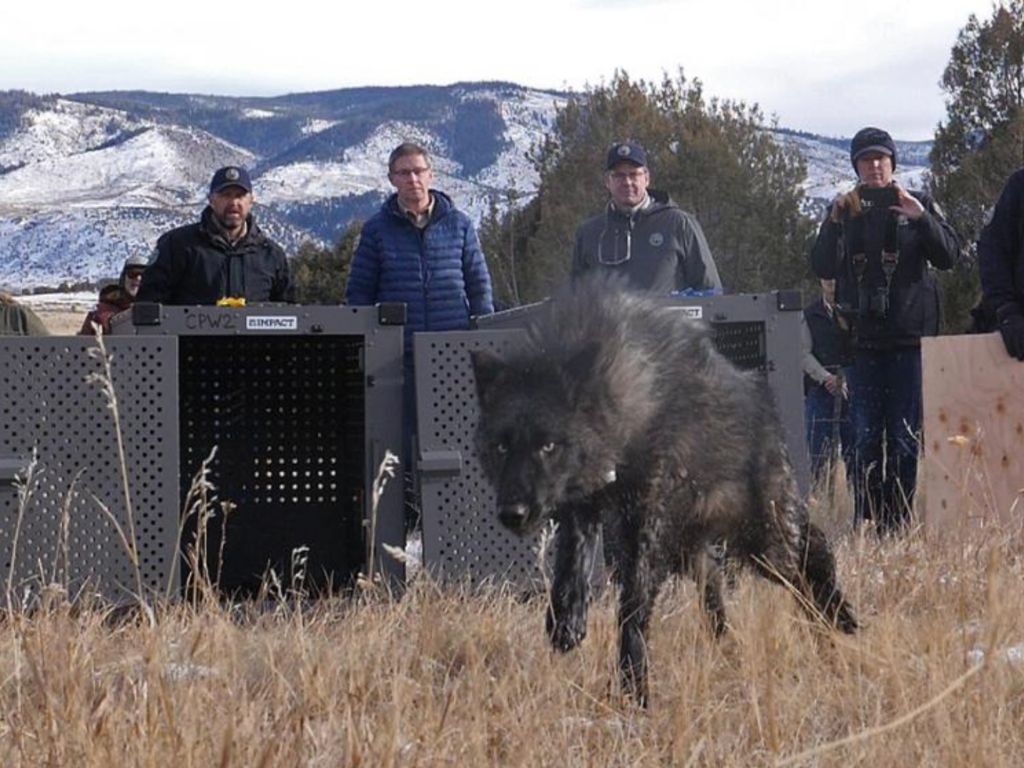
Federal wildlife officials have opened a formal review of Colorado’s wolf reintroduction program, launching a public comment period to assess how the state has handled rising conflicts between wolves and livestock. A notice from the U.S. Fish and Wildlife Service...

Aurora lawmakers unanimously pass water shortage declaration, watering restrictions
Kyla Pearce
kyla.pearce@gazette.com
Updated 19 hours ago
Aurora City Council members unanimously passed a Stage I Water Shortage declaration in Monday night’s meeting, putting restrictions on outdoor water use starting immediately. The shortage declaration imposes restrictions on outdoor watering for residents and businesses and reduces commercial user...

Colorado legislators propose $46.8 billion budget, driven by Medicaid costs
Marianne Goodland
marianne.goodland@coloradopolitics.com
Updated 2 days ago
The six-member panel of legislators in charge of crafting the state budget has now turned over its plan to the Colorado legislature, proposing to spend $1.5 billion more for the Medicaid program. The increase is driven by Medicaid costs, which...
Appeals Court rules Douglas County violated open meeting laws
Nicholas Fogleman
nicholas.fogleman@denvergazette.com
Updated 20 hours ago
The Colorado Court of Appeals ruled that Douglas County Commissioners violated Colorado open meeting laws in a series of closed meetings leading up to the county’s failed home rule special election. The Thursday ruling reversed a trial court’s denial of...

Former Parker police sergeant arrested for unlawful sexual conduct
Jacob Mauk
jacob.mauk@denvergazette.com
Updated 13 hours ago
A former Parker Police Department sergeant was arrested Friday after being charged with multiple counts of “unlawful sexual conduct,” according to department officials on Monday. The department placed Sgt. Troy Brienzo, 31, on investigative leave on Jan. 7 after an...

As Colorado passes 6 million residents, housing initiatives take center stage
Marianne Goodland
marianne.goodland@coloradopolitics.com
Updated 2 days ago
New Census data confirming Colorado’s population has topped six million is fueling renewed debate over Gov. Jared Polis’ housing agenda, as he tied the population increases to home construction. The governor said the counties experiencing the largest increases in new...

Bill to accelerate police access to online data clears Colorado committee
Marissa Ventrelli
marissa.ventrelli@coloradopolitics.com
Updated 2 days ago
A proposal to speed up law enforcement’s access to social media data is advancing in the Colorado Legislature, drawing testimony from the residents of Evergreen, where a school shooting took place, and questions from opponents worried about privacy and constitutional...
PREV
PREVIOUS

Judge rules that Colorado law makes it too hard for parties to bar unaffiliated voters from primaries
A federal judge ruled in favor of the Colorado Republican Party late Tuesday, saying that a portion of the state law that allows unaffiliated voters to cast ballots in party primaries is unconstitutional because it imposes an unrealistic burden on political parties seeking to restrict the nominating process to their own members. U.S. District Court […]

Denver promised every school funding from $1B bond — but campuses later closed received far less | Analysis
Denver voters overwhelmingly approved the largest bond measure in Denver Public Schools history on the promise that every school — including charter campuses — would receive something. And they did. But the nearly $1 billion bond was not distributed evenly. Schools that remained open were allocated about 57% more bond funding on average than campuses […]