

Front Range cities oppose Democratic proposal to permit lot‑splitting
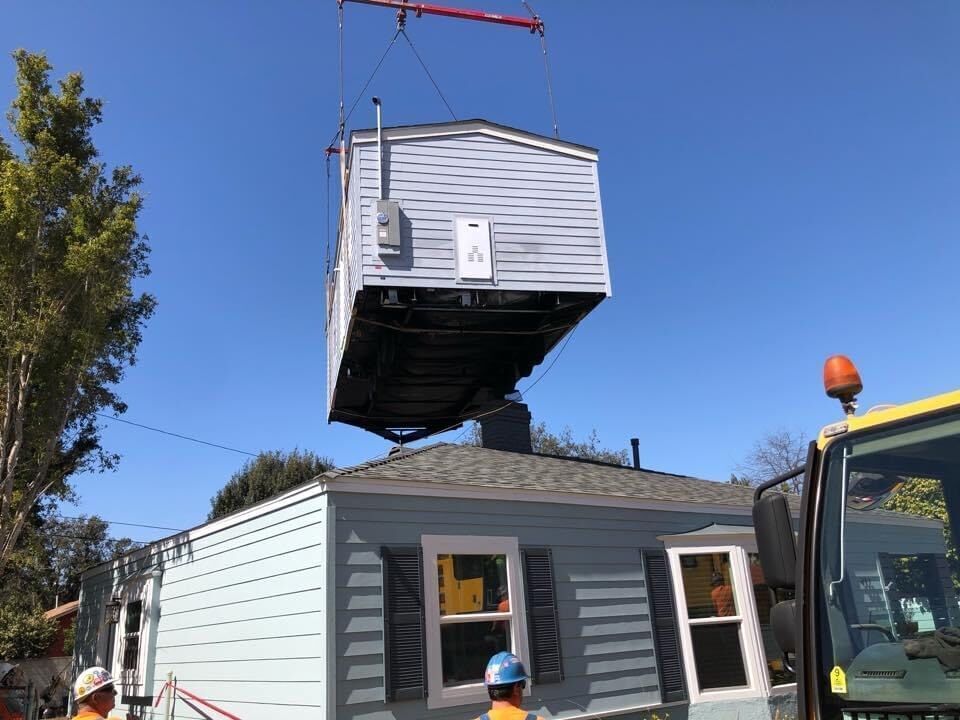
Colorado lawmakers are pressing ahead with a plan to let homeowners split their lots to make room for smaller, less expensive houses — a proposal that has drawn sharp opposition from Aurora, Colorado Springs, Denver and other Front Range cities that argue it undermines local control over land use.
The legislation would change local land‑use rules that supporters say could open the door to first‑time homeownership but which opponents warn would erode community control.
Behind the legislation is Speaker Pro Tem Andrew Boesenecker, D-Fort Collins, along with fellow Democrats Rep. Steven Woodrow of Denver, and Sens. Judy Amabile of Boulder and Matt Ball, also of Denver.
House Bill 1308 cleared the House on March 24 on a 39-26 vote, picking up four Democratic “no” votes, along with 22 House Republicans voting against it.
HB 1308 is now awaiting action from the Senate.
The bill would allow a lot to be split, provided the new plan allots at least 1,200 square feet. That’s down from the bill’s original intent of 2,000 feet.
If the property has a mortgage, the homeowner must get written approval from their lender and file that consent with the county before splitting the lot.
It also limits lot-splitting to municipalities with at least 1,000 residents and is within a “metropolitan planning organization” region.
Because of those restrictions, the bill would primarily benefit residents in Front Range communities from Fort Collins to Pueblo, as well as in Grand Junction.
House Bill 1308 faces opposition from Aurora, Colorado Springs, Denver and numerous Front Range cities. Supporters to date include several realtors, homebuilders, the city of Fort Collins, and the Colorado Chamber of Commerce.
Boesenecker told Colorado Politics the goal is to open up lower-priced homes to first-time home buyers. It would also give people who own a four- or five-bedroom home an option when they want to downsize, he said.
He’s hoping to address the lack of homes for purchase in the 700-square-foot to 1,000-square-foot range, which he said nobody is building right now.
The bill comes with a host of exceptions, which Boesenecker said are intended to be thoughtful about limitations and to establish an objective, reasonable set of standards.
Those exceptions include bans on lot‑splitting in historic districts, a requirement for lender approval if the property has a mortgage, limits tied to water and sewer access — such as lots served by wells or rural water systems — and an exemption for existing homeowners associations. HOAs created after Jan. 1, 2027, however, would not be exempt.
Boesenecker maintains that the bill doesn’t force cities or counties to change their zoning rules, a point where he and the Colorado Municipal League disagree on.
Bev Staples, representing the Colorado Municipal League and its 271 local governments, told the House Transportation, Housing and Local Government Committee that lot-splitting “undermines a fundamental principle that has long guided land use,” where decisions about local land use are made locally.
Staples said the bill also eliminates meaningful community input and bypasses public hearings.
“Coloradans expect and deserve a voice in decisions that directly impact where they live,” she said.
The bill also disregards sound land use planning by local governments designed to meet local priorities, she added.
Jeff Holwell of the City of Lone Tree added that the bill violates the home rule authority of many local governments, a right enshrined in the state constitution and upheld by the Colorado Supreme Court.
Boesenecker said the measure doesn’t require local governments to approve every lot‑split request.
“It doesn’t mean that a local government always has to say yes, because, like with other land‑use bills, there are good reasons why you should say no,” he said.
But he argued that having clear, objective criteria would speed up approvals for homeowners who want to create another home on their property.
According to Boesenecker, that streamlined process could also help existing homeowners stay in their neighborhoods by giving them a way to offset rising property taxes. Splitting a lot, he said, allows someone to secure their long‑term future, while creating a new path to homeownership for someone else.
Boesenecker added that current zoning rules often encourage the construction of large “McMansions” — because builders maximize square footage to maximize profit. HB 1308, he said, would instead make it feasible to build two smaller homes, which he believes would help stabilize property values, rather than drive them sharply upward when a modest house sits beside a three‑story one.
The bill would also give builders more flexibility, he said, by creating opportunities to construct homes in areas where developable land is otherwise scarce.
Boesenecker also believes that two smaller homes would use less water and place less strain on infrastructure than one large home.
Permission from the local government would already follow state laws on zoning for accessory dwelling units, as well as the HOME Act that Gov. Jared Polis signed on March 25.
HB 1308 drew concerns from several municipalities and the Colorado Municipal League.
During debate on March 23, Rep. Max Brooks, R-Castle Rock, who served on that community’s planning commission and is a sitting councilman in the town, advocated for local planning, which he said often takes years.
Those who live on lots and in neighborhoods with lower density choose that, he said, while warning that the bill could create transportation issues.
Boesenecker — who said his mother-in-law now lives in an accessory dwelling unit on his property — co-sponsored the recently signed HOME Act, which borrowed from last year’s “God in my Backyard” bill, which would have allowed churches the authority to build homes on their properties
The 2026 HOME Act went far beyond that, granting that authority to schools, colleges, non-profits, transit agencies and housing authorities. Although the bill did not specifically mention churches.

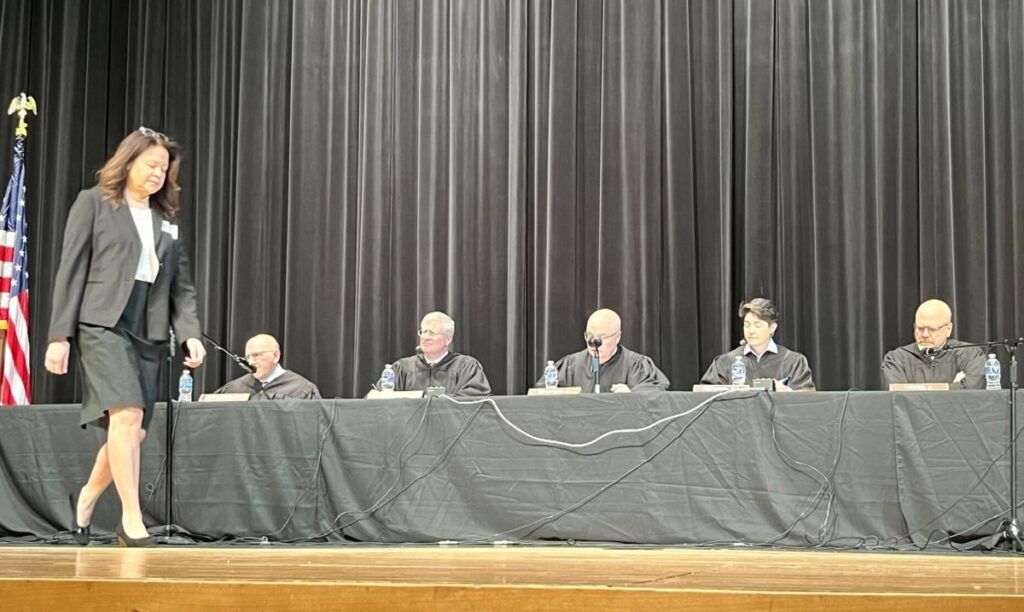
Colorado justices accept appeals on Netflix taxation, children pursuing neglect cases
Michael Karlik
michael.karlik@coloradopolitics.com
Updated 3 hours ago
The Colorado Supreme Court announced on Monday that it will decide whether Netflix subscriptions are subject to the state’s sales tax as “tangible personal property.” At least three of the court’s seven members must agree to hear an appeal. The...
Proposal outlines $300M deal separating Pinnacol from Colorado state government
Marianne Goodland
marianne.goodland@coloradopolitics.com
Updated 3 hours ago
Colorado lawmakers are weighing a proposal that would allow Pinnacol Assurance to sever its remaining ties to the state in exchange for a $300 million payment, a long‑debated shift that supporters say could stabilize the insurer’s future and help plug...
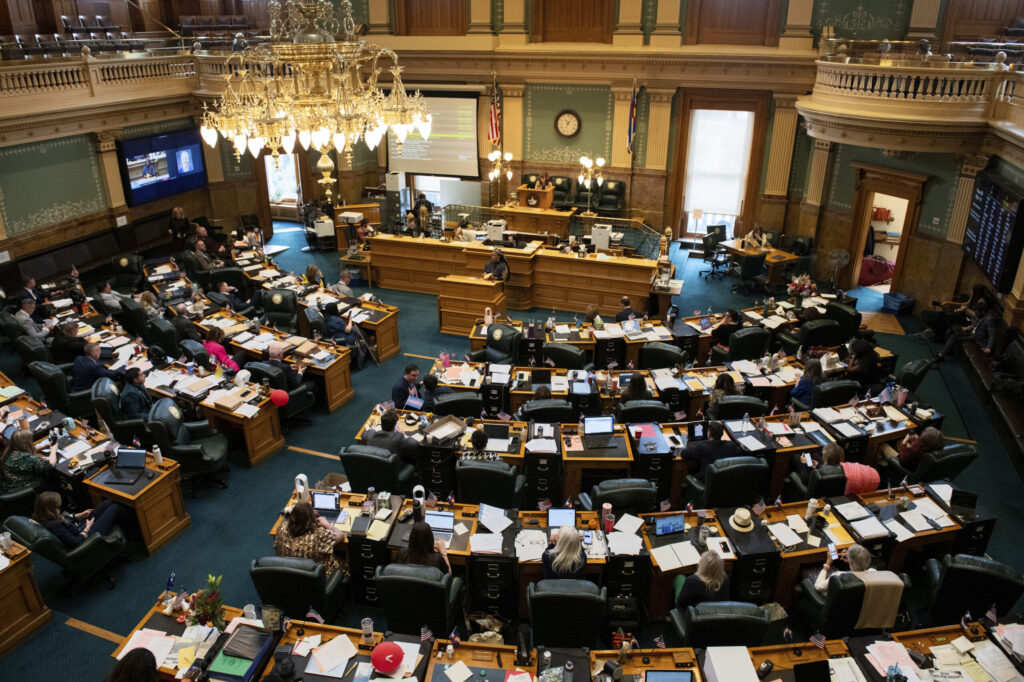
Bill requiring employers to grant unpaid leave to Colorado lawmakers heads to governor’s desk
Marissa Ventrelli
marissa.ventrelli@coloradopolitics.com
Updated 2 hours ago
Colorado lawmakers are one step away from securing guaranteed unpaid leave from their day jobs during the legislative session after the House narrowly approved the proposal Thursday. Senate Bill 087 would require businesses to allow employees who are members of...
Redistricting fight escalates as Colorado Title Board clears competing ballot proposals
Marianne Goodland
marianne.goodland@coloradopolitics.com
Updated 2 hours ago
Colorado’s title board on Wednesday gave final approval to multiple ballot measures related to congressional redistricting, setting up a series of proposals that could alter how the state draws its U.S. House districts for the 2028 and 2030 elections. The...
Colorado lawmakers propose deep cuts to close $1.2B budget gap
Marianne Goodland
marianne.goodland@coloradopolitics.com
Updated 2 hours ago
The panel of Colorado legislators in charge of crafting next year’s budget has finalized the 2026–27 spending plan built on deep cuts and one‑time cash transfers in an attempt to close a shortfall of more than $1.2 billion. The plan...
Denver judge denies Gov. Polis request to dismiss ICE-related records case
Marianne Goodland
marianne.goodland@coloradopolitics.com
Updated 6 hours ago
A year after blocking the release of state records to federal immigration agents, a Denver judge has now denied Gov. Jared Polis’ effort to end the lawsuit at the center of the dispute. The lawsuit filed against the governor in...
Colorado appeals court orders new sentencing for Tina Peters, upholds convictions
Michael Karlik
michael.karlik@coloradopolitics.com
Updated 2 hours ago
Colorado’s second-highest court determined on Thursday that a trial judge improperly sentenced former Mesa County clerk Tina Peters based upon her exercise of protected speech, while at the same time upholding her convictions. The three-judge Court of Appeals panel also...

Denver promised every school funding from $1B bond — but campuses later closed received far less | Analysis
Nico Brambila
nico.brambila@denvergazette.com
Updated 6 hours ago
Denver voters overwhelmingly approved the largest bond measure in Denver Public Schools history on the promise that every school — including charter campuses — would receive something. And they did. But the nearly $1 billion bond was not distributed evenly....

National conservation area growing by 4,000-plus acres in western Colorado
Seth Boster
seth-boster@coloradopolitics.com
Updated 10 hours ago
A formerly private, sweeping swath of western Colorado is growing a public, red rock wonderland. Spanning 4,000-plus acres, Escalante Ranch has been transferred to the Bureau of Land Management and incorporated into Dominguez-Escalante National Conservation Area, The Conservation Fund recently...

Judge rules that Colorado law makes it too hard for parties to bar unaffiliated voters from primaries
Ernest Luning
ernest.luning@coloradopolitics.com
Updated 9 hours ago
A federal judge ruled in favor of the Colorado Republican Party late Tuesday, saying that a portion of the state law that allows unaffiliated voters to cast ballots in party primaries is unconstitutional because it imposes an unrealistic burden on...
PREV
PREVIOUS

Susan Blanco signals views on role of appellate courts in first opinion as Colorado justice
Justice Susan Blanco’s first solo opinion as a new member of the Colorado Supreme Court made clear her view of the guardrails that keep the state’s highest court tethered to the issues it is asked to decide. On Monday, the court issued a 4-3 decision in a criminal appeal. Blanco, while part of the majority, […]

Federal judge proposes sanctions against Mike Lindell's lawyers for continued fake citations
A federal judge is once again pursuing sanctions against lawyers for MyPillow CEO Mike Lindell for continuing to cite to court cases that do not exist, likely based on the faulty output of artificial intelligence tools. Last year, a jury in Colorado awarded plaintiff Eric Coomer $2.3 million in damages against the defendants, Lindell and […]