

Federal judge dismisses U.S. government lawsuit against Colorado, Denver’s ‘sanctuary’ laws
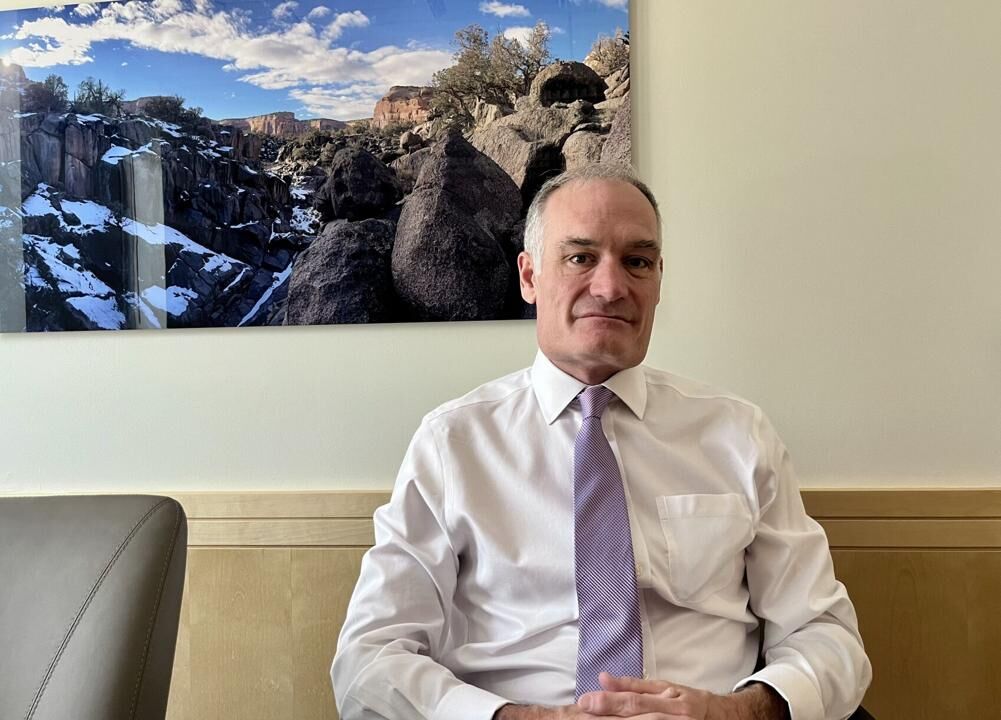
A federal judge dismissed the U.S. government’s lawsuit against Colorado and Denver on Tuesday, which alleged that various local policies impermissibly infringed on federal immigration enforcement.
U.S. District Court Judge Gordon P. Gallagher followed the lead of judges in Illinois and New York, who recently rejected similar claims by the federal government. Although the Colorado defendants asserted multiple grounds for dismissing the case, Gallagher addressed one: Compelling Colorado and Denver to take part in federal immigration enforcement would violate the 10th Amendment.
“Plaintiff seeks to usurp control over Colorado and Denver officials by dictating what the officials can and cannot do,” wrote Gallagher in a March 31 order. “The Federal Government does not have the power to direct the Colorado legislature or Colorado state and local officials in such a fashion.”
The lawsuit alleged Colorado and Denver preempted the federal government’s ability to carry out immigration enforcement, according to 9News. It challenged the constitutionality of several state laws that limit local law enforcement’s ability to enforce immigration law and to share information with U.S. Immigration and Customs Enforcement. The litigation also challenged a Denver ordinance restricting ICE’s ability to enter jails to interview people without a judicial warrant.
Broadly speaking, a “sanctuary city” refers to local policies that limit or prohibit cooperation with federal immigration authorities. Both the Colorado government and the city of Denver have adopted such laws, though political leaders insist neither the state nor the municipality is a “sanctuary” jurisdiction.
The lawsuit was one of multiple that the U.S. Department of Justice filed in Democratic-controlled jurisdictions.
Last July, a federal judge in Illinois called the litigation an “end-run around the Tenth Amendment,” which allows states to exercise powers not constitutionally granted to the federal government.
In November, a New York judge similarly dismissed a case, reasoning the federal government’s argument would “deprive New York of its essential ability to protect its sovereign interests in the face of undue federal interference.”
Gallagher, a Joe Biden appointee, likewise agreed that the U.S. Constitution did not empower the federal government to require states to assist in immigration enforcement, although voluntary cooperation remains on the table.
“Therefore, it is clearly established that Congress does not have the power to dictate the allocation of state resources, such as by compelling states to bear the cost of enforcing a federal regulatory program,” he wrote. “Plaintiff’s claims seek to effectively mandate Colorado expend state resources to implement the federal immigration scheme.”
The Justice Department did not immediately respond to a request for comment.
“This lawsuit by the Trump administration was a straightforward attack on Colorado’s sovereignty. The 10th Amendment protects states’ rights to make our own decisions about how our personnel protect public safety,” said Attorney General Phil Weiser in a statement. “Today’s court ruling is a win for public safety and a win for Coloradans’ rights. The Trump administration needs to stop singling out Colorado for punishment.”
“Denver will always stand for safe communities and accountable government,” said Denver Mayor Mike Johnston. “Today’s ruling makes clear that we cannot be required to use local resources to enforce federal policies. And instead of being bullied by President Trump, we will continue to do what we do best in making our neighborhoods safer, strengthening trust with the community, and delivering for Denver families.”
Gallagher’s order comes weeks after a different judge in Colorado, R. Brooke Jackson, blocked the U.S. Department of Agriculture from requiring the state to perform a rapid recertification of food assistance beneficiaries in five counties. Among other things, Jackson found the agriculture secretary lacked the authority to compel participation in the sudden “pilot project.”
The case is United States v. State of Colorado et al.
9News, a partner of the Gazette newspapers, contributed to this article. For this and similar stories, please visit 9news.com.

Colorado legislators propose $46.8 billion budget, driven by Medicaid costs
Marianne Goodland
marianne.goodland@coloradopolitics.com
Updated 9 hours ago
The six-member panel of legislators in charge of crafting the state budget has now turned over its plan to the Colorado legislature, proposing to spend $1.5 billion more for the Medicaid program. The increase is driven by Medicaid costs, which...
As Colorado passes 6 million residents, housing initiatives take center stage
Marianne Goodland
marianne.goodland@coloradopolitics.com
Updated 11 hours ago
New Census data confirming Colorado’s population has topped six million is fueling renewed debate over Gov. Jared Polis’ housing agenda, as he tied the population increases to home construction. The governor said the counties experiencing the largest increases in new...

Bill to accelerate police access to online data clears Colorado committee
Marissa Ventrelli
marissa.ventrelli@coloradopolitics.com
Updated 9 hours ago
A proposal to speed up law enforcement’s access to social media data is advancing in the Colorado Legislature, drawing testimony from the residents of Evergreen, where a school shooting took place, and questions from opponents worried about privacy and constitutional...
An April Fool’s Day to remember | Capitol M | Week of April 4, 2026
Marianne Goodland
marianne.goodland@coloradopolitics.com
Updated 12 hours ago
The lighter side of the Capitol, and if light were weight, the Capitol would have lifted off better than the Artemis II rocket on April Fool’s Day. There was a plethora of Fools at the Capitol for April Fool’s Day...
Aurora City Council to vote on water restrictions as metro area faces water supply woes
Kyla Pearce
kyla.pearce@gazette.com
Updated 17 hours ago
At Monday night’s regular Aurora City Council meeting, councilmembers will cast an official vote on a Stage I Water Shortage declaration, as recommended by Aurora Water. If it passes, restrictions on water use will go into effect the next day,...
Colorado ski resorts announce early closures amid historic snowpack lows, high temperatures
Kyla Pearce
kyla.pearce@gazette.com
Updated 3 days ago
Vail Resorts is the latest area to announce season closure Wednesday As Colorado’s historically low snowpack year comes to a close and spring conditions take over the mountains, the state’s major ski resorts are announcing closing dates — some of...

Kentucky Gov. Andy Beshear set to headline Colorado Democrats’ annual fundraising dinner
Ernest Luning
ernest.luning@coloradopolitics.com
Updated 3 days ago
Kentucky Gov. Andy Beshear, one of the Democrats’ top 2028 presidential prospects, is scheduled to deliver the keynote address at the Colorado Democratic Party’s annual fundraising dinner in June in Denver, the party said Friday. Serving his second term as...
Gov. Polis names new leaders for Colorado health agencies in wake of Medicaid turmoil
Marianne Goodland
marianne.goodland@coloradopolitics.com
Updated 4 days ago
Gov. Jared Polis, on Thursday, announced he was appointing Gretchen Hammer to serve as acting executive director of the Colorado Department of Health Care Policy and Financing, and deputy executive director Stephanie Beasley to become the next commissioner of the...

Relaunched Lakewood Navigation Center offers shelter, resources
Sage Kelley
sage.kelley@denvergazette.com
Updated 16 hours ago
Once a shelter against extreme weather conditions, the Lakewood navigation center has officially opened after nearly a year of renovations, part of the city’s campaign to combat its growing homeless population. The city, in partnership with the Volunteers of America...
Colorado sues Trump administration over elections order
Marissa Ventrelli
marissa.ventrelli@coloradopolitics.com
Updated 8 hours ago
Colorado has joined a coalition of states in suing President Donald Trump over his new executive order on elections, arguing the directive unlawfully intrudes on their authority to run their own voting systems and threatens access to mail ballots for...
PREV
PREVIOUS

Lakewood zoning canvasser accused of stealing opposition material
Allegations of sign stealing and electioneering have emerged in the Lakewood special election over zoning. A resident recently shared security camera footage online of a man appearing to steal an opposition door knocker. Meanwhile, the city also filed a complaint against the Green Mountain Water and Sanitation District, alleging electioneering. Last October, the city approved […]

Gov. Polis declares April ‘dig safely month’ to mark 40th anniversary of Colorado 811
Gov. Jared Polis declared April 2026 as “Dig Safely Month” in Colorado, an annual observance that this year highlights the 40th anniversary of Colorado 811, the state’s One-Call Notification System. “Before everyone starts their warm weather projects around the house, it’s important to remember to protect yourself, your home, your neighbors and critical underground infrastructure […]