10th Circuit warns lawyers after finding fake case in filing

The Denver-based federal appeals court warned attorneys to be more careful last month after discovering one lawyer cited a fake case in his arguments.
In recent months, federal and state judges in Colorado have begun cautioning lawyers explicitly about the pitfalls of using generative artificial intelligence in legal filings without verifying the output. The Colorado Supreme Court recently amended the rules of professional conduct to warn about the potential violations lawyers may trigger with improper AI use. Within weeks of each other last fall, two federal judges also called out fake citations that appeared in legal filings.
In early February, the U.S. Court of Appeals for the 10th Circuit ordered a lawyer to pay $1,000 for her “reckless” inclusion of fake cases in her appeal.
On Feb. 13, a three-judge panel for the 10th Circuit rejected an asylum appeal in a family’s Colorado-based immigration proceedings. The panel determined the family of five had not established a likelihood of future persecution in Colombia based upon a relative’s ongoing extortion by a criminal organization.
“If counsel made a citation error, we have not been able to deduce what it might be. We have not uncovered any relevant federal case similarly captioned or containing any of the quotations that counsel attributes to this apparently nonexistent case,” wrote Senior Judge Paul J. Kelly Jr. in the panel’s order. “This case citation and the quotations and propositions attributed to it appear fabricated. This is likely the result of Petitioners’ counsel’s use of a generative artificial intelligence tool as a research and drafting aid without adequate review of the results the tool generated.”
The family’s attorney cited to a 2023 decision of the 10th Circuit, and explained why its contents supported his clients’ position. However, the government pointed out in its response that the case was fictional.
Case: Picon-Diaz v. Bondi
Decided: February 13, 2026
Jurisdiction: Board of Immigration Appeals
Ruling: 3-0
Judges: Paul J. Kelly Jr. (author)
Joel M. Carson III
Bobby R. Baldock
In determining whether to impose consequences, Kelly acknowledged there was nothing “inherently problematic” with using AI, so long as an attorney does not attempt to persuade a court with fake cases.
“However, we decline to sanction counsel in this case but warn him — and all attorneys practicing before this court — of the responsibility to ensure that citations to legal authority are not fabrications but instead point to real cases that contain quotations attributed to them and arguably stand for the propositions for which they are cited,” Kelly concluded.
The attorney, Jorge E. Munoz of Houston, confirmed the 10th Circuit’s description of the problem.
“This occurred because I used an AI research tool and failed to adequately verify the results before filing. I take full responsibility for this error,” he told Colorado Politics. “I have implemented verification procedures to independently confirm all cited authorities before submission and to ensure this does not happen again.”
The case is Picon-Diaz et al. v. Bondi.

Colorado leaders weigh next steps after US Supreme Court rules against state’s ‘conversion therapy’ ban
Marissa Ventrelli
marissa.ventrelli@coloradopolitics.com
Updated 12 minutes ago
Colorado leaders and advocacy groups remain divided after the U.S. Supreme Court on Tuesday ruled against the state’s ban on conversion therapy for minors, ruling 8-1 that the 2019 law violates the First Amendment. While it is a victory for...

10th Circuit rules cognitively impaired man’s risk of lobotomy, mistreatment in Mexico not ‘torture’
Michael Karlik
michael.karlik@coloradopolitics.com
Updated 14 hours ago
The Denver-based federal appeals court concluded last month that a man’s risk of mistreatment or forced lobotomy in his native Mexico did not amount to “torture” that should shield him from deportation. A three-judge panel of the U.S. Court of...
Colorado justices side with news organizations for disclosure of high-level child abuse data
Michael Karlik
michael.karlik@coloradopolitics.com
Updated 19 hours ago
The Colorado Supreme Court ruled on Monday that the state must disclose the number of child abuse reports at individual group living facilities in response to an open records request, as the addresses are already in the public domain. The...
Divided Colorado Supreme Court finds Denver detective did not violate defendant’s Miranda rights
Michael Karlik
michael.karlik@coloradopolitics.com
Updated 14 hours ago
The Colorado Supreme Court determined on Monday that a Denver detective did not improperly resume questioning of a defendant in custody after he invoked his right to counsel. By 4-3, the justices reversed a trial judge’s order that found a...

Out-of-state judges address ex-discipline director’s lawsuit, Colorado justices accept federal invitation | COURT CRAWL
Michael Karlik
michael.karlik@coloradopolitics.com
Updated 1 day ago
Welcome to Court Crawl, Colorado Politics’ roundup of news from the third branch of government. A pair of out-of-state judges got down to business in a lawsuit brought by Colorado’s former judicial discipline director, plus the state Supreme Court has...
Federal judge upholds constitutionality of Colorado campaign contribution limits
Michael Karlik
michael.karlik@coloradopolitics.com
Updated 4 days ago
A federal judge upheld Colorado’s individual campaign contribution limits as constitutional on Thursday, finding that three Republican plaintiffs failed to prove the campaign finance framework violates their First Amendment rights. U.S. District Court Senior Judge John L. Kane recognized that...

Appeals court rejects theory that existing tax revenue undermines need for new fees
Michael Karlik
michael.karlik@coloradopolitics.com
Updated 4 days ago
Colorado’s second-highest court rejected a plaintiff’s claim on Thursday that the tax revenue generated by an existing activity should prevent local governments from imposing new fees aimed at regulating the activity. The question stemmed from Colorado’s unique constraints on taxation...
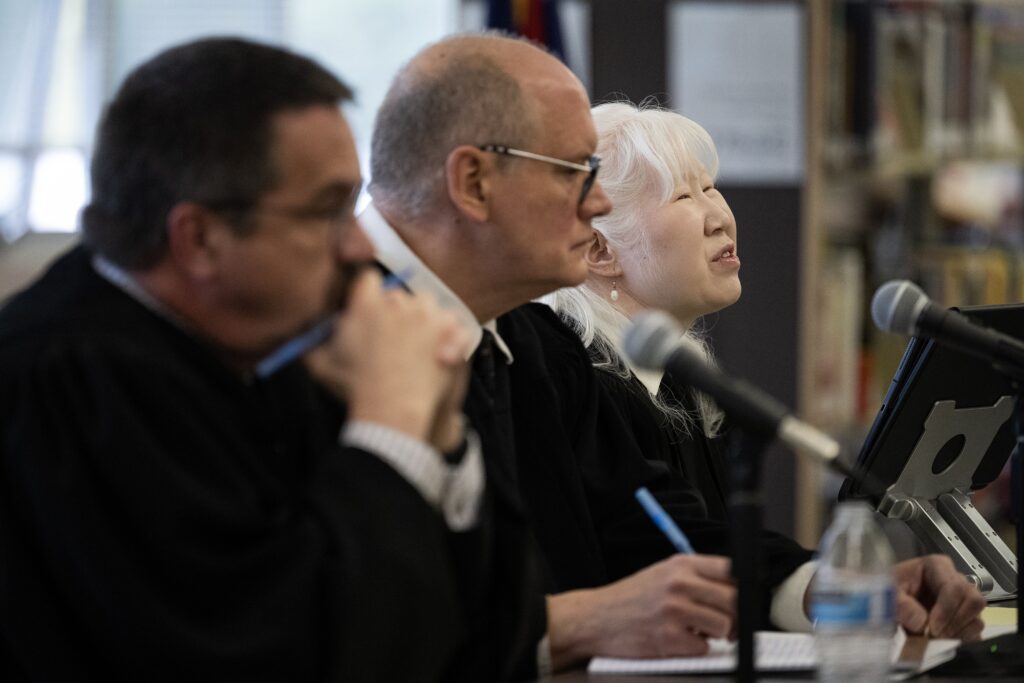
Appeals court finds no illegal sentence when defendants forfeit time-served credit
Michael Karlik
michael.karlik@coloradopolitics.com
Updated 3 days ago
Colorado’s second-highest court ruled on Thursday that criminal defendants may agree to relinquish the credits they earned while incarcerated pending trial, despite a state law guaranteeing that such time “shall be deducted” from a person’s sentence. Kerry Ellis Endsley pleaded...
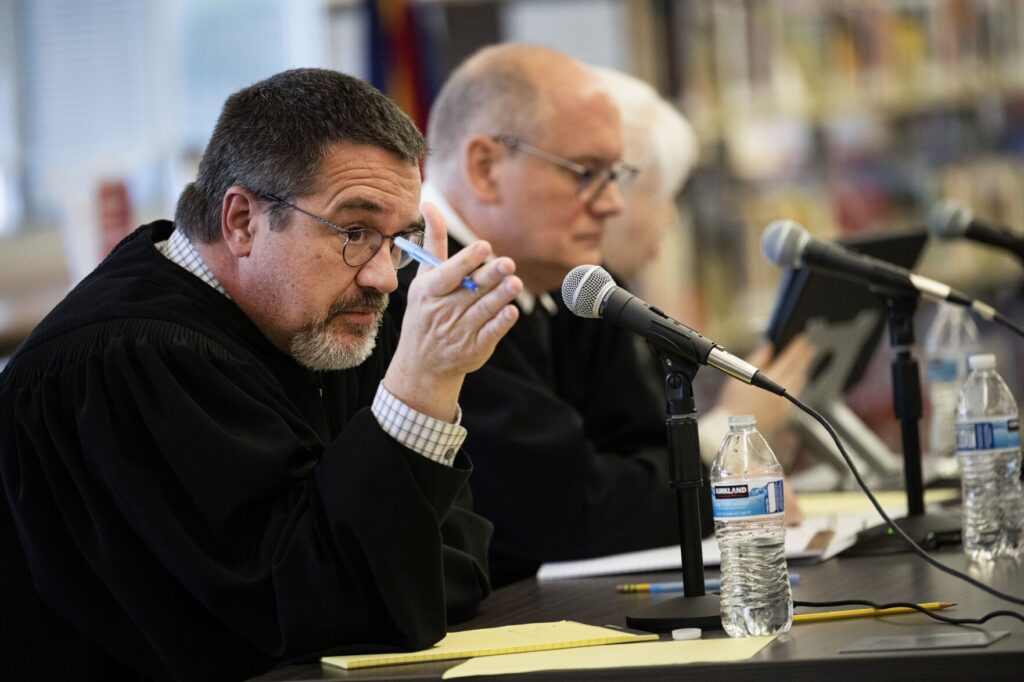
Appeals court reinstates Garfield County arson charge
Michael Karlik
michael.karlik@coloradopolitics.com
Updated 2 days ago
Colorado’s second-highest court reinstated a Garfield County defendant’s arson charge on Thursday, concluding a trial judge improperly credited a witness’s claim that she alone was responsible for starting the fire. A sheriff’s deputy responded to a brush fire near Parachute...
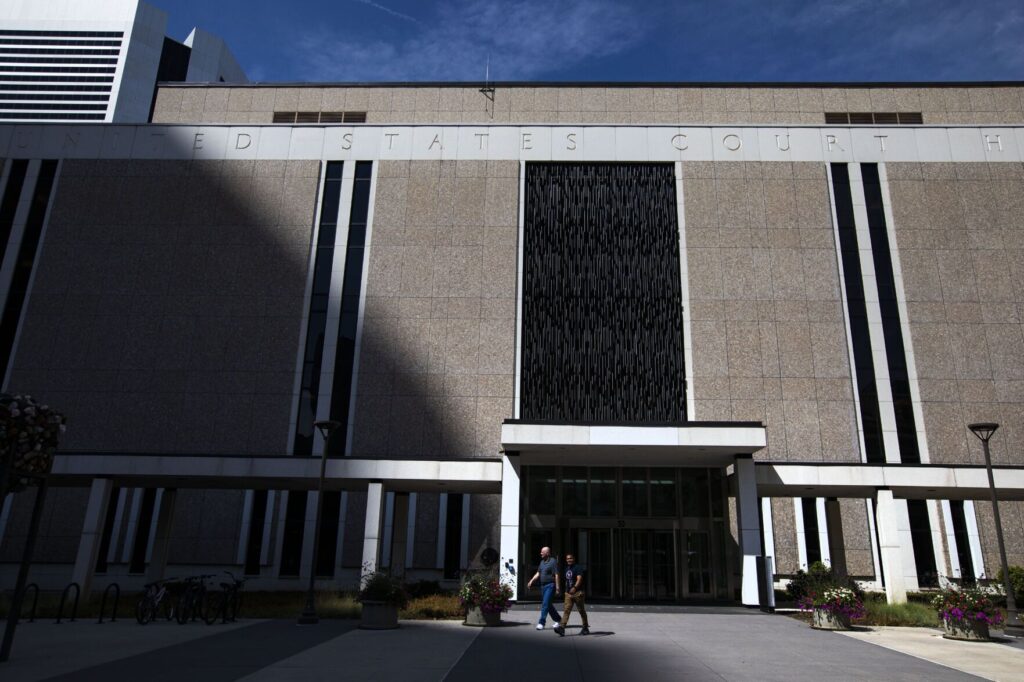
Federal judges rebuke ex-Colorado judicial discipline director for conduct in lawsuit
Michael Karlik
michael.karlik@coloradopolitics.com
Updated 5 days ago
A pair of federal judges expressed a desire on Thursday to break the logjam on a lawsuit by Colorado’s former judicial discipline director against the state Supreme Court and related entities, while simultaneously showing little tolerance for the plaintiff’s scorched-earth...