10th Circuit rules cognitively impaired man’s risk of lobotomy, mistreatment in Mexico not ‘torture’
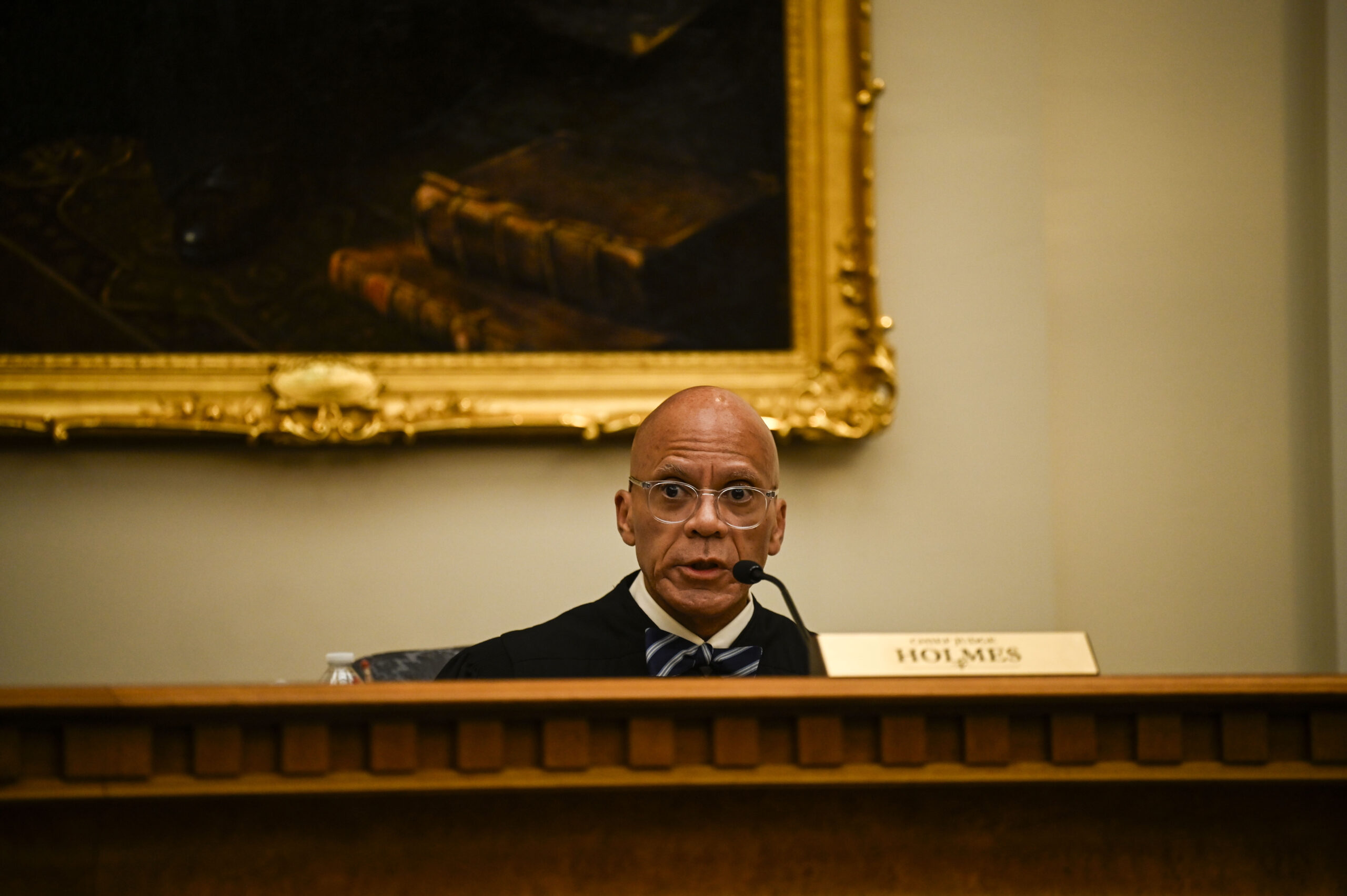
The Denver-based federal appeals court concluded last month that a man’s risk of mistreatment or forced lobotomy in his native Mexico did not amount to “torture” that should shield him from deportation.
A three-judge panel of the U.S. Court of Appeals for the 10th Circuit noted that Javier Garcia-Botello’s request for protection under the Convention Against Torture required him to demonstrate severe pain or suffering “intentionally inflicted” as punishment, either by the government directly or through the acquiescence of public officials.
Evidence that Garcia-Botello would face “prolonged restraints, psychosurgery, and corporal punishment” if returned to Mexico, wrote Chief Judge Jerome A. Holmes, was not enough in the absence of intent to torture.
“Although certainly shocking to our sensibilities in the United States about how to best and most humanely treat persons with disabilities, these practices do not by their very nature ‘compel the conclusion that they were intended to inflict pain,'” he wrote in the Feb. 25 opinion.
Case: Garcia-Botello v. Bondi
Decided: February 25, 2026
Jurisdiction: Board of Immigration Appeals
Ruling: 3-0
Judges: Jerome A. Holmes (author)
Carolyn B. McHugh
Veronica S. Rossman
Garcia-Botello overstayed his tourist visa as a teenager and remained in the United States for more than a decade. He attended school, maintained employment, and started a family without incident. At age 26, he was a passenger in a car that crashed at a high speed, ejecting Garcia-Botello and causing severe, permanent injuries.
In addition to physical damage, the accident caused a traumatic brain injury. His impaired cognitive functioning led to numerous encounters with police and criminal convictions. In 2018, the government moved to deport him for his visa overstay, although not for his criminal record.
After the Board of Immigration Appeals expressed concerns about Garcia-Botello’s competency, he received an appointed attorney, who sought to prevent Garcia-Botello’s deportation to Mexico under the Convention Against Torture. Specifically, Garcia-Botello argued his cognitive disability would continue to lead to conflict with police and others.
Garcia-Botello presented evidence of human rights abuses in Mexico against those with disabilities, including “prolonged physical restraints, physical and sexual abuse, lack of privacy and hygiene, electroconvulsive therapy without anesthesia, and even forced lobotomies,” which are now-rare brain surgeries that frequently affect patients detrimentally.
Then-Immigration Judge Matthew W. Kaufman, based in Aurora, found Garcia-Botello credible, but reasoned he had not proven Mexican law enforcement would have the specific intent to inflict pain and suffering on him. Therefore, any harm would amount to “neglect, a lack of resources, or insufficient training or education,” not torture.
Board of Immigration Appeals member Anne Greer upheld the decision to deny relief to Garcia-Botello. She acknowledged Garcia-Botello’s argument that he would be subject to “primitive medical practices,” like a lobotomy, and that Mexico had improved its treatment of people with disabilities in an “inconsistent” and “limited” fashion.
“Nonetheless, the Immigration Judge permissibly determined that these ongoing issues and conditions are insufficient to establish that a public official more likely than not will acquiesce and torture of the respondent,” Greer wrote.
During oral arguments to the 10th Circuit panel in January 2025, the judges similarly were skeptical that any harm to Garcia-Botello in Mexico would meet the specific definition of “torture.”
In the Board of Immigration Appeals’ view, “even if you have this chain of events such that he ends up in a detention facility or he ends up in a mental health institution, the fact that he would be subject to conditions that, in the United States, perhaps, would be viewed as horrific, does not mean that he has been tortured,” said Holmes. “And that is the problem.”
“Is your position that a lobotomy, for instance, which is in the record as something that could happen in a mental institution in Mexico, is (automatically) satisfying the standard of what constitutes torture?” asked Judge Veronica S. Rossman.
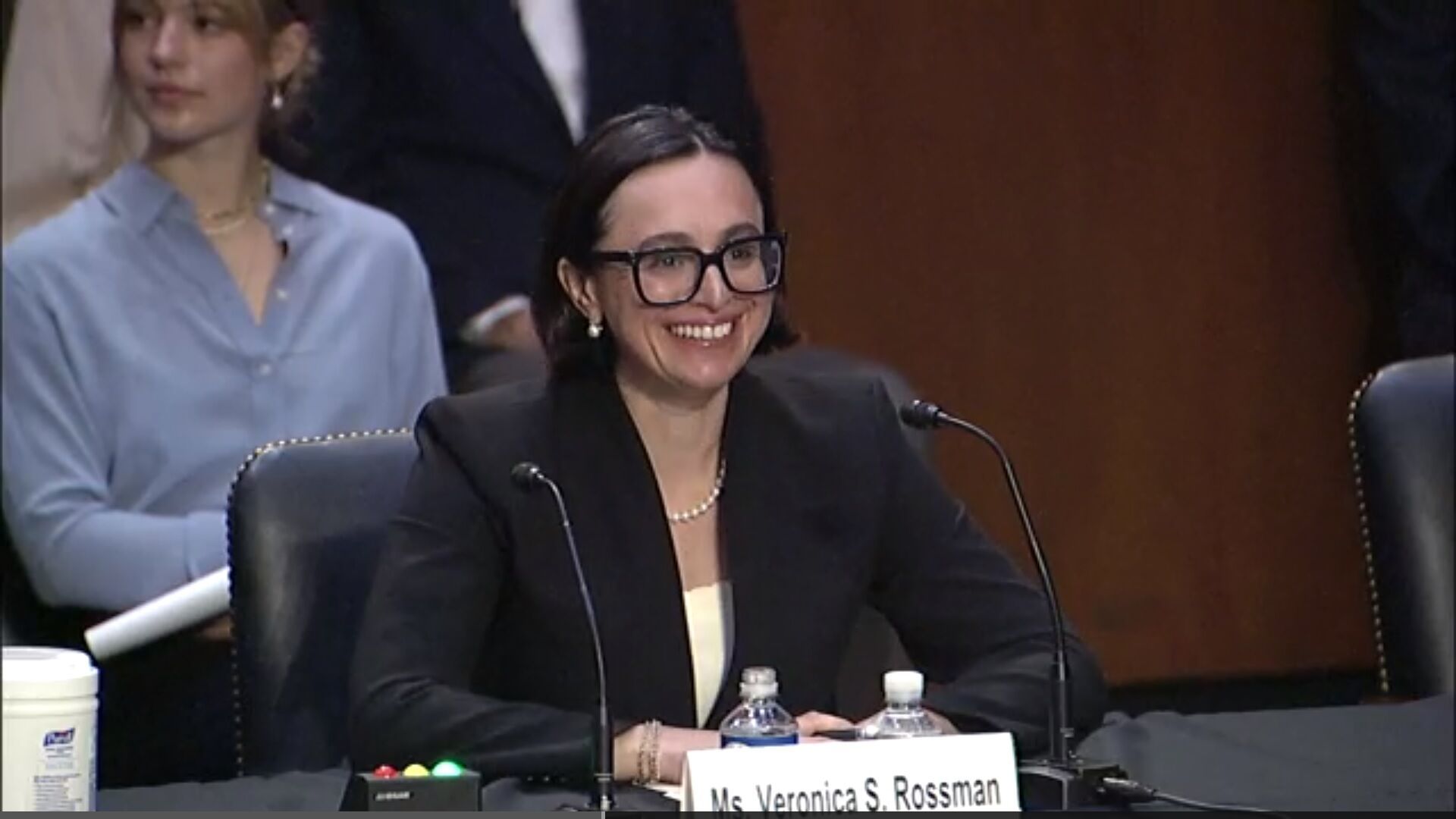
Attorney Carolyn M. Welter responded that the lobotomy would most likely occur for the improper purpose of correcting behavior.
“Let’s assume that, in a mental health institution, they have one staff member per 100 patients,” said Holmes. “Which means that they impose punishment on people. They hit them. Corporal punishment in order to do that. Bad, bad thing to do. But is that torture?”
In other words, “they’re not doing it because they get kicks out of it,” he added. “They do it because they have to maintain that facility.”
Ultimately, the panel concluded it was not enough to demonstrate an intent to torture based solely on the severity of the injuries a person would likely face.
“When someone seeking CAT protection can only point to harsh treatment, but cannot show that such treatment is the result of anything other than a country’s ‘economic and social ills,’ that person fails to show a specific intent to torture and cannot obtain CAT relief,” wrote Holmes. “To be sure, all of this may be cold comfort to Mr. Garcia-Botello, but the BIA’s analysis conforms to, and is consistent with, the legal requirements to establish torture.”
Lawyers for Garcia-Botello declined to talk about his case.
The case is Garcia-Botello v. Bondi.

Colorado justices side with news organizations for disclosure of high-level child abuse data
Michael Karlik
michael.karlik@coloradopolitics.com
Updated 2 hours ago
The Colorado Supreme Court ruled on Monday that the state must disclose the number of child abuse reports at individual group living facilities in response to an open records request, as the addresses are already in the public domain. The...
Divided Colorado Supreme Court finds Denver detective did not violate defendant’s Miranda rights
Michael Karlik
michael.karlik@coloradopolitics.com
Updated 2 hours ago
The Colorado Supreme Court determined on Monday that a Denver detective did not improperly resume questioning of a defendant in custody after he invoked his right to counsel. By 4-3, the justices reversed a trial judge’s order that found a...

Out-of-state judges address ex-discipline director’s lawsuit, Colorado justices accept federal invitation | COURT CRAWL
Michael Karlik
michael.karlik@coloradopolitics.com
Updated 10 hours ago
Welcome to Court Crawl, Colorado Politics’ roundup of news from the third branch of government. A pair of out-of-state judges got down to business in a lawsuit brought by Colorado’s former judicial discipline director, plus the state Supreme Court has...
Federal judge upholds constitutionality of Colorado campaign contribution limits
Michael Karlik
michael.karlik@coloradopolitics.com
Updated 3 days ago
A federal judge upheld Colorado’s individual campaign contribution limits as constitutional on Thursday, finding that three Republican plaintiffs failed to prove the campaign finance framework violates their First Amendment rights. U.S. District Court Senior Judge John L. Kane recognized that...

Appeals court rejects theory that existing tax revenue undermines need for new fees
Michael Karlik
michael.karlik@coloradopolitics.com
Updated 3 days ago
Colorado’s second-highest court rejected a plaintiff’s claim on Thursday that the tax revenue generated by an existing activity should prevent local governments from imposing new fees aimed at regulating the activity. The question stemmed from Colorado’s unique constraints on taxation...
Appeals court finds no illegal sentence when defendants forfeit time-served credit
Michael Karlik
michael.karlik@coloradopolitics.com
Updated 2 days ago
Colorado’s second-highest court ruled on Thursday that criminal defendants may agree to relinquish the credits they earned while incarcerated pending trial, despite a state law guaranteeing that such time “shall be deducted” from a person’s sentence. Kerry Ellis Endsley pleaded...
Appeals court reinstates Garfield County arson charge
Michael Karlik
michael.karlik@coloradopolitics.com
Updated 1 day ago
Colorado’s second-highest court reinstated a Garfield County defendant’s arson charge on Thursday, concluding a trial judge improperly credited a witness’s claim that she alone was responsible for starting the fire. A sheriff’s deputy responded to a brush fire near Parachute...
Federal judges rebuke ex-Colorado judicial discipline director for conduct in lawsuit
Michael Karlik
michael.karlik@coloradopolitics.com
Updated 4 days ago
A pair of federal judges expressed a desire on Thursday to break the logjam on a lawsuit by Colorado’s former judicial discipline director against the state Supreme Court and related entities, while simultaneously showing little tolerance for the plaintiff’s scorched-earth...

Democratic bill would let recipients of ‘conversion therapy’ sue Colorado providers with no statute of limitations
Marissa Ventrelli
marissa.ventrelli@coloradopolitics.com
Updated 4 days ago
Colorado lawmakers have advanced a proposal that would allow people who underwent conversion therapy to sue licensed providers for damages, moving the measure forward on a party-line vote in the House Judiciary Committee. House Bill 1322, proposed by Democratic Reps....
Federal judge refuses to authorize immediate appeal in World Cup trafficking lawsuit
Michael Karlik
michael.karlik@coloradopolitics.com
Updated 5 days ago
A federal judge declined to authorize an immediate appeal last week of a prior decision allowing companies operating out of Colorado to be sued for allegedly participating in a human trafficking venture involving Filipino laborers who constructed facilities for the...