

Federal judge refuses to authorize immediate appeal in World Cup trafficking lawsuit
A federal judge declined to authorize an immediate appeal last week of a prior decision allowing companies operating out of Colorado to be sued for allegedly participating in a human trafficking venture involving Filipino laborers who constructed facilities for the 2022 World Cup in Qatar.
Occasionally, trial judges’ decisions are subject to mid-case, or “interlocutory,” appeal. Federal law allows judges to authorize an interlocutory appeal if there is a crucial legal issue that could end the litigation, so long as there is “a substantial ground for difference of opinion” among judges.
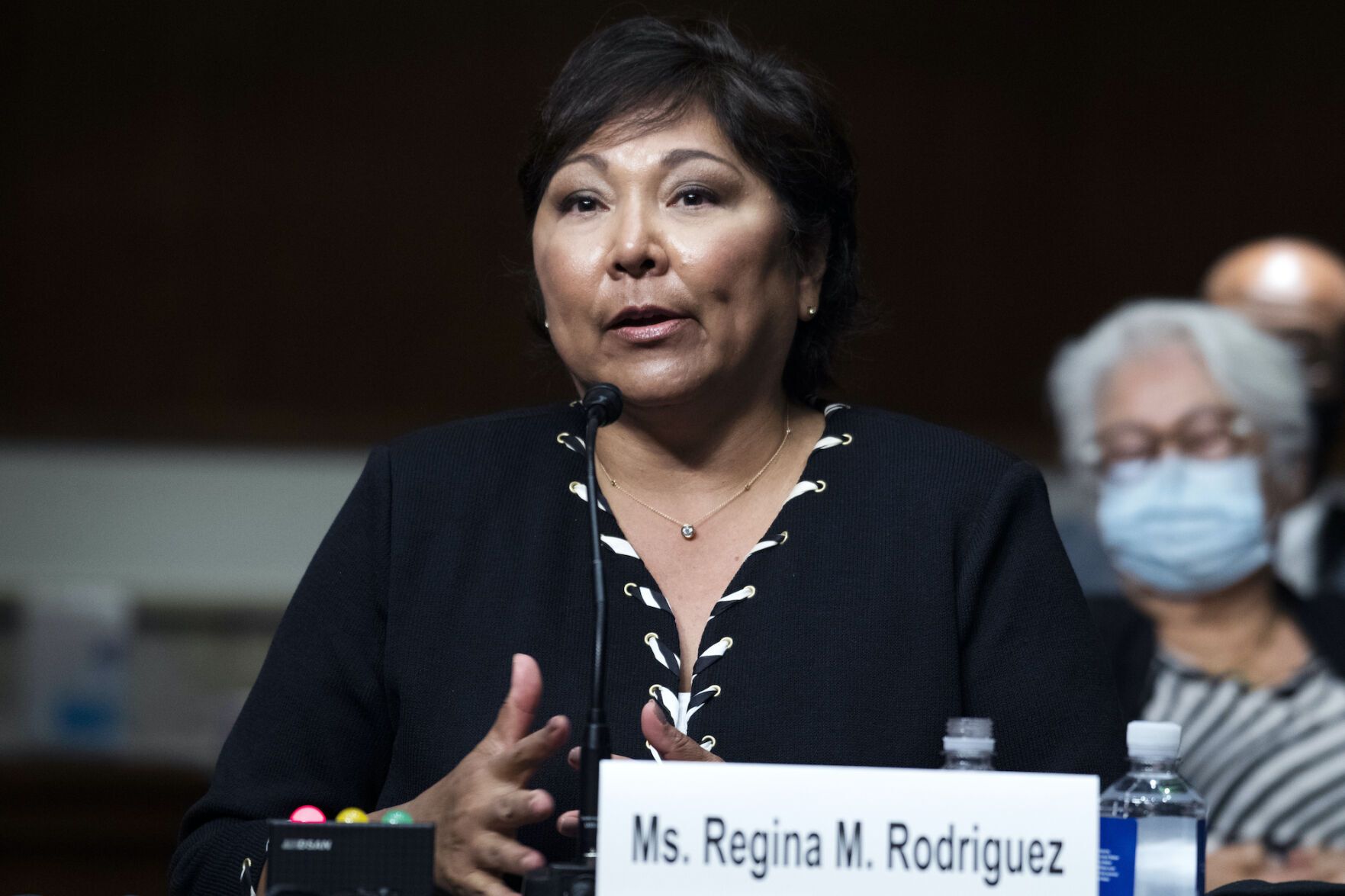
In a March 20 order, U.S. District Court Judge Regina M. Rodriguez determined there was no substantial likelihood that judges would disagree about whether the Trafficking Victims Protection Reauthorization Act can impose liability for the defendant companies for alleged overseas trafficking.
“Defendants do not directly contest the assertion that the majority of the courts that have addressed this issue have found that the TPVA’s civil claims apply extraterritorially,” she wrote.
Fifty-three plaintiffs sued CH2M Hill Companies, Jacobs Engineering Group, and related organizations that worked with the Qatari government to construct multiple soccer stadiums and facilities in the lead-up to the World Cup. The Filipino workers alleged their employers took their passports, forced them to live in inhumane conditions, and did not pay them as promised.
The plaintiffs accused the defendant corporations of violating the Trafficking Victims Protection Reauthorization Act. Among other things, the law allows lawsuits against those who knowingly benefit from their participation in a human trafficking “venture.”
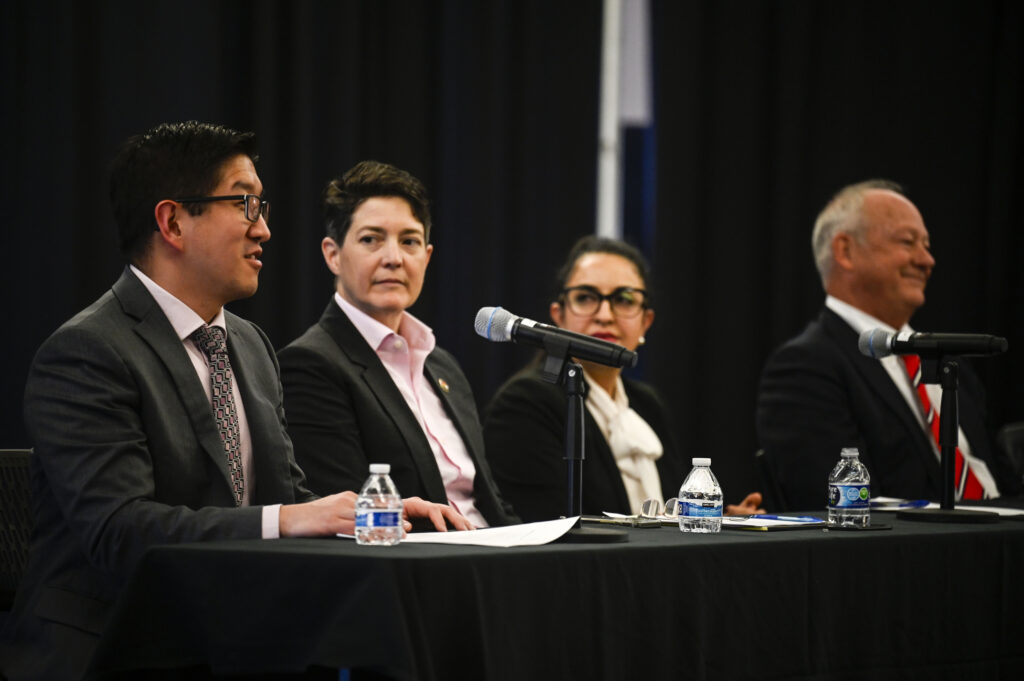
Last June, U.S. Magistrate Judge Cyrus Y. Chung permitted some of the claims to proceed. He agreed with the plaintiffs that the law reached outside U.S. borders to a certain extent, as Congress wanted to address the enforcement challenges posed by transnational trafficking. Chung noted the complaint sufficiently alleged that certain entities of CH2M Hill and Jacobs benefitted from the stadium construction venture and would have been put on notice about potential human trafficking.
The defendants then sought to immediately appeal his decision to the U.S. Court of Appeals for the 10th Circuit. Specifically, they argued the lawsuit would be over if the 10th Circuit believed the federal human trafficking law did not apply to conduct outside U.S. borders.
“That different federal courts have reached irreconcilably different results on the exact same statutory interpretation question demonstrates substantial grounds for — and actual — differences of opinion,” wrote the defense attorneys.
The plaintiffs countered that multiple courts, including at least one federal appeals court, have agreed with Chung’s interpretation of the law. The main decisions on which the defendants relied were issued by a single trial judge in Washington, D.C.
While the defendants’ motion was pending, Colorado’s district court added Rodriguez to the case. Although the litigants previously consented to having a magistrate judge handle the lawsuit in its entirety, a similar case with 40 additional plaintiffs was also pending, with Rodriguez as the presiding judge. The court’s clerk told Colorado Politics that both cases were reassigned jointly to Rodriguez and Chung in mid-2025 for efficiency reasons.
Chung, responding to the request for an immediate appeal, recommended against it. He wrote that all circuit courts to address the issue have come to the same conclusion as him, and isolated decisions from trial judges to the contrary did not tip the scales.
“The short of it is that while there is some conflict in the district courts in the interpretation of the TVPRA, it falls short of substantial ground for difference of opinion,” he wrote.
The defendants objected to Rodriguez, arguing Chung did “not engage with the novel and difficult nature of the extraterritoriality question.”
To the contrary, responded Rodriguez, the fact that Chung “dedicated over ten pages of his 46-page (dismissal order) to the extraterritoriality issue demonstrates that he did engage with the novel and difficult nature of the extraterritoriality issue.”
She upheld Chung’s recommendation and observed that an interlocutory appeal would be “likely to prolong the matter, which has already been pending for two-and-a-half years.”
The case is F.C. et al. v. Jacobs Engineering Group Inc. et al.

Federal judge upholds constitutionality of Colorado campaign contribution limits
Michael Karlik
michael.karlik@coloradopolitics.com
Updated 19 hours ago
A federal judge upheld Colorado’s individual campaign contribution limits as constitutional on Thursday, finding that three Republican plaintiffs failed to prove the campaign finance framework violates their First Amendment rights. U.S. District Court Senior Judge John L. Kane recognized that...

Appeals court rejects theory that existing tax revenue undermines need for new fees
Michael Karlik
michael.karlik@coloradopolitics.com
Updated 1 day ago
Colorado’s second-highest court rejected a plaintiff’s claim on Thursday that the tax revenue generated by an existing activity should prevent local governments from imposing new fees aimed at regulating the activity. The question stemmed from Colorado’s unique constraints on taxation...
Appeals court finds no illegal sentence when defendants forfeit time-served credit
Michael Karlik
michael.karlik@coloradopolitics.com
Updated 1 day ago
Colorado’s second-highest court ruled on Thursday that criminal defendants may agree to relinquish the credits they earned while incarcerated pending trial, despite a state law guaranteeing that such time “shall be deducted” from a person’s sentence. Kerry Ellis Endsley pleaded...
Appeals court reinstates Garfield County arson charge
Michael Karlik
michael.karlik@coloradopolitics.com
Updated 2 days ago
Colorado’s second-highest court reinstated a Garfield County defendant’s arson charge on Thursday, concluding a trial judge improperly credited a witness’s claim that she alone was responsible for starting the fire. A sheriff’s deputy responded to a brush fire near Parachute...
Federal judges rebuke ex-Colorado judicial discipline director for conduct in lawsuit
Michael Karlik
michael.karlik@coloradopolitics.com
Updated 2 days ago
A pair of federal judges expressed a desire on Thursday to break the logjam on a lawsuit by Colorado’s former judicial discipline director against the state Supreme Court and related entities, while simultaneously showing little tolerance for the plaintiff’s scorched-earth...

Democratic bill would let recipients of ‘conversion therapy’ sue Colorado providers with no statute of limitations
Marissa Ventrelli
marissa.ventrelli@coloradopolitics.com
Updated 2 days ago
Colorado lawmakers have advanced a proposal that would allow people who underwent conversion therapy to sue licensed providers for damages, moving the measure forward on a party-line vote in the House Judiciary Committee. House Bill 1322, proposed by Democratic Reps....
Federal judge considers second round of sanctions against ex-Colorado judicial discipline director
Michael Karlik
michael.karlik@coloradopolitics.com
Updated 3 days ago
A federal judge ordered Colorado’s former judicial discipline director on Tuesday to explain why she should not sanction him a second time for filing documents for improper purposes, such as harassment or delay. U.S. District Court Senior Judge Kathryn H....

Colorado justices agree to review insurance question that has divided federal judges
Michael Karlik
michael.karlik@coloradopolitics.com
Updated 3 days ago
The Colorado Supreme Court granted a federal judge’s request on Friday to address an issue that has produced conflicting answers in policyholders’ lawsuits against insurance companies over unpaid benefits. “Parties (and judges) regularly spend undue time and money fighting in...

Federal judge dismisses background screeners’ challenge to Colorado law
Michael Karlik
michael.karlik@coloradopolitics.com
Updated 2 hours ago
A federal judge dismissed a challenge on Friday to a portion of Colorado law that prohibits certain information from being included in consumer reports, in what seemed to be a conflict with federal law. Congress originally enacted the Fair Credit...
10th Circuit rejects ‘penalty’ for children of naturalized citizens seeking visas
Michael Karlik
michael.karlik@coloradopolitics.com
Updated 4 days ago
The Denver-based federal appeals court joined three of its peers earlier this month and determined the child of a newly naturalized U.S. citizen is not moved to a longer visa line as a result of his parent gaining citizenship, and...
PREV
PREVIOUS

Colorado lawmakers approve $150,000 ibogaine study bill targeting PTSD and addiction
The Colorado House Health and Human Services Committee advanced a bill that would create a $150,000 research pilot program to study the safety and effectiveness of ibogaine, a psychoactive compound that claims to treat post-traumatic stress disorder, opioid addiction, and other mental health conditions. The bill ultimately passed on a 12-1 committee vote, with Rep. […]

Denver residents question funding, local transport aspects of Front Range Passenger Rail
Funding, local transit focus and how exactly the Front Range Passenger Rail will serve Coloradans are a few topics Denver residents have on their minds regarding an upcoming project meant to bring 180 miles of passenger rails to the Interstate 25 corridor. Planners for the Front Range Passenger Rail District laid out project goals and […]