

Denver residents question funding, local transport aspects of Front Range Passenger Rail

Funding, local transit focus and how exactly the Front Range Passenger Rail will serve Coloradans are a few topics Denver residents have on their minds regarding an upcoming project meant to bring 180 miles of passenger rails to the Interstate 25 corridor.
Planners for the Front Range Passenger Rail District laid out project goals and took questions from the public at a town hall meeting Wednesday morning in downtown Denver, one of several events the district has planned to solicit public feedback. The train project will create a passenger rail service between Pueblo and Fort Collins, with future connections to New Mexico and Wyoming possible, in an effort to provide alternatives to car travel.
Wednesday’s town hall drew a few dozen Denver residents to the Alliance Center on Wynkoop Street. The event started with an overview of the project, including how it can reduce travel costs, travel time and improve air quality in Colorado by reducing the number of cars traveling on I-25, before diving into a Q&A session.
The town halls come ahead of plans for a 2026 ballot measure relating to the funding of the rail, which could include public funding.
Ean Tafoya, Colorado State Director for GreenLatinos, said the rail project is meant to make travel equitable by providing a way for Coloradans without cars to travel into the Denver area.
“Why do they need to come to Denver? Because we have the hub of everything, health facilities in particular,” Tafoya said. “So we have elders, veterans, who have to come to Denver, Colorado to get the services they need.”
John Putnam, chair of the Front Range Passenger Rail board of directors, said data from the 2025 Urban Mobility Report showed fuel consumption is increasing. Commuters in Denver are burning up to 20 extra gallons of gas per year because of traffic jams and spending more time in traffic — issues the passenger rail is hoping to alleviate.
Among the questions posed by residents were questions about the funding of the project. Putnam said the financial plan for the project, including the total estimated cost, is currently under review and will be finalized within the next couple of months. Putnam said a sales tax or tax increment finance tools are being considered as ways to generate revenue to fund the project.
Jill Locantore, executive director of the Denver Streets Partnership, said while she is excited for the rail as it can help reduce dependency on car travel, she is worried about the passenger rail taking precedent over local transit such as buses.
“Denver is the hub with all the destinations people are trying to get to,” Locantore said. “It would be a failure if people got off the Front Range Passenger Rail and had to take an Uber to get to their final destination, because we don’t have good local transit.”
Locantore said she is worried about the Regional Transportation District cutting services because of funding issues and said voters could become fatigued by repeated requests for funding for public transit. In response, Putnam said he is confident voters will see the value provided by the passenger rail and see that they can trust their tax dollars will be used wisely.
Other questions included whether existing freight lines would be utilized for the passenger rail and how the rail service would work for special events that run outside of the planned service times, such as sporting events. Putnam said the current plan is to utilize the existing freight lines to reduce costs, and said the passenger rail will work with local sports stadiums and arenas to provide “special event services” to transport people after games and events.
Attendance has varied at previous town halls, Putnam said, with some drawing a few dozen and others a few hundred. He said the district has planned the events for different time frames throughout the day in order to reach the most people.
Putnam said the feedback received at the town halls shows what the public is concerned about and wants to see in the project. He said most residents just want to know how the passenger rail will serve them and their communities.
The next town hall is planned for 3:30 p.m. Thursday in Colorado Springs.


Colorado Gov. Polis signs social media warrant bill after last year’s veto
Marissa Ventrelli
marissa.ventrelli@coloradopolitics.com
Updated 2 minutes ago
Colorado law enforcement will soon have faster access to digital evidence after Gov. Jared Polis signed a pared‑down bill requiring social media companies to acknowledge and respond to search warrants on a tight timeline, a shift from a broader proposal...
Under fire from legislators and critics, Colorado’s top Medicaid official resigns
Marianne Goodland
marianne.goodland@coloradopolitics.com
Updated 8 minutes ago
Kim Bimestefer resigned Monday as Colorado’s top Medicaid official, stepping down just as a bipartisan bloc of state senators prepared to formally urge Gov. Jared Polis to remove her over what they called years of mismanagement, waste and costly errors...
Power grid shutdowns in Colorado bring protection — and problems
Scott Weiser
scott.weiser@gazette.com
Updated 4 hours ago
A downed power line in Sunshine Canyon in the mountains west of Boulder in December posed an electrocution risk to firefighters and bystanders after Xcel Energy re-energized it without repairing it, despite being notified of the break the day before....
Aurora wildland fire contained at Buckley Space Force Base
Nicholas Fogleman
nicholas.fogleman@denvergazette.com
Updated 4 hours ago
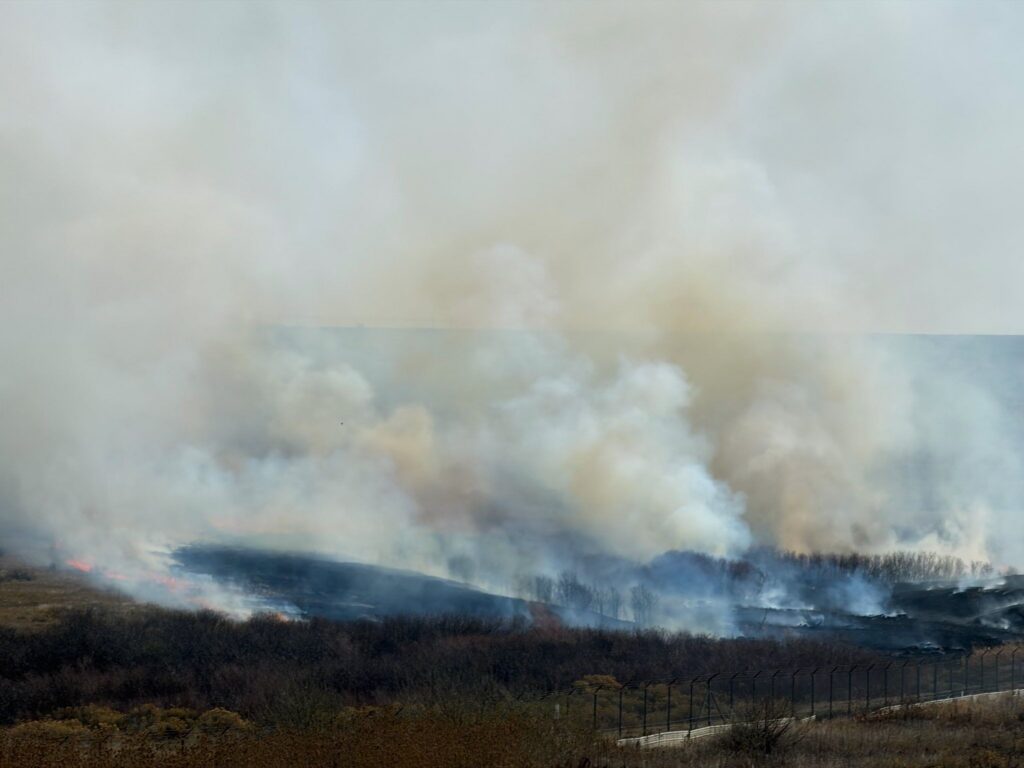
A wildland fire burned Sunday morning on the southwest end of Buckley Space Force Base in Aurora, authorities said. The fire no longer posed a threat and crews were clearing the scene as of 10:53 a.m., according to Aurora Fire...

Unsustainable: How Colorado’s Medicaid spending exploded
Nico Brambila
nico.brambila@denvergazette.com
Updated 6 hours ago
The state’s Medicaid program — which covers about one in four Coloradans — is poised for its largest single-year jump in at least two decades, with officials proposing a $2.3 billion increase, even as lawmakers face a $1.5 billion budget...

Phil Weiser wins top spot in Colorado’s Democratic gubernatorial primary at party’s state assembly
Ernest Luning
ernest.luning@coloradopolitics.com
Updated 2 days ago
Attorney General Phil Weiser’s name will appear first on Colorado’s Democratic gubernatorial primary ballot after his overwhelming win Saturday at the party’s state assembly in Pueblo. Weiser joins U.S. Sen. Michael Bennet in the June 30 primary for the office...

‘No Kings’ protest draws tens of thousands to Colorado state Capitol
Matt Kyle
matt.kyle@denvergazette.com
Updated 2 days ago
The third round of the national No Kings Day protests hit Denver Saturday, when tens of thousands gathered near the Colorado state Capitol to criticize the Trump administration. Organizers addressing the crowd estimated there were 30,000 present for the Saturday...

Denver Democrat Diana DeGette trails challenger Melat Kiros at assembly as both qualify for primary
Ernest Luning
ernest.luning@coloradopolitics.com
Updated 2 days ago
U.S. Rep Diana DeGette, a Denver Democrat, qualified for Colorado’s June primary by the skin of her teeth Friday at the party’s district assembly, where the 15-term incumbent received fewer than half as many delegate votes as her challenger, 28-year-old...
Jeffco adopts updates to wildfire resiliency code
Sage Kelley
sage.kelley@denvergazette.com
Updated 4 hours ago
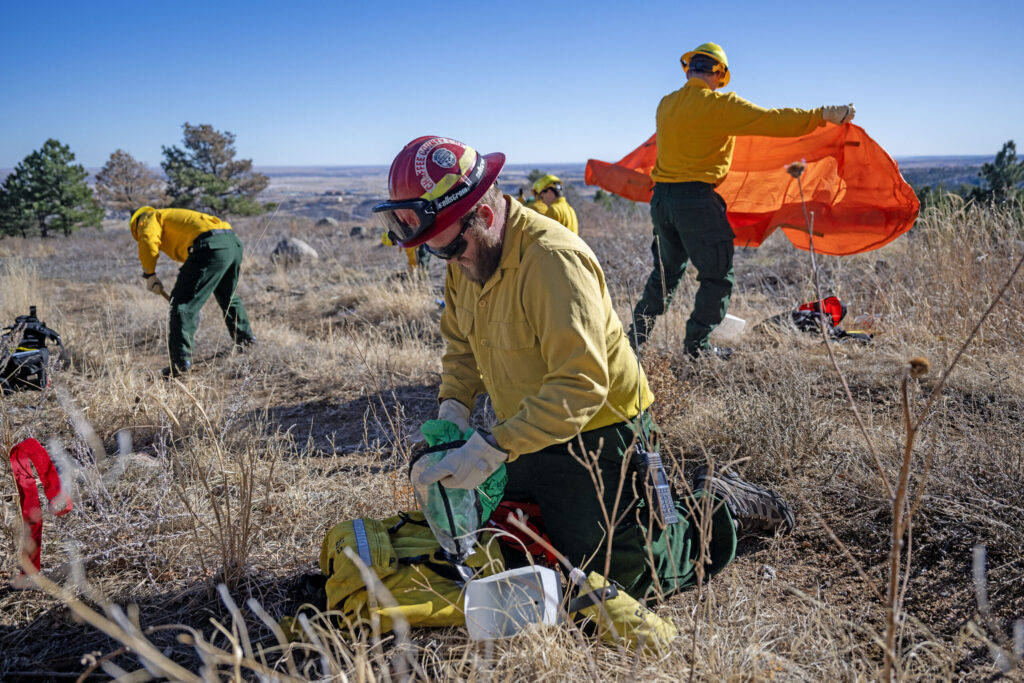
Jefferson County is one of the most at-risk counties for wildfires in the country, and the board of commissioners is attempting to lessen the danger. The Jefferson County commissioners approved updates to the Wildfire Resiliency Code on March 10, including...
Colorado ski resorts announce early closures amid historic snowpack lows, high temperatures
Kyla Pearce
kyla.pearce@gazette.com
Updated 3 days ago
As Colorado’s historically low snowpack year comes to a close and spring conditions take over the mountains, the state’s major ski resorts are announcing closing dates — some of which are weeks before historic closing dates. Most of Colorado’s ski...
PREV
PREVIOUS

Federal judge refuses to authorize immediate appeal in World Cup trafficking lawsuit
A federal judge declined to authorize an immediate appeal last week of a prior decision allowing companies operating out of Colorado to be sued for allegedly participating in a human trafficking venture involving Filipino laborers who constructed facilities for the 2022 World Cup in Qatar. Occasionally, trial judges’ decisions are subject to mid-case, or “interlocutory,” […]

Colorado farmers begin spring planting season with soaring fertilizer costs and price-gouging fears
As Colorado farmers prepare their fields for spring planting, many are sounding the alarm over fertilizer prices that have surged far beyond what they say global supply disruptions can explain. With nitrogen costs up 30% in a matter of days, growers and lawmakers are questioning whether the industry is using geopolitical conflict as cover for […]