

Colorado farmers begin spring planting season with soaring fertilizer costs and price-gouging fears
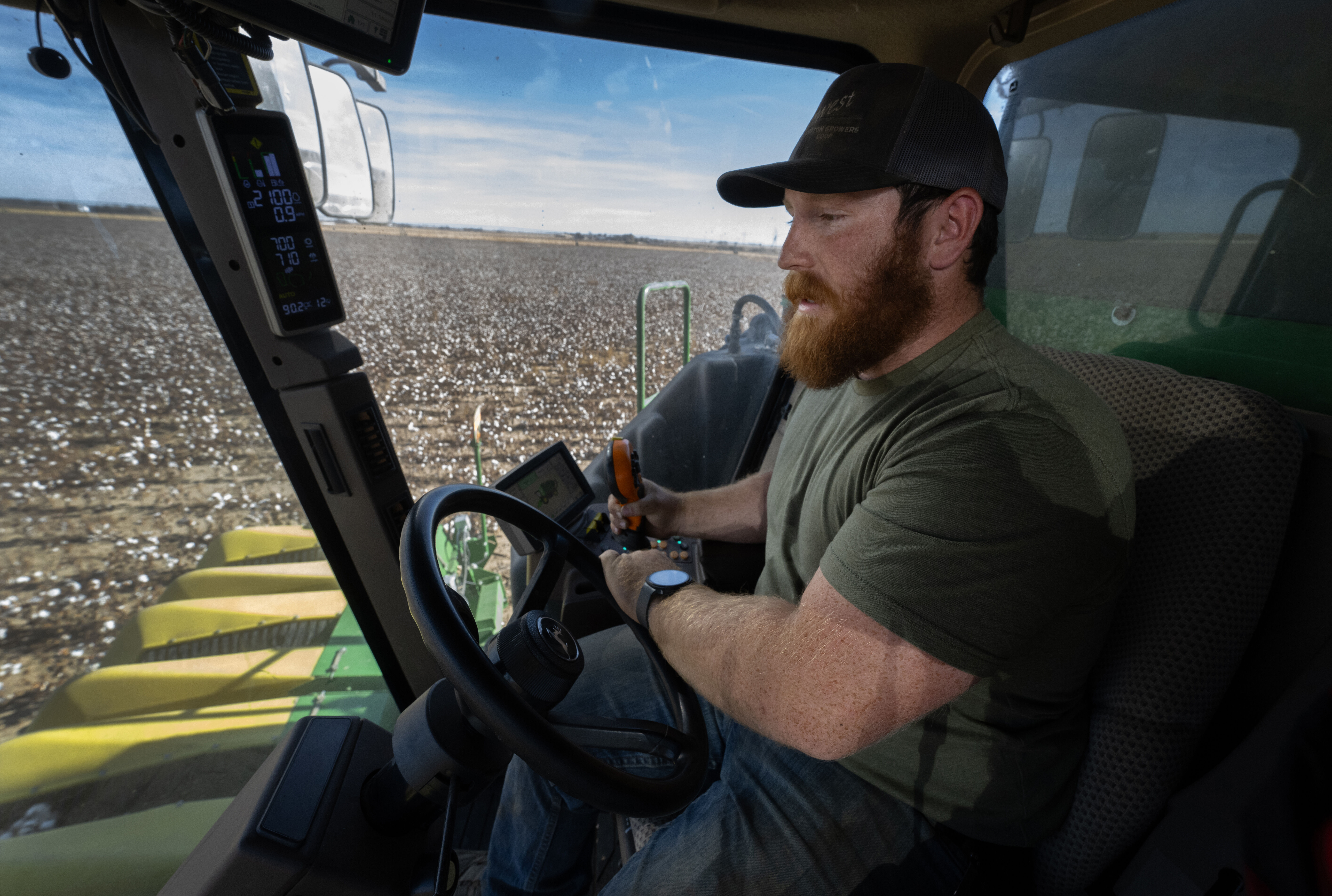
As Colorado farmers prepare their fields for spring planting, many are sounding the alarm over fertilizer prices that have surged far beyond what they say global supply disruptions can explain.
With nitrogen costs up 30% in a matter of days, growers and lawmakers are questioning whether the industry is using geopolitical conflict as cover for advantageous price gouging.
The two main costs that farmers are growing increasingly concerned over as seeds for spring planting are going into the ground include fuel and fertilizer.
The rapid price spikes are being attributed to the Trump administration’s decision to go to war with Iran, now entering its fourth week. In retaliation, Iran has closed the Strait of Hormuz, a critical global shipping corridor, raising fears about disruptions to international exports.
In Colorado, Roy Pfaltgraff farms 2,000 acres near Haxtun, growing over a dozen different crops, including heirloom corn, oats, grain sorghum, millet, sunflowers and black-eyed peas. He grows gluten-free crops, operates a milling operation to process them, and is also a beekeeper.
The Pfaltzgraff farm is a dryland operation, meaning no irrigation. Oats were planted last week, he told Colorado Politics, and that requires a lot of fertilizer, though his focus on soil health allows him to use less.
He’s also getting ready to plant some of his other crops, and called his fertilizer dealer to get a price. “I can’t quote you a price right now,” he was told.
A week after that call, he learned the price of nitrogen-based fertilizer had shot up 30%.
Fertilizer is one of the three main costs for farmers, along with herbicides and seeds. Altogether, Pfaltgraff estimated that fertilizer takes up about 25% of his input costs.
The cost of planting corn is increasing to more than $50 per acre, up from the previous range of $150 to $200 per acre.
Commodity prices, which are set by the market, are currently low, making it difficult for farmers to break even. The break-even price for corn is about $4.75 per bushel; anything lower means a loss. An average acre produces roughly 250 bushels, he said.
The price of corn last September was $4.24/bushel.
But Pfaltzgraff and other farmers who spoke to Colorado Politics said most fertilizer companies imported their nitrogen long before the war in Iran began, raising concerns about price gouging.
“Why are we seeing these huge increases in price in stuff that’s already in warehouses?” he asked, noting that only about 20% of the nitrogen fertilizer imported to the U.S. comes from the Middle East.
China and India have been the top producers of nitrogen fertilizer, with the United States and Russia next.
The attention to potential price-gouging has not gone unnoticed.
Missouri Republican Sen. Josh Hawley sent a letter to the top five fertilizer companies in the U.S. He wrote that “the price run-ups American farmers are facing far outpace any disruption from recent events. To be more specific, the percentage of U.S. fertilizer supply affected by issues in the Hormuz Strait appears to be minimal compared to the sudden change in prices.”
Hawley noted the industry consolidation, pointing out that “a small group of firms dominates the domestic market for nitrogen, phosphate, and potash.”
A coalition of 54 agricultural groups sent a letter last week to President Donald Trump, asking for market relief for America’s farmers and pointing out what has happened to fertilizer prices in recent weeks.
Potash, which is mined, is another fertilizer whose prices are raising questions. The biggest exporter to the United States is not the Middle East. It’s Canada, which supplies as much as 88% of the potash to the American market.
Prices for potash, a potassium-bearing compound used as fertilizer, have also spiked in recent weeks.
Justin Lewton runs a 35,000 dryland farm near Bennet, where his primary crop is wheat, although he also grows corn and millet.
He calls the price increases for fertilizer a farce, given that nitrogen comes from natural gas, phosphorus largely is mined in the U.S. and potassium mostly comes from Canada.
None of that goes through the Strait of Hormuz, he told Colorado Politics this week.
He also believes most of the fertilizer needed for this spring’s planting has been sitting in U.S. warehouses. “We shouldn’t be subject to massive price increases,” he said.
He also pointed to big profits for the largest U.S. fertilizer companies, saying he believes antitrust laws should be better enforced.
Lewton said he tried to prepay for his fertilizer in the past, but his supplier wouldn’t work with him.
He said he doesn’t blame the local retailers, who he said are doing an absolute service to customers by making things work, and don’t want to see their neighbors go out of business. It’s the higher-ups who are creating these conditions, he said.
As a self-proclaimed capitalist, Lewton said he doesn’t begrudge the companies for making profits, but it’s an issue he says is out of control.

Farmworker overtime bill advances after lengthy debate in Colorado Senate
Marianne Goodland
marianne.goodland@coloradopolitics.com
Updated 1 day ago
The Colorado Senate on Tuesday narrowly advanced a bill to raise the overtime threshold for agricultural workers, defeating more than a dozen amendments from its leading opponent aimed at rewriting the measure. As introduced, Senate Bill 121 would raise the threshold for...

Colorado Agriculture Day: A feast for the ears, eyes and stomachs
Marianne Goodland
marianne.goodland@coloradopolitics.com
Updated 1 day ago
Gov. Jared Polis, legislators and friends of agriculture gathered at the state Capitol on Tuesday to celebrate Colorado Agriculture Day. The annual recognition of the contributions of Colorado farmers, ranchers and agribusiness drew hundreds to the Capitol’s west foyer, where...
Colorado Senate committee advances bill increasing overtime threshold for farmworkers
Marianne Goodland
marianne.goodland@coloradopolitics.com
Updated 4 days ago
The struggle to balance farmworker protections with the survival of Colorado’s family farms took center stage Thursday as senators debated two competing overtime bills. The Senate Business, Labor and Technology Committee held a rare double-bill hearing that led to a...
Department of Agriculture warns of packages holding potentially invasive seeds
Michael Braithwaite
michael.braithwaite@gazette.com
Updated 2 weeks ago
Spring planting is around the corner, and the Colorado Department of Agriculture wants residents to know where their seeds are coming from. Officials with the department warned Tuesday that they received reports of unsolicited packages containing plant seeds mailed internationally...

More than 20 Colorado counties receive grants to improve land record-keeping systems
Maren Prince
maren.prince@denvergazette.com
Updated 3 weeks ago
More than 20 Colorado counties received a total of $2.5 million to improve their land record-keeping systems, according to a Monday news release. The State’s Electronic Recording Technology Board awarded 22 counties with grants ranging from $5,000 to $350,000, according...
JBS strike could trip up Greeley’s economic surge
Hap Fry, Special to The Gazette
hap-fry@gazette.com
Updated 1 month ago
GREELEY – The upward trajectory of Greeley has been hard to match by other Colorado communities in the here and now. The city is on the verge of experiencing dramatic growth and change. Greeley is in the midst of developing a...
A fight over seeds and bees: Colorado Democrats target neonicotinoid pesticides
Marianne Goodland
marianne.goodland@coloradopolitics.com
Updated 1 month ago
Colorado lawmakers are weighing new restrictions on a class of pesticides after Gov. Jared Polis signaled support for a Democratic-backed bill aimed at protecting pollinators — a proposal that has raised sharp worries from farmers who rely on treated seeds...
We tested vapes in Colorado for signs of hemp. This is what we found.
Christopher Osher
chris.osher@gazette.com
Updated 2 months ago
This article was produced for ProPublica’s Local Reporting Network in partnership with The Denver Gazette. Sign up for Dispatches to get our stories in your inbox every week. Leaders in the Colorado marijuana industry have complained in recent years that...

Colorado farmers warn U.S. Sen. John Hickenlooper tariffs and research cuts endanger agriculture
Marianne Goodland
marianne.goodland@coloradopolitics.com
Updated 2 months ago
Northern Colorado farmers told U.S. Sen. John Hickenlooper this week that tariffs and President Donald Trump’s decision to import $40 billion worth of beef from Argentina have hurt Colorado’s agricultural industry. But the administration’s cuts to scientific research are almost...

47th Citizen of the West: ‘Epitome of Western traditions and values’
Joanne Davidson Special to Colorado Politics
joanne-davidson-special-to-colorado-politics@coloradopolitics.com
Updated 2 months ago
The 47th Citizen of the West, George Eidsness, grew up on a farm in North Dakota where his appreciation for the Western way of life took shape as he rode horses, showed cattle in 4-H and shared in the often back-breaking chores necessary to maintain a farm. It was that hard work and a deep...
PREV
PREVIOUS

Federal judge refuses to authorize immediate appeal in World Cup trafficking lawsuit
A federal judge declined to authorize an immediate appeal last week of a prior decision allowing companies operating out of Colorado to be sued for allegedly participating in a human trafficking venture involving Filipino laborers who constructed facilities for the 2022 World Cup in Qatar. Occasionally, trial judges’ decisions are subject to mid-case, or “interlocutory,” […]

Colorado legislators consider $500 million in general fund cuts amid $1.5 billion deficit
The legislature’s Joint Budget Committee is working through a list Wednesday of about 150 suggestions to cut as much as $1.5 billion in general fund dollars out of next year’s budget. The largest on the list prepared by JBC staff is $198 million in cuts to the funding for the annual senior and disabled veterans […]