

What exactly makes you a public figure? | Hal Bidlack
Well, once again, this non-lawyer columnist is going to jump in the deep end of legal scholarship and will explore a recent Colorado Court of Appeals decision. Buckle up.
In yet another terrific Colorado Politics Court Crawl article, we learned about quite a few cases that the Appeals Court has ruled upon. Recall that only the state Supreme Court is above the appellate level. A lawyer friend once explained it to me as what he called the “10% rule”: about 90% of cases are decided at the district court, or lowest level of the judicial system. About 10% of decision there get appealed to the Appeals court (so that’s where the name came from!), with about 90% of appealed cases ending there. About 10% of appellate court decisions are appealed to the Supreme court. That basically means for the vast majority of cases, final decisions are issued at lower-level courts.
The CoPo article covers quite a few interesting cases that may have escaped your view initially. In yet another case in which the courts have been asked to balance free speech rights, the appellate court ruled a person saying nasty and unkind things to a judge when they both happened to be in the same elevator was engaged in a form of protected speech and the judge could not, therefore, sue the nasty person. I’m tempted to call this elevator case an uplifting decision, but my kindly editor hates it when I do that (Ed: wait… what?).
But the case I want to focus on a bit is another interesting free speech vs. criminal speech. A while back, during a forum for candidates running for school board here in Colorado Springs, one candidate talked about banned books a bit, and a person in the audience was deeply offended, apparently. This individual began referring to the candidate, based on, well, nothing, as a “predator” and other nasty things about children being unsafe around him.
Now, that is pretty outrageous, and it would seem to me to be a very good candidate for a defamation case, but the Colorado Appeals Court ruled, not so much. As reported, “Colorado’s second-highest court ruled last week that a public figure cannot sue for defamation solely because a person publicly accuses them of committing a crime, as the statement may be constitutionally protected opinion.”
For most of my life, I’ve understood the defamation world to revolve around two basic determinations in cases involving non-famous people, and a tad different for public figures. In the first case, I thought that defamation required the person making the statement to first, know that the statement was false, and second, that damage was done by the false statements.
But for public figures, courts have ruled the person making the statements knew they were false and proceeded anyway, with malice.
Who is a public figure is an interesting question. Back when I was teaching at the AF Academy, I taught my students about Oliver Sipple and his “public figure” status. Back in 1975, Sipple happened to be next to Sara Jane Moore, outside a building that then-President Gerald Ford would soon exit. Upon seeing Ford, Moore drew a pistol and attempted to shoot at the president. Sipple reacted instantly, grabbing Moore and forcing her pistol up and her shots fell harmlessly elsewhere. He had saved the president. Understandably, the press was interested in Sipple, and found it interesting, and therefore reported widely, that Sipple was gay. The problem was that Sipple hadn’t told his fundamentalist family about his sexual orientation, and he was promptly disowned and estranged from his family.
Sipple later sued, claiming his privacy rights were violated. The courts held that, when Sipple grabbed Moore’s arm, he was essentially volunteering to be a public figure, and his lawsuits were dismissed. His life spiraled downwards, and he would die at only 47 years old, alone with a bottle of Jack Daniel’s next to him, a public figure. His life was destroyed by his act of heroism.
In my own case, I know I did, in fact, volunteer to be a public figure when I ran for Congress and when I started writing these columns. But the person who was, well, in my view harassing the school board candidate, was not a public figure apparently, even though her actions seem to be attention-getting. Therefore, a determination of malice wasn’t required.
Though, thanks to Alexander Hamilton, truth is an absolute defense against defamation cases, in this case, as explained by one of the judges, “The line between fact and opinion can grow blurry when one person accuses another — particularly a public figure — of committing a crime, but there is a difference between falsely accusing someone of committing a criminal act and expressing the view that an act the person indisputably undertook violates the law.”
Overall, I think I agree with the courts. As I’ve said before, I think of myself as a Hugo Black absolutist when it comes to free speech. I fully understand the school board candidate’s frustration with a total stranger attempting a most vile smear, but protecting such speech is the price we pay to ensure that all speech, and especially political speech, is protected.
During my run for Congress back in 2008, I picked up a stalker who argued then-President George W. Bush was actually the mastermind behind the attacks on Sept. 11, 2001. When I rejected that nonsensical claim, the individual involved started harassing me on the campaign trail and, most atrociously, at home, where his many, many harassing phone calls scared my kids. But my status as a public figure ended any legal recourse on my part.
I’m sure you’ve heard it said that the test of whether you truly believe in free speech comes down to whether or not you defend speech that you personally find vile and horrible. And it’s hard to imagine any more vile charge than being accused of crimes against children. Yet, as noted by the Colorado Appellate Court, such speech is nearly always protected. I will be curious if the case gets appealed to the state supreme court, and if they would even accept the case for consideration. In the meantime, you may want to consider whether your actions make you a public figure, as it might matter if things turn out poorly.
Stay tuned.
Hal Bidlack is a retired professor of political science and a retired Air Force lieutenant colonel who taught more than 17 years at the U.S. Air Force Academy in Colorado Springs.


Killing off the Regional Transportation District | Miller Hudson
Miller Hudson
miller-hudson@coloradopolitics.com
Updated 21 minutes ago
This column is appearing the same day state Sen. Matt Ball (D) of Denver and his legislative co-sponsors unveil legislation implementing many of the recommendations advanced by last summer’s Regional Transportation District Accountability Committee. Although it isn’t readily apparent, they...

Green energy shouldn’t come at expense of Colorado farmers, ranchers feeding us | Rachel Gabel
Rachel Gabel
rachel-gabel@coloradopolitics.com
Updated 15 minutes ago
In 2023, the Department of Energy released the National Interest Electric Transmission Corridors (NIETC) study identifying areas they speculate would experience transmission capacity constraints of congestion. The map identified more than 2 million acres or 24% of the state of...
Bill in state legislature would put large apartment projects in single-family neighborhoods | Cronin & Loevy
Tom Cronin Bob Loevy
tom-cronin-bob-loevy@coloradopolitics.com
Updated 9 minutes ago
There is an old joke that goes something like this: “When the state legislature is in session, no person and their property are safe.” That is not a joke in the older, more traditional neighborhoods that surround the downtown regions...

Colorado hates its disabled citizens | Jon Caldara
Jon Caldara
jon-caldara@coloradopolitics.com
Updated 3 days ago
This is a selfish column. The legislature is about to hurt my disabled son. My son, Chance, has Down syndrome and a few years ago would have been labeled “retarded.” Then “developmentally delayed.” Now the hypersensitive prefer “intellectually disabled.” Whatever...
Phil Weiser wins top spot in Colorado’s Democratic gubernatorial primary at party’s state assembly
Ernest Luning
ernest.luning@coloradopolitics.com
Updated 1 day ago
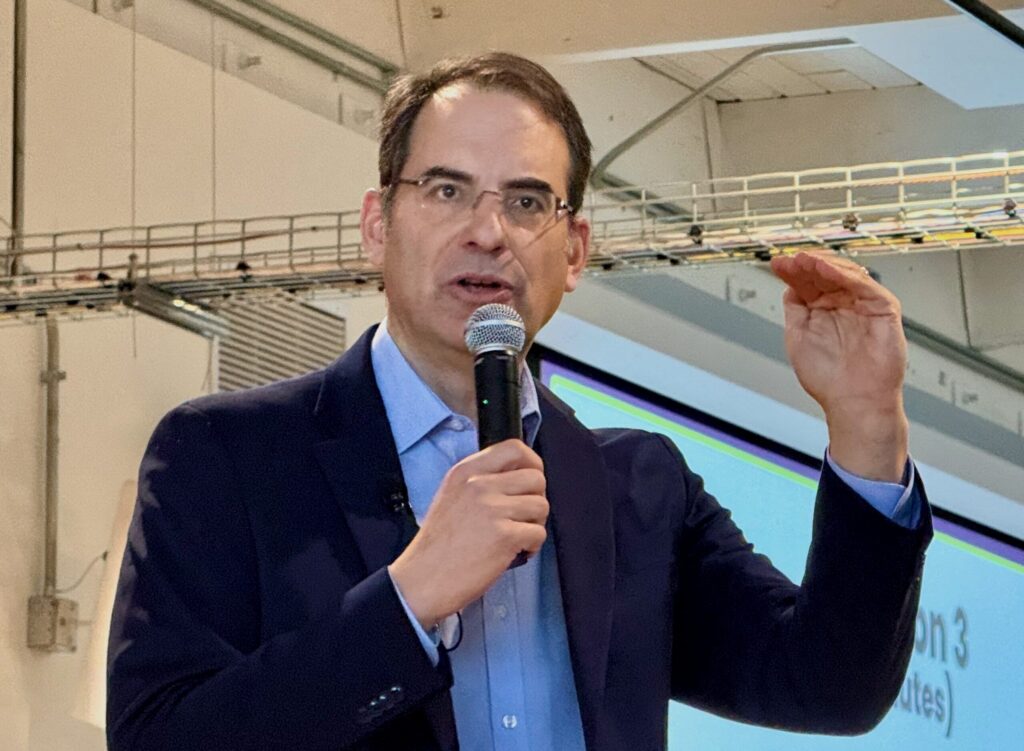
Attorney General Phil Weiser’s name will appear first on Colorado’s Democratic gubernatorial primary ballot after his overwhelming win Saturday at the party’s state assembly in Pueblo. Weiser joins U.S. Sen. Michael Bennet in the June 30 primary for the office...
Denver Democrat Diana DeGette trails challenger Melat Kiros at assembly as both qualify for primary
Ernest Luning
ernest.luning@coloradopolitics.com
Updated 2 days ago
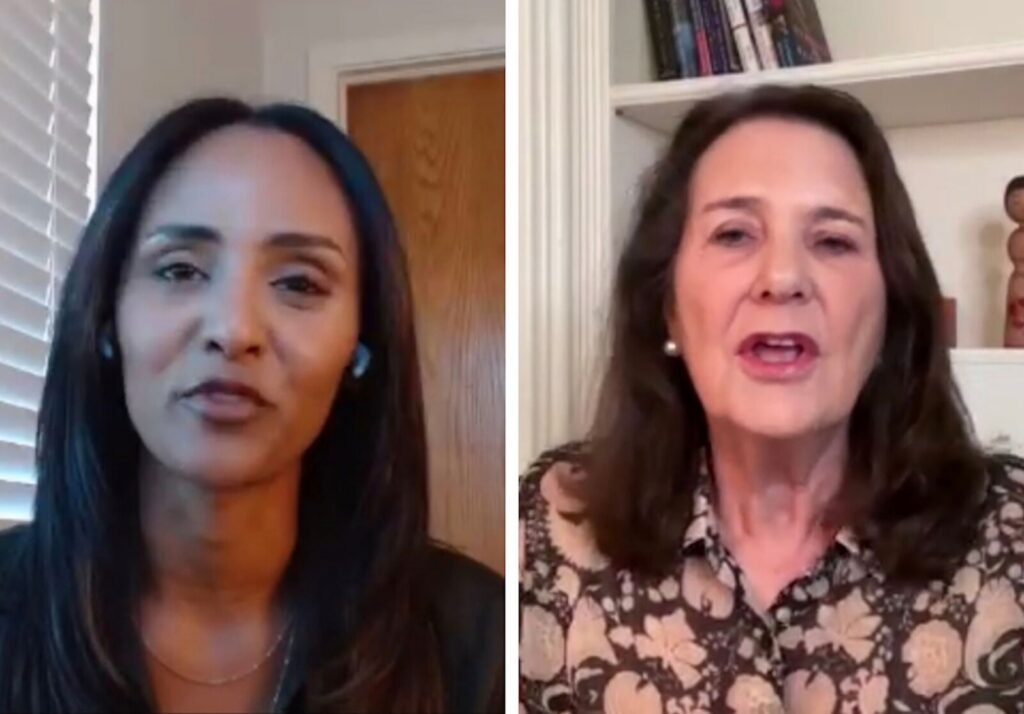
U.S. Rep Diana DeGette, a Denver Democrat, qualified for Colorado’s June primary by the skin of her teeth Friday at the party’s district assembly, where the 15-term incumbent received fewer than half as many delegate votes as her challenger, 28-year-old...
Federal judge upholds constitutionality of Colorado campaign contribution limits
Michael Karlik
michael.karlik@coloradopolitics.com
Updated 2 days ago
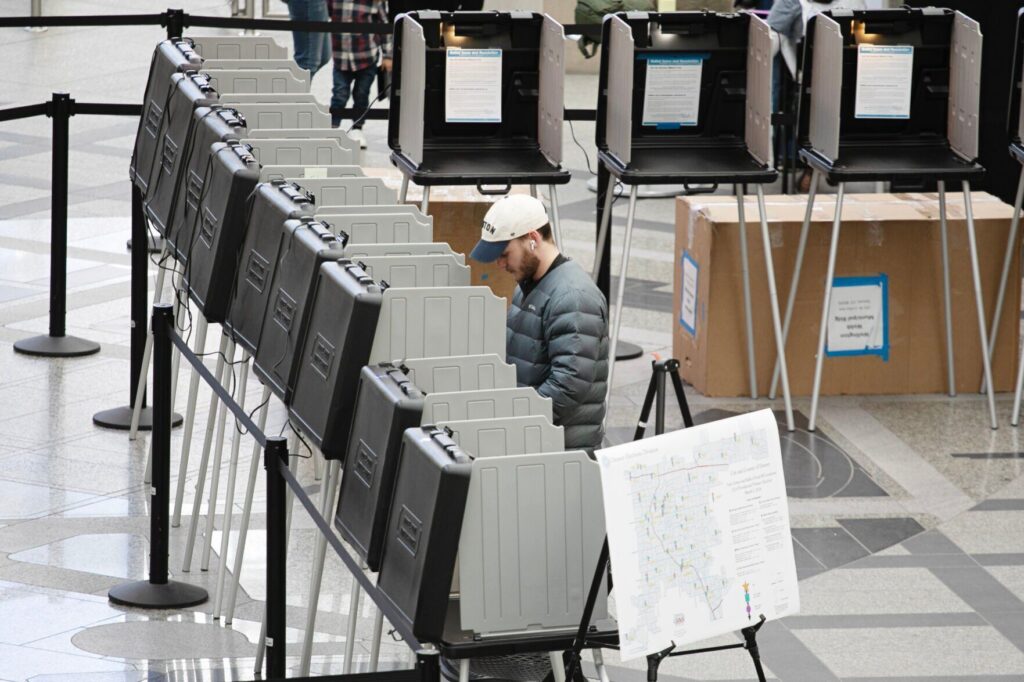
A federal judge upheld Colorado’s individual campaign contribution limits as constitutional on Thursday, finding that three Republican plaintiffs failed to prove the campaign finance framework violates their First Amendment rights. U.S. District Court Senior Judge John L. Kane recognized that...
Seligman, Bridges, Gonzales lead downballot races heading into Colorado Democrats’ state assembly
Ernest Luning
ernest.luning@coloradopolitics.com
Updated 2 days ago
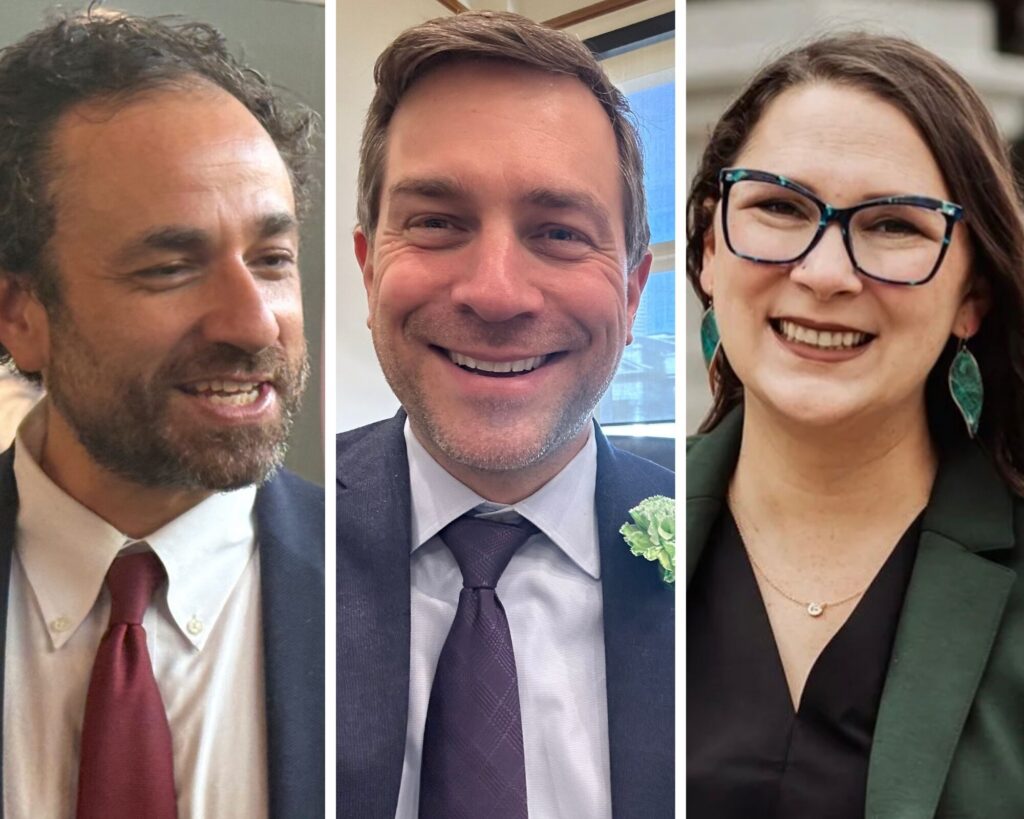
As Colorado Democrats prepare to designate candidates to the June primary ballot at the party’s state assembly in Pueblo on Saturday, three candidates appear poised to win top-line designation in downballot statewide races, according to data compiled by the state...
Planned Parenthood, groups launch campaign against transgender ballot measures in Colorado
Marissa Ventrelli
marissa.ventrelli@coloradopolitics.com
Updated 2 days ago
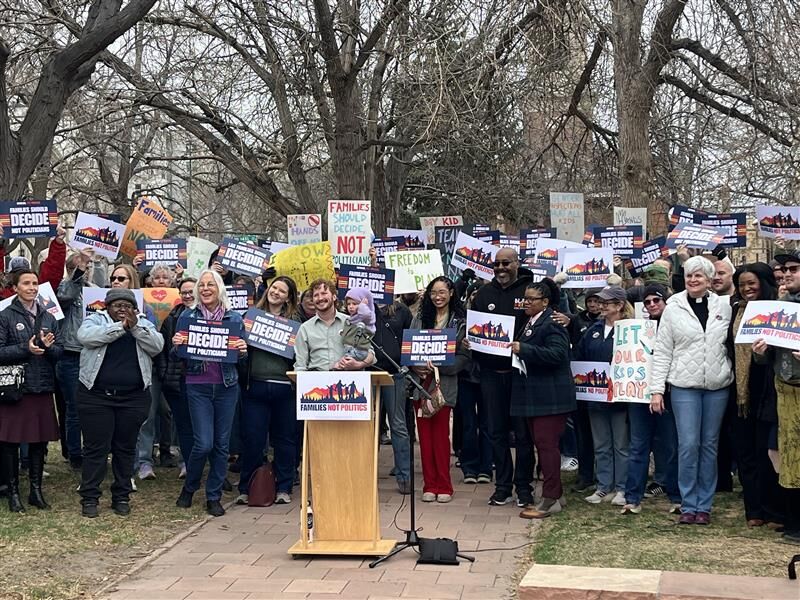
Planned Parenthood and other groups have launched a coalition to oppose two ballot measures that would ban transgender surgeries among children and require student athletes to only join sports teams that correspond to their biological sex. The two measures will...
From pause to progress — a better path on AI policy | OPINION
Colorado Politics
colorado-politics@coloradopolitics.com
Updated 3 days ago
By Brittany Morris Saunders and Loren Furman Last year, following the Special Legislative Session, we wrote in Colorado Politics that delaying Colorado’s AI Act was not a setback. It was an opportunity. We asked state leaders to pause, bring more...
PREV
PREVIOUS
Modernizing Pinnacol is about its members, not politics | IN RESPONSE
By Akasha Absher While we share the passion for protecting Colorado’s workers expressed in a recent op-ed from the perspective of trial attorneys and union representatives, the piece paints a picture of Pinnacol Assurance that is more rooted in 1915 than our 21st-century reality (“Colorado’s workers can’t afford a privatized Pinnacol | OPINION,” March 17). […]

Hickenlooper primary challenger Julie Gonzales endorsed by national progressive group Indivisible
State Sen. Julie Gonzales’ bid to challenge U.S. Sen. John Hickenlooper in Colorado’s Democratic primary got a boost Tuesday from Indivisible when the national arm of the progressive grassroots group endorsed the Denver lawmaker. The national group’s endorsement comes less than a week before Gonzales is expected to land a top-line designation on the June […]