

Federal judge dismisses background screeners’ challenge to Colorado law

A federal judge dismissed a challenge on Friday to a portion of Colorado law that prohibits certain information from being included in consumer reports, in what seemed to be a conflict with federal law.
Congress originally enacted the Fair Credit Reporting Act in 1970, with the goal of requiring consumer reporting agencies to adopt reasonable procedures for collecting information for use by insurance companies, employers, landlords, and others.
Among other things, the law prohibits consumer reporting agencies from including civil lawsuits and arrest records that are generally more than seven years old. Criminal convictions from any time can be included.
Finally, the law bars states from enacting their own prohibitions on topics regulated by the Fair Credit Reporting Act.
In January 2025, the Professional Background Screening Association sued Attorney General Phil Weiser. The organization argued that two provisions of the Colorado Consumer Credit Reporting Act conflict with their federal counterpart:
- A 1997 requirement that prohibits the inclusion of convictions more than seven years old
- A 2022 prohibition on the reporting of criminal records that resulted in no conviction
“Colorado’s attempt to override Congress’s careful decision-making regarding the contents of consumer reports threatens the national uniformity in consumer reporting regulation Congress has endeavored to ensure,” wrote attorney Justin D. Balser. “Colorado has forced consumer reporting agencies to undertake the burden of developing, implementing, and continuing to maintain regulatory compliance procedures for consumer reports issued in Colorado that are separate and distinct from the procedures used for reports issued elsewhere.”
Weiser moved to dismiss the lawsuit, arguing that the trade association had not identified any member company that would be imminently harmed by the provisions, including one that had existed for nearly 30 years. Further, Weiser noted the state attorney general plays no role in enforcing the challenged requirements.
“The CCRA does not confer on the Attorney General enforcement authority over its restrictions on consumer report contents. Instead, the CCRA provides for private enforcement,” wrote Assistant Solicitor General Talia Kraemer. “The Complaint does not identify any instance in which the Attorney General or any other entity or individual has enforced, or threatened to enforce, those provisions against PBSA’s members over the years in which they have been in effect.”
In a March 20 order, U.S. District Court Judge Philip A. Brimmer agreed with Weiser.
“The CCRA gives consumers the right to bring a private action to enforce the CCRA. Nothing in the CCRA expressly grants the Attorney General the authority to enforce its provisions,” he wrote.
Although the background screeners’ association attached press releases in which Weiser said that private complaints “inform our consumer protection work,” Brimmer wrote that such comments from the attorney general did not show an obligation to enforce the specific provisions being challenged.
“A press release is not a binding interpretation of the law,” Brimmer wrote.
The case is Professional Background Screening Association v. Weiser.


10th Circuit rejects ‘penalty’ for children of naturalized citizens seeking visas
Michael Karlik
michael.karlik@coloradopolitics.com
Updated 22 hours ago
The Denver-based federal appeals court joined three of its peers earlier this month and determined the child of a newly naturalized U.S. citizen is not moved to a longer visa line as a result of his parent gaining citizenship, and...
Appeals court recognizes longer window to sue insurers for withholding policy details
Michael Karlik
michael.karlik@coloradopolitics.com
Updated 17 hours ago
Colorado’s second-highest court split with its own prior decision earlier this month and concluded injured motorists have two years, not one, to sue insurance companies for withholding relevant information about an at-fault driver’s policy. In 2019, Colorado lawmakers enacted a measure to...

Appeals court decides free speech cases, error-prone judge reversed again | COURT CRAWL
Michael Karlik
michael.karlik@coloradopolitics.com
Updated 1 day ago
Welcome to Court Crawl, Colorado Politics’ roundup of news from the third branch of government. The state’s Court of Appeals decided multiple cases implicating free speech rights, plus Colorado’s most error-prone judge was reversed on appeal yet again. Heard on...

Federal judge dismisses claims against medical contractor for Eagle County jail suicide
Michael Karlik
michael.karlik@coloradopolitics.com
Updated 4 days ago
A federal judge dismissed the claims against a medical contractor for the Eagle County jail and its employees earlier this month, concluding there were insufficient allegations that they violated the constitutional rights of a man who died by suicide in...

Federal judge advances lawsuit seeking overtime compensation for Aurora firefighter trainees
Michael Karlik
michael.karlik@coloradopolitics.com
Updated 21 hours ago
A federal judge gave preliminary approval earlier this month to a class of Aurora firefighter trainees who may sue the city over allegations that they were denied overtime pay in violation of federal law. Joseph Elias, who attended Aurora’s fire...
Appeals court says jury not obligated to apply discounts to determine value of stolen merch
Michael Karlik
michael.karlik@coloradopolitics.com
Updated 21 hours ago
Colorado’s second-highest court concluded on Thursday that it was up to a Douglas County jury to determine the value of stolen merchandise at a defendant’s theft trial, after both sides presented different estimates of the items’ value. Under state law,...
Public figures have limited path to sue over accusations of criminality, says appeals court
Michael Karlik
michael.karlik@coloradopolitics.com
Updated 4 days ago
Colorado’s second-highest court ruled last week that a public figure cannot sue for defamation solely because a person publicly accuses them of committing a crime, as the statement may be constitutionally protected opinion. A three-judge Court of Appeals panel narrowed...
Federal judge to consider sanctioning ex-Colorado judicial discipline director
Michael Karlik
michael.karlik@coloradopolitics.com
Updated 5 days ago
A federal judge ordered Colorado’s former head of judicial discipline on Wednesday to explain why she should not sanction him for making inaccurate statements about the defendants in his lawsuit against the Colorado Supreme Court and related entities. U.S. District...

Federal judge green-lights trial against Denver officer over race-based enforcement
Michael Karlik
michael.karlik@coloradopolitics.com
Updated 4 days ago
A federal judge green-lit a jury trial last week on a man’s claim that a Denver police officer engaged in racially selective enforcement of the law by arresting him for video recording at a police station, while not arresting a...
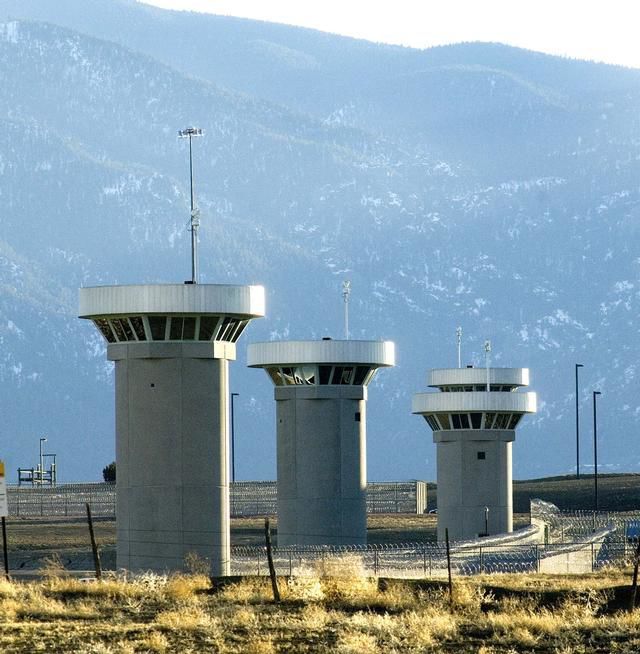
Federal judge says 8 years in solitary confinement not grounds to reduce man’s sentence
Michael Karlik
michael.karlik@coloradopolitics.com
Updated 6 days ago
A federal judge concluded earlier this month that a man’s eight years allegedly spent in solitary confinement did not justify granting his request for a sentence reduction. However, U.S. District Court Senior Judge William J. Martínez signaled his willingness to...
PREV
PREVIOUS
Wildlife agency asks for $450,000 to bring more wolves to Colorado
Colorado’s Joint Budget Committee on Monday rejected a proposal that proponents said would increase transparency around how much Colorado Parks and Wildlife spends to bring additional wolves into the state. At the same time, the wildlife agency is seeking $450,000 in general funds for 2026–27 — twice what it spent in 2025 — to acquire […]

Pueblo man held in Afghanistan for more than a year released, Taliban says
KABUL, Afghanistan — Afghanistan’s Taliban authorities on Tuesday released American academic Dennis Coyle after holding him for over a year, with the foreign ministry saying the release came on the occasion of Eid al-Fitr, the Muslim holiday that marks the end of the Islamic holy month of Ramadan. A statement from the ministry said the academic researcher had […]