

Those who cannot live without wild things | Rachel Gabel
Aldo Leopold wrote in his Sand County Almanac, “There are some who can live without wild things and some who cannot.” The collection of essays first published in 1949 was accepted by a publishing house after a steady stream of rejections. His work long outlived him as Leopold died of a heart attack while fighting a grass fire just a week later. He wrote conservation is difficult because land is regarded as a commodity belonging to us rather than a community to which we belong, treated with love and respect. Farmers, ranchers, hunters, anglers, outdoor recreationists and others unable to live without wild things make up the community actively involved in conservation — and damned for it by people who live much further from the land but purport to know better.
These people are most at home far from a parcel of farm ground purchased and turned into an ill-fated development full of ragged orange plastic safety fence, tumbleweeds and prairie dogs. They thrive far from range once grazed carefully by a man with a good dog, an eye for rain clouds, lupine and a deep appreciation for short grasses, salt and the stream of water pumped by a windmill now growing only houses and gas stations.
Leopold, undoubtedly with a Spaniel at his side and binoculars around his neck, joined the U.S. Forest Service shortly after it was established and published “Game Management,” the first textbook on wildlife management. Having written the book in quite the literal sense, he drilled down on the concepts of managing populations, habitats and interrelationships as a whole, rather than in isolation; sustainable population densities; ethical hunting practices and habitat stewardship; the integration of forestry, agriculture, and wildlife management practices for the best outcome; the sustained yield of game animals; and the importance of research and data collection to inform management decisions.
A man of the same era, Gifford Pinchot was the first chief of the National Forest Service, the agency Leopold joined in 1909. Pinchot’s family sought and found their fortune selling products from forests and knew a well-managed forest sustained the families and communities dependent upon it as well as the forest itself. Pinchot understood and worked within both the Roosevelt and Taft administrations to promote efficiency in resource use through the use of the entirety of felled trees.
Pinchot, who said it was “a greater thing to be a good citizen than to be a good Republican or a good Democrat” understood efficient use and conservation are complimentary. His multiple use concept is still the center of many a fight today. He led his forestry work with data and studies, perhaps hinting at his understanding when he said, “Learning is the gradual replacement of fantasy with fact.”
Theodore Roosevelt created the U.S. Forest Service and then tapped Pinchot to lead it, shared much more with Pinchot than just the moustache and occasional bow tie. During his presidency, he created five national parks, 18 national monuments and 150 national forests, protecting more than 230 million acres of public land. He did so by placing professionals like Pinchot and Leopold in key positions to lead where the data and studies took them.
Just north of the nation’s first wilderness area, established by Leopold in the Gila National Forest, Colorado’s first wildlife law was passed in 1861 prohibiting the take of “trout by seine, net, basket, or trap.” By 1876, the first Fish Commissioner was appointed, and fish hatcheries were established around the Front Range and western portions of the state. The Colorado Department of Forestry, Game and Fish was established in 1897.
Prior to 1920, the agency received an appropriation from the General Assembly before becoming funded by licenses, permits and fines. Today, the agency known as Colorado Parks and Wildlife is funded entirely by the sale of licenses, permits, federal grants, and recreation programs.
Using a staff of wildlife biologists and professional wildlife managers, the agency began a long line of wildlife wins. The first was bringing the 1910 elk herd from an estimated 500 to 1,000 head to today’s herd of nearly 300,000 from the original herd and 350 elk relocated from Jackson Hole, Wyoming from 1912 to 1928. Bighorn sheep conservation followed, and on that management success, came lynx, black-footed ferrets, greenback cutthroat trout and the science-based management of more than 900 species.
Today’s professional wildlife managers and keepers of the habitats that allow the greatest good to the greatest number of people for the longest time are following the lead of Leopold, Pinchot and Roosevelt. Those who cannot live without wild things know the resources and their responsible, science-based management are the inheritance to all and the defense of wise management is the debt owed to the visionaries.
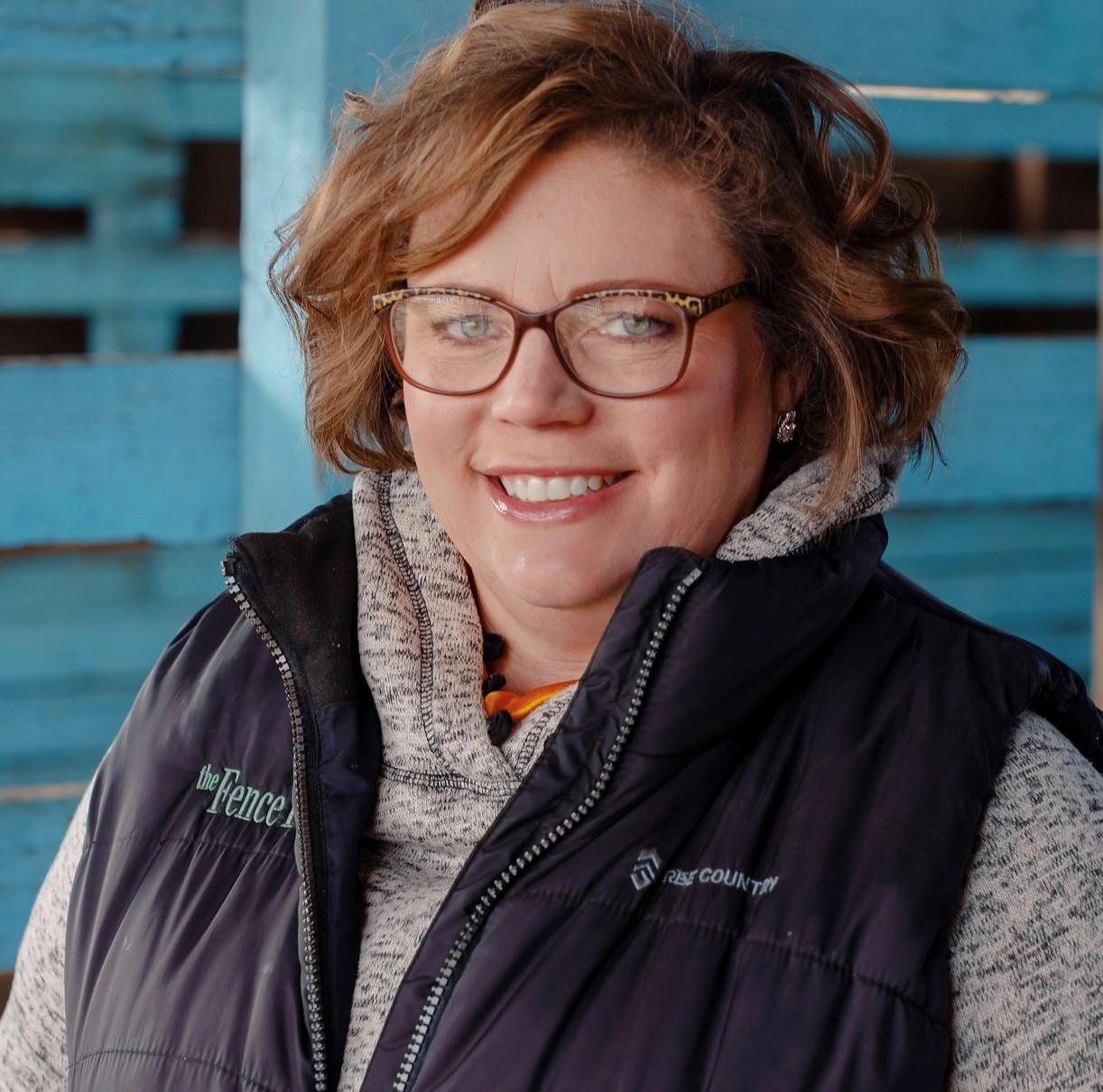
Rachel Gabel writes about agriculture and rural issues. She is assistant editor of The Fence Post Magazine, the region’s preeminent agriculture publication.


Killing off the Regional Transportation District | Miller Hudson
Miller Hudson
miller-hudson@coloradopolitics.com
Updated 19 minutes ago
This column is appearing the same day state Sen. Matt Ball (D) of Denver and his legislative co-sponsors unveil legislation implementing many of the recommendations advanced by last summer’s Regional Transportation District Accountability Committee. Although it isn’t readily apparent, they...

Green energy shouldn’t come at expense of Colorado farmers, ranchers feeding us | Rachel Gabel
Rachel Gabel
rachel-gabel@coloradopolitics.com
Updated 13 minutes ago
In 2023, the Department of Energy released the National Interest Electric Transmission Corridors (NIETC) study identifying areas they speculate would experience transmission capacity constraints of congestion. The map identified more than 2 million acres or 24% of the state of...
Bill in state legislature would put large apartment projects in single-family neighborhoods | Cronin & Loevy
Tom Cronin Bob Loevy
tom-cronin-bob-loevy@coloradopolitics.com
Updated 7 minutes ago
There is an old joke that goes something like this: “When the state legislature is in session, no person and their property are safe.” That is not a joke in the older, more traditional neighborhoods that surround the downtown regions...

Colorado hates its disabled citizens | Jon Caldara
Jon Caldara
jon-caldara@coloradopolitics.com
Updated 3 days ago
This is a selfish column. The legislature is about to hurt my disabled son. My son, Chance, has Down syndrome and a few years ago would have been labeled “retarded.” Then “developmentally delayed.” Now the hypersensitive prefer “intellectually disabled.” Whatever...
Phil Weiser wins top spot in Colorado’s Democratic gubernatorial primary at party’s state assembly
Ernest Luning
ernest.luning@coloradopolitics.com
Updated 1 day ago
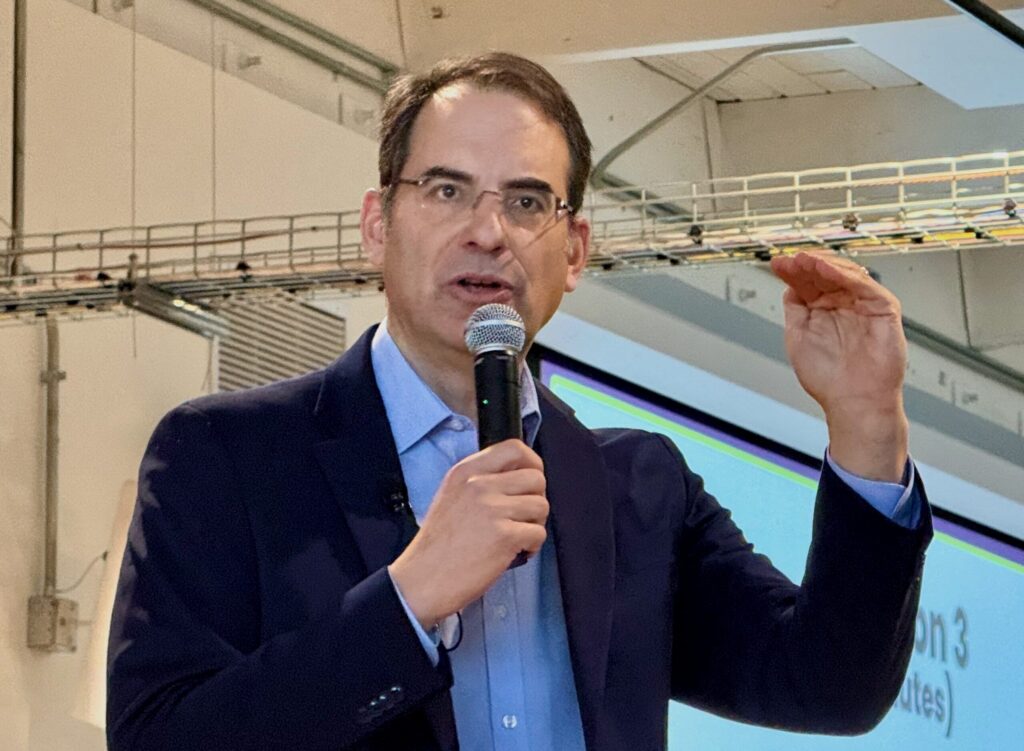
Attorney General Phil Weiser’s name will appear first on Colorado’s Democratic gubernatorial primary ballot after his overwhelming win Saturday at the party’s state assembly in Pueblo. Weiser joins U.S. Sen. Michael Bennet in the June 30 primary for the office...
Denver Democrat Diana DeGette trails challenger Melat Kiros at assembly as both qualify for primary
Ernest Luning
ernest.luning@coloradopolitics.com
Updated 2 days ago
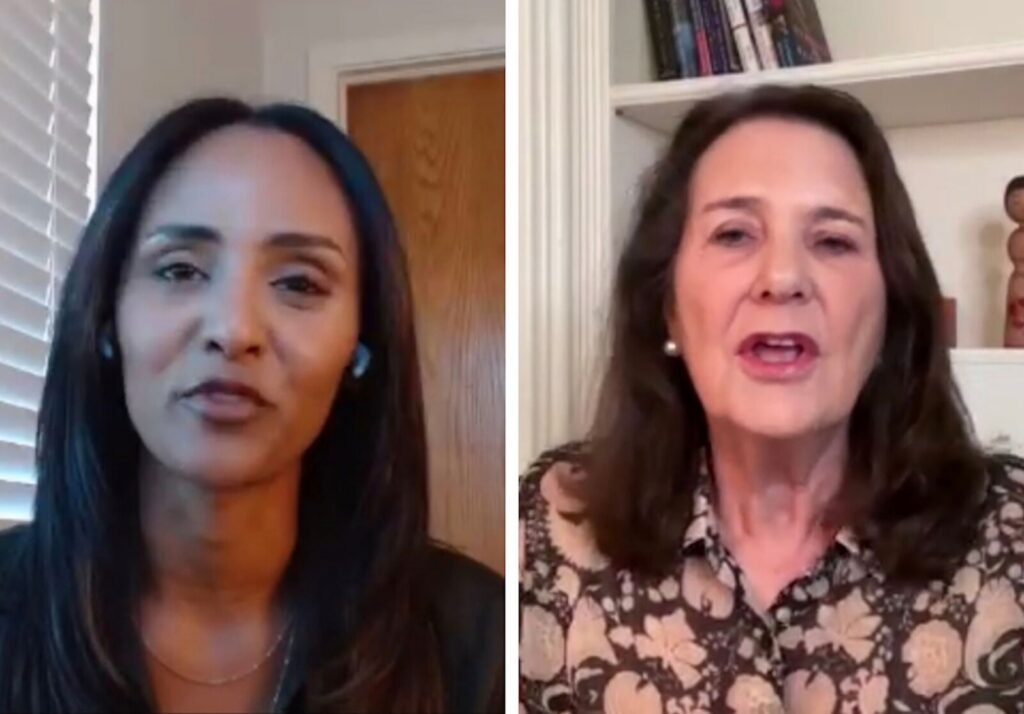
U.S. Rep Diana DeGette, a Denver Democrat, qualified for Colorado’s June primary by the skin of her teeth Friday at the party’s district assembly, where the 15-term incumbent received fewer than half as many delegate votes as her challenger, 28-year-old...

Federal judge upholds constitutionality of Colorado campaign contribution limits
Michael Karlik
michael.karlik@coloradopolitics.com
Updated 2 days ago
A federal judge upheld Colorado’s individual campaign contribution limits as constitutional on Thursday, finding that three Republican plaintiffs failed to prove the campaign finance framework violates their First Amendment rights. U.S. District Court Senior Judge John L. Kane recognized that...
Seligman, Bridges, Gonzales lead downballot races heading into Colorado Democrats’ state assembly
Ernest Luning
ernest.luning@coloradopolitics.com
Updated 2 days ago
As Colorado Democrats prepare to designate candidates to the June primary ballot at the party’s state assembly in Pueblo on Saturday, three candidates appear poised to win top-line designation in downballot statewide races, according to data compiled by the state...
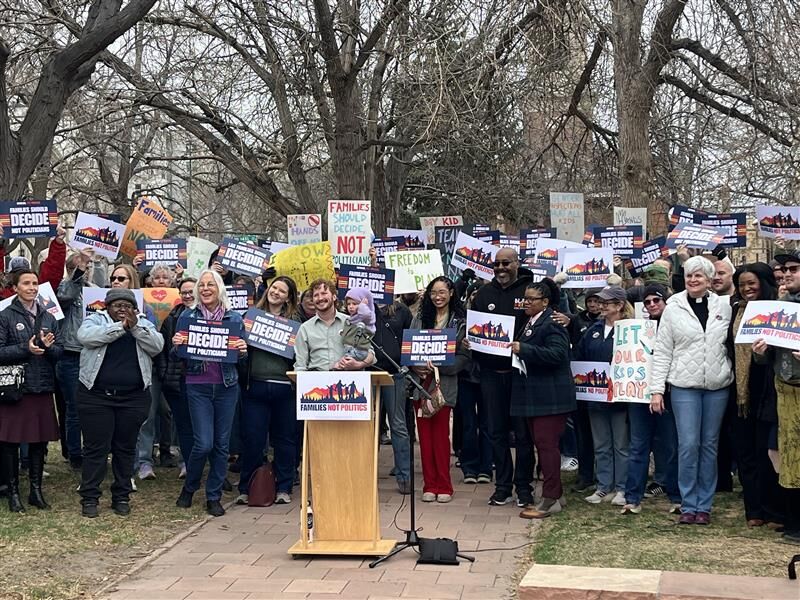
Planned Parenthood, groups launch campaign against transgender ballot measures in Colorado
Marissa Ventrelli
marissa.ventrelli@coloradopolitics.com
Updated 2 days ago
Planned Parenthood and other groups have launched a coalition to oppose two ballot measures that would ban transgender surgeries among children and require student athletes to only join sports teams that correspond to their biological sex. The two measures will...
From pause to progress — a better path on AI policy | OPINION
Colorado Politics
colorado-politics@coloradopolitics.com
Updated 3 days ago
By Brittany Morris Saunders and Loren Furman Last year, following the Special Legislative Session, we wrote in Colorado Politics that delaying Colorado’s AI Act was not a setback. It was an opportunity. We asked state leaders to pause, bring more...
PREV
PREVIOUS

Thank God for Wyoming — the un-Colorado | Jon Caldara
Years ago, I interviewed a Canadian health-care broker whose job was helping his countrymen escape their own failing system. When their “free” health care turned into “free to wait until you die,” he’d save his clients by routing them to doctors in the U.S. who’d accept cash and rescue their lives. I asked him what […]

What kind of energy independence did we pay for? | Miller Hudson
It was during the summer of 1972 AT&T published an internal solicitation for installation and repair supervisors with “inner-city” experience to transfer to Mountain Bell. The catch was an applicant’s readiness to work 10 hours a day, six days a week during the first year in Denver. On the plus side, although a salaried manager, […]