

Colorado Senate committee advances bill increasing overtime threshold for farmworkers
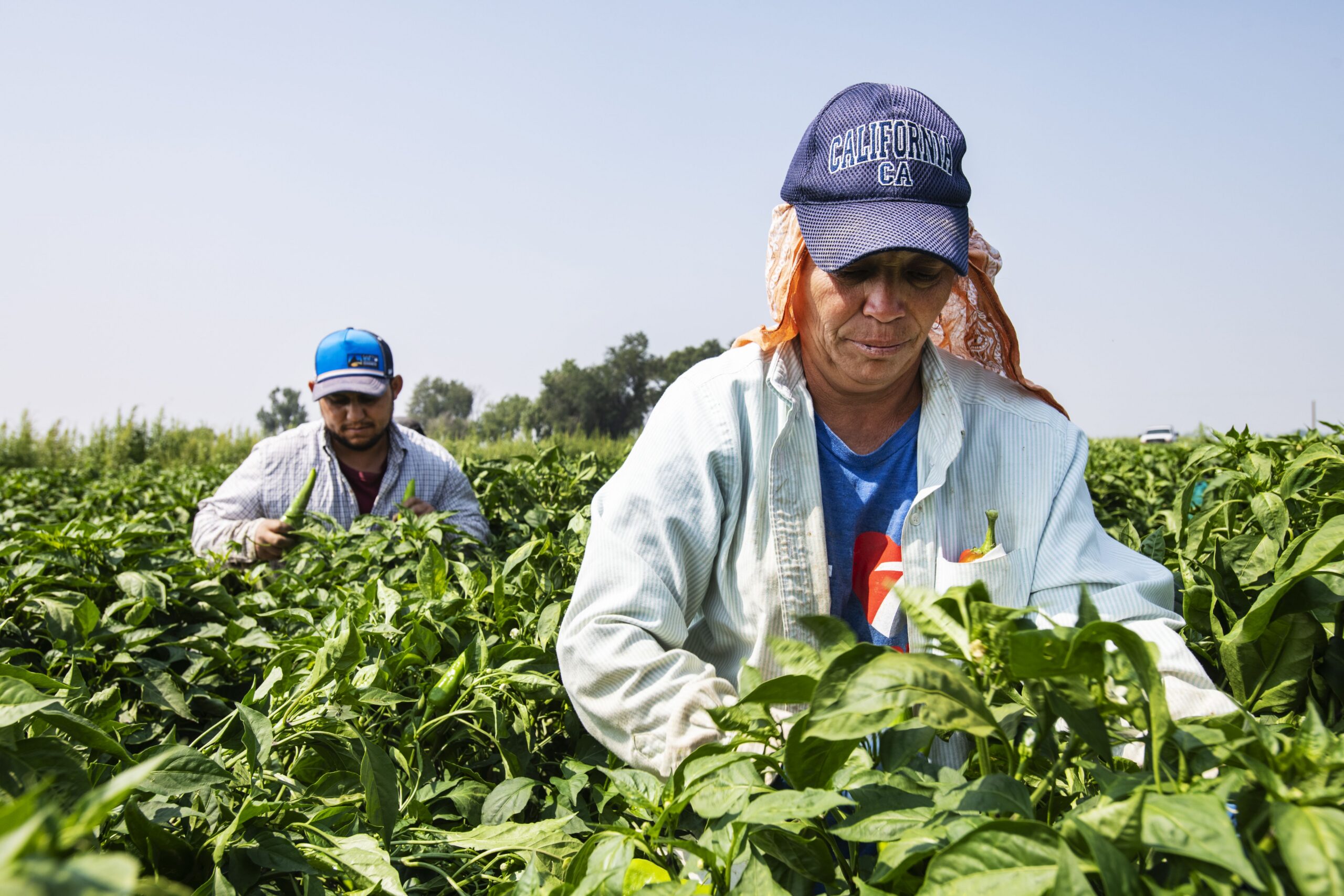
The struggle to balance farmworker protections with the survival of Colorado’s family farms took center stage Thursday as senators debated two competing overtime bills.
The Senate Business, Labor and Technology Committee held a rare double-bill hearing that led to a 3-2 vote rejecting a measure that was supported by unions and sponsored by the committee chair, Sen. Jessie Danielson, D-Wheat Ridge.
Her bill, Senate Bill 81, would have lowered the overtime threshold to 40 hours, down from 48.
The second bill, Senate Bill 121, which the committee approved, would raise the threshold to 60 hours. The bill is sponsored by Sen. Robert Rodriguez.
Speaking on the competing bills was Senate Minority Leader Cleave Simpson, who farms 800 acres in Alamosa County.
SB 121 concerns the viability of Colorado agriculture and small farms, he told the committee. Of the 36,000 farms in Colorado, about 1,800 have sales of more than $500,000.
“Colorado agriculture is slipping away,” Simpson said, pointing to data from the U.S. Department of Agriculture that identified Colorado as the top state for the loss of farms, based on factors such as climate and input costs.
That includes labor. Increased labor costs are leading farmers to transition away from labor-intensive crops, Simpson said, and toward more mechanization of farm tasks, which impacts the workforce.
SB 121 balances the need for a valued, respected workforce and healthy, profitable producers, he explained.
Rodriguez said that for decades, farmworkers were excluded from basic labor protections that most other workers take for granted. “That was wrong,” and in 2021, the legislature passed Danielson’s previous bill on the issue, Senate Bill 87, a bill he supported and voted for.
The enhanced overtime provisions of the 2021 law are a good example “of well-intentioned policy with unintended and harmful consequences,” Rodriguez said. Shrinking paychecks mean farmworkers take second jobs or leave Colorado for states without overtime thresholds, he said.
In other states with similar overtime laws, such as California and Oregon, workers lose on average $2,000 per person per year because farms cut back hours rather than pay overtime. He also noted that the average family farm in Colorado nets about $50,000 annually and that ag producers are subject to commodity prices, meaning the market determines the price, not the farmer.
“This is not what any of us intended when we fought for extended labor protections,” Rodriguez said. “If we care about protecting workers and supporting rural communities and keeping family farms in Colorado, we need policies that actually work. “
Supporting the 60-hour threshold was former U.S. Rep. John Salazar of Manassa, who was also a Colorado commissioner of agriculture.
Salazar still farms the land his great-grandfather established in 1860.
“Everyone on the farm is foundational to harvesting crops or tending animals, and there is no waiting for the ideal time to do this,” he said.
And costs are going up. The Trump administration tariffs raised costs by 26% in 2025, and fuel costs will make it even more challenging in 2026, Salazar explained. He supports paying workers fairly, but said the 2021 law doesn’t work for farms and ranches.
Salazar also explained the realities of some ag operations, such as sheepherding, where the workers must stay with the herd 24/7.
Speaking in favor of the 40-hour threshold and against the 60-hour bill, Stacy Suniga of the Latino Coalition of Weld County claimed ag work has been disregarded under fair labor rules, and that ag work solves its problems on the backs of its workers.
Suniga spoke about a 19-year-old female and the harsh working conditions she experiences, but never once mentioned the overtime issue, which affects that worker and other farmworkers.
“Would we consider making a 60-hour workweek for people that are working office jobs?,” she asked.
Fatuma Emmad of Frontline Farms said resetting the overtime threshold to 60 hours will not impact seasonal farms. Instead, it will impact year-round operations, such as ranches and dairies, which she said operate under demanding and dangerous conditions.
Overtime isn’t only about the money. It’s also providing protection to workers, since injuries skyrocket with the additional hours, she added.
Former state Sen. Polly Baca grew up on a farm. There’s no reason why farmworkers ought to be treated any differently than other workers, or denied the right to overtime, she said.
Hunter Knapp of Project Protect Food Systems Workers said the studies being used as reference from California looked only at crops, not dairies or livestock, and is not comparable to Colorado’s rules.
He added that while the system is not perfect, the current overtime protections are working as intended by providing premium pay to some individuals working extremely long hours, while removing the incentive to structure farming practices in ways that have proven to harm worker health.
Danielson, in her closing remarks, criticized the farmers who, she said, have figured out how to avoid paying overtime.
“I was really impressed with the innovative ways that employers described figuring out how to get out of paying overtime,” calling it, sarcastically, clever, she said.
Danielson added, “Of course, these businesses would like to continue to be exempt from overtime requirements.”
The swing vote on both bills was Sen. Nick Hinrichsen, D-Pueblo, the committee’s vice-chair, who was a firm “no” on Danielson’s bill and voted to move the 60-hour overtime bill forward to the full Senate.
“This is tough. I hate this. I hate all of it,” he said during closing comments.
“I’m convinced our farms are hurting,” he said, noting that Pueblo County has lost 54% of its farms while he’s lived there. Two-thirds of those remaining operated at a net loss last year, he added.
While SB 121 isn’t fair to the workers, he indicated, SB 81 isn’t fair to the producers. “Both deserve our support, and the system at the federal level fails both of them,” he said.
SB 121 was amended to ensure it would not require a separate rulemaking process by the Colorado Department of Labor and Employment, which was responsible for setting the 48-hour standard, with 56 hours for seasonal production. That rulemaking could have resulted in a $39,000 fiscal cost, a death knell for bills in a budget year when budget writers are struggling to find cuts of $1.5 billion in general funds.
SB 121 would go into effect on Jan. 1, 2027, if it passes the Senate and House and is signed by the governor.


Department of Agriculture warns of packages holding potentially invasive seeds
Michael Braithwaite
michael.braithwaite@gazette.com
Updated 1 week ago
Spring planting is around the corner, and the Colorado Department of Agriculture wants residents to know where their seeds are coming from. Officials with the department warned Tuesday that they received reports of unsolicited packages containing plant seeds mailed internationally...

More than 20 Colorado counties receive grants to improve land record-keeping systems
Maren Prince
maren.prince@denvergazette.com
Updated 3 weeks ago
More than 20 Colorado counties received a total of $2.5 million to improve their land record-keeping systems, according to a Monday news release. The State’s Electronic Recording Technology Board awarded 22 counties with grants ranging from $5,000 to $350,000, according...
JBS strike could trip up Greeley’s economic surge
Hap Fry, Special to The Gazette
hap-fry@gazette.com
Updated 1 month ago
GREELEY – The upward trajectory of Greeley has been hard to match by other Colorado communities in the here and now. The city is on the verge of experiencing dramatic growth and change. Greeley is in the midst of developing a...
A fight over seeds and bees: Colorado Democrats target neonicotinoid pesticides
Marianne Goodland
marianne.goodland@coloradopolitics.com
Updated 1 month ago
Colorado lawmakers are weighing new restrictions on a class of pesticides after Gov. Jared Polis signaled support for a Democratic-backed bill aimed at protecting pollinators — a proposal that has raised sharp worries from farmers who rely on treated seeds...

We tested vapes in Colorado for signs of hemp. This is what we found.
Christopher Osher
chris.osher@gazette.com
Updated 2 months ago
This article was produced for ProPublica’s Local Reporting Network in partnership with The Denver Gazette. Sign up for Dispatches to get our stories in your inbox every week. Leaders in the Colorado marijuana industry have complained in recent years that...

Colorado farmers warn U.S. Sen. John Hickenlooper tariffs and research cuts endanger agriculture
Marianne Goodland
marianne.goodland@coloradopolitics.com
Updated 2 months ago
Northern Colorado farmers told U.S. Sen. John Hickenlooper this week that tariffs and President Donald Trump’s decision to import $40 billion worth of beef from Argentina have hurt Colorado’s agricultural industry. But the administration’s cuts to scientific research are almost...

47th Citizen of the West: ‘Epitome of Western traditions and values’
Joanne Davidson Special to Colorado Politics
joanne-davidson-special-to-colorado-politics@coloradopolitics.com
Updated 2 months ago
The 47th Citizen of the West, George Eidsness, grew up on a farm in North Dakota where his appreciation for the Western way of life took shape as he rode horses, showed cattle in 4-H and shared in the often back-breaking chores necessary to maintain a farm. It was that hard work and a deep...

Boots ‘n Business Luncheon: ‘It’s something very special.’ | NONPROFIT REGISTER
Joanne Davidson Special to Colorado Politics
joanne-davidson-special-to-colorado-politics@coloradopolitics.com
Updated 2 months ago
DENVER METRO CHAMBER OF COMMERCE Denver News: With a capacity crowd of 1,400, a waiting list of 120 and an after-party attended by 600, it wasn’t a stretch for Denver Metro Chamber of Commerce President/CEO J.J. Ament to describe the 2026 Boots ‘n Business Luncheon as...
Colorado rancher donates 72,000 pounds of hay to ranchers affected by Lee fire
Jonathan Ingraham
jonathan.ingraham@denvergazette.com
Updated 3 months ago
“We’re grateful that we can be a part of it. It’s the Western way.” The Lee fire burned more than 138,000 acres of grassland used by ranchers and wildlife in northwestern Colorado in August and September, affecting the livelihoods of...

Trump administration announces $12 billion soybean aid package
RACHAEL WRIGHT Special to The Gazette
rachael-wright-special-to-the-gazette@coloradopolitics.com
Updated 3 months ago
President Donald Trump and Secretary of Agriculture Brooke Rollins announced Monday that the administration was planning to disburse a $12 billion dollar aid package as part of the Farmer Bridge Assistance (FBA) Program, to make targeted, one-time payments to crop...
PREV
PREVIOUS

Colorado bill to fund mental health by raising alcohol taxes defeated in House committee
Colorado legislators on Wednesday narrowly rejected a second measure that would raised taxes on alcohol products in order to fund mental health care treatment in the state. Proponents said the new revenue is necessary to help pay for mental health treatment, while critics said legislators should not be targeting an industry that’s already being squeezed, […]

Federal judge dismisses claims against medical contractor for Eagle County jail suicide
A federal judge dismissed the claims against a medical contractor for the Eagle County jail and its employees earlier this month, concluding there were insufficient allegations that they violated the constitutional rights of a man who died by suicide in custody. U.S. District Court Judge Philip A. Brimmer noted a doctor with Your Hope Center […]