

Federal judge says 8 years in solitary confinement not grounds to reduce man’s sentence
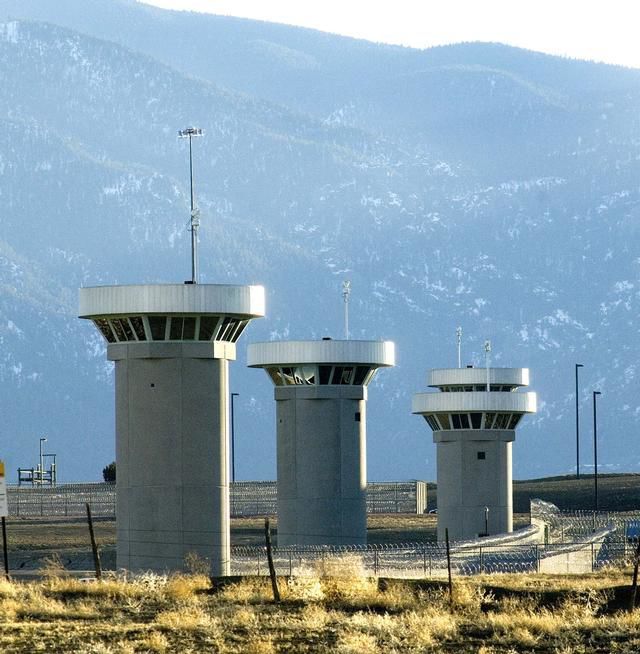
A federal judge concluded earlier this month that a man’s eight years allegedly spent in solitary confinement did not justify granting his request for a sentence reduction.
However, U.S. District Court Senior Judge William J. Martínez signaled his willingness to re-evaluate Randy Platt’s request if Platt details why his experience in prolonged isolation amounts to the type of “extraordinary and compelling circumstances” that can trigger a sentence reduction.
“The Court does not doubt that extended periods of solitary confinement may constitute extraordinary and compelling circumstances in certain situations,” Martínez wrote in a March 4 order. “Platt, however, does not supply sufficient facts or develop any argument as to why his personal circumstances, in combination with his prolonged solitary confinement, constitute extraordinary and compelling circumstances.”
Martínez sentenced Platt to 12.5 years in prison in 2022 for cutting a corrections officer’s arm with a razor blade. Platt remains at the U.S. Penitentiary, Administrative Maximum Facility in Florence.
Last June, Platt wrote to Martínez seeking compassionate release or a reduced sentence, in part based on changes to federal sentencing guidelines.
He added that he “has been held in solitary confinement for the past 8 years with no offer of transfer to a general population yard,” wrote Platt. “This in itself presents an ‘extraordinary and compelling reason’ for the fact that the physical, psychological, and emotional damage of long-term solitary confinement can never be reversed.”
Responding to Platt’s request, the government did not address Platt’s allegation of extended solitary confinement. Instead, it argued his history should weigh against any reduction to his punishment.
“Defendant Platt has an atrocious criminal record that stretches back more than 20 years and across Utah, Oklahoma, and Colorado,” wrote Assistant U.S. Attorney JD Rowell. “His disciplinary record while incarcerated is similarly replete with evidence of his inability to conform his conduct to rules while incarcerated.”
Rowell provided a chart with Platt’s numerous infractions in prison. However, the last entry was from August 2019, more than two years before Martínez sentenced Platt for his assault on the corrections officer.
Martínez, in his order, wrote that Platt was not eligible for a sentence reduction or compassionate release. He noted that he sentenced Platt to a lesser term of incarceration than the guidelines suggested.
Turning to Platt’s allegation of prolonged isolation, Martínez wrote that he “would have benefited from the Government weighing in on this solitary confinement issue, and is perplexed by the fact that it was ignored.”
“The Court appreciates that those conditions have likely been detrimental to his rehabilitation and mental and physical health,” Martínez continued. He quoted from an opinion by Senior Judge Carlos F. Lucero of the U.S. Court of Appeals for the 10th Circuit, who wrote in 2018 that he could not consider “such prolonged, unjustified confinement as anything other than extreme and atypical.”
“Still, Platt cites to no authority, and the Court is aware of none, providing that extended periods of solitary confinement alone necessarily constitutes extraordinary and compelling circumstances under the compassionate release statute,” wrote Martínez. “The Court has instead located caselaw suggesting that this issue is fact-dependent.”
Martínez cautioned that Platt’s “long and violent criminal history” would make it difficult for him to entertain a sentence reduction in the future. Still, he invited Platt to renew his motion after June, should Platt’s solitary confinement continue, with a detailed argument for why his particular circumstances should trigger relief.
The case is United States v. Platt.


Federal judge green-lights trial against Denver officer over race-based enforcement
Michael Karlik
michael.karlik@coloradopolitics.com
Updated 7 hours ago
A federal judge green-lit a jury trial last week on a man’s claim that a Denver police officer engaged in racially selective enforcement of the law by arresting him for video recording at a police station, while not arresting a...

10th Circuit rejects ‘potential for violence’ when police arrest vehicle occupant’s romantic partner
Michael Karlik
michael.karlik@coloradopolitics.com
Updated 10 hours ago
The Denver-based federal appeals court rejected the idea on Tuesday that a vehicle occupant poses a danger to police solely because they are romantically involved with another occupant who officers are arresting. By 2-1, a three-judge panel of the U.S....

Colorado justices grill debt collector about compliance with law
Michael Karlik
michael.karlik@coloradopolitics.com
Updated 4 hours ago
The Colorado Supreme Court repeatedly pressed a debt collection company last week to explain how its lawsuit against a Boulder woman for an unpaid credit card balance complied with the specific requirements that state lawmakers have created. Portfolio Recovery Associates,...
Appeals court agrees defendant’s speech constitutionally protected against El Paso County judge
Michael Karlik
michael.karlik@coloradopolitics.com
Updated 14 hours ago
Colorado’s second-highest court agreed last week that a defendant’s critical statements toward an El Paso County judge were constitutionally protected and could not form the basis of a retaliation charge. A three-judge Court of Appeals panel concluded that, in context,...
Colorado justices, 4-3, order new murder trial due to wrongfully excluded evidence
Michael Karlik
michael.karlik@coloradopolitics.com
Updated 2 days ago
The Colorado Supreme Court agreed on Monday that a trial judge incorrectly faulted a defendant for refusing to cooperate in a mental health examination, even though the state’s hospital was the entity that botched its responsibility to evaluate her during...
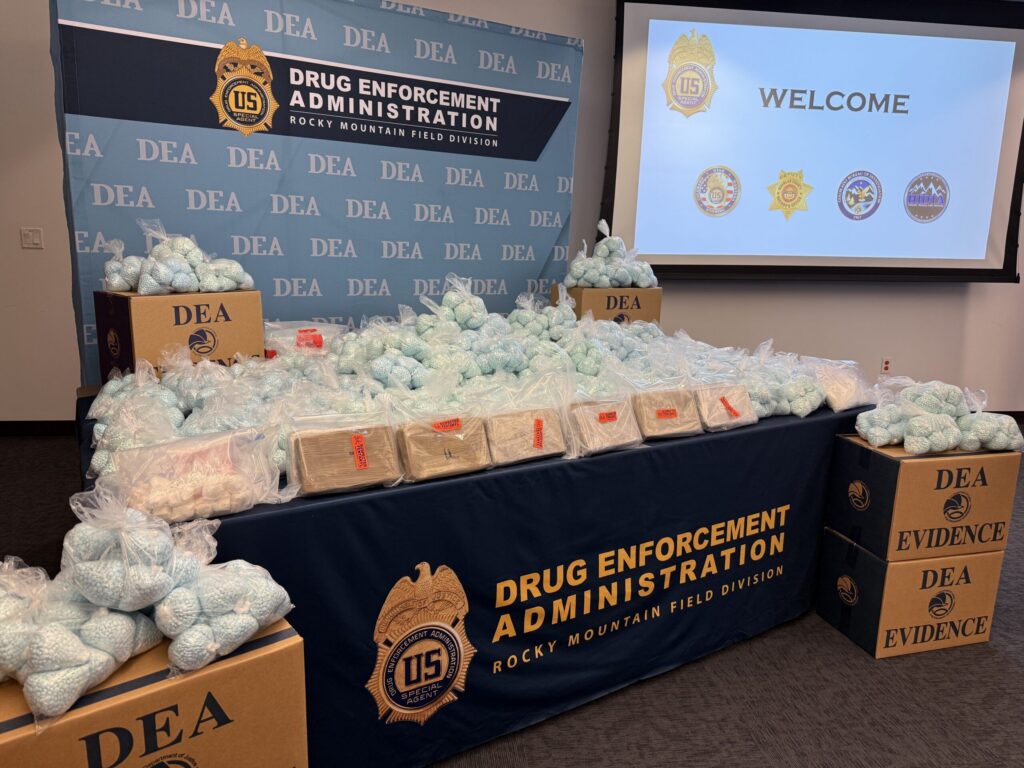
Overdose deaths from opioids dip in America — but not in Colorado, study says
Jacob Mauk
jacob.mauk@denvergazette.com
Updated 2 days ago
Overdose deaths from opioids rose in Colorado, diverging from the national trend, which has been decreasing, according to a new study from a think tank. In its new report, the Common Sense Institute said synthetic opioid overdose deaths in Colorado...
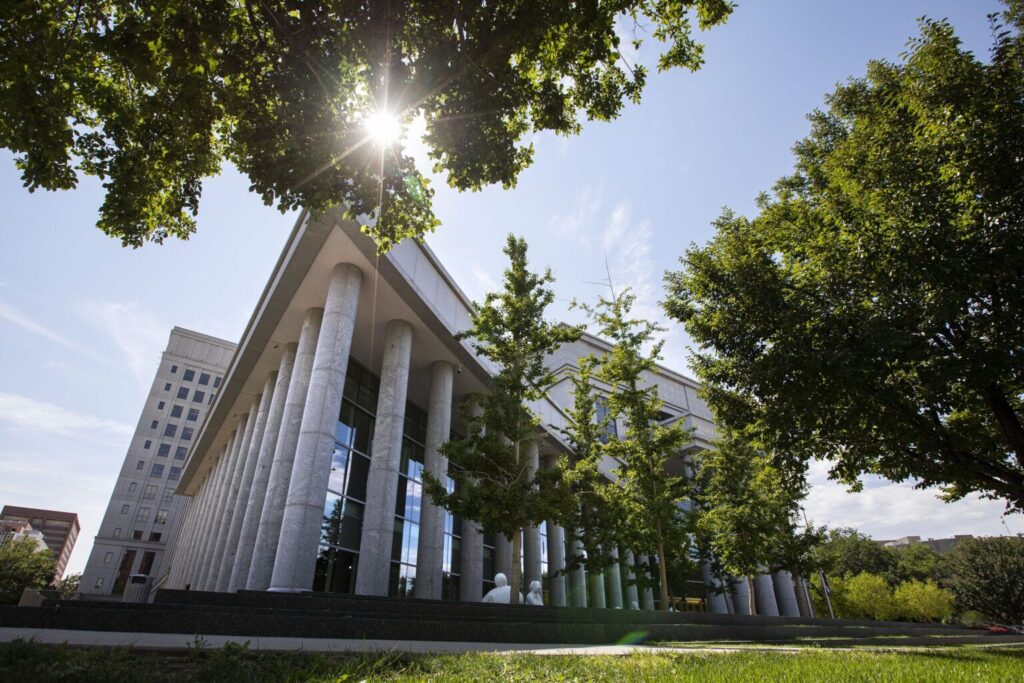
Error-prone Douglas County judge triggers another reversal of criminal convictions
Michael Karlik
michael.karlik@coloradopolitics.com
Updated 1 day ago
Colorado’s second-highest court overturned a defendant’s Douglas County convictions on Thursday due to the error of a judge whose actions have triggered a disproportionate number of reversals to convictions and sentences in recent years. Since 2021, the Court of Appeals...

Federal judge formalizes injunction blocking USDA’s ‘pilot project’ for Colorado food assistance
Michael Karlik
michael.karlik@coloradopolitics.com
Updated 12 hours ago
A federal judge formalized his order on Monday to prevent the U.S. Department of Agriculture from requiring Colorado to participate in a food assistance “pilot project,” finding that it violates the law, the U.S. Constitution, and “the bounds of reasoned...

Colorado justices speak about inner workings of court, analysis of appellate opinions | COURT CRAWL
Michael Karlik
michael.karlik@coloradopolitics.com
Updated 2 days ago
Welcome to Court Crawl, Colorado Politics’ roundup of news from the third branch of government. Members of the state Supreme Court provided an inside look at the workings of their institution, and a Colorado Politics analysis found that some appellate...
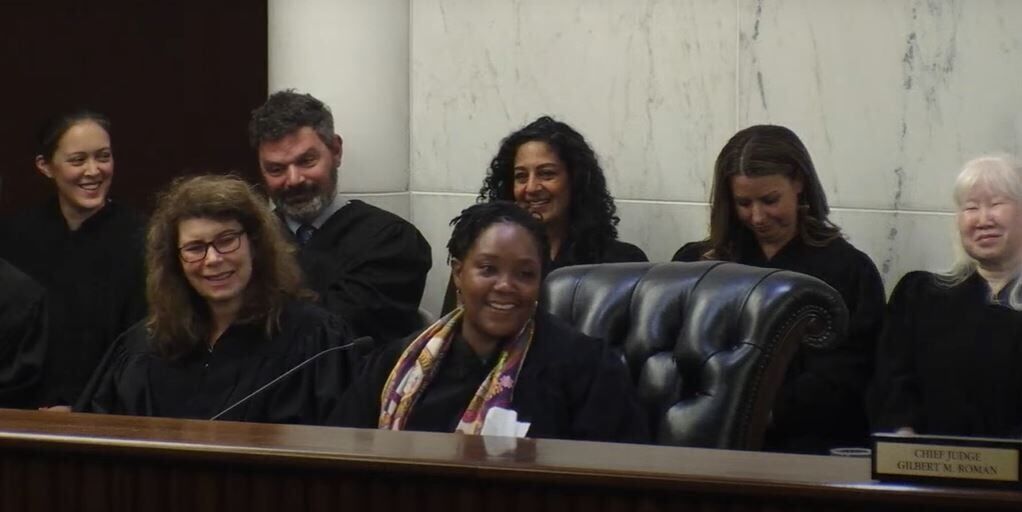
Appeals court finds no requirement for different judge to handle attorney-client conflict hearings
Michael Karlik
michael.karlik@coloradopolitics.com
Updated 2 days ago
Colorado’s second-highest court rejected a defendant’s argument on Thursday that a judge improperly heard about a potential conflict between himself and his lawyer right before sentencing, and the man’s reaction could have “tainted” the sentencing decision. In September 2023, Anthony...
PREV
PREVIOUS

Democrat Matt Cavanaugh ends campaign in Colorado’s 5th CD, says petition firm came up short
Democratic congressional candidate Matt Cavanaugh said Wednesday that he was ending his bid to challenge Republican U.S. Rep. Jeff Crank in Colorado’s 5th District because the firm his campaign hired to gather petition signatures failed to deliver. Cavanaugh, an Army combat veteran and author, registered as a Democrat in late December after launching an independent […]

Federal judge green-lights trial against Denver officer over race-based enforcement
A federal judge green-lit a jury trial last week on a man’s claim that a Denver police officer engaged in racially selective enforcement of the law by arresting him for video recording at a police station, while not arresting a White man who filmed in the same spot. U.S. District Court Judge Philip A. Brimmer […]