

Colorado’s workers can’t afford a privatized Pinnacol | OPINION

By Stephanie Tucker and Dennis Dougherty
Pinnacol Assurance plays an important role in Colorado by providing workers’ compensation insurance as a quasi-governmental agency. In Colorado, employers are required to carry this insurance to ensure their workers are covered after a workplace injury.
Pinnacol was created in 1915 to make sure all employers — especially those in dangerous industries — could obtain this required coverage at an affordable cost. It was designed as a “provider of last resort,” meaning it would insure employers who might otherwise be unable to find coverage. Over time, Pinnacol has continued to offer affordable coverage not only to high-risk employers, but to businesses of all kinds.
In recent years, however, Pinnacol has repeatedly pushed to become a private company. Privatization would allow it to operate like a for-profit insurer, keeping financial benefits for itself while offering no guarantees to the employers who pay into the system or to the workers who rely on the coverage.
Since at least the Ritter administration, Pinnacol has found support for privatization within the governor’s office. Pinnacol has made several promises to justify this change, but these claims appear focused more on increasing profits than on protecting employers or injured workers. For example, Pinnacol argues it is losing market share even though it still controls about half of the workers’ compensation market. It also claims it could require PERA — the state retirement system — to accept a buyout of its employees from the system at a price set by Pinnacol itself, while also providing hundreds of millions of dollars to the state. However, under Pinnacol’s governing laws, its profits belong to the ratepayers — the employers — not to the company itself.
Despite years of opposition from employers, workers and competing workers’ compensation insurers, legislators and the governor continue to push this plan forward. Even more concerning, the state’s ongoing budget pressures are being used as leverage to force privatization through. In past attempts, funding for critical priorities — such as the Homestead tax exemption, K-12 education, and contributions to PERA — have been put at risk to pit constituencies against one another. Last year, privatization of Pinnacol was even floated as a bargaining chip in unrelated labor legislation. This pattern makes clear the proposal is driven less by sound policy and more by short-term political and budgetary goals.
If privatization ultimately passes, the immediate result may look like a success: a one-time infusion of money, a claim of a balanced budget, and promises of future growth as Pinnacol expands into other states and lines of insurance. But those gains rest on shaky ground. Pinnacol’s assets legally belong to the employers who pay into the system, privatization invites costly legal challenges that could take years to resolve. If the courts agree those funds were taken improperly, the state would be left with a massive budget shortfall of its own making potentially hundreds of millions of dollars while employers, workers and taxpayers bear the fallout. What is being presented as a fiscal solution is a high-risk gamble that threatens the stability of a system that has protected Colorado businesses and injured workers for more than a century.
It is always tempting to prioritize short-term convenience over long-term security, especially when there is a desire to leave office on a high note. The next governor will start their first-year hundreds of millions in debt from “a solution” that created the very problem it claimed to solve. Colorado employers and workers deserve better from the governor, House, and Senate leadership, and we should not be gambling a century-old workers’ compensation system in exchange for a one-time budget fix.
Stephanie Tucker is a Denver attorney and member of the law firm Babcock Tucker, where she represents the injured in workers’ compensation and personal injury cases. She currently serves as president of the Workers’ Compensation Education Association, a nonprofit organization of attorneys and paralegals dedicated to protecting the rights of injured workers in Colorado. Dennis Dougherty is executive director of the Colorado AFL-CIO, which represents approximately 165 affiliate unions with membership totaling more than 130,000 working Coloradans.


Want to talk to the Colorado legislature? Be nice | Hal Bidlack
Hal Bidlack
hal-bidlack@coloradopolitics.com
Updated 22 hours ago
As I peruse Colorado Politics each week, in search of a topic upon which I can wax philosophic, I sometimes come across stories that seem, frankly, to be quite dull or even unimportant upon first glance. But when I dig...

Constituents still message DC — but are our reps even listening? | Miller Hudson
Miller Hudson
miller-hudson@coloradopolitics.com
Updated 21 hours ago
Each time I visit the nation’s capital, it feels a bit like a homecoming — not that I would ever wish to return as a resident. Yet, I did grow up outside the city in Montgomery County, Maryland from 1956...

Access to earned wages increases retention, attendance, morale | OPINION
Colorado Politics
colorado-politics@coloradopolitics.com
Updated 21 hours ago
By Diane Macheers Every payday, I’m reminded how much trust our team members place in us. They work hard, show up for our residents, and do everything they can to support themselves and their families. As an employer, we believe...

Why Colorado businesses should oppose SB26-134 | OPINION
Colorado Politics
colorado-politics@coloradopolitics.com
Updated 21 hours ago
By Liliana Soto My family has spent the last 30 years building a small piece of Colorado’s food culture. My father founded Las Dos Americas Tortilleria three decades ago with a simple idea to make authentic flour and corn tortillas...

Legislation shifts too big a burden onto family court | OPINION
Colorado Politics
colorado-politics@coloradopolitics.com
Updated 13 hours ago
By Judi Atwood I know what a family-court snafu looks like because I lived one. In military slang, a snafu is a breakdown so confused and badly managed the people trapped inside it pay the price. In my own case,...

Colorado voters will decide whether transgender students can join girls’ sports
Marissa Ventrelli
marissa.ventrelli@coloradopolitics.com
Updated 3 hours ago
A ballot initiative that would require student athletes to only join sports teams that correspond to their biological sex has qualified for the November ballot, the latest development in the culture war being waged in school districts, in the courts...

DeGette challenger Melat Kiros trounces 15-term Democratic incumbent in Denver delegate vote
Ernest Luning
ernest.luning@coloradopolitics.com
Updated 2 days ago
The 28-year-old, first-time candidate challenging Democratic U.S. Rep. Diana DeGette in this year’s primary soundly defeated the 15-term incumbent in a delegate preference poll conducted Saturday at a county party assembly in Denver. Melat Kiros, the daughter of Ethiopian immigrants...

Army veterans Jessica Killin, Joe Reagan qualify for Democratic primary ballot in Colorado’s 5th CD
Ernest Luning
ernest.luning@coloradopolitics.com
Updated 2 days ago
Democratic congressional candidates Jessica Killin and Joe Reagan secured spots Saturday in Colorado’s June primary to decide who will run against Republican U.S. Rep. Jeff Crank in a district that’s only ever sent GOP lawmakers to Congress. The two Democrats,...
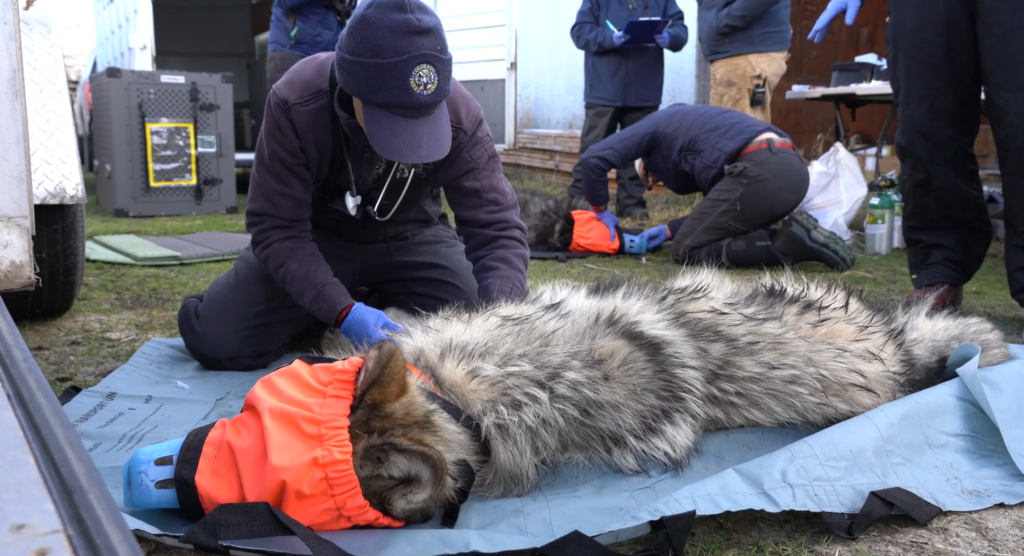
Latest death brings down wolves’ survival rate to 44% in Colorado
Marianne Goodland
marianne.goodland@coloradopolitics.com
Updated 3 hours ago
The female wolf of the mating pair for the King Mountain pack has died, bringing total fatalities to 14 out of the 25 animals reintroduced in Colorado. The wolf, identified as No. 2310, was among the 10 wolves brought to...
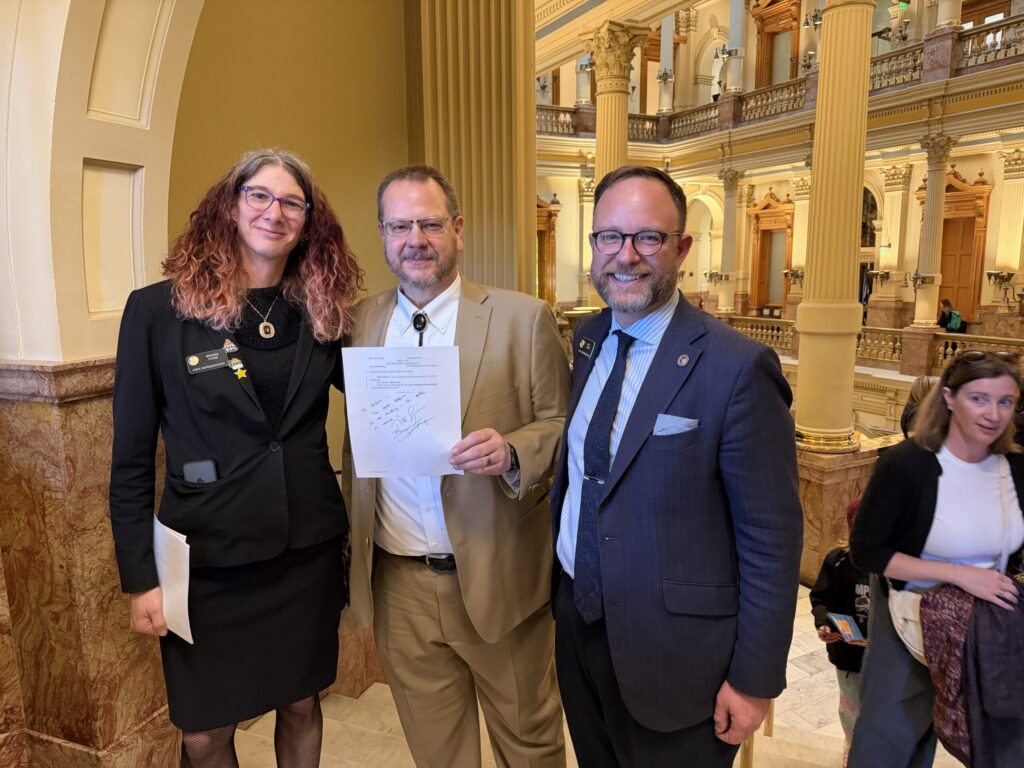
Roasts, get yer roasts, here: Capitol M | Week of March 14, 2026
Marianne Goodland
marianne.goodland@coloradopolitics.com
Updated 6 days ago
The lighter side of the Capitol, especially in the past week Apparently, the pending and eventual switch to daylight stupid time has put people in some pretty funny moods. And thank goodness! On March 4, the Senate approved the appointments...
PREV
PREVIOUS
Legislation shifts too big a burden onto family court | OPINION
By Judi Atwood I know what a family-court snafu looks like because I lived one. In military slang, a snafu is a breakdown so confused and badly managed the people trapped inside it pay the price. In my own case, the court adopted and preserved findings about my conduct even though I was never served, […]

Why Colorado businesses should oppose SB26-134 | OPINION
By Liliana Soto My family has spent the last 30 years building a small piece of Colorado’s food culture. My father founded Las Dos Americas Tortilleria three decades ago with a simple idea to make authentic flour and corn tortillas from scratch and serve our community with pride. What started as a small tortilleria has […]