

Democrats eye new taxes on alcohol, marijuana to fund Colorado mental health spending

Facing a more than $1 billion budget shortfall, Colorado lawmakers are searching for ways to fund mental health services in a state that consistently ranks among the worst in the nation for mental health outcomes.
Several proposals this session aim to generate new revenue for treatment and hospital beds. The ideas — including new fees on alcohol and higher taxes on marijuana — are already drawing pushback from industry groups.
The push to find revenue is occurring as legislators are scrambling to plug an $850 million deficit, primarily driven by a significant spike in spending in Medicaid, which, according to reports, is beset by tens of millions of dollars in over-billing and claims of fraud.
A shortage of psychiatric beds
Experts have said Colorado consistently ranks among the worst in the nation for mental health outcomes, with some of the highest rates of depression and suicide. The problem is compounded by a severe shortage of mental health treatment facilities, particularly for people with serious conditions, such as schizophrenia and those involved in the criminal justice system, experts said.
Colorado has 482 psychiatric beds, according to the Treatment Advocacy Center, which considers 50 beds per 100,000 people to be “minimally adequate treatment” for individuals with severe mental illness.
Colorado has about eight beds per 100,000 individuals.
In November, Gov. Jared Polis announced plans to invest up to $12 million to help ensure that suspects declared incompetent to stand trial land somewhere — and not back in the streets, where some reoffended.
In a supplemental budget request issued two months later, the governor asked for about $80 million and 150 full-time employees over the next three years to “ensure that resources are available for secure placements and opportunities for community-based supervision” for such individuals.
Current, there is a waitlist for beds. The state has been under a court-ordered consent decree since 2019 that mandates the Department of Human Services to expedite competency evaluations and restoration.
Medicaid pressures
Providers of lower-level care, such as talk therapy, are also feeling a pinch, especially those who serve clients on Medicaid.
In October, the state’s Department of Health Care Policy and Financing announced it would reinstate prior authorization requirements for Medicaid patients’ therapy sessions as part of its efforts to control costs, which soared following the implementation of a 2022 state law.
The law, which was intended to expand access to mental health care for disabled and low-income Coloradans, led to a nearly 75% increase in Medicaid spending.
Colorado’s legislators have also blamed the federal government for the state’s fiscal woes.
Over the summer, the state sued the federal government for cutting nearly $10 million in grants earmarked for youth mental health. About half of the state’s mental health funding comes from the federal government, though many of the dollars from Washington aimed at increasing mental health outcomes during the pandemic have expired.
In the last few weeks, several reports claimed that Colorado’s Medicaid program is ripe with fraud and abuse, as well as overspending driven by sharp spikes in reimbursement rates in certain services.
On Thursday, a U.S. House committee on energy and commerce has sent a letter to Polis and the Colorado Department of Health Care Policy and Finance, pointed to problems that surfaced in Minnesota, such as over-billing, falsified records, identity theft and phantom claims in Medicaid social service and health programs for a variety of populations.
The Committee on Energy and Commerce said it is concerned Colorado’s Medicaid program “may be similarly vulnerable” to fraud, waste and abuse, citing data showing that spending here had surpassed $14.6 billion, of which $8.6 billion camme from the federal government. That spending has doubled in the past decade, despite enrollment growing by only 7%.
The letter zeroed in on Colorado Medicaid programs the committee said are high risk for waste, fraud, and abuse, such as non-emergency medical transportation, applied behavioral analysis (ABA) services for children with autism spectrum disorder, and genetic laboratory services.
Spending on non-emergency transport services had jumped 436% between 2019 and 2025, the letter claimed, because the Colorado Department of Health Care Policy and Financing provided “incorrect guidance” to non-emergency providers, such as identifying beneficiaries with extra-large wheelchairs as needing specialty ambulances.
The congressional panel also cited reports of fraudulent billing — so far totaling more than $25 million — in the non-emergency transport program, the letter said.
Those payments have since been halted.
Lawmakers search for new funding
Members of the Colorado General Assembly are used to coming up with creative ways to fund their spending priorities. A popular strategy is establishing enterprises or government-owned businesses.
In 2024, Democrats proposed creating an Alcohol Impact and Recovery Enterprise within the state’s Behavioral Health Administration.
The enterprise would have been funded through fees imposed on alcohol manufacturers and distributors in the state — $0.0409 per gallon of beer and hard cider, $0.0367 per liter of wine, and $0.3060 per liter of spirits.
All funds collected would have gone toward alcohol and other substance abuse prevention, treatment, and recovery services throughout the state.
The House Finance Committee ultimately killed the bill in the final days of the 2024 session.
It’s back this year.
Only one sponsor of the 2024 measure, Sen. Judy Amabile, D-Boulder, is still in office. She is cosponsoring this year’s version, alongside Rep. Jamie Jackson, D-Aurora, Assistant Majority Leader Jennifer Bacon, D-Denver, and Sen. Iman Jodeh, D-Aurora.

An alcohol enterprise
The measure, House Bill 1271, creates three separate enterprises, one for each type of alcohol, and establishes fees of $0.05 per gallon of beer and cider, $0.07 per liter of wine, and $0.35 per liter of spirits manufactured and distributed in the state.
Supporters of the proposal said Colorado has some of the lowest taxes on alcohol in the country, which Amabile said made her feel like increasing those taxes by a small amount is the least the state could do to shore up additional funds for substance abuse treatment.
“We don’t have adequate funds in the state, and we have all of the constraints of TABOR, so we haven’t been able to really get at this problem,” she said, referring to the Taxpayer’s Bill of Rights, which, at its core, requires voter approval for tax increases. “There isn’t just magic money in the state budget that we can use to solve any of the problems that we’re having, and this year is particularly painful.”
Amabile is also sponsoring House Bill 1301 with Rep. Bob Marshall, D-Highlands Ranch. The bill would refer a measure to the ballot proposing an excise tax increase of $0.0733 per gallon on beer and hard cider, $0.08 per liter of wine, and $0.6026 per liter of spirits, as well as an increase of 0.42 percentage points for marijuana.
Under TABOR, any tax increase must be approved by voters.
All excess funds generated through the tax increase would go toward the Colorado Mental Health Institute at Aurora, which would be a new mental health hospital. Construction and operation of the hospital would be the top priority for funds collected, with any additional dollars left over to be directed toward long-term civil commitment facilities in Mesa County.
“We are absolutely desperate to find a way to fund more mental health beds,” Amabile said. “Not having that has had massive consequences, and it’s expensive. Providing care to people who have illnesses like schizophrenia and schizoaffective disorder and all of that is costing our society a lot.”
Amabile said there is plenty more she’d like to do, calling her proposals a good first step given the budgetary constraints.
“It would give us more flexibility to move patients to appropriate settings and to get people from jail off the competency waitlist and into getting competency restoration services and potentially recovery,” she said.

Industry groups push back
Colorado is known for its breweries, but even in a state with higher-than-average alcohol consumption, more than 100 craft breweries have closed across the state in the past two years.
Costs are high, and drinking is down, said Shawnee Adelson of the Colorado Brewers Guild, adding the industry feels like it’s being hit with even more financial burdens from the legislature.
“You’re piling on more and more costs, and these businesses are already working on thin margins,” she said. “It’s a difficult time to say, ‘Hey, let’s raise taxes on things that aren’t selling as well as they used to.'”
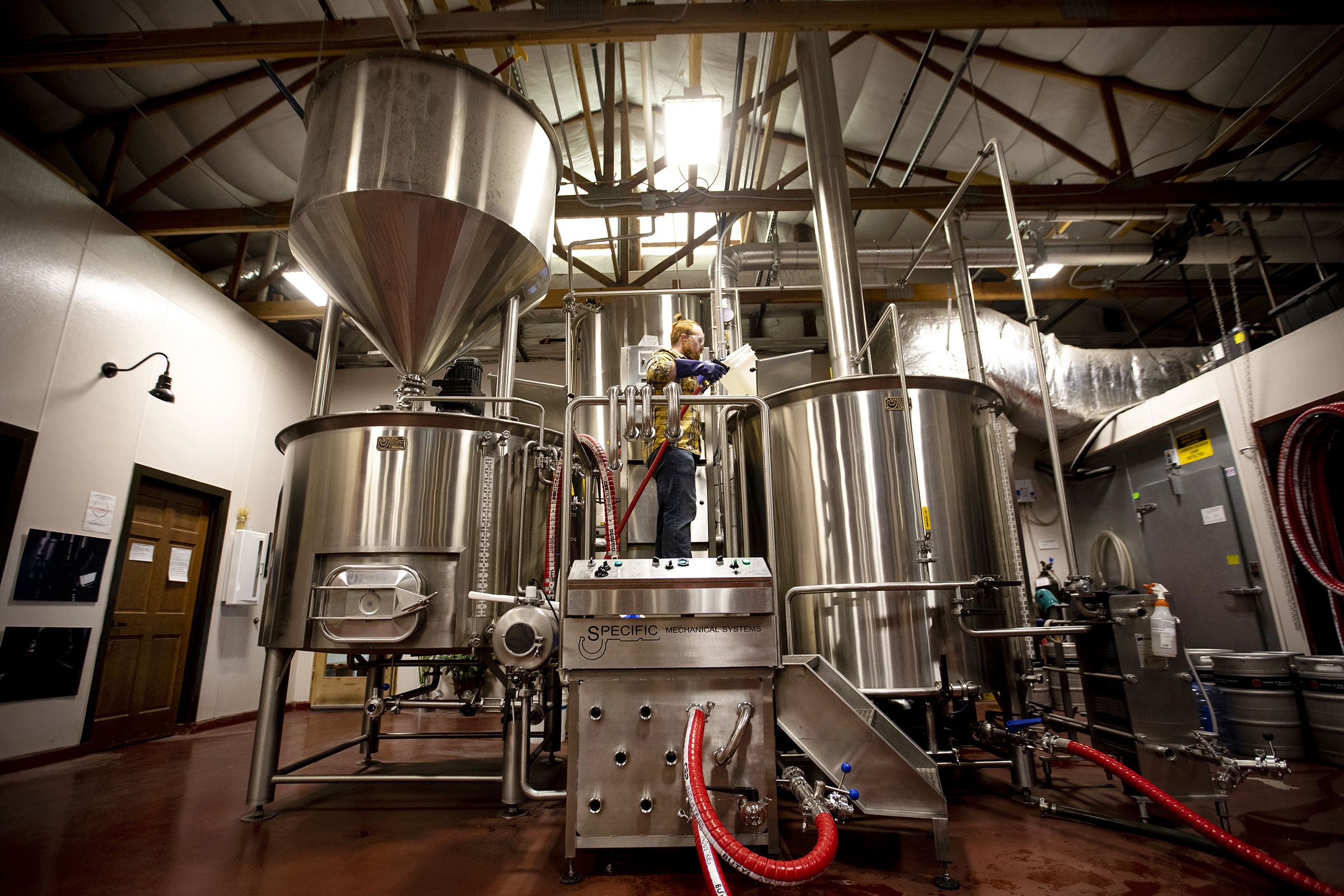
Amabile said the industry’s concerns are very real, but she believes increasing prices is worth it if it means more funding for mental health treatment.
“It’s kind of a question of, what are we willing to pitch in to solve a problem?” she said. “It is a very small amount of money, and it will have a relatively small impact on the retail price of these products.”
If House Bill 1271 and the excise tax ballot measure both pass, the alcohol industry would see a 162% increase in taxes and fees in one year, according to Adelson.
That’s a lot of money, she said, especially for another struggling industry.
Meanwhile, Colorado Leads, a trade organization representing the state’s cannabis industry, said it “strongly opposes” HB 1301.
“Marijuana in Colorado is already subject to substantially higher taxes than other consumer products, and neither the businesses nor consumers can afford another increase,” said Mason Tvert, who founded Safer Alternative For Enjoyable Recreation and represents Colorado Leads.
Cannabis taxes raised over $236 million in state revenue and tens of millions of dollars in local revenue in 2025, Tvert said.
According to a memo published by Legislative Council staff, marijuana generated more than four times the amount raised from alcohol in FY 2024-2025.
Stil, marijuana sales have declined since the pandemic, Tvert said, causing many dispensaries to close their doors.
“Imposing additional tax burdens on an already struggling industry will accelerate these economic losses and undermine the very revenue stream the state relies upon,” he said. “Colorado’s cannabis industry is already pulling more than its fair share of the state’s tax burden. We encourage lawmakers to focus on stabilizing and supporting this vital sector — not taxing it further.”
The Brewers Guild conducted a 2024 survey of voters regarding Senate Bill 181. Nearly half of the respondents opposed increasing excise taxes on alcohol, while 23.3% supported it. When respondents were informed about how the bill would circumvent TABOR by creating an enterprise, disapproval increased to 58%.
The survey found that 65% of respondents said the state should prioritize how it spends its alcohol dollars, rather than increasing taxes, while 40.7% disagreed.
Colorado hasn’t increased its excise taxes on alcohol in over 35 years. The state has imposed excise taxes on a number of industries, including oil and gas, cigarettes and tobacco, and sports betting.



Another TABOR fight: Democrats plan to redirect refunds to Colorado residents
Marianne Goodland
marianne.goodland@coloradopolitics.com
Updated 8 hours ago
Colorado voters could decide this fall whether billions of dollars that would otherwise be returned as refunds under the Taxpayer’s Bill of Rights should instead go to public schools under a ballot measure unveiled Thursday by Democrats. Supporters say the...
Analysis: Colorado legislators introduce 18 energy bills amid debate over emissions goals
Scott Weiser
scott.weiser@gazette.com
Updated 14 hours ago
Colorado legislators have introduced 18 energy-related bills so far in the 2026 session, with Democrats sponsoring 14 and Republicans four, highlighting the sharp partisan split over how aggressively the state should pursue its greenhouse gas reduction goals while protecting affordability...

Colorado Democrats, Republicans fight over ballot fiscal information
Marissa Ventrelli
marissa.ventrelli@coloradopolitics.com
Updated 12 hours ago
Republicans and Democrats clashed anew over legislation that would require identifying which programs would see a funding reduction if a ballot measure passed, with the former saying it’s yet another way for the government to control the campaign narrative and...

Democrat Dwayne Romero jumps in primary to challenge Republican Jeff Hurd in Colorado’s 3rd CD
Ernest Luning
ernest.luning@coloradopolitics.com
Updated 20 hours ago
The Democrat who has been running for nearly a year to unseat Republican U.S. Rep. Jeff Hurd in Colorado’s 3rd Congressional District got some company in the primary this week. Dwayne Romero, a Snowmass Village business owner and decorated Army...

Proposed changes to wildfire code would add protections to eastern edge of Colorado Springs
Brennen Kauffman
brennen-kauffman@coloradopolitics.com
Updated 22 hours ago
New construction rules may be coming to the higher-risk wildfire areas around Colorado Springs, including the grassland on the city’s eastern side. Colorado Springs Fire Marshal Kris Cooper presented an early draft of the proposed changes to the city’s wildfire...
U.S. House probes reports of fraud, waste in Colorado’s Medicaid program
Marianne Goodland
marianne.goodland@coloradopolitics.com
Updated 1 day ago
A congressional committee is probing reports of waste, fraud and abuse in Colorado’s Medicaid program, citing recent stories outlining over-billing in transportation spending and alleged improper payments in autism services. The U.S. House Committee on Energy and Commerce has sent...

Colorado’s outdoor economy slowing down
Bernadette Berdychowski
bernadette.berdychowski@denvergazette.com
Updated 19 hours ago
The post-pandemic boom in the outdoor recreation world appears to have slowed, according to new federal data. The industry is still growing nationwide, but it’s been slower than in past years. The trend is evident in Colorado, as well, though...

Lawmakers call for boosting Air Force Academy staff funding
Mary Shinn
mary-shinn@coloradopolitics.com
Updated 18 hours ago
Colorado lawmakers are calling to boost funding for civilian staff at the Air Force Academy in a letter to the secretary of the Air Force. Democratic Sen. John Hickenlooper and Republican Rep. Jeff Crank are asking for $10 million from...
Colorado’s congressional redistricting proposal could flip three Republican House seats | ANALYSIS
Michael Braithwaite
michael.braithwaite@gazette.com
Updated 2 days ago
A Democrat-backed proposal to redraw Colorado’s congressional map for the 2028 election could flip three Republican districts. The proposal, introduced by a group called Coloradans for a Level Playing Field, is yet another development in a national redistricting debate after...
Colorado lawmakers’ speeches on immigration, Iran draw worries about decorum, grandstanding
Marianne Goodland
marianne.goodland@coloradopolitics.com
Updated 2 days ago
Several speeches from Colorado legislators this week have raised new worries about decorum and grandstanding in the state House after two members talked about immigration and Iran using what’s called a “point of personal privilege.” Under the rules of the...
PREV
PREVIOUS

LDS activist excommunicated from the church speaks out on women’s rights across Colorado | A LOOK BACK
Forty-Five Years Ago This Week: “Women must demand — now and if necessary at the peril of our lives — that we be granted civil rights in the same way rich white men in this country were granted them: constitutional decree,” said Sonia Johnson, co-founder of Mormons for the Equal Rights Amendment. Johnson spoke in […]

Is Trump a builder or just a latter-day headhunter? | SONDERMANN
It was well under 100 hours after President Donald Trump’s overly long, overly theatrical State of the Union speech that he unleashed American bombers across Iran. As I write, it is now less than 100 hours since those bombers started releasing their lethal payloads. Who knows what the next 100 hours will bring? It is […]