

Hopes and fears: Colorado Iranians speak out on widening war
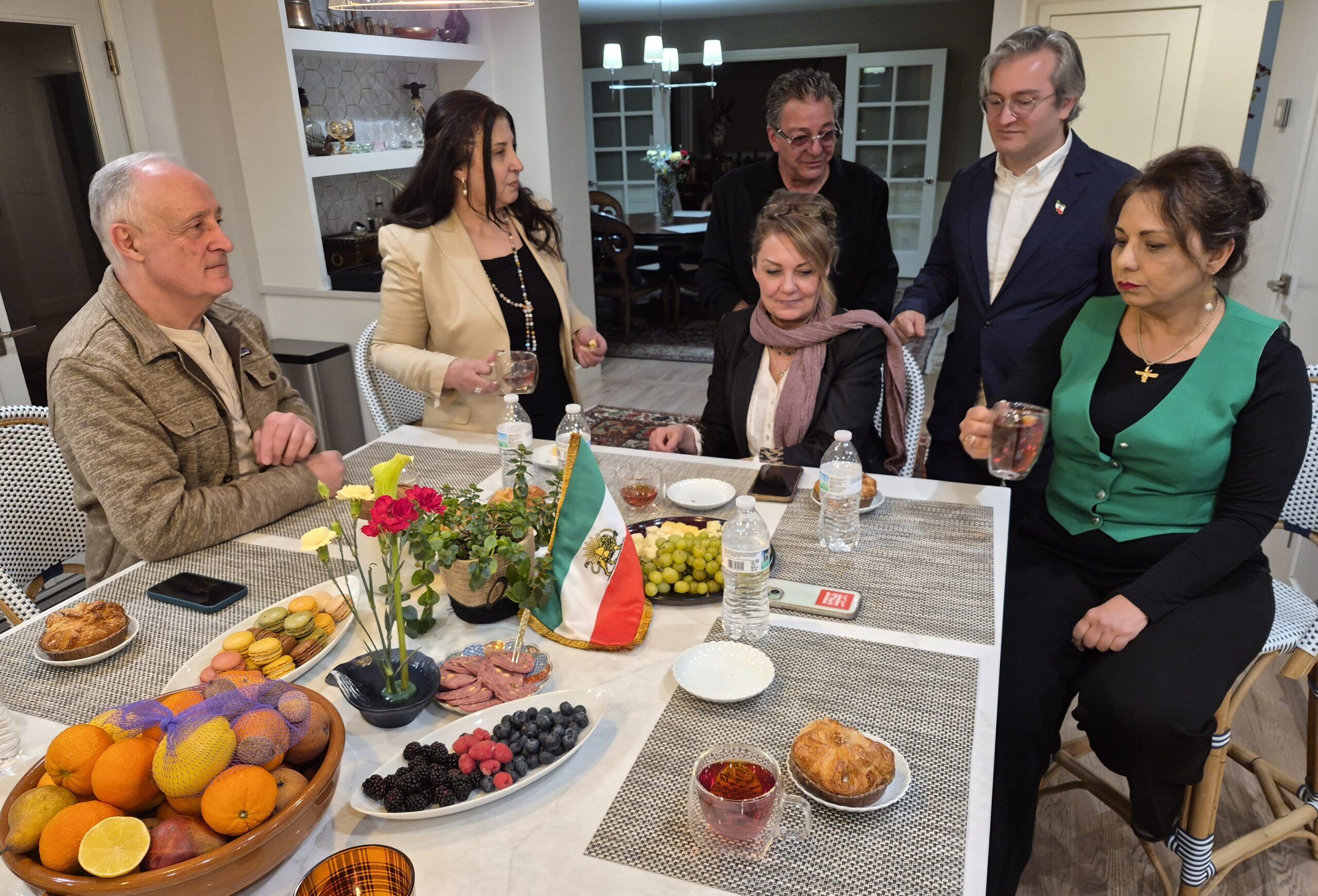
Group talks about young people protesting against the Islamic Republic, and Reza Pahlavi and the monarchy
When Denver area real estate agent Fara Novin dined out for her birthday Friday night, Feb. 27, she blew out a candle on a cake and made a wish.
Early next morning, news broke that a joint U.S.-Israeli strike on Iranian targets had likely killed Ayatollah Ali Khamenei, along with scores of high-ranking Iranian military and Revolutionary Guard commanders.
“That was the fastest wish I ever had granted,” Novin said this week.
She was among six Colorado Iranians who agreed to meet with The Denver Gazette to share their perceptions now, as the Islamic Republic retaliates by firing not just at Israel but also at several of its neighbors.
The three women and three men — pharmacist Babak Behzadi, along with a Westminster veterinarian, an Aurora social worker, an Adams County cultural advocate, a family business owner, and the real estate agent — shared how they and others in their community, here and in Iran, view the conflict.
The Denver Gazette chose not to use last names of all participants due to concerns for their safety.
All affirmed they have ongoing contacts with Iranians at home. Two said they had ties through family to Iranians who were shot or executed during crackdowns by the Islamic Republic in months leading up to Friday’s strike.
You all seem supportive of the attack. How do you perceive reactions of other Colorado Iranians on U.S. and Israeli actions? Do they agree with you?
“Absolutely,” several replied.
After being pressed on whether Iranians here singularly back an overthrow, one woman, Nush, explained that even her friends who generally support left-leaning causes are anxious to see the current regime removed.
“We have several friends who are not Pahlavi lovers,” she went on, referencing Reza Pahlavi, whose father Shah Mohammed Pahlavi was deposed as Iran’s leader in 1979, leading to the current regime. The younger Pahlavi is now seeking to lead a transitional government.
“But even when we were talking to a very leftist friend, she said (to us), ‘We’re at a point that we want Pahlavi to take over the transition.’”
How do you perceive younger Iranians with respect to an overthrow?
“They’re the ones who gave their lives,” said Nikki, who works for her family business here. “Many millions went out in the street, but 50,000 of them died in Iran because of (their support for) Pahlavi, because they were screaming his name, holding up the monarchist flag, the old lion and sun flag.”*
“That’s what caused the regime to start shooting — because they freaked out. This isn’t like the old protests where they would go and say, ‘We want the right to vote; we want the right to not wear the scarf,’” Nikki continued.
“But (the young) are the ones who gave their lives. We’re just going to rallies,” Nikki added.
And young Iranians wouldn’t oppose a new regime led by the Shah’s son?
“This is one of the most secular generations Iran has ever put out, and one of the most pragmatic generations,” Babak said. “They’re not looking for a utopia by any means. Even when they open up on behalf of Reza Pahlavi, if Pahlavi does not deliver, they will run over him. I’m dead serious.”
Babak added: “This generation, you don’t mess around with because they broke the taboos at home. They went against what their parents said. Don’t forget, Iranians always listen to their parents. But they have had to first break the taboos of their parents before they can break the taboos in the society.”
How extensive is support for an overthrow back home? Are you in contact with family about that?
“It’s over 80% who are against the regime,” Fara, the real estate agent, said.
“They’re for (overthrow),” added Nikki. “They’re very educated. They’re very brave there. I went to Iran, October of 2024 into December. I thought, ‘Let’s go talk to some of the young people.’ I was staying with cousins who were much younger. They’re savvy. They know exactly what’s going on politically.
“They know how to fish out everything. The regime comes out with their lies, their propaganda. They can smell it from a mile away. (The younger Iranians) immediately know — they’re that savvy.
Are people back home in touch with you now, as the regime shuts down communications?
“Well, there’re certain people who have Starlink,” Nikki added. “But there’s a death sentence if they find out you have Starlink. Today, they came out with another decree that if they find out that you’ve gone online, they can put you in prison.”
Nikki added: “They don’t even want you to fish around with the VPNs (virtual private networks) and find an access to going online because they don’t want this information getting to them from the outside. And they don’t want the information from the inside getting out. This is a totalitarian regime.”
Nush showed a screenshot on her phone from family that had received an SMS message from police sent to the population, threatening that Internet use would be treated as a crime during the current situation.
At this point, could a return to a monarchy gain democratic support?
“Look, we have two old roots fighting each other, right?” said Babak. “You have 3,000 years of monarchy and 1,400 years of Islam in Iran. These are both powerful, foundational things.
“However, the monarchy says, ‘I can change, modernize myself.’ And like European monarchies that we saw, they changed. He (Pahlavi) represents a progressive movement to the future.”
How do Iranians view Israel now? The Islamic Republic has long supported proxy terrorist groups attacking the Jewish state.
“I think anybody who is with Pahlavi has seen the light and realizes that Israel isn’t the big bad Satan,” said Nikki, recalling her recent trip to Iran. “The USA is not the big Satan. These are all terminologies and narratives of the regime.”
“We think that there’s going to be a much better government coming in no matter what happens,” Babak added, “and it will have to teach about antisemitism and how we can be great again among nations.”
“Look, (Iran and Israel) are the only two countries that are surrounded by people who may not even like them, right? We’re not Arabs, but we’re the only ones, and we need each other,” he said.
Babak went on to suggest that Israeli ties would not only end regional war, but would lend technological aid, as Iran struggles for water resources.
President Trump has reportedly contacted Kurdish leaders concerning the offensive. Kurds are populations both inside and outside Iran. How do you feel about their involvement?
The group divided on whether Kurdish involvement would be welcomed.
“Imagine a tent,” said Babak. “You take out the main pole and that is Khamanei and his cronies and perhaps the major IRGC (Islamic Revolutionary Guard Corps) people. But you have to have the smaller poles holding the tent. You cannot have a complete collapse.”
“A failed state of Iran is a disaster for everybody. We hope for what they want to do, but you don’t want to create instability in its place. For Iranians, Iran is everything. First you save the country, then you’ll have democracy, then you have progress. But if you lose the country, you can’t have anything,” he said.
Nikki pushed back, saying Kurds could become allies in an overthrow.
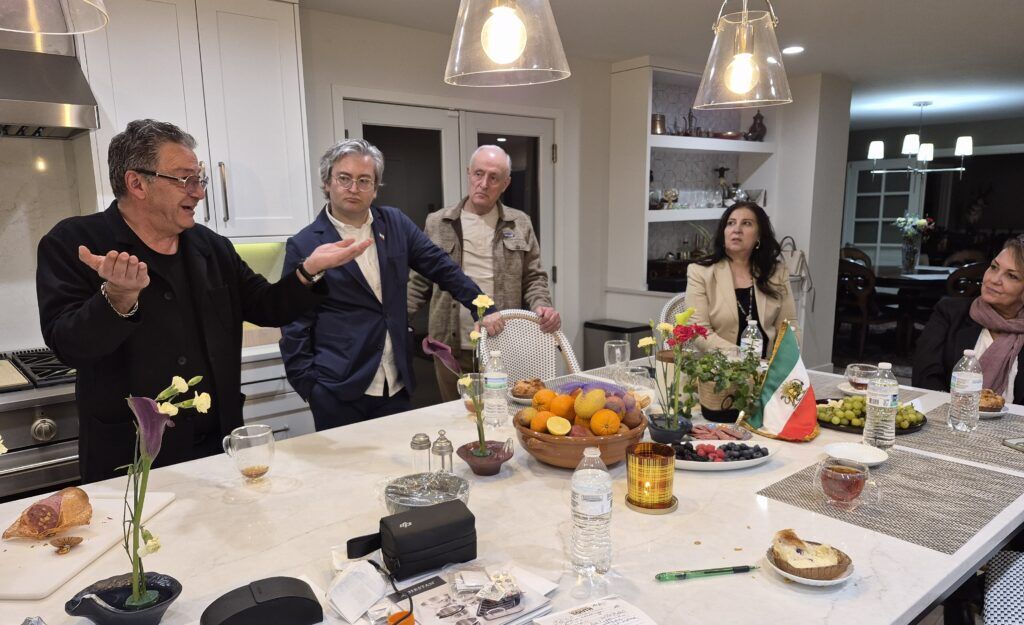
“The Kurds have been part of Iran for millennia,” she said. “There are elements in the group who have separatist ideas and, obviously, they want a little chunk of Iran for themselves. But if you go into the cities that are Kurdish and you talk to them, they say they’re Iranians, they’re nationalists. They want to be part of the new Iran.”
Tell us what you make of media coverage now. Are you pleased with how these events are being covered?
“I tend to vote more Democratic,” Nush said. “So, I follow a lot of the left news from Democracy Now! to all of those other ones. And I have to tell you, feeling abandoned is a really good statement.”
“I feel very disappointed not only from the Democratic party, but also very much disappointed from the media,” added Nush. “When they show Iranians, they hardly ever show the protestors who were out there chanting for freedom and chanting for Pahlavi to come back. They show their version of Iranians, women covered from top to bottom. The regime people are always the ones that are being showed.”
Nush complained about local television news reports: “The first thing they talked about were the anti-war protests. No Iranian that I know has been involved in those anti-war protests. We don’t know anyone.”
She added that on Saturday after the first strike, she and a friend made a sign and went to the Pearl Street Mall to talk to strangers but encountered an organized group of anti-war protesters that they had regularly seen there.
“They’re saying, ‘No war here, no war on there.’ So, it was almost like the same pro-Palestinian crowd had changed their signs overnight and came to protest. I mean, they had these ready signs, very professional looking.”
Nush added, “I thought the war just broke out. All of a sudden they had these beautiful, very professional signs that said, ‘No war in Iran.’”
“It seems that when there is coverage,” added Fara, “they only give attention to what fits their narrative.” She added that she went to the State Capitol for a demonstration Sunday. “We had good news, and so we were celebrating and they played music the whole day and people danced and brought roses and sweets.
“So, I go home and I watch the news. Apparently, there was an anti-war rally, and that’s what they covered. That’s all they covered.”
Any other misconceptions that you would clear up?
Nush, the cultural advocate, said commentators failed to understand women’s opposition to the Islamic regime. That was particularly true, she said, following the widely covered death in 2022 of Mahsa Amini, the 22-year-old woman who died in custody of teh regime’s morality police.
“What a lot of people got wrong was that this was all about hijab (headscarf), but sharia law was the essence. By sharia, women are considered half of a man. There is no way an Islamic regime could change their ways — it has to practice sharia law,” Nush said.
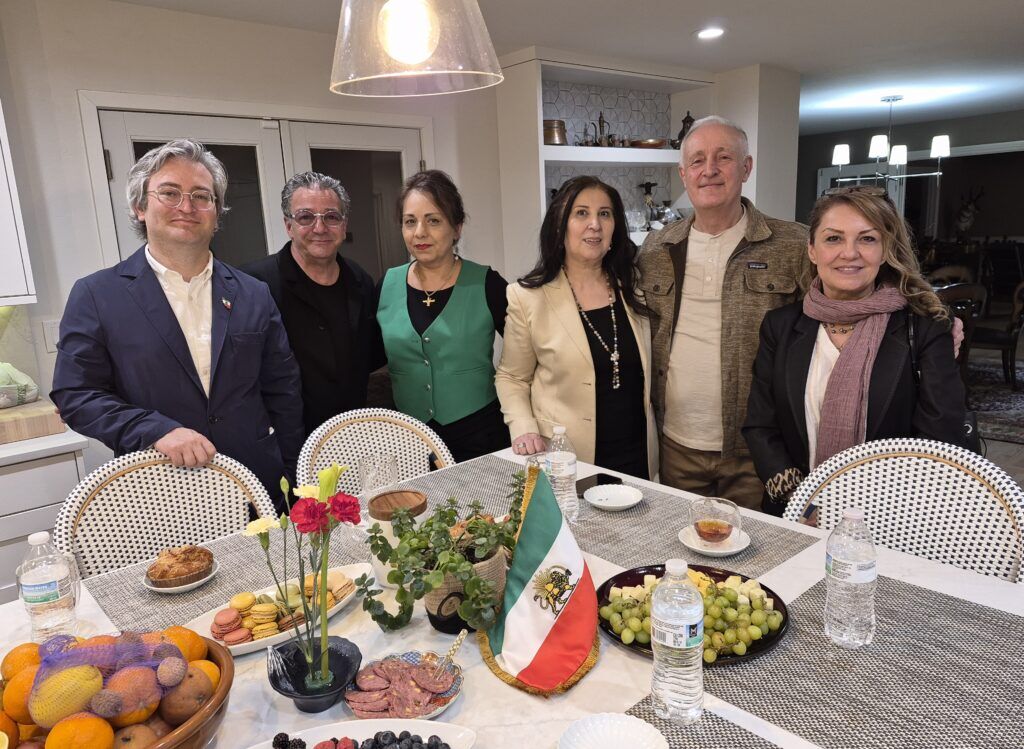
Nush noted that during a visit to see her parents 35 years ago, she had been arrested by the morality police after visiting a bazaar. She recalled two nights in custody, in which she met numbers of other women arrested, some who were lashed for infractions before Nush herself was released.
“Our ancient culture is for modernity,” she continued. “It started with women’s rights, but it quickly became about regime change.”
Editor’s note: *Estimates vary on how many opponents were killed or executed by the Islamic Regime in recent months, ranging from 3,000 to 5,000 by the regime’s published estimates to 30,000 and even 90,000 by others.

Rep. Jeff Crank thinks Democrats are too focused on Trump, not enough on Colorado Springs
Vince Bzdek
vince.bzdek@gazette.com
Updated 11 hours ago
By Vince Bzdek For Congressman Jeff Crank, who’s unopposed in the Republican primary for the 5th Congressional District but the main target of both candidates in the lively Democratic primary, the big question in the midterms is not who will...
A special edition of Capitol M: In remembrance of the outrageous Lynn Bartels
Marianne Goodland
marianne.goodland@coloradopolitics.com
Updated 15 hours ago
I had Lynn Bartels envy. For almost longer than I can remember. There, I said it. And it’s true. Lynn died Friday, age 69, after a short battle with glioblastoma. I was just heartsick when that news of her diagnosis...

Bernie Sanders endorses DeGette challenger Melat Kiros in Colorado’s 1st CD Democratic primary
Ernest Luning
ernest.luning@coloradopolitics.com
Updated 16 hours ago
U.S. Sen. Bernie Sanders on Friday endorsed congressional candidate Melat Kiros, one of two Democrats challenging 15-term U.S. Rep. Diana DeGette in Colorado’s June primary. Sanders, a Vermont independent who caucuses with the Democrats, called the 29-year-old Kiros “exactly the...
Colorado Iranians express disappointment with U.S.-Iran deal
Mark Samuelson Special to The Denver Gazette
mark.samuelson@denvergazette.com
Updated 15 hours ago
Iranians in Colorado worry agreement solidifies the Islamic regime’s power A group of Colorado Iranians expressed disappointment in the agreement reached between the U.S. and the Islamic Republic of Iran, arguing it preserves the government’s hold on power and any...

Democratic ballots outpace Republicans’ as Colorado’s primary vote starts to trickle in
Ernest Luning
ernest.luning@coloradopolitics.com
Updated 14 hours ago
With less than two weeks left before ballots are due in Colorado’s primary election, election officials have logged in ballots from just under 6% of the state’s 4 million active, registered voters, the Colorado Secretary of State’s Office said Thursday....

July 1 brings new Colorado rules on gun ammo, wildfire-risk scoring, wildlife enforcement
Marissa Ventrelli
marissa.ventrelli@coloradopolitics.com
Updated 16 hours ago
Colorado will usher in a new set of laws on July 1 that affect everything from ammunition sales to insurance transparency and wildlife trafficking enforcement. Here is a look at some of the state’s new laws: Ammunition sales House Bill...

Amid public pressure, Colorado candidates tackle social media regulations for minors
Bethany Johnson
bethany.johnson@denvergazette.com
Updated 13 hours ago
Following the accidental overdose of her daughter in 2020, Patti Lujan pursued a lawsuit against Snapchat, the social media platform that, she claimed, connected her daughter with a drug dealer. In a news release announcing the lawsuit, Lujan alleged that...

Denver gets more time to answer FAA questions in probe regarding Key Lime lease denial
Deborah Grigsby
deborah.smith@denvergazette.com
Updated 2 days ago
The City of Denver has asked the Federal Aviation Administration for additional time to gather information and prepare its response to the federal agency’s investigation of the city’s 2025 denial of a Denver International Airport ground lease expansion for Key...
FDA breaks ground on new food lab at Denver Federal Center
Marissa Ventrelli
marissa.ventrelli@coloradopolitics.com
Updated 16 hours ago
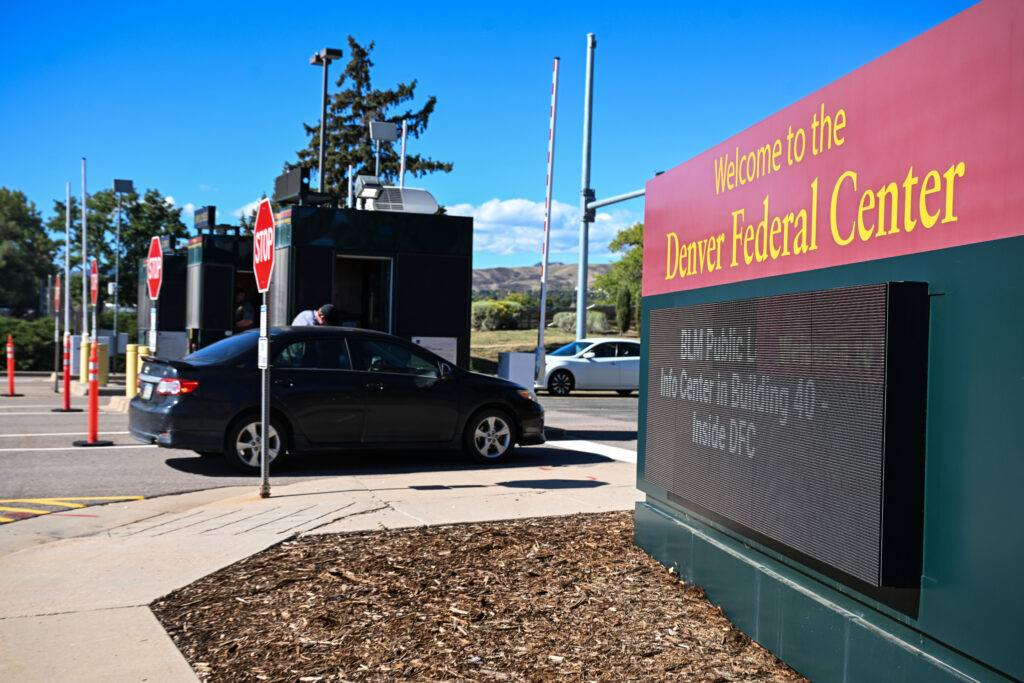
The U.S. Food and Drug Administration and the General Services Administration announced on Wednesday that they have officially broken ground on a new food lab at a federal center in Lakewood. The $228 million project includes 16,500 square feet of...
Colorado state Senate: Meet the primary election candidates
Marianne Goodland
marianne.goodland@coloradopolitics.com
Updated 3 days ago
Colorado’s June 30 primary features a slate of state Senate contests, with several incumbents stepping aside and competitive fields emerging in both parties. These are some of the races to watch as voters begin to submit ballots. Senate District 3:...
PREV
PREVIOUS
Federal judge dismisses developer's challenge to Denver affordable housing ordinances
A federal judge dismissed a homebuilder’s constitutional challenge on Tuesday to a pair of Denver ordinances that impose obligations on developers related to the affordable housing demands created by new construction. Two related companies, redT Homes and redT Capital Partners, sued the city last year over the fees they would incur to construct six homes […]

LDS activist excommunicated from the church speaks out on women’s rights across Colorado | A LOOK BACK
Forty-Five Years Ago This Week: “Women must demand — now and if necessary at the peril of our lives — that we be granted civil rights in the same way rich white men in this country were granted them: constitutional decree,” said Sonia Johnson, co-founder of Mormons for the Equal Rights Amendment. Johnson spoke in […]