Indian Health Service to phase out dental fillings containing mercury by 2027 | OUT WEST ROUNDUP
NEW MEXICO
Indian Health Service phases out mercury fillings
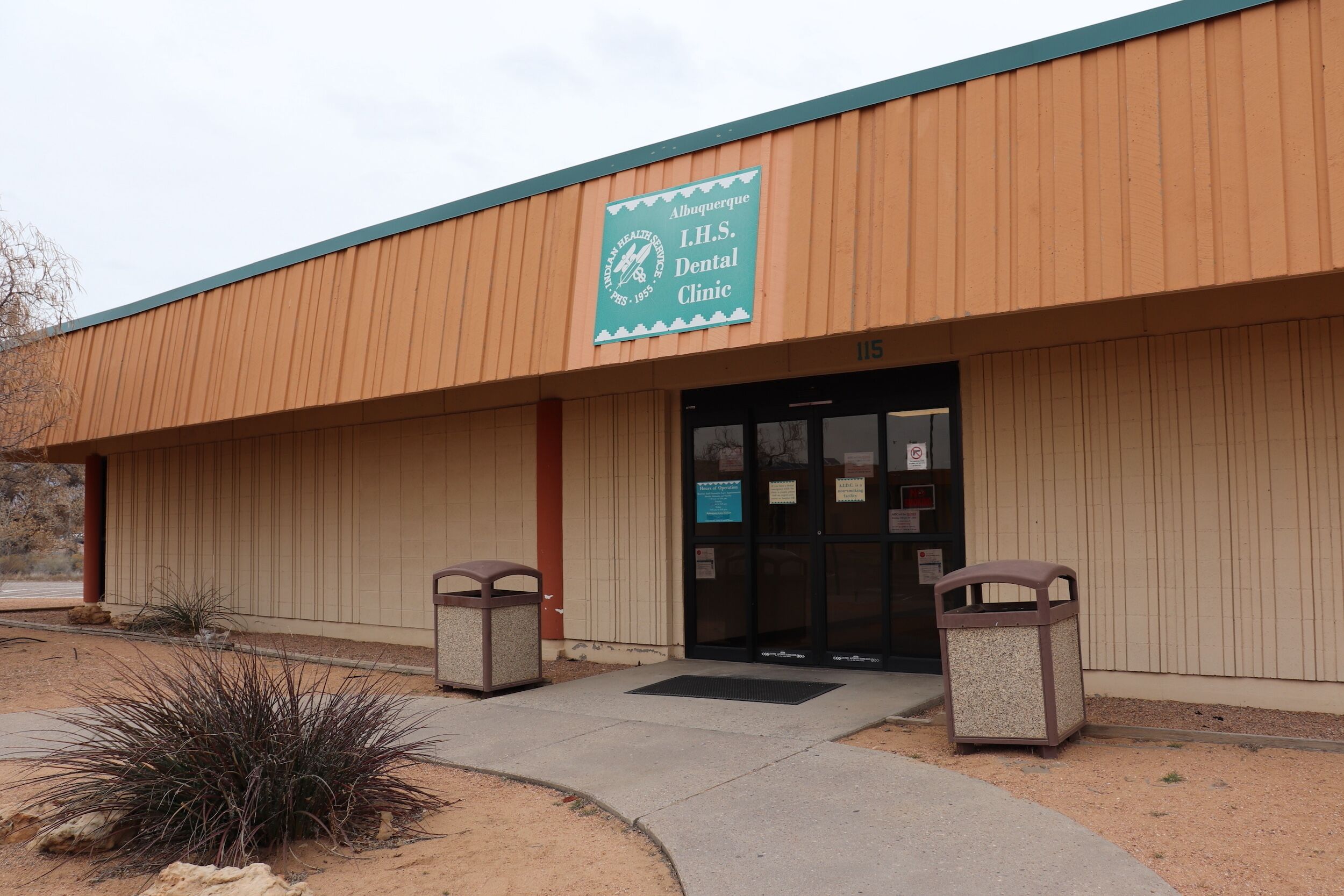
ALBUQUERQUE — The federal agency that provides health care to Native Americans and Alaska Natives has announced it will phase out the use of dental fillings containing mercury.
The Indian Health Service has used fillings, known as dental amalgams, that contain elemental mercury to treat decayed and otherwise damaged teeth for decades. Native American rights and industry advocates have called for an end to the practice, arguing it exposes patients who may not have access to private dentistry to a harmful neurotoxin.
The use of mercury-containing amalgams, also known as “silver fillings” due to their appearance, has declined sharply since 2009 when the U.S. Food and Drug Administration reclassified the devices from low to moderate risk. The industry has largely abandoned them in favor of plastic resin alternatives, which are also preferred for aesthetic reasons.
The Indian Health Service says it will fully implement the move to mercury-free alternatives by 2027. Already, the percentage of the Indian Health Service’s roughly 2.8 million patient user population receiving them has declined from 12% in 2005 to 2% in 2023, the latest year of available data, agency documents show.
The U.S. Department of Health and Human Services, which oversees IHS, said growing environmental and health concerns about mercury exposure, and global efforts to reduce materials containing the hazardous heavy metal prompted the change announced this month.
In a statement, the American Dental Association acknowledged declining use of mercury-containing fillings, but said they remain a “safe, durable and affordable material.”
NEBRASKA
Buffett’s company invests in New York Times
OMAHA — Five years after Warren Buffett sold off all of Berkshire Hathaway’s newspapers and predicted unending declines for most of the industry, Berkshire disclosed a new $350 million investment in the New York Times on Feb. 17.
The somewhat surprising move highlighted the quarterly update Berkshire filed with the Securities and Exchange Commission about the company’s stock holdings in Buffett’s last quarter as CEO. Berkshire also increased its investment in Chevron just before President Donald Trump ordered the arrest of Venezuela’s president, and the Omaha-based company continued selling off more of its Bank of America and Apple shares.
At the time that Buffett sold off Berkshire’s dozens of newspapers in 2020 he concluded the industry was “toast.” But even then he suggested that newspapers with a national brand like the Times or Wall Street Journal might still do well.
Tim Franklin, a professor and chair of local news at Northwestern University’s Medill School of Journalism, said the Times may have its roots in the newspaper business, but today it’s a thriving digital business with popular games like Wordle, a well known sports platform called The Athletic and more than 12 million digital subscribers. He said maybe struggling local newspapers can draw some lessons from the “digital news powerhouse” the Times has become and find ways to offer online games and showcase the local sports coverage that readers can’t get elsewhere.
In addition to stocks, Berkshire owns dozens of companies outright including insurance giants like Geico, a collection of major utilities, BNSF railroad and many manufacturing and retail companies with brands like Dairy Queen and See’s Candy.
WYOMING
Bill would establish municipal recalls
CHEYENNE — In Wyoming, there is currently no formal process to recall municipal mayors and council members.
A proposed law is looking to change that.
A bill sponsored by Rep. Scott Heiner, R-Green River, received an 8-1 committee vote on Feb. 11 to advance after a lengthy discussion centered on how to balance voter accountability with the administrative complexities of the Wyoming Election Code.
Heiner, who chairs the House Minerals, Business and Economic Development Committee, explained that while Wyoming’s original statutes provided for recalls under the commission form of government, the state’s shift to mayor-council systems a century ago left a statutory gap.
The bill aims to move the recall mechanism into a broader section of the law, making it available for all municipal officers. As introduced, it requires a petition signed by 25% of registered electors to trigger a special removal election.
Despite support for the bill’s intent, experts warned of significant administrative hurdles.
Ashley Harpstreith, executive director of the Wyoming Association of Municipalities, or WAM, proposed a series of amendments designed to prevent retaliatory recalls and proposed raising the signature threshold from 25% to 40% and implementing grace periods.
Mayor Matt Murdock of Pinedale, serving as current WAM board president, warned that in very small towns, a 25% threshold could represent as few as eight voters.
The committee ultimately adopted changes that increased the signature requirement to 40% of registered electors, prohibited a recall petition from being filed during an official’s first nine months in office and limited recalls to once per person per term.
If the bill passes three readings in the House, it heads to the Senate for further consideration.
Youth helps preserve turtle fossil
Touren Pope took a few days off school the second week of February, but this was not just some regular family vacation.
Pope headed up to Casper from Elko, Nevada, on Feb. 9 to provide a helping hand with the work being done on a 50-million-year-old turtle fossil he named “Lil Timmy” at Casper College’s Tate Geological Museum.
The fossil of a soft shell turtle was found by the sixth-grader back in July while rock hounding with his grandparents near Lander. After calling the Bureau of Land Management, the Tate Museum was involved because they have permits to extract from federal land.
Pope was invited back to Lander in August to help with the excavation, and now he has had a chance to help clean up the fossil.
The turtle shell ended up being completely intact, but that was all they found. However, this is no small find. J.P. Cavigelli, Tate Geological Museum’s collections manager, said it is only the third or fourth full shell they have found in his 20 years with the college.
Pope said he wants to be a paleontologist when he gets older. He is even considering Wyoming for college. He warned Cavigelli that he better not retire before he gets there.
Pope’s grandparents, Patti and Tom Patterson from Jackson, said they visited the area near Lander often and had never come across something like this.
Once the shell is finished being preserved, it will stay at the museum.

Democrat Michael Bennet turns in petitions for Colorado’s gubernatorial primary, plans to skip caucuses
Ernest Luning
ernest.luning@coloradopolitics.com
Updated 13 hours ago
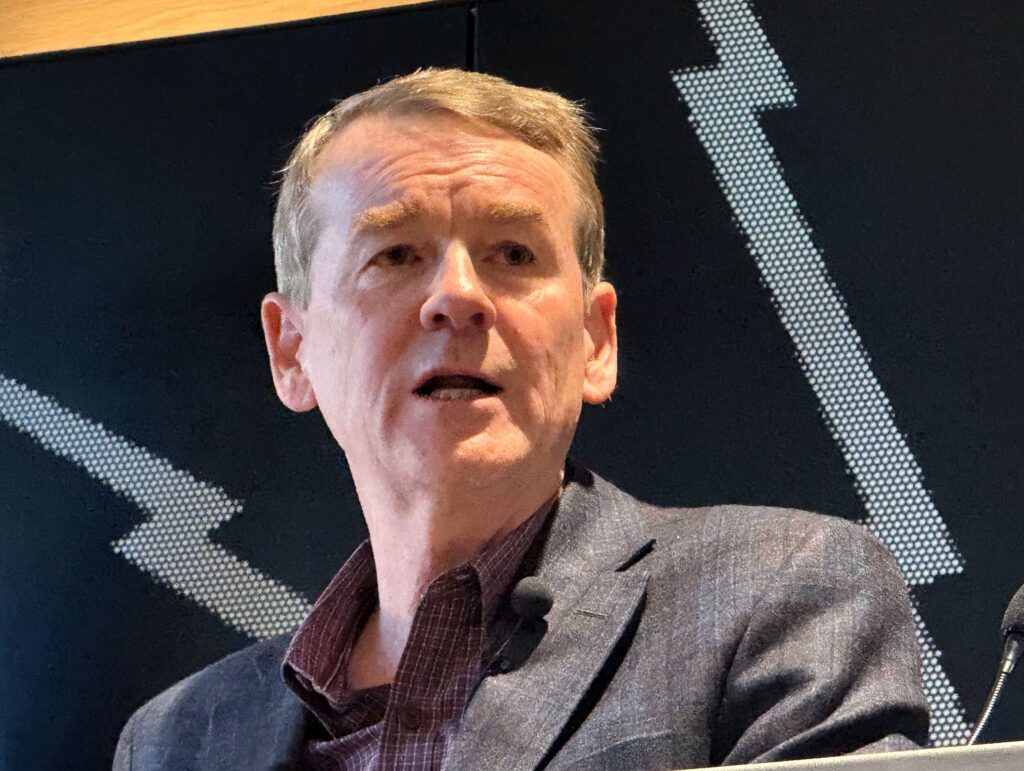
U.S. Sen. Michael Bennet, a Democratic candidate for governor, submitted nominating petitions for Colorado’s June primary ballot on Friday, his campaign and the Colorado Secretary of State’s Office said. Bennet plans to rely on his petitions to get on the...

Israeli officials say Iran’s Supreme Leader Khamenei is dead. No word from US or Iran
Aamer Madhani
aamer.madhani@associatedpress.com
Updated 16 hours ago
DUBAI, United Arab Emirates (AP) — Supreme Leader Ayatollah Ali Khamenei has died in a major attack on Iran launched by Israel and the United States, Israeli officials told The Associated Press on Saturday. There was no immediate comment from...

Colorado Republicans, Democrats clash over Iran military operation
Thelma Grimes
thelma.grimes@coloradopolitics.com
Updated 11 hours ago
Colorado’s congressional delegation split sharply along party lines Saturday after the U.S. and Israel attacked Iran, triggering a fresh debate in America over presidential war powers. Trump announced early Saturday morning that U.S and Israeli forces had begun “Operation Epic...

What to know about U.S.-Israel attacks on Iran
The Associated Press
the-associated-press@coloradopolitics.com
Updated 14 hours ago
The attack The U.S. and Israel attacked Iran on Saturday in what President Donald Trump said was a massive operation to destroy the country’s military capabilities and eliminate the threat of it creating a nuclear weapon. Iran’s Foreign Ministry said it would...

World leaders react cautiously to US and Israeli strikes on Iran
The Associated Press
the-associated-press@coloradopolitics.com
Updated 15 hours ago
BRUSSELS • World leaders reacted warily to U.S. and Israeli strikes on Iran on Saturday that triggered worries of a broader conflict. European leaders held emergency meetings and took measures to protect their citizens in the Middle East, with key leaders calling...

US and Israel launch a major attack on Iran and Trump urges Iranians to ‘take over your government’
The Associated
the-associated@gazette.com
Updated 23 hours ago
The U.S. and Israel launched a major attack on Iran on Saturday, and President Donald Trump called on the Iranian public to “seize control of your destiny” by rising up against the Islamic leadership that has ruled the nation since 1979. Some of the first...
Additional thoughts on State of the Union address/rally | Cronin and Loevy
Tom Cronin Bob Loevy
tom-cronin-bob-loevy@coloradopolitics.com
Updated 22 hours ago
The U.S. Constitution’s Article II states that “He (the president) shall from time to time give to the Congress Information of the State of the Union, and recommend to their Consideration such Measures as he shall judge necessary and expedient...

Colorado Politics Calendar Mar. 2-9
Rachael Wright, Special to Colorado Politics
rachael.wright@coloradopolitics.com
Updated 4 days ago
CoPo’s weekly political calendar will help you find political and public-policy events throughout Colorado. It includes candidate and issue campaign events, public policy meetings, court hearings, state and local party conventions, assemblies, debates, rallies, parades, speaking engagements, traveling dignitary appearances,...

First reapportionment commission meeting held after passage of Amendment 9 | A LOOK BACK
Rachael Wright, Special to Colorado Politics
rachael.wright@coloradopolitics.com
Updated 4 days ago
Forty-Five Years Ago This Week: 1981 marked the first year, following the passage of Amendment 9 years earlier, that the newly formed reapportionment commission would meet. According to the amendment, the commission had to hold its first meeting no later...
A cynical import Colorado doesn’t need | SONDERMANN
By Eric Sondermann
by-eric-sondermann@coloradopolitics.com
Updated 20 hours ago
“But mommy, he started it.” Every parent, definitely those with more than one kid, has heard this instinctively defensive reaction to the point of exhaustion. It is the ultimate deflection or shifting of the blame. A similar rationale, often about...