

Colorado lawmakers advance ban on 3D-printed guns

Colorado lawmakers spent hours Friday debating a pair of gun control measures aimed at tightening restrictions on 3D-printed firearms and key weapon components, advancing both bills after a debate that underscored the Capitol’s deep partisan divide over Second Amendment rights and public safety.
In the House, legislators tackled House Bill 1144, which prohibits using a 3D printer to manufacture firearms or to distribute instructions for printing a firearm or a firearm component.
In 2023, lawmakers passed Senate Bill 279, banning the possession and sale of “ghost guns” or self-assembled firearms without serial numbers. While not all ghost guns are created with a 3D printer, all 3D-printed firearms are considered “ghost guns.”
According to the sponsors of this year’s HB 1144, the 2023 legislation did not specifically criminalize the act of creating a 3D-printed firearm itself, which they believe is a necessary expansion of current statutes.
“This might feel like a minor technical concern, but this is a gap in our statute that threatens the safety of all Coloradans,” said Rep. Lindsay Gilchrist, D-Denver, who sponsored the bill, along with Rep. Andrew Boesenecker, D-Fort Collins.
Because they’re untraceable and don’t require background checks to purchase, 3D-printed firearms are especially popular among gun traffickers, Gilchrist and Boesenecker said.
Last spring, law enforcement agents discovered hundreds of 3D-printed machine gun conversion devices inside a Colorado Springs home. Two men living inside the home were arrested and indicted on federal gun charges. They had been shipping the conversion devices, hidden in LEGO boxes, to customers around the country.
Gilchrist cited a review of crime gun recoveries in 20 American cities that found the presence of 3D printed firearms at crime scenes has increased 1,000% over the past five years. Denver alone recovered 64 3D-printed firearms used in crimes — more than Detroit, Chicago, and Baltimore.
As 3D printing technology advances and becomes more accessible, the bill’s sponsors argued legislation is necessary to continue Colorado’s legacy as a leader in gun violence prevention, Boesenecker said.
Critics of gun restrictions have countered that the proposals at the state Capitol have only served to diminish the ability of residents to defend themselves against criminals, while failing to achieve the goal of halting gun violence. Some argued that new gun laws have not stopped mass shootings in Colorado. Critics have also sued over the laws, arguing they violate Americans’ Second Amendment right.
During the debate this week, Republicans introduced 19 amendments to the bill, though none passed.
Rep. Dusty Johnson, R-Fort Morgan, said the bill and other bills like it are “chipping away at a fundamental right that we as Americans have.”
“We are here to represent the voices of those who elected us to serve them,” she added. “That means representing their values, not dictating what their values are and what they cannot do.”
Johnson expressed particular worry with the bill’s prohibition on distributing instructions for printing firearms, arguing it amounted to the state telling its residents what knowledge they can and cannot have.
Rep. Ron Weinberg, R-Loveland, who has a background in information technology, said individuals who want to 3D print firearms could easily circumvent the bill’s provisions should they become law.
If they wanted to, someone could download a file with instructions for printing a firearm, drive to Wyoming, and access it there, Weinberg argued, or they could just install a VPN to hide the fact that they’re in Colorado.
“There’s no enforcement on this. This is a nothing bill, he said. “Internet distribution, in case you didn’t know, is borderless. There is no border for the internet.”
The bill passed on second reading and will be voted on at a later date. It is sponsored in the Senate by Sen. Tom Sullivan, D-Centennial.
In the Senate, lawmakers spent about six hours debating Senate Bill 043, which requires that firearm barrels be purchased or transferred in person by a federally licensed firearms dealer. The bill also requires an individual to be 18 or older to purchase a firearm barrel and mandates that firearms dealers fill out a form recording the sale or transfer of a firearm barrel.
Sullivan, the prime Senate sponsor of SB 043, said the bill has been mischaracterized as an attempt to put firearms dealers out of business or create a statewide gun registry.
“Acolytes of the gun industry feel like anything they disagree with must be unconstitutional, and they threaten court battles,” he said, adding that the Colorado Supreme Court has already established in the 2024 case Rocky Mountain Gun Owners v. Polis that the state can prohibit individuals under a certain age from purchasing firearms.
While a barrel itself is not inherently dangerous, it is a component of a potentially dangerous weapon, Sullivan said, and it’s the only component that can’t be effectively made with a 3D printer.
“(A barrel) is not just some piece of tubing that someone has in their workshop,” he said. “This will not be the end of all of our concerns with 3D printed firearms and ghost gun kits. It is a meaningful step.”
Minority Leader Cleave Simpson, R-Alamosa, read a letter sent to him by a constituent, who called the bill “a misguided approach that would create significant costs and regulatory burdens while delivering little, if any, public safety benefit.”
Treating a firearm barrel the same way the state treats a whole firearm does not align with regulatory precedent, wrote the constituent wrote, who, according to Simpson, expressed concern about a domino effect, in which every component of a firearm would need to be tracked, registered, and sold through an a licensed dealer.
“Regulatory creep risks turning routine maintenance and lawful ownership into a bureaucratic maze,” especially for hunters and sports shooters, who replace barrels on a regular basis, the constituent wrote.
“This will do nothing to deter criminals, who overwhelmingly buy firearms through illegal channels rather than lawful parts purchases,” the constituent added.
Sen. Lynda Zamora Wilson, R-Colorado Springs, called the bill “another egregious infringement on our Second Amendment rights” that brings the state one step closer to “a de facto gun registry.”
Zamora Wilson argued that SB 043’s zero-dollar fiscal note couldn’t be accurate, as she believes the bill would require expenditures to address increased workload at the Colorado Bureau of Investigation and the state’s courts.
“We’re gonna have an erosion of fiscal responsibility as government expands control over private property without proven public safety benefits,” she said.
Following a role call vote, the bill passed second reading on a vote of 18-10, with six Senators absent and one seat vacant. All of the chamber’s Republicans and three Democrats — Sens. Nick Hinrichsen of Pueblo, Dylan Roberts of Frisco, and Marc Snyder of Colorado Springs — voted in opposition.


Army veterans Jessica Killin, Joe Reagan qualify for Democratic primary ballot in Colorado’s 5th CD
Ernest Luning
ernest.luning@coloradopolitics.com
Updated 5 hours ago
Democratic congressional candidates Jessica Killin and Joe Reagan secured spots Saturday in Colorado’s June primary to decide who will run against Republican U.S. Rep. Jeff Crank in a district that’s only ever sent GOP lawmakers to Congress. The two Democrats,...
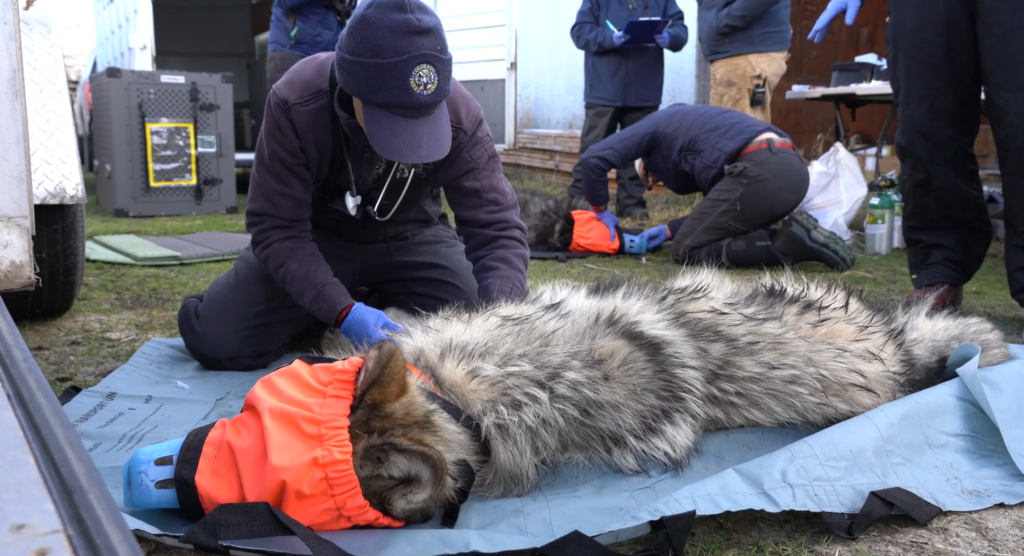
Latest death brings down wolves’ survival rate to 44% in Colorado
Marianne Goodland
marianne.goodland@coloradopolitics.com
Updated 13 hours ago
The female wolf of the mating pair for the King Mountain pack has died, bringing total fatalities to 14 out of the 25 animals reintroduced in Colorado. The wolf, identified as No. 2310, was among the 10 wolves brought to...
Roasts, get yer roasts, here: Capitol M | Week of March 14, 2026
Marianne Goodland
marianne.goodland@coloradopolitics.com
Updated 4 days ago
The lighter side of the Capitol, especially in the past week Apparently, the pending and eventual switch to daylight stupid time has put people in some pretty funny moods. And thank goodness! On March 4, the Senate approved the appointments...

Boebert challenger Eileen Laubacher joins lawsuit aimed at blocking her from Democratic assembly
Ernest Luning
ernest.luning@coloradopolitics.com
Updated 1 day ago
A Denver District Court judge on Thursday permitted Democratic congressional candidate Eileen Laubacher to join a lawsuit filed by one of her primary opponents seeking to prevent Laubacher from participating in the party’s assembly process in a bid to qualify...
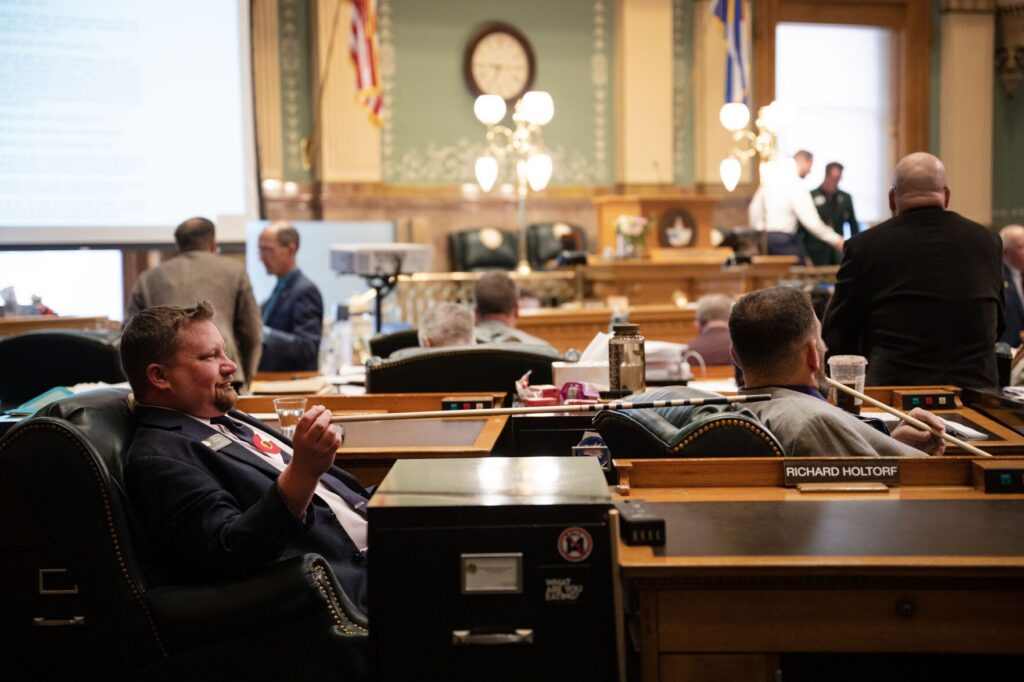
House Ethics Committee to begin hearing on Weinberg complaint
Marianne Goodland
marianne.goodland@coloradopolitics.com
Updated 1 day ago
The House Ethics Committee on Tuesday will begin a hearing requested by Rep. Ron Weinberg, R-Loveland, tied to an ethics complaint filed against him by Rep. Brandi Bradley, R-Roxborough Park. The ethics committee had found probable cause on two issues...
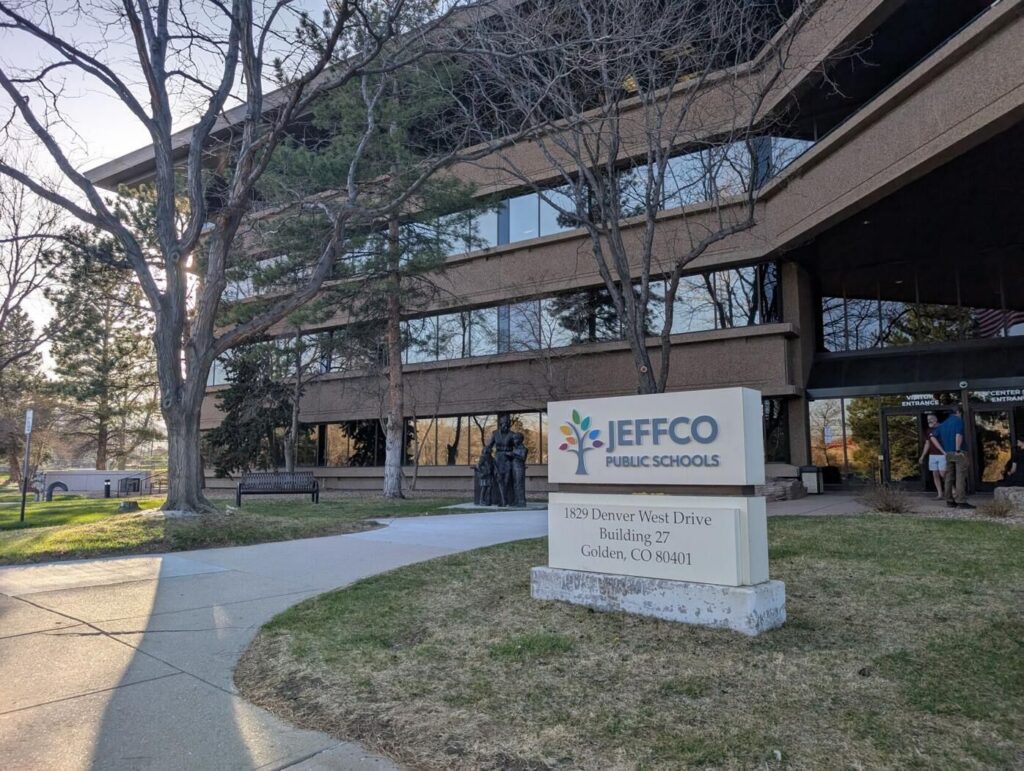
Jeffco Public Schools found in violation of Title IX
Sage Kelley
sage.kelley@denvergazette.com
Updated 1 day ago
Civil rights office: Male students occupy 61 roster positions on girls’ sports teams The U.S. Department of Education announced Friday that the Jeffco Public Schools district violated Title IX by permitting male students to access female bathrooms and compete in...
Colorado plans to slash interim committee work amid budget woes
Marianne Goodland
marianne.goodland@coloradopolitics.com
Updated 10 hours ago
In a tight-budget year, the work of interim committees — those off-session groups that look at transportation, agriculture, water, healthcare, wildfires, pensions, and anything else lawmakers want to look at — is on the chopping block. And this year, no...
Xcel Energy: Power shutoff ‘likely’ Saturday in Boulder, Jefferson counties
Dan Boniface
dan.boniface@denvergazette.com
Updated 1 day ago
Up to 43,000 residents in parts of Boulder and Jefferson counties should be prepared to have their power shut off Saturday afternoon, Xcel Energy said. The power company said it was “planning for a likely Public Safety Power Shutoff (PSPS)...
Colorado GOP chair Brita Horn says she’ll resign next month, points to ‘divide within our party’
Ernest Luning
ernest.luning@coloradopolitics.com
Updated 2 days ago
Colorado Republican Party Chair Brita Horn said Thursday that she will resign her position next month following the GOP’s state assembly, citing what she described as an “enduring divide” within the party “marked by vitriol and hostility.” Horn’s announcement came...
Senate committee moves forward with Colorado ballot measure to redirect TABOR refunds to schools
Marianne Goodland
marianne.goodland@coloradopolitics.com
Updated 1 day ago
A Senate panel on Thursday voted along party lines to move forward with a bill that would ask voters for permission to eliminate Taxpayer’s Bill of Rights refunds and redirect those dollars to K-12 public education. The 6-3 vote in...
PREV
PREVIOUS

Garfield County sheriff illegally collaborated with ICE, cease and desist letter claims
A cease and desist letter filed Wednesday alleged that the Garfield County sheriff intentionally violated state law by collaborating with the U.S. Immigration and Customs Enforcement (ICE). The letter, filed by the law firm Towards Justice, claimed that Garfield County Sheriff Lou Vallario told other law enforcement officials that he would not comply with Colorado’s […]

Colorado Politics Calendar Mar. 2-9
CoPo’s weekly political calendar will help you find political and public-policy events throughout Colorado. It includes candidate and issue campaign events, public policy meetings, court hearings, state and local party conventions, assemblies, debates, rallies, parades, speaking engagements, traveling dignitary appearances, water meetings, book signings, county commission hearings, city council meetings and more. As a subscriber, […]