

U.S. Supreme Court to hear bid by oil companies to toss climate suits in Boulder case

WASHINGTON • The U.S. Supreme Court has agreed to hear a bid by ExxonMobil and Suncor Energy to scuttle a lawsuit brought by officials in Boulder that seeks to hold the oil companies liable for allegedly helping to fuel climate change in a case that could affect dozens of similar lawsuits around the country.
The justices on Monday took up an appeal by the companies of a lower court’s ruling that let the litigation move forward. The suit alleging state law violations by the companies seeks unspecified monetary damages for costs incurred by Boulder associated with mitigating climate impacts.
President Donald Trump’s administration is backing the appeal by the oil companies.
The Boulder litigation is the latest chapter in efforts by numerous U.S. jurisdictions seeking damages from companies that extract, produce, distribute or sell fossil fuels.
Last year, the Colorado Supreme Court permitted Boulder County and the city of Boulder on Monday to proceed with their lawsuit against the two corporations.
The claims from Boulder County and the city of Boulder in Colorado court had implicated a variety of political and policy questions, including the executive and legislative branches’ prerogative to set energy policy and the slippery slope of permitting every municipal government to potentially seek money from private entities for climate-related disasters.
In the plaintiffs’ telling, ExxonMobil and Suncor knew for decades that the burning of fossil fuels and the release of greenhouse gases into the atmosphere would change the planet’s climate. Yet, the companies misrepresented or concealed their internal findings from the public, they alleged. As a result, Boulder County and the city of Boulder have had to spend money to address droughts, wildfires and other manifestations of extreme weather, they said.
The plaintiffs had brought the claims under the state’s common law — which refers the longstanding category of civil claims that does not originate with a specific statute. To them, the lawsuit was not about regulating emissions or altering federal policy, but to use the same tools as plaintiffs who are harmed by faulty products, for example.
On their side, the local governments wielded a 2023 decision of the Hawaii Supreme Court, finding the city of Honolulu’s similar state-law claims against Sunoco and other defendants could proceed. The U.S. Supreme Court declined to review that decision.
Meanwhile, the defendants in the Boulder County case had leaned on a different decision out of the New York-based U.S. Court of Appeals for the Second Circuit. In that lawsuit, where New York City sued ExxonMobil and other energy corporations, the Second Circuit ruled that the city would be “jeopardizing our nation’s foreign policy goals” by deploying state-level legal claims against longstanding national and international energy agreements.
In the May 12 opinion Colorado Supreme Court opinion, Justice Richard L. Gabriel had rejected the defendants’ argument that the lawsuit seeking damages was, in essence, a backdoor method of regulating global greenhouse gas emissions.
“Moreover, accepting defendants’ argument that a large damages award is equivalent to regulation and thus must be preempted could lead to the preemption of many traditional state law (liability) claims simply because they might lead to a large damages award,” he wrote. “But a lawsuit does not amount to regulation merely because it might have an impact on how actors in a given field behave.”
Justice Carlos A. Samour Jr. dissented, arguing all local governments are now empowered to file their own lawsuits to recover the costs of addressing climate change. Such a result, he argued, is “regulatory chaos.”
“We are but one indivisible nation. Yet, the majority in this case gives Boulder, Colorado, the green light to act as its own republic,” Samour wrote for himself and Justice Brian D. Boatright.
Nearly 60 state and local governments have brought similar lawsuits seeking billions of dollars in damages, with more continuing to be filed, the companies told the Supreme Court in a filing.
The Trump administration has acted in various ways to bolster the companies’ positions. Last year, it launched two preemptive cases seeking to stop Hawaii and Michigan from filing climate-related lawsuits against oil companies that the administration said would imperil domestic energy production.
Reporter Michael Karlik contributed to this article.


Democratic lawmakers propose changes to landlord-tenant laws in Colorado | Bills in Brief
Marissa Ventrelli
marissa.ventrelli@coloradopolitics.com
Updated 7 hours ago
Colorado lawmakers introduce hundreds of bills each year. Bills in brief cuts through the noise by explaining which proposals matter, what’s at stake, and how decisions at the Capitol could affect everyday life across the state. House Bill 1013, sponsored by Reps....
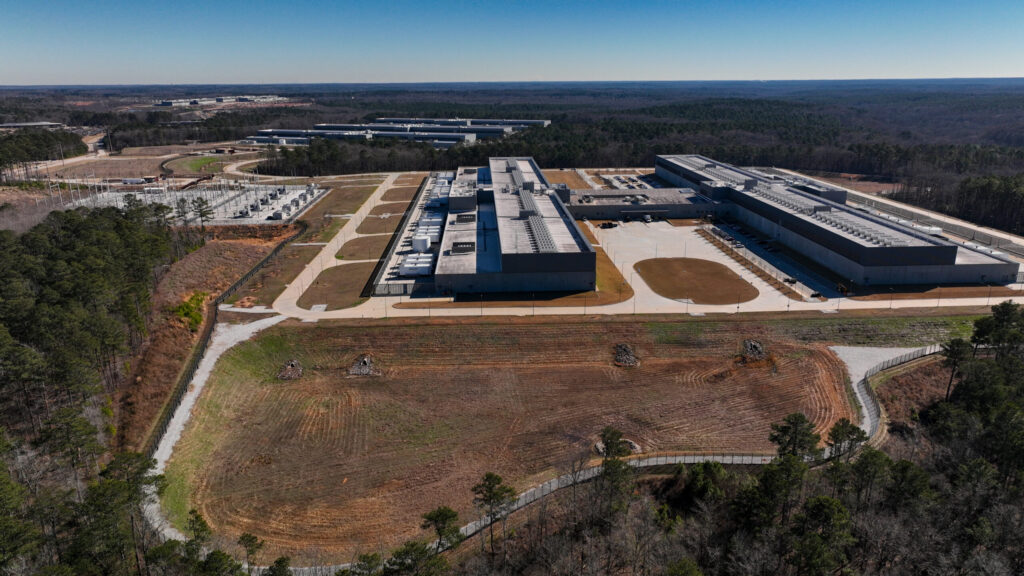
Colorado lawmakers mull competing bills on data centers
Scott Weiser
scott.weiser@gazette.com
Updated 2 hours ago
A Colorado coalition of data center developers and operators is urging lawmakers to pass a proposal that offers tax breaks to attract large facilities, while calling a competing bill a major obstacle to new investment. Meanwhile, proponents of the latter...

Denver plans moratorium on new data centers
Deborah Grigsby
deborah.smith@denvergazette.com
Updated 1 hour ago
As artificial intelligence drives the data center construction boom, building one in Denver is poised to get more complicated after Mayor Mike Johnston and members of the Denver City Council announced plans to impose a moratorium on new facilities. Under...

Greeley voters to decide fate of project that includes minor league hockey arena
Hap Fry, Special to The Gazette
hap-fry@gazette.com
Updated 1 day ago
GREELEY • The fate of the Cascadia development — and quite possibly the future direction of the city — is in the hands of Greeley voters this Tuesday during a special city election on whether the landscape-altering project should be...
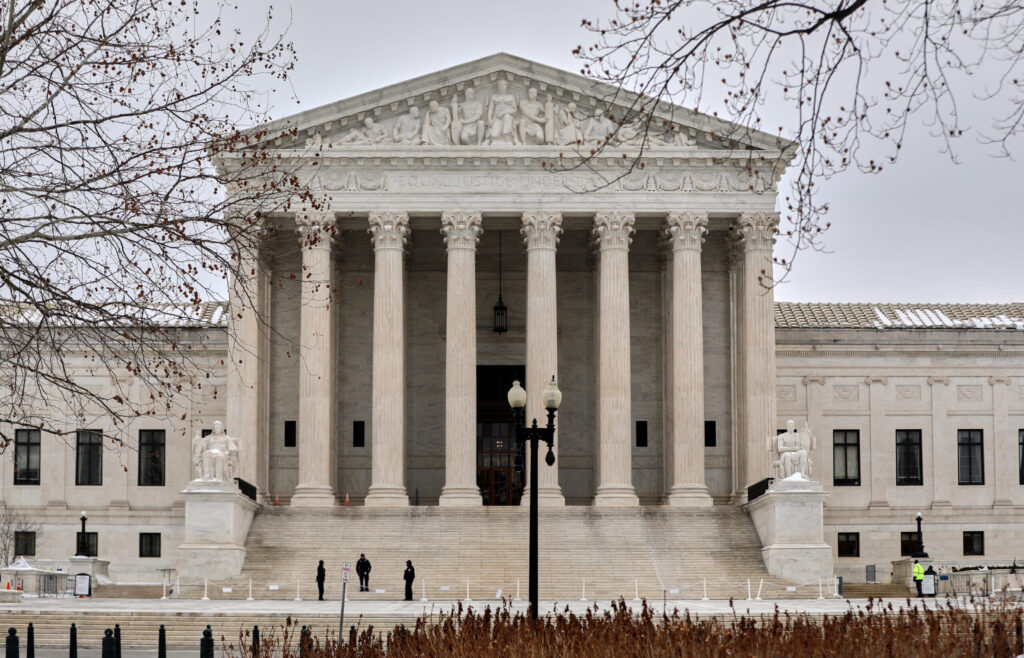
U.S. Supreme Court strikes down Trump’s tariffs, upending central plank of economic agenda
Lindsay Whitehurst
lindsay.whitehurst@associatedpress.com
Updated 3 days ago
WASHINGTON • The Supreme Court struck down President Donald Trump’s global tariffs on Friday, handing him a major loss on an issue crucial to his economic agenda. The 6-3 decision centers on tariffs imposed under an emergency powers law, including...

Colorado legislators challenge lottery rules allowing credit card purchases
Marianne Goodland
marianne.goodland@coloradopolitics.com
Updated 11 hours ago
Back in November, legislators told the Colorado Lottery Commission to hold off on rules that would allow, for the first time, purchases of lottery products with credit cards. The commission went ahead anyway and approved those changes. And now lawmakers...
Potential clues? Palantir shares several risks of doing business in Colorado
Bernadette Berdychowski
bernadette.berdychowski@denvergazette.com
Updated 5 days ago
When Palantir announced it moved its headquarters from Denver to Miami, it gave little reason for its decision. All it sent out was a short post on X. It came as a shock that the major company known for its...

Three local nonprofits awarded grants in nationwide award cycle | NONPROFIT REGISTER
Joanne Davidson Special to Colorado Politics
joanne-davidson-special-to-colorado-politics@coloradopolitics.com
Updated 2 days ago
MJ CHARITABLE FOUNDATION Phoenix, AZ News: Dress for Success Denver, Global MindEd and We Don’t Waste are among the nonprofits receiving grants from the MJ Charitable Foundation in its current grant cycle. Dress for Success Denver received $25,000, We Don’t Waste was awarded $15,000 and Global MindEd was given $5,000. Other...
Palantir moves HQ from Denver to Miami
Bernadette Berdychowski
bernadette.berdychowski@denvergazette.com
Updated 6 days ago
Palantir Technologies Inc., a large artificial intelligence and software company with many government contracts, including federal immigration forces and the U.S. military, is moving its headquarters out of Denver. “We have moved our headquarters to Miami, Florida,” the company posted...

Push to regulate high concession prices in Colorado could hurt vendors, critics warn
Bernadette Berdychowski
bernadette.berdychowski@denvergazette.com
Updated 1 week ago
High food and drink prices have long been a staple of going to a sports game, concert, festival or the airport. But as inflation has increasingly pinched people’s wallets, pushback against higher concession prices is growing. The issue has reached...
PREV
PREVIOUS

Denver plans moratorium on new data centers
As artificial intelligence drives the data center construction boom, building one in Denver is poised to get more complicated after Mayor Mike Johnston and members of the Denver City Council announced plans to impose a moratorium on new facilities. Under the plan, the city will review additional data-center-specific regulations targeting “responsible land, energy, and water […]

New Supreme Court member announced, justices hear oral arguments | COURT CRAWL
Welcome to Court Crawl, Colorado Politics’ roundup of news from the third branch of government. The governor announced his pick to fill a vacancy on the state Supreme Court, and the justices heard oral arguments in multiple criminal and civil cases. Susan Blanco joins highest court • Chief Judge Susan Blanco of Larimer and Jackson counties […]