

Will President Trump’s emissions ‘progress’ turn into pollution regression? | Paula Noonan
Will President Donald Trump allow gasoline producers to put lead back in petrol? Will he declare by executive order fuel engines no longer need catalytic converters? Just wondering how far he will take his environmental policies before his four years in office are up.
Trump’s 2025 executive order to reconsider the Environmental Protection Agency’s (EPA) rules on greenhouse gas endangerment resulted in EPA’s rescission of emissions standards. The agency’s rules originally applied to vehicles and engines and later to other carbon- and methane-emitting entities such as refineries, power plants and oil-and-gas operations. The president apparently applied his Bobby McFerrin political philosophy to this action: Don’t worry, be happy.
Gov. Jared Polis commented on the president’s decision. He cited unpredictability as a principal risk for people and business upon the rule’s rescission. A quick mind experiment suggests there will be great predictability related to certain impacts.
Car emission standards will no longer come from the federal government. This creates a stark ethical dilemma for the U.S. car industry and its shareholder-owned companies. They no longer must comply with federal emission standards. They can build big truck engines that push out any amount of carbon and methane. These vehicles are their most profitable products.
Under the previous rule, car makers had to offset their big trucks’ pollution with lower-profit-margin, emissions-efficient cars. Think hybrids and electric vehicles. Since 2009, these industrial powerhouses have redesigned their manufacturing, used lighter materials, and produced more efficient engines. What now?
Refineries, power plants, and oil-and-gas drillers and operators will face the same stark ethical choice: will they continue to mitigate carbon and methane because of EPA’s rules or will they forego that expense? Trump’s action may produce the greatest challenge to theories of capitalism and free markets in history as the rest of the world and the people of this nation look on.
For Colorado and other states with air-quality problems along with climate-change-produced drought conditions in the west, Trump’s deregulation is a certain disaster. The upper and lower states along the Colorado River can stop negotiating the river’s water. There won’t be enough to matter.
News reports indicate emissions regulation will go to the states. That will be where unpredictability for industry shows up. Seventeen states mostly blue in political color follow California’s engine emission standards. That population represents about 40% of the nation. The country will now learn from the other 33 states how industry prioritizes money versus the people’s health and environmental security.
The U.S. auto industry will face multiple temptations and counter pressures. They can build big, gas-guzzling trucks for the U.S. market, but they won’t be able to sell them in nations with strict emissions regulations. They face pressures from China, that sells its EVs everywhere but here in the US. As Trump’s policies to slow-walk electric vehicle charging stations proceeds, the auto industry can choose to give up on its EV initiatives for short term gains in gas-engine vehicle sales. But that choice threatens other business sectors that cannot thrive in an over-heated planet.
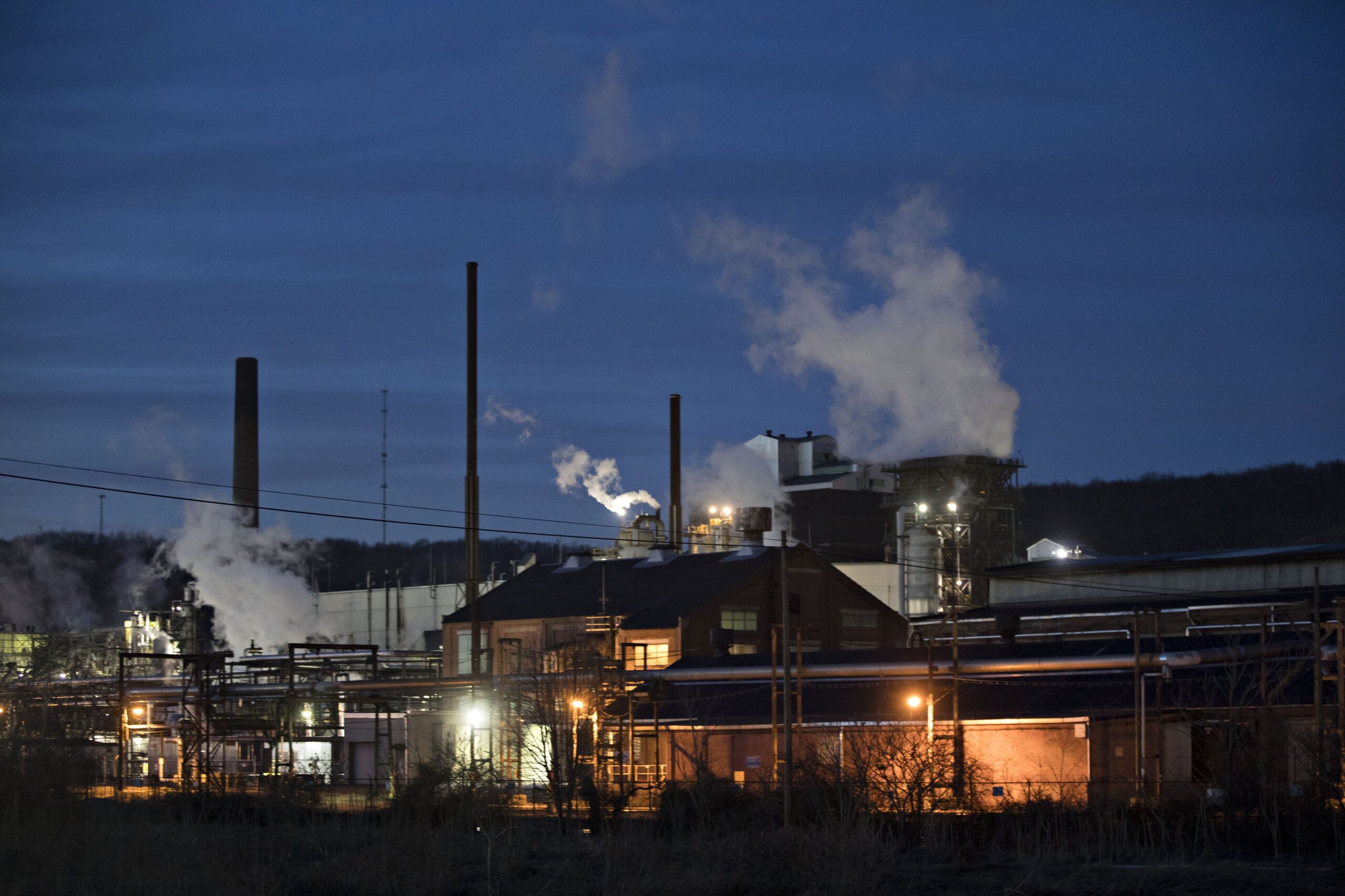
In Colorado, various environmental bills put up emissions controls. SB19-181 set a foundation energy development in oil and gas could not come at the expense of human and environmental health and welfare. Follow-up legislation has affected how drillers must measure and fix methane leaks and how other industrial operations must lower their emissions. None of these actions, however, has been enough to bring Colorado’s air quality along the FrontRange into compliance with EPA’s former rules.
Other areas of Colorado with significant oil-and-gas production also experience violations of EPA’s former standards. Unless the state acts, it’s very possible emission progress will turn into pollution regression.
Coloradans likely to suffer most under Trump’s repeal are people who live near interstate highways, near active oil-and-gas operations, and proximate to the Suncor Refinery and other industrial activities in north Denver and Adams County. If energy industries choose to go down the deregulation road, they can easily load up the state with carbon and methane emissions that directly affect ozone production, especially in summer months.
Anyone paying attention to the pain in Colorado’s recreational snow industries knows what’s at stake with emissions regression. Less snow due to climate change also affects agriculture, summer recreation and cities and counties trying to find enough water for residential and commercial uses.
The AI world will suffer as it needs water to cool its energy-driven servers in their enormous warehouses, at least until AI can figure out a water substitute. Very sadly, nature and all its elements will feel the pain of wind, fire and floods.
With this latest blow to science and common sense as it applies to how we as a nation conduct ourselves, has Trump completed his reversal of the mechanisms that keep us thriving? We no longer use vaccines to prevent measles or polio. Trump’s administration has essentially closed down environmental science funded by the federal government. Our scientists are fleeing to labs overseas. Don’t worry, be happy.
Paula Noonan owns Colorado Capitol Watch, the state’s premier legislature tracking platform.

Rep. Ron Weinberg denies allegations in response to House ethics complaint
Marianne Goodland
marianne.goodland@coloradopolitics.com
Updated 22 minutes ago
A legislator from Loveland has denied allegations made against him by a fellow Republican in his response to an ethics committee looking into the claims. In his Feb. 6 response, Rep. Ron Weinberg said the complaint “appears (to be) politically...

One Chance to Grow Up director reflects on marijuana legalization 14 years later
Marissa Ventrelli
marissa.ventrelli@coloradopolitics.com
Updated 1 hour ago
Fourteen years after Colorado became one of the first states to legalize recreational marijuana, the executive director of an organization focused on educating parents about the drug’s effects on developing brains is reflecting on how much has changed in nearly...

Colorado’s Medicaid crisis was years in the making | OPINION
Colorado Politics
colorado-politics@coloradopolitics.com
Updated 16 hours ago
By Greg D’Argonne As the Joint Budget Committee meets to finalize spending decisions for the coming fiscal year, one truth should guide the conversation: Colorado’s health care budget strain did not appear overnight — and it is not the fault...

Metro district legislation provides pragmatic, meaningful solution | OPINION
Colorado Politics
colorado-politics@coloradopolitics.com
Updated 16 hours ago
By Sam Nizam Colorado needs more transparency and accountability in government… at all levels. And during the 2025 legislative session, one such bill made it through the process, improving transparency at the closest local level: metro districts. House Bill 25-1219,...

Provide Colorado workers with a ladder to climb to boost Colorado’s economic potential | OPINION
Colorado Politics
colorado-politics@coloradopolitics.com
Updated 6 hours ago
By Jason Janz Colorado has the most educated population in the country, but it cannot fill the critical jobs that keep our communities and economy running. A significant shortage of essential workers in every category — trades and blue-collar jobs...

Colorado bill seeks to limit surveillance tech to ‘lawful’ public safety purposes
Marissa Ventrelli
marissa.ventrelli@coloradopolitics.com
Updated 4 hours ago
A Republican legislator is pushing legislation on surveillance technology that, she said, is designed to achieve a balance between aiding law enforcement and protecting people’s private rights. Her proposal is drawing support from both sides of the ideological aisle, though...
Democrats want to decouple Colorado from federal tax breaks
Marissa Ventrelli
marissa.ventrelli@coloradopolitics.com
Updated 22 hours ago
Democratic members of Colorado’s House and Senate on Tuesday announced the introduction of a slew of bills that would reduce corporate tax deductions and sever Colorado’s tax regime from recent federal changes to the tax code. The federal tax changes...

Colorado title board OKs language of ballot measure to privatize Pinnacol Assurance
Marianne Goodland
marianne.goodland@coloradopolitics.com
Updated 1 day ago
The state’s title board on Wednesday unanimously voted to approve the wording of a ballot measure that would allow Pinnacol Assurance, the state’s workers’ compensation insurance provider of last resort, to privatize. Behind ballot measure No. 218 is Colorado Succeeds,...
National redistricting fight reaches Colorado with ballot measures targeting GOP-held congressional districts
Marianne Goodland
marianne.goodland@coloradopolitics.com
Updated 8 minutes ago
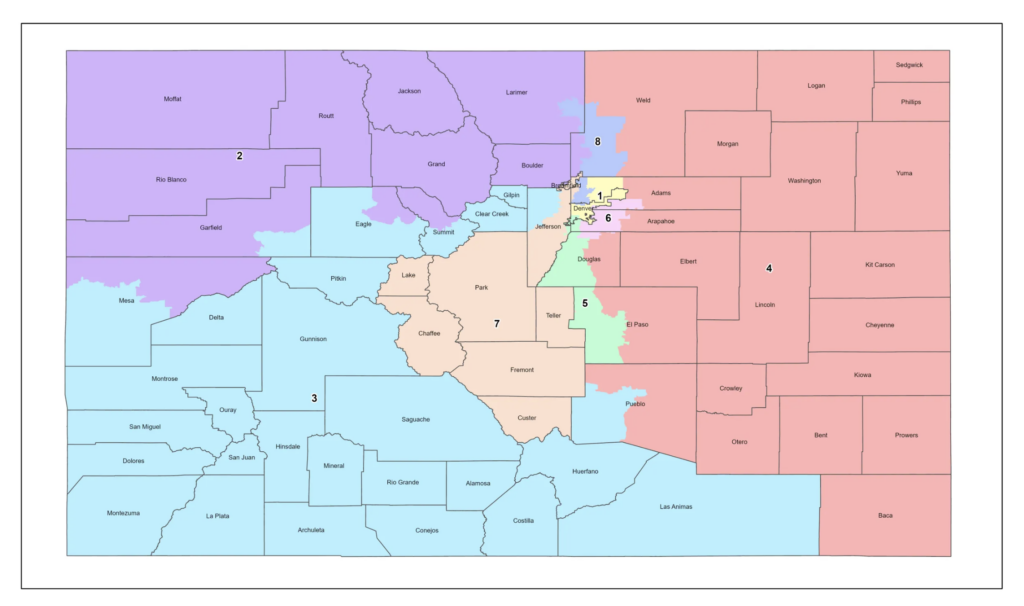
A Democratic-aligned group backed by the House Majority PAC filed four versions of a 2026 ballot measure Tuesday that would temporarily suspend Colorado’s independent congressional redistricting commission and redraw the state’s map in an effort to flip three Republican-held U.S....

Colorado senators review budget as Medicaid costs drive $776 million increase
Marianne Goodland
marianne.goodland@coloradopolitics.com
Updated 2 hours ago
Colorado senators this week are reviewing revisions to the current state budget, which has been reduced by hundreds of millions of dollars in each round of cuts. The bottom line is that, because of Medicaid costs, the state will spend...
PREV
PREVIOUS

Colorado's Medicaid crisis was years in the making | OPINION
By Greg D’Argonne As the Joint Budget Committee meets to finalize spending decisions for the coming fiscal year, one truth should guide the conversation: Colorado’s health care budget strain did not appear overnight — and it is not the fault of hospitals, doctors, or any medical provider. Health care spending itself is at the heart […]

One Chance to Grow Up director reflects on marijuana legalization 14 years later
Fourteen years after Colorado became one of the first states to legalize recreational marijuana, the executive director of an organization focused on educating parents about the drug’s effects on developing brains is reflecting on how much has changed in nearly a decade. Henny Lasley, cofounder of One Chance to Grow Up, said among the biggest […]