

GoFundMe donations for victim do not lessen defendant’s restitution obligation, appeals court rules

Donations made to a victim’s crowdfunding page do not necessarily reduce the defendant’s obligation to pay crime victim restitution, Colorado’s second-highest court concluded on Thursday.
Under state law, crime victim compensation boards reimburse victims for certain monetary losses, including funeral costs, medical expenditures, and property damage. Prosecutors may, in turn, seek restitution payments from the defendant whose conduct caused the losses.
However, the boards can deduct from their payments any money that the victim receives directly from the defendant, from the state or federal government, and from “a private source.”
After Harlan Nelson Eddington pleaded guilty in Douglas County to vehicular manslaughter for killing Molly Sadler, the prosecution sought $5,487 in restitution for the crime victim compensation board’s payments for Sadler’s funeral and burial expenses.
The defense objected, pointing to a GoFundMe page that raised at least $2,608 for costs related to Sadler’s funeral and her dog. The victim is only entitled to compensation from the board that “has not been paid for by a collateral source,” wrote public defender Lauren Sposa.
Chief Judge Ryan Stuart declined to deduct the crowdfunded amounts from the requested restitution, reasoning that it was unclear whether the money paid for the same expenditures of the crime victim compensation board.
“I don’t know that that money was raised for funeral expenses and given to the family and said, ‘… This money that we raised can only be used for funeral expenses,’ or if the victim’s family (could) take that money and just go to the spa because they feel sad one day,” he said. “Without evidence before the court that there were restrictions placed on the use of these funds … I can’t make those findings.”
Eddington appealed, arguing the GoFundMe page explicitly indicated the money was intended to cover funeral expenses.
“Here, there was no evidence that Sadler’s family was limited by any agreement as to how to apportion the donated funds between arguably covered expenses and uncovered expenses,” countered Senior Assistant Attorney General Brittany Limes Zehner.
Case: People v. Eddington
Decided: February 19, 2026
Jurisdiction: Douglas County
Ruling: 3-0
Judges: Katharine E. Lum (author)
Jerry N. Jones
Melissa C. Meirink
A three-judge Court of Appeals panel agreed with the government.
“Eddington doesn’t direct us to any language in the restitution statute or the compensation act (and we can find none) that requires a court to reduce the amount of restitution simply because a victim received a monetary gift,” wrote Judge Katharine E. Lum in the Feb. 19 opinion.
She cited three prior appellate decisions involving a defendant’s obligation to pay crime victim restitution in light of insurance company settlements resulting from vehicle crashes. While the Court of Appeals had concluded defendants may be entitled to deductions when the settlements clearly duplicate the costs that crime victim compensation boards would cover, that was not true with no-strings-attached settlements.
Similarly, “absent evidence that the donated funds are required to be used in one or more specific ways, there are no strings attached to donations or other monetary gifts,” Lum wrote.
The case is People v. Eddington.

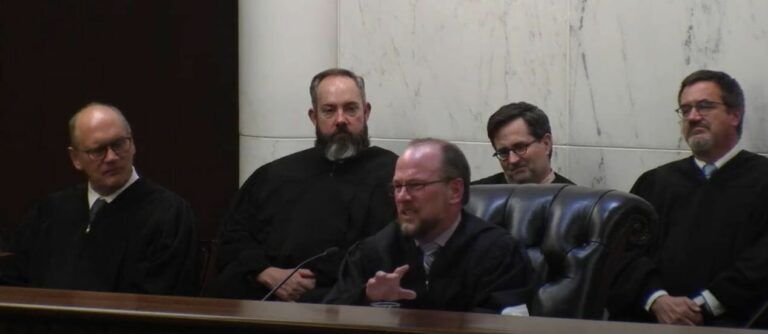
Colorado counties cannot challenge state law restricting immigration contracts, appeals court says
Michael Karlik
michael.karlik@coloradopolitics.com
Updated 9 minutes ago
Colorado’s second-highest court ruled on Thursday that counties lack standing to challenge a 2023 state law that restricts their ability to contract with the federal government or private entities for immigration detention. A three-judge Court of Appeals panel agreed with...

Colorado lawmakers propose changes to family court procedures | Bills in Brief
Marissa Ventrelli
marissa.ventrelli@coloradopolitics.com
Updated 17 hours ago
Colorado lawmakers introduce hundreds of bills each year. Bills in brief cuts through the noise by explaining which proposals matter, what’s at stake, and how decisions at the Capitol could affect everyday life across the state. Colorado lawmakers from both parties are...
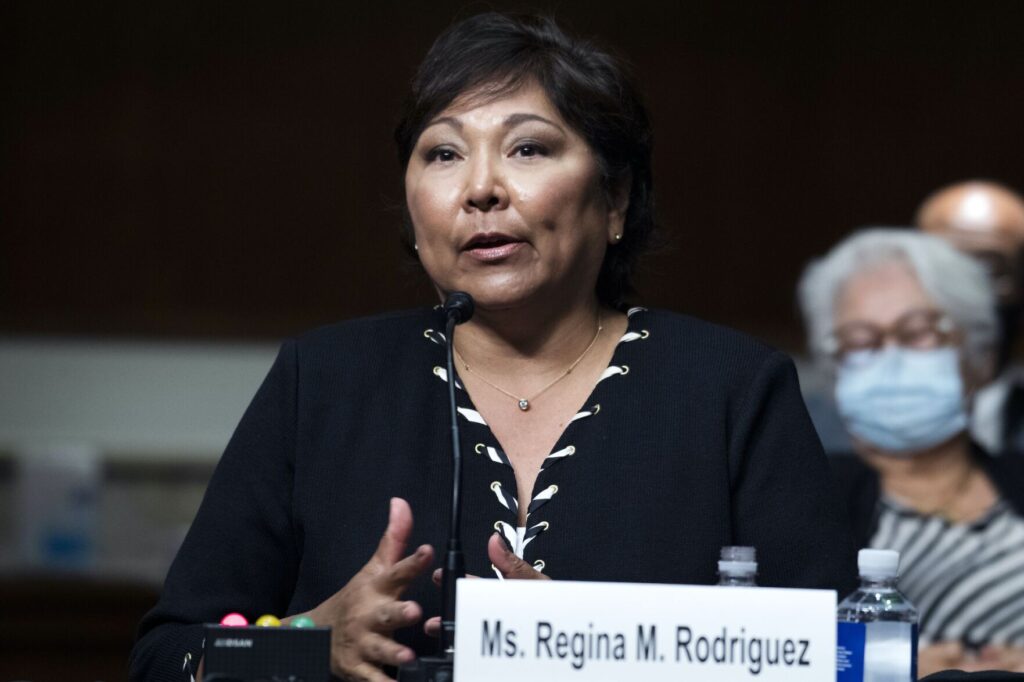
Federal judge partially allows second World Cup trafficking lawsuit to move forward
Michael Karlik
michael.karlik@coloradopolitics.com
Updated 19 hours ago
A federal judge allowed some claims to move forward last month against companies operating out of Colorado that allegedly participated in a human trafficking venture involving Filipino laborers who constructed facilities for the 2022 World Cup in Qatar. There are...
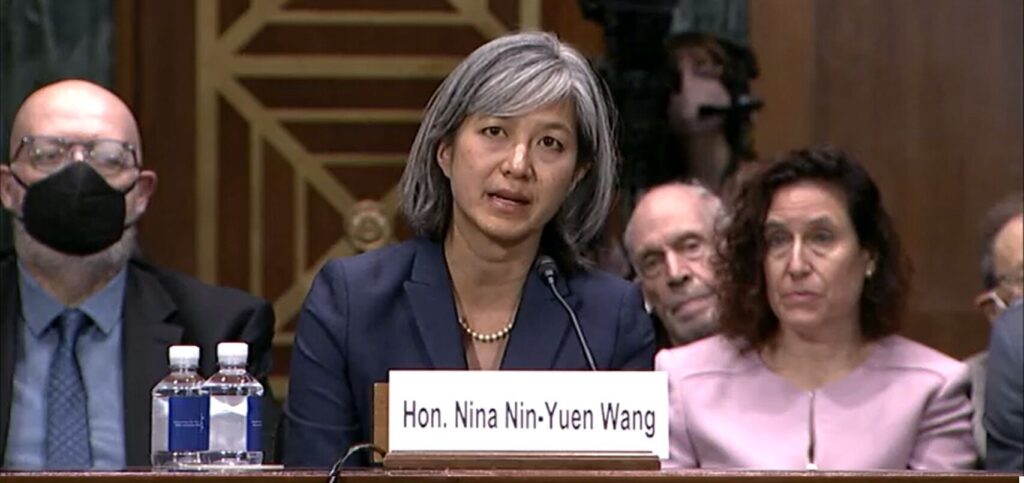
Federal judge dismisses lawsuit seeking to force Colorado secretary of state to screen out scam filings
Michael Karlik
michael.karlik@coloradopolitics.com
Updated 13 hours ago
A federal judge dismissed a lawsuit last week that sought to require Colorado’s secretary of state to verify corporate filings in the state’s database to reduce the risk of future fraud. Bernard Butts of Florida, who was 83 when he...
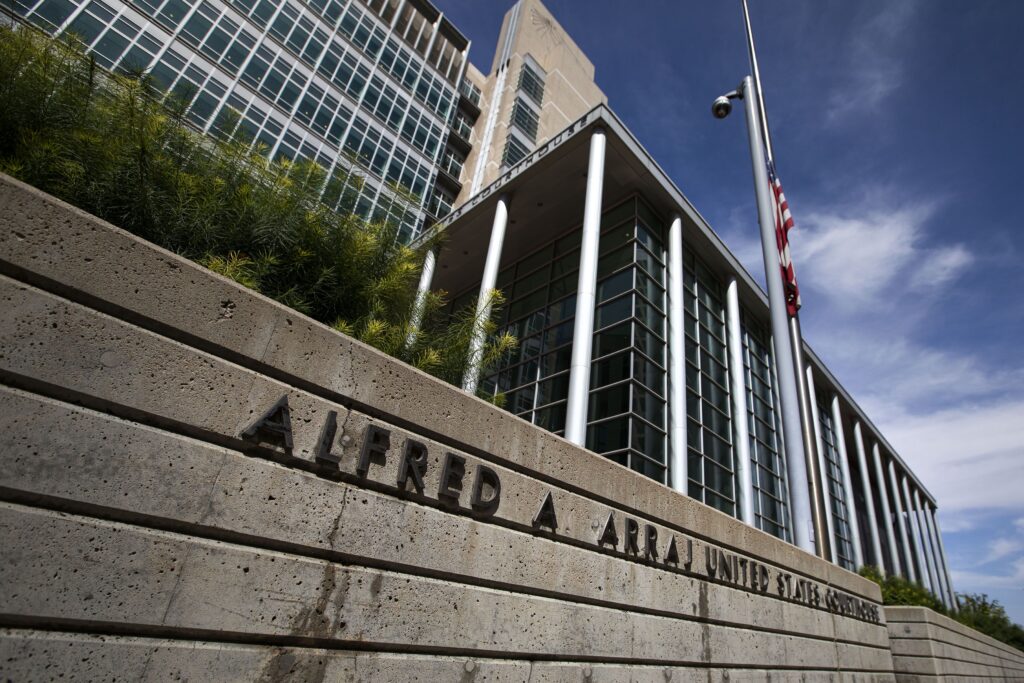
Federal judge finds no constitutional violation by Huerfano County well inspectors
Michael Karlik
michael.karlik@coloradopolitics.com
Updated 17 hours ago
A federal judge concluded last month that two Huerfano County employees did not engage in an unconstitutional search when they approached the plaintiffs’ camper within 40 feet to investigate a potential code violation. In July 2021, the county’s building inspector,...
Federal judge warns of increasingly inadequate immigration bond hearings
Michael Karlik
michael.karlik@coloradopolitics.com
Updated 2 days ago
A federal judge ordered the immediate release of a man in immigration custody last week and, seemingly for the first time in Colorado, warned that the government is increasingly conducting inadequate bond hearings for detainees. Colorado’s federal trial court is facing...

10th Circuit upholds dismissal of Barry Morphew’s civil lawsuit against prosecutors, investigators
Michael Karlik
michael.karlik@coloradopolitics.com
Updated 2 days ago
The Denver-based federal appeals court agreed on Monday that Barry Morphew, who now stands accused for a second time of murdering his wife, failed to state viable claims against the government officials involved in his first, unsuccessful prosecution. Morphew was...
Federal judge blocks evidence from Aurora police’s unconstitutional search
Michael Karlik
michael.karlik@coloradopolitics.com
Updated 2 days ago
A federal judge ruled last month that prosecutors cannot use firearm evidence against a defendant because Aurora police searched him without having any reasonable basis to believe he was armed and dangerous. In evaluating the constitutionality of the search, U.S....

Colorado justices confirm lawyers may ‘borrow’ allegations from elsewhere
Michael Karlik
michael.karlik@coloradopolitics.com
Updated 3 days ago
The Colorado Supreme Court ruled on Monday that plaintiffs’ lawyers can use allegations made elsewhere to bolster their own clients’ claims, so long as the attorney first performs some degree of investigation into the “borrowed” assertions. Under Colorado’s rules for...
Appeals Court rules Douglas County violated open meeting laws
Nicholas Fogleman
nicholas.fogleman@denvergazette.com
Updated 2 days ago
The Colorado Court of Appeals ruled that Douglas County Commissioners violated Colorado open meeting laws in a series of closed meetings leading up to the county’s failed home rule special election. The Thursday ruling reversed a trial court’s denial of...
PREV
PREVIOUS
Colorado senators initially push for — then drop 'identity' factor in parenting time decisions
The sponsors of a proposal that would require suppression of records in name-change petitions for minors removed a provision that would have mandated the courts to factor in the issue of “identity” when allocating parenting time. In its original form, Senate Bill 018, included a requirement that family courts consider whether parents recognize their child’s […]

Researchers to study universal health care, as Coloradans face $1 billion in medical debt
Colorado residents owe about $1 billion in medical debt. The sky-high number is a small portion of the nation’s medical debt estimated around $220 billion, according to a 2024 analysis by Peterson Center on Healthcare and KFF, formerly the Kaiser Family Foundation. As more people nationally are expected to lose their health insurance following planned […]