Bureau of Land Management revokes American Prairie’s bison leases | OUT WEST ROUNDUP
MONTANA
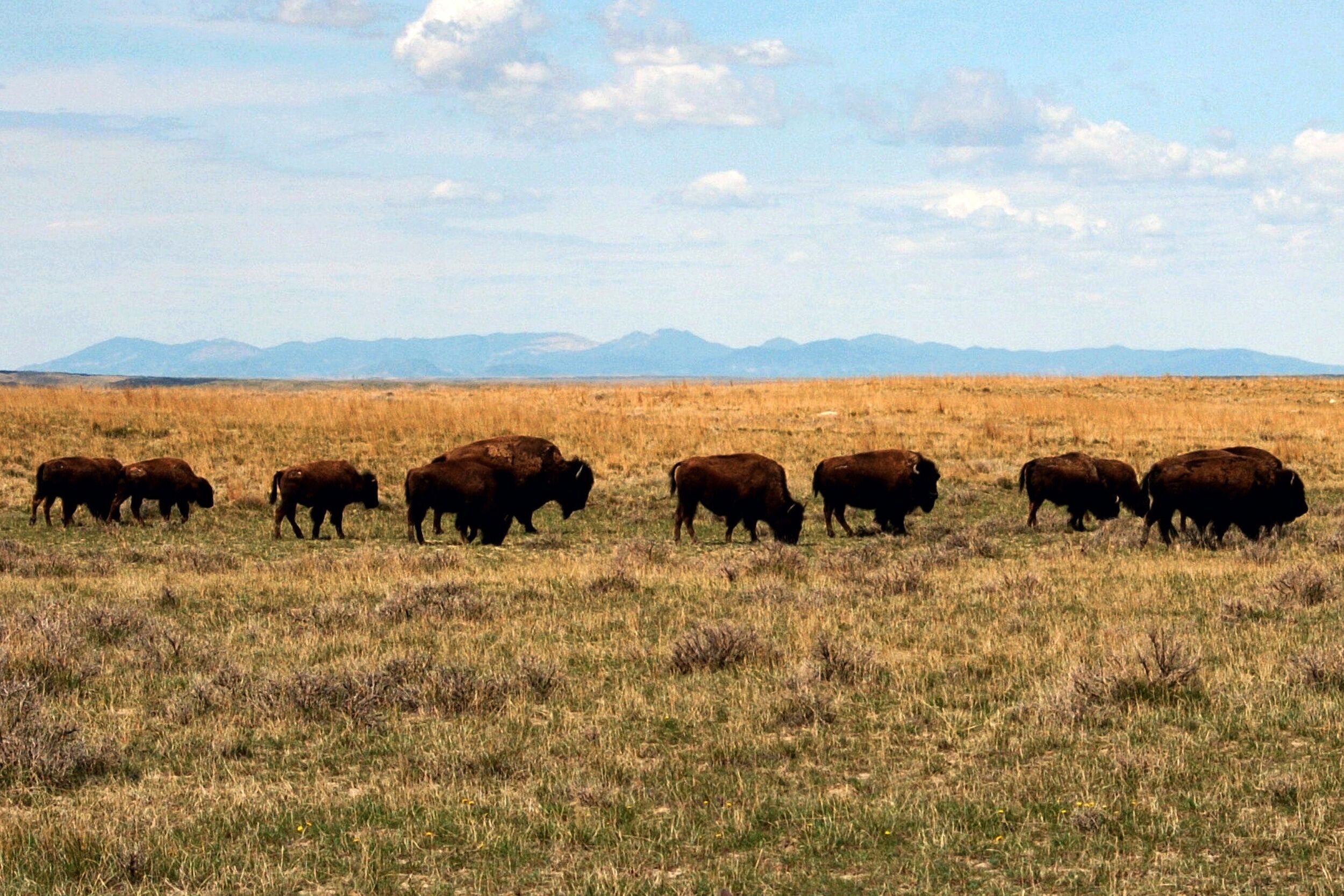
BLM revokes bison grazing leases
The U.S. Department of the Interior announced on Jan. 16 that it is revoking grazing permits in Phillips County that American Prairie had been using to sustain its herd of bison.
The decision comes after a three-and-a-half-year battle between the Montana livestock industry, backed by Gov. Greg Gianforte and the Montana Department of Justice, and American Prairie, a conservation nonprofit working to restore the prairie ecosystem of north-central Montana.
The Montana Stockgrowers Association cheered the news, describing it as a “win for public lands ranching in Montana.”
American Prairie called the decision a “troubling precedent” for those reliant on consistent, predictable federal land management decisions.
American Prairie CEO Ali Fox emphasized bison’s ecological significance to prairie ecosystems in a statement, describing it as “a relationship that has been extensively studied and well documented over time.”
American Prairie had been grazing bison on four leases for about three years as the high-profile case wound through the Interior Department’s Office of Hearings and Appeals, and noted that it first received permission to graze bison on BLM land using other leases that were also revoked by the Jan. 16 decision in the mid-aughts and has “done so successfully for the past 20 years.”
In December, Trump administration Interior Secretary Doug Burgum directed the BLM to reconsider the grazing authorization approved by the Biden administration in 2022, arguing that the 1934 Taylor Grazing Act requires that grazing on publicly owned federal lands be “limited to cases where the animals to be grazed are domestic and will be used for production-oriented purposes.”
That distinction was the justification BLM provided for its decision.
OKLAHOMA
US invests in rare earth miner
The U.S. is taking a minority stake in an Oklahoma rare earth miner, the latest government investment in the sector as it seeks to minimize its reliance on imports of a material used prevalently in smartphones, robotics, electric vehicles and many other high tech products.
China processes more than 90% of the world’s critical minerals and has used its dominance in the market to gain leverage in the trade war with Washington.
USA Rare Earth said on Jan. 26 that the U.S. Commerce Department is investing $1.6 billion in the company to advance work on a mine in Texas and to build a magnet manufacturing facility in Oklahoma.
Shares of USA Rare Earth jumped more than 13% before U.S. markets opened.
The agreement with the Commerce Department’s CHIPS program includes $277 million in proposed federal funding and a $1.3 billion senior secured loan. The Commerce Department will get 16.1 million shares of common stock in return, as well as rights to buy 17.6 million more.
Industry insiders, analysts and lawmakers have warned for years that America’s dependence on China for critical minerals — a list of 50 minerals that includes 17 sought-after rare-earth elements — is a national security vulnerability.
USA Rare Earth, based in Stillwater, Oklahoma, is the third U.S. operator in which the Trump administration has invested in recent months.
The Trump administration’s tax and spending cut bill includes $2 billion for the Pentagon to boost the U.S. stockpile of critical minerals and $5 billion more through 2029 to invest in those supply chains.
UTAH
Chief justice cautions against court expansion
SALT LAKE CITY — The chief justice of Utah’s state Supreme Court cautioned lawmakers against meddling with the judiciary as Republicans pushed to add justices to the high court during their annual 45-day session that began Tuesday.
Republican legislative leaders and Gov. Spencer Cox have said they support a proposal to expand the five-judge panel to seven, arguing it would help speed up decision-making. Legal experts say the move could have the opposite effect and set a dangerous precedent at a time of tension between the two branches.
The move comes as Utah courts have dealt lawmakers a string of defeats on abortion restrictions, transgender athletes and the legislature’s ability to change or repeal voter-approved initiatives. The legislature is also preparing to appeal a redistricting ruling that gave Democrats a strong shot at picking up one of Utah’s four Republican-held congressional seats in the midterms this fall.
“I ask that your disappointment with a few results not lead to penalties for an entire branch of government and, by extension, penalties for your constituents,” Chief Justice Matthew Durrant said on Jan. 20 in his yearly address to lawmakers.
Durrant said it’s the Legislature’s prerogative to expand the Supreme Court, but he urged them to prioritize adding judges to lower courts, where the need is greater.
Cox has denied that the proposal to add justices is politically motivated, noting that Republican governors and senators have made all recent appointments to the court.
WYOMING
Over-the-counter ivermectin
CHEYENNE — A new legislative push to make ivermectin available without a prescription in Wyoming is drawing sharp criticism from medical professionals, who warn the move could not only endanger patients, but also inadvertently dry up the state’s supply of the medication.
Advocates say it will increase care and give patients greater medical freedom.
House Bill 13, sponsored by Rep. Gary Brown, R-Cheyenne, seeks to require that ivermectin be provided as an over-the-counter (OTC) medication without the need for a prescription or consultation with a health-care professional. However, since the FDA continues to classify oral ivermectin as a prescription-only medication federally, it’s unclear how many pharmacists would actually dispense it if this bill became law.
Under the proposed statute, ivermectin would no longer be designated as a “dangerous substance” or a medication requiring practitioner supervision in the state of Wyoming.
While the bill aims to increase public access, health-care experts across the state are advising caution regarding the drug’s effectiveness and the legal quandary the bill creates for local pharmacists.
Bill sponsor Rep. Joel Guggenmos, R-Riverton, said his belief in the drug’s effectiveness is based largely on testimonies he has heard and reports he has seen online. Guggenmos and supporters of the bill often point to ivermectin’s potential to treat illnesses ranging from the flu to cancer.
However, Dr. Greg Stampfli, a family medicine physician at Cheyenne Regional Medical Center, expressed deep concern over the “huge amount of misinformation” circulating online, particularly concerning the drug’s supposed treatment of cancer.
Despite the warnings from the medical community, the bill’s advocates argue that Wyoming residents should have the right to choose their own treatments without interference from “Big Pharma” or the mainstream medical industry.

Colorado GOP Chair Brita Horn rebuffs critics as fellow party officer greenlights ‘no-confidence’ vote
Ernest Luning
ernest.luning@coloradopolitics.com
Updated 19 hours ago
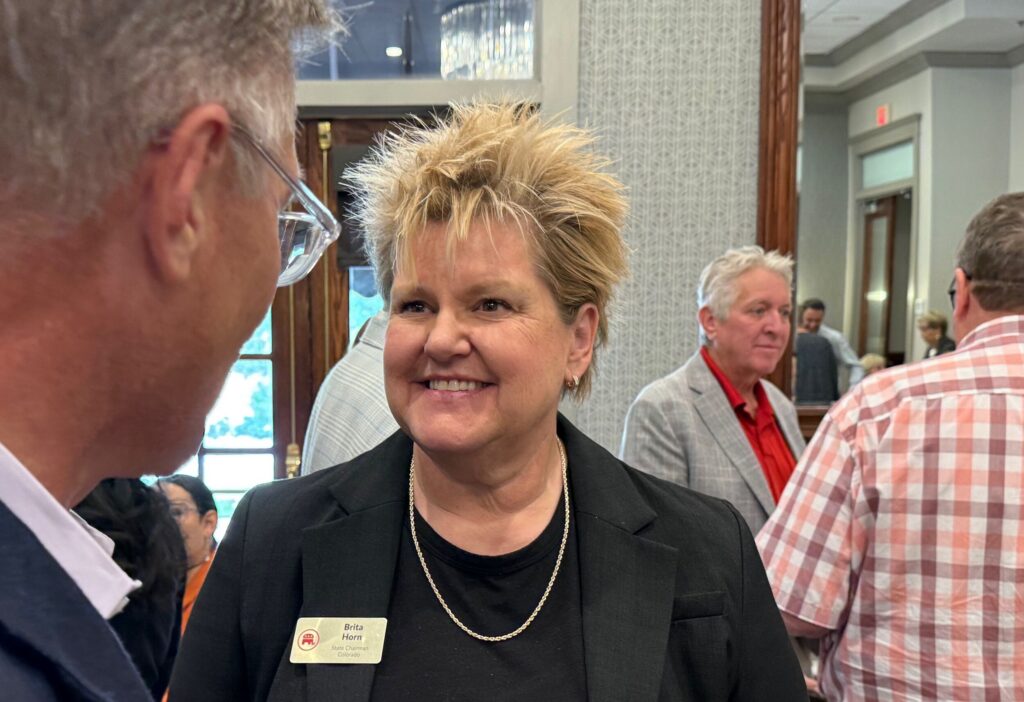
A Colorado Republican Party officer said last week that a move by party officials to impose restrictions on state GOP chair Brita Horn and hold a “no-confidence” vote on her leadership can proceed. Horn, however, told Colorado Politics that the...

Evans challenger Evan Munsing qualifies by petition for Democratic primary ballot in Colorado’s 8th CD
Ernest Luning
ernest.luning@coloradopolitics.com
Updated 20 hours ago
Thornton Democrat Evan Munsing, one of three major Democratic candidates challenging Republican U.S. Rep. Gabe Evans’ bid for a second term, became the first candidate to qualify for Colorado’s 8th Congressional District primary after submitting a sufficient number of valid...
Pueblo state representative defects from party, handgun carry permit bill receives first real scrutiny | A LOOK BACK
Rachael Wright, Special to Colorado Politics
rachael.wright@coloradopolitics.com
Updated 4 days ago
Forty-Five Years Ago This Week: After being labelled a turncoat by activist John Van Vranken in The Colorado Statesman, state Rep. Bob Kirscht, R-Pueblo, defended his defection from the Democratic Party on the grounds of “philosophical differences.” The Democratic Party,...
Capitol M: Olympic version | Week of Feb. 7, 2026
Marianne Goodland
marianne.goodland@coloradopolitics.com
Updated 3 days ago
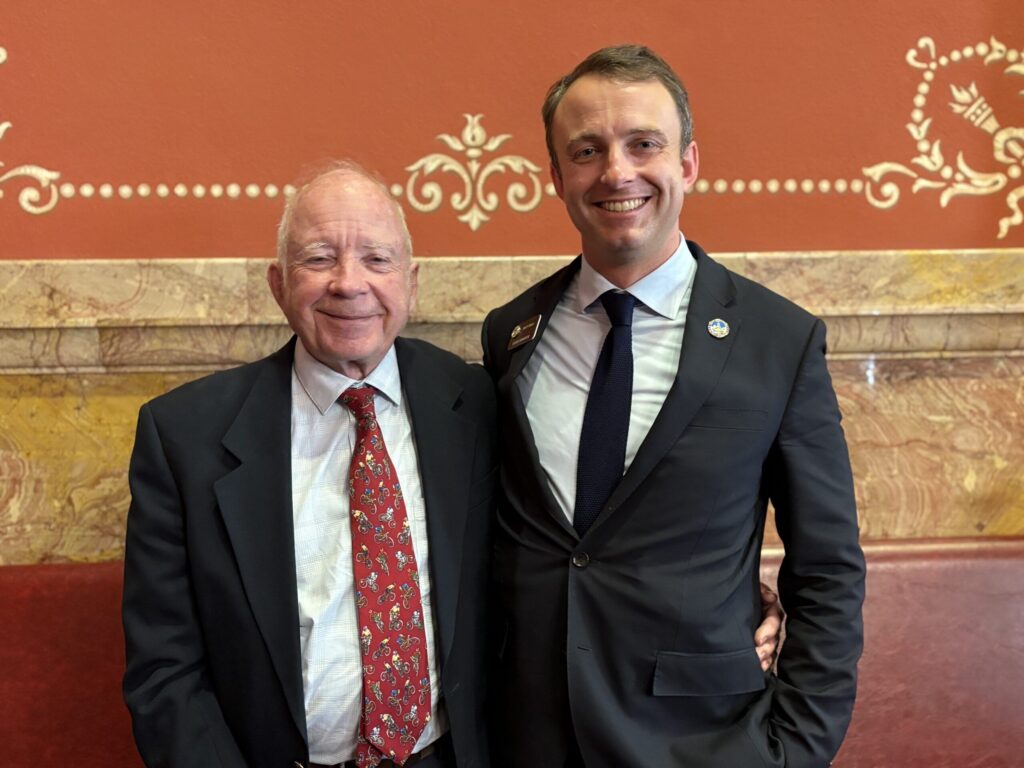
The lighter side of the state Capitol, usually. Sen. Byron Pelton, R-Sterling, who turns 50 this year, is sporting eyeglasses for the first time. He blames the lege. “With 700 bills to read a year, my eyes are failing me,”...

Colorado Politics Calendar Feb. 9-15
Rachael Wright, Special to Colorado Politics
rachael.wright@coloradopolitics.com
Updated 4 days ago
CoPo’s weekly political calendar will help you find political and public-policy events throughout Colorado. It includes candidate and issue campaign events, public policy meetings, court hearings, state and local party conventions, assemblies, debates, rallies, parades, speaking engagements, traveling dignitary appearances,...
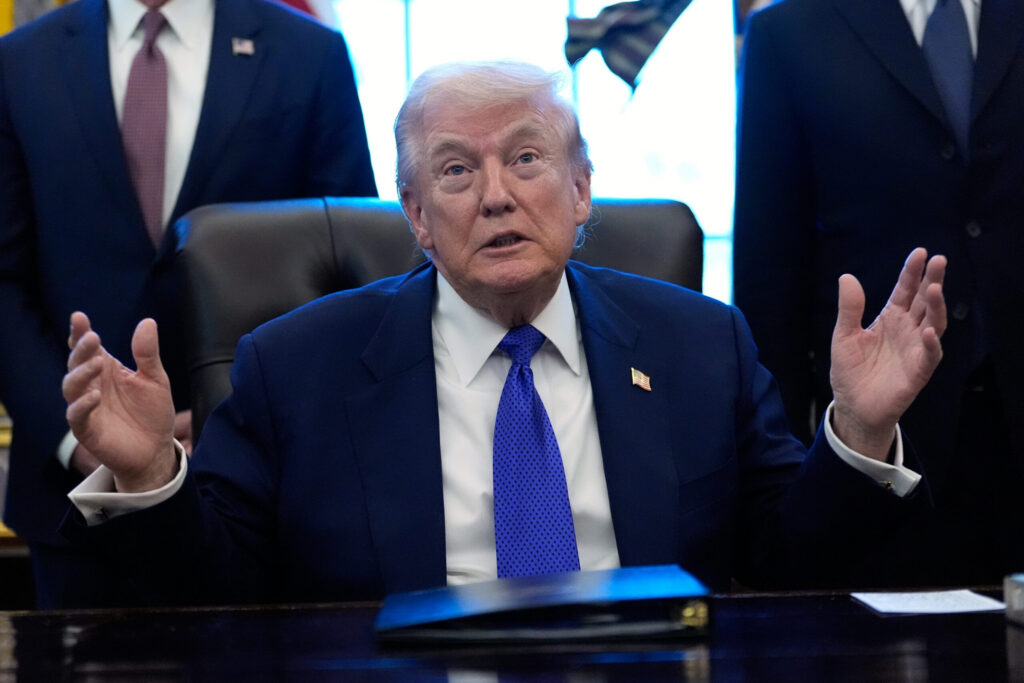
Trump’s critics are not the ones suffering from “derangement” | SONDERMANN
By Eric Sondermann
by-eric-sondermann@coloradopolitics.com
Updated 4 days ago
It appears that 63% of Americans, plus or minus, are deranged. Per recent surveys, that is the percentage of fellow citizens who do not approve of President Trump’s performance a year into his second term. In Trump’s world, almost any...
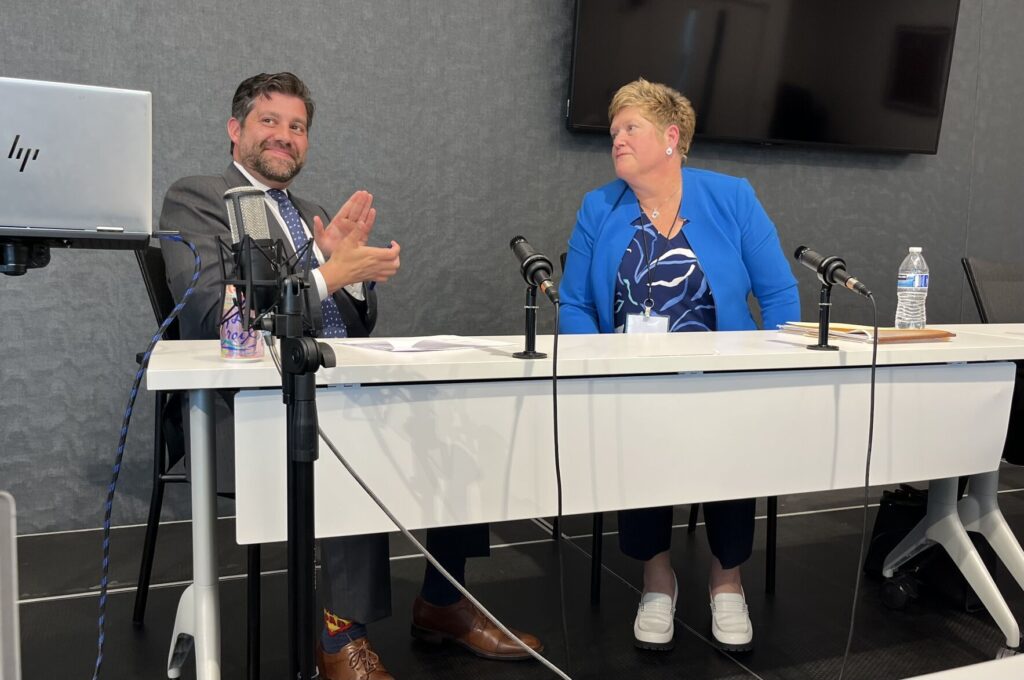
Federal judge blasts government for violating court order, confiscating man’s property
Michael Karlik
michael.karlik@coloradopolitics.com
Updated 2 days ago
A federal judge gave the government three hours on Friday to return the property of a man released from immigration detention, which it allegedly retained in violation of her previous order. “At its most benign, this failure is an unforced...
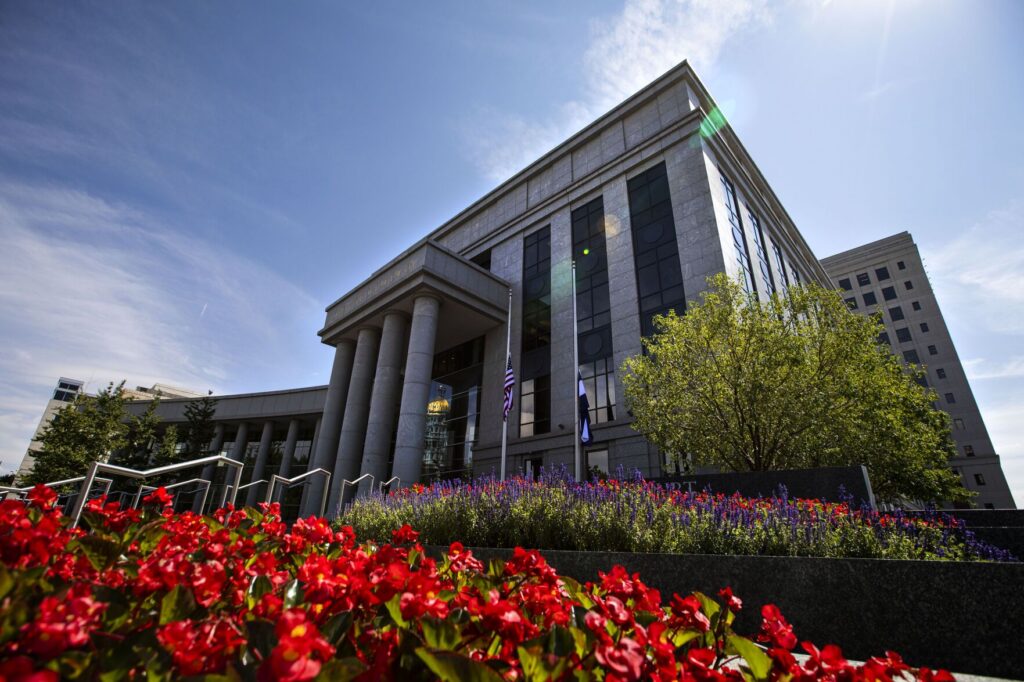
DA’s withdrawal from veterans treatment court not judge’s problem, ethics panel says
Michael Karlik
michael.karlik@coloradopolitics.com
Updated 2 days ago
There are no ethical concerns from a judge continuing to participate in a specialty veterans treatment court if the district attorney’s office has withdrawn from the program, the Colorado Supreme Court’s ethics committee advised on Wednesday. Colorado law permits chief...
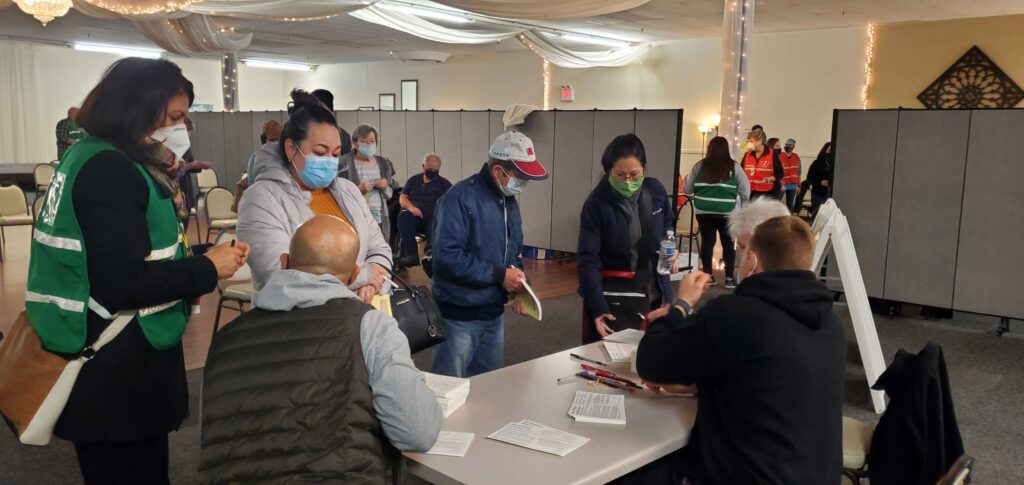
As federal vaccine guidance shifts, Colorado Senate backs recommendations from pediatric groups
Marianne Goodland
marianne.goodland@coloradopolitics.com
Updated 2 days ago
At least 20 states have said they are using guidance from the American Academy of Pediatrics and other medical associations when setting vaccine policies and immunization schedules, in some cases supplementing or diverging from recommendations issued by the Trump administration...
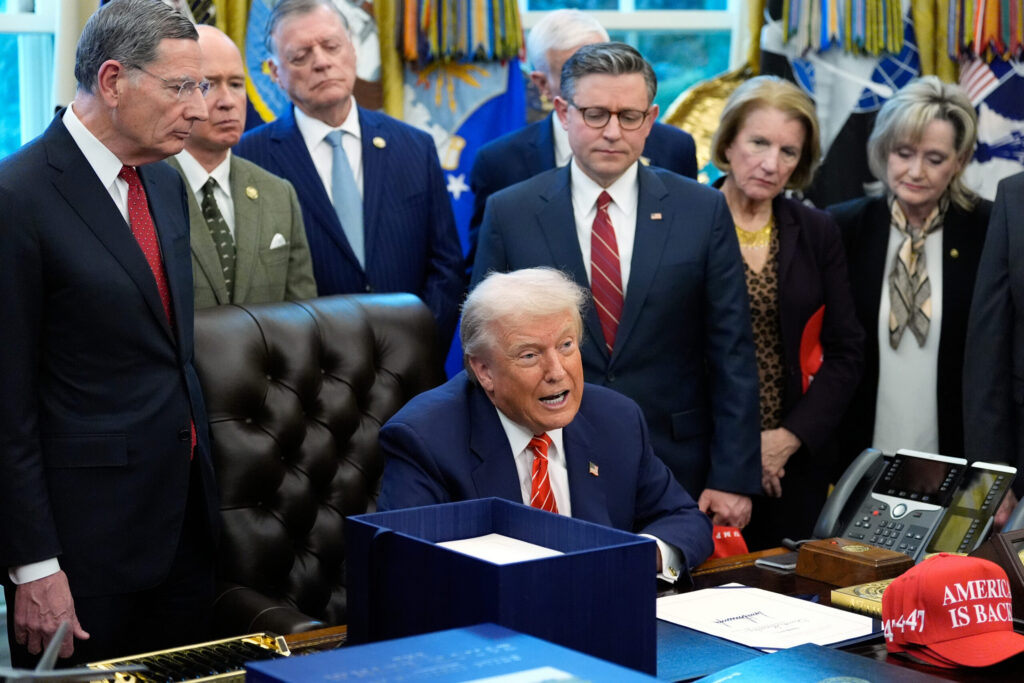
Trump signs minibus spending bill with $6.5 billion in earmarks
Kevin R. Kosar, Washington Examiner
kevin.r.kosar.washington.examiner@gazetteedit.wpenginepowered.com
Updated 2 days ago
President Donald Trump recently signed $174.7 billion spending legislation. The White House said little upon signing the Commerce, Justice, Science; Energy and Water Development; and Interior and Environment Appropriations Act, 2026. The move, however, signaled its support for Congress on the long-titled...