

Pueblo state representative defects from party, handgun carry permit bill receives first real scrutiny | A LOOK BACK
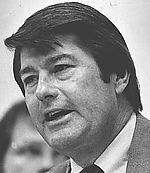
Forty-Five Years Ago This Week: After being labelled a turncoat by activist John Van Vranken in The Colorado Statesman, state Rep. Bob Kirscht, R-Pueblo, defended his defection from the Democratic Party on the grounds of “philosophical differences.”
The Democratic Party, Kirscht said, was “out of step with the mainstream of thinking in Colorado” and the choice he was faced with was between putting the interests of his constituents in Pueblo first or those of partisan politics.
“I believe I can represent the district better as a Republican,” Kirscht said. “If I had stayed in the Democratic Party, I would have been viewed as an antagonist, an obstructionist, a negative figure.”
Kirscht was referring to a contentious House leadership contest in which he had been ousted as minority leader in a secret meeting. Kirscht also believed that Gov. Dick Lamm had played a significant behind-the-scenes role in his defeat.
“I believe that representatives should have the independence to be individuals and represent their districts,” Kirscht said. “Legislators should vote their consciences. And because I felt that way, I got rolled.”
Not only was the back-room dealing poisonous to a healthy party caucus, Kirscht argued, but it was also why the Democratic Party had become unpopular.
“What shuts people off the most,” Kirscht said, “is when people act in the same manner as they criticize others for acting. It wasn’t me that was ousted from the leadership post. It was the moderate point of view I represent. And my point of view was rejected in a secret meeting held in violation of the state’s ‘Sunshine Law.’”
While opposition to his defection was steadily growing among labor unions in Pueblo, Kirsht said he welcomed a recall effort because it would give him the chance to air the issue.
“I’m not anti-union,” Kirscht said. “People have a right to have their collective views heard. But I don’t intend to be bullied by the union leadership. I intend to communicate directly with the working people of my district.”
Twenty-Five Years Ago: “Data clearly demonstrates that more guns equal more crime,” said Jean Grattet, a founding member of Colorado Gun Violence Accountability Project.
Colorado GAP and its coalition partners, including SAFE Colorado, Million Mom March, and representatives from local law enforcement and the Denver Mayor’s office, expressed their outrage with Senate Bill 01-83, which they said would result in a proliferation of loaded, hidden handguns in public spaces. According to Colorado GAP, it would strip local law enforcement of the ability to exercise judgment in determining who could carry a concealed handgun.
The bill, sponsored by Rep. Ken Chlouber, R-Leadville, would compel local law enforcement officials to issue permits to applicants for concealed carry weapons permits regardless of whether the individual could demonstrate any need for carrying a handgun in public spaces. SB01-83 also allowed permit holders to bring guns into churches, shopping malls, child care centers, libraries and parks. A reciprocity provision in the bill also exempted those with a concealed weapons permit in another state from the Colorado permitting process.
Grattet argued that prior to the Columbine High School shooting in 1999, the Colorado General Assembly considered bills supported by the gun lobby without much attention, but that time was over.
“The gun safety issue was pivotal in the 2000 election, and voters responded by ousting several legislators whose votes did not reflect the will of the people,” said Grattet. “Legislators are beginning to understand that they can no longer hide behind the cloak of the gun lobby and be free from scrutiny.
Rachael Wright is the author of several novels, including The Twins of Strathnaver, with degrees in Political Science and History from Colorado Mesa University, and is a contributing columnist to Colorado Politics, the Colorado Springs Gazette, and the Denver Gazette.


US service member missing after Iran shot down fighter jet has been rescued, US officials say
Associated Press
associated-press@coloradopolitics.com
Updated 4 hours ago
JERUSALEM — President Donald Trump announced early Sunday that the U.S. had rescued an aviator nearly two days after he was shot down over Iran. The extraction came after a frantic search in what appears to be a remote, mountainous region of...

Low and slow meets forever: US postage stamps honor lowrider car culture | OUT WEST ROUNDUP
The Associated Press
the-associated-press@coloradopolitics.com
Updated 4 days ago
NEW MEXICO Stamps honor lowrider culture ALBUQUERQUE — From Mexican American and Chicano barrios in the American Southwest to the halls of the Smithsonian on the National Mall and even the streets of Japan, lowrider culture has become part of...

Colorado Politics Calendar Apr. 6-12
Rachael Wright, Special to Colorado Politics
rachael.wright@coloradopolitics.com
Updated 4 days ago
CoPo’s weekly political calendar will help you find political and public-policy events throughout Colorado. It includes candidate and issue campaign events, public policy meetings, court hearings, state and local party conventions, assemblies, debates, rallies, parades, speaking engagements, traveling dignitary appearances,...

Democrats rebounding without learning necessary lessons | SONDERMANN
Eric Sondermann
eric-sondermann@coloradopolitics.com
Updated 1 day ago
“When we fight, we win!” That, reportedly, was the chant heard over and over again at the Colorado Democratic Assembly a week ago. It suggests that pugilism has been the piece missing from the Democratic toolkit. Perhaps it was just...
An April Fool’s Day to remember | Capitol M | Week of April 4, 2026
Marianne Goodland
marianne.goodland@coloradopolitics.com
Updated 3 days ago
The lighter side of the Capitol, and if light were weight, the Capitol would have lifted off better than the Artemis II rocket on April Fool’s Day. There was a plethora of Fools at the Capitol for April Fool’s Day...

Federal judge sides with Mesa County school district in ex-student’s First Amendment claims
Michael Karlik
michael.karlik@coloradopolitics.com
Updated 2 days ago
A federal judge concluded last week that Mesa County Valley School District 51 and three of its administrators did not violate the First Amendment rights of a former student when they imposed minor discipline in response to disruptive behavior. In...

Colorado Supreme Court intervenes in 4 ongoing cases
Michael Karlik
michael.karlik@coloradopolitics.com
Updated 2 days ago
The Colorado Supreme Court recently moved to intervene in four ongoing cases, including two criminal prosecutions, a civil lawsuit, and a child welfare proceeding. At least four of the court’s seven members must agree to hear a case outside of...
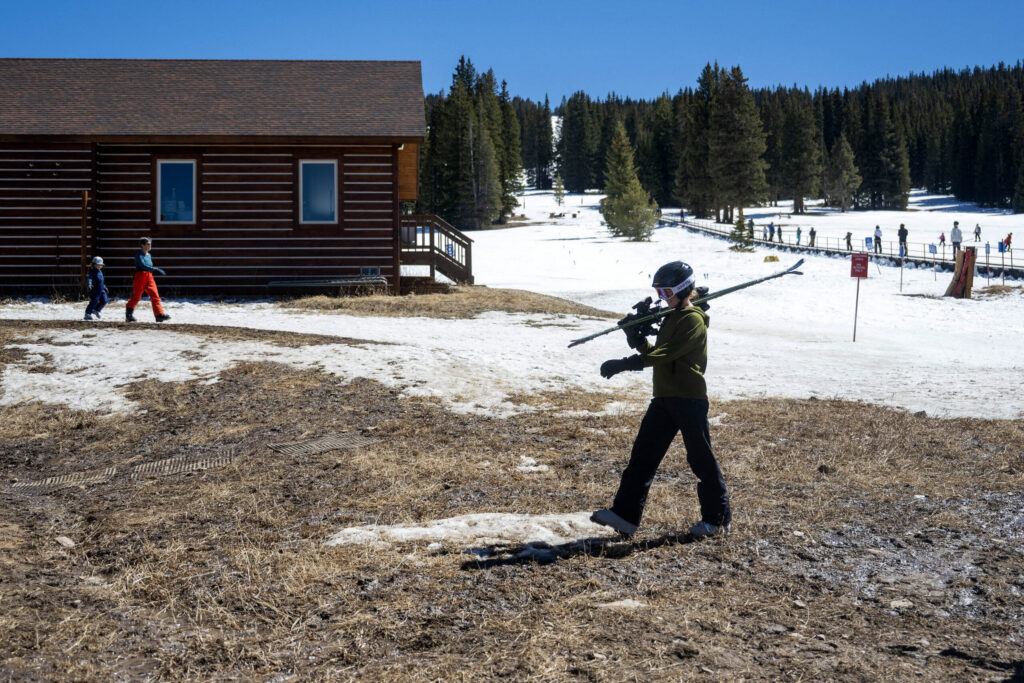
Colorado ski resorts announce early closures amid historic snowpack lows, high temperatures
Kyla Pearce
kyla.pearce@gazette.com
Updated 1 day ago
Vail Resorts is the latest area to announce season closure Wednesday As Colorado’s historically low snowpack year comes to a close and spring conditions take over the mountains, the state’s major ski resorts are announcing closing dates — some of...

Kentucky Gov. Andy Beshear set to headline Colorado Democrats’ annual fundraising dinner
Ernest Luning
ernest.luning@coloradopolitics.com
Updated 2 days ago
Kentucky Gov. Andy Beshear, one of the Democrats’ top 2028 presidential prospects, is scheduled to deliver the keynote address at the Colorado Democratic Party’s annual fundraising dinner in June in Denver, the party said Friday. Serving his second term as...
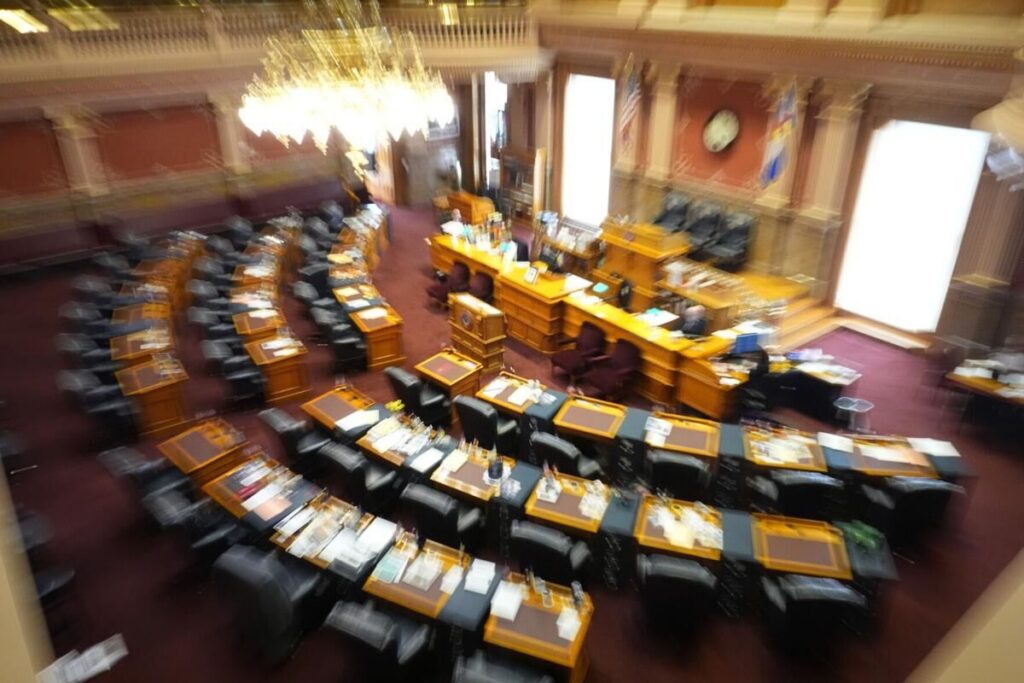
Gov. Polis names new leaders for Colorado health agencies in wake of Medicaid turmoil
Marianne Goodland
marianne.goodland@coloradopolitics.com
Updated 2 days ago
Gov. Jared Polis, on Thursday, announced he was appointing Gretchen Hammer to serve as acting executive director of the Colorado Department of Health Care Policy and Financing, and deputy executive director Stephanie Beasley to become the next commissioner of the...
PREV
PREVIOUS
Capitol M: Olympic version | Week of Feb. 7, 2026
The lighter side of the state Capitol, usually. Sen. Byron Pelton, R-Sterling, who turns 50 this year, is sporting eyeglasses for the first time. He blames the lege. “With 700 bills to read a year, my eyes are failing me,” he quipped. Salute to Colorado’s Olympians, and one in particular With the Winter Olympics underway […]

Deaths by suicide decrease at Royal Gorge Bridge following safety upgrades
CAÑON CITY – Jay Valusek stared at “that damned railing” for hours that bled into days after his beloved 28-year-old daughter jumped in 2018 from atop the metal edge of the Royal Gorge Bridge to her death 956 feet below. Valusek’s vision blurred and then refocused as he pictured his precious Elizabeth Anne Valusek, who […]