

Colorado Springs dropped as location for Census Test
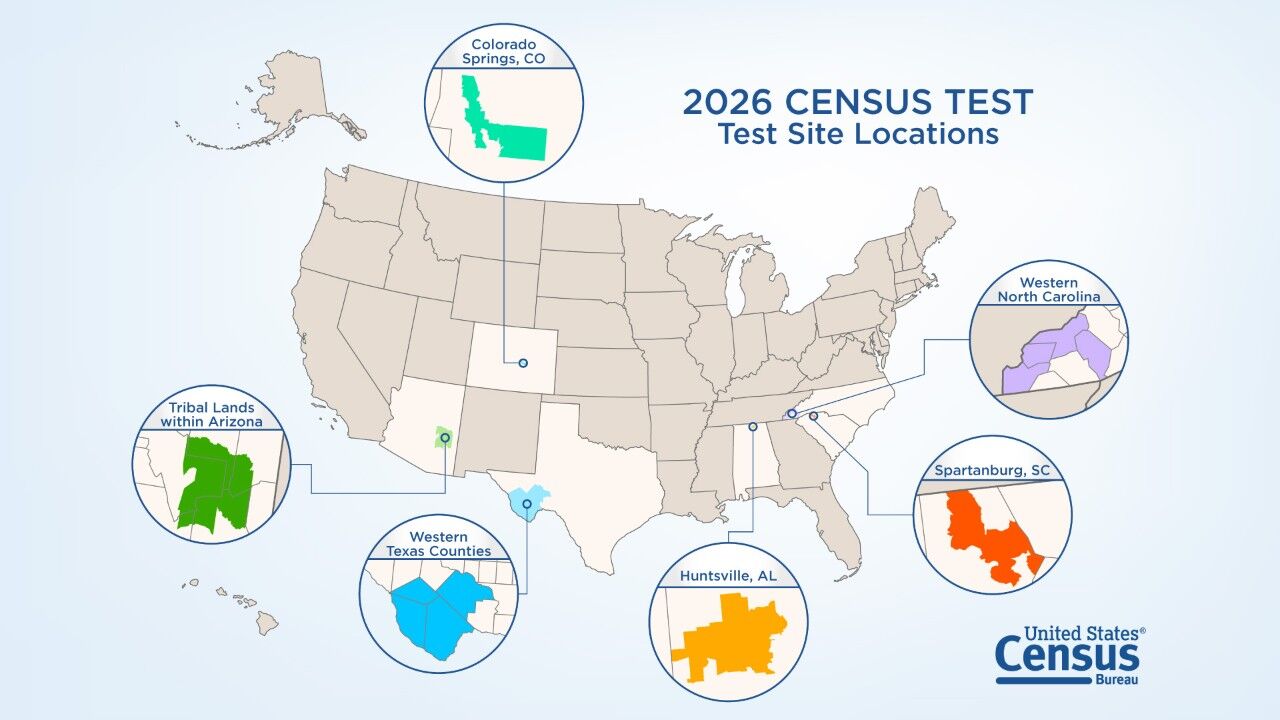
Colorado Springs will no longer be one of the regions used by the U.S. Census Bureau as a test location ahead of the once-a-decade census in 2030.
The Census Bureau announced Monday that the 2026 census test would be pared back from six locations to two: Huntsville, Ala., and Spartanburg, S.C.
The bureau didn’t immediately respond to questions about why it dropped Colorado Springs from the Census Test. The Springs had been actively recruiting temporary census takers as recently as a few weeks ago.
The test is one of the small-scale efforts the Census Bureau uses to improve its methods to reach hard-to-count populations during the official census.
The six areas originally selected were chosen because they posed different challenges to getting an accurate population count. According to previous announcements, the bureau selected Colorado Springs as a test location because of the large number of residents living at military facilities and universities.
The Census Bureau also cited the amount of new construction in the city and a mix of places that had “comprehensive and minimal” previous records.
Mark Mather, an associate vice president at the Population Reference Bureau, a nonpartisan research group, said limiting the test to just two metro areas in the South would be “a step backward,” according to The Associated Press.
“The Census Bureau would be essentially flying blind into communities that need testing most — tribal lands, rural areas with limited connectivity and places with historically low response rates,” Mather said. “You can’t fix what you don’t test.”
Terri Ann Lowenthal, a former congressional staffer who consults on census issues, called the locale eliminations “an ominous sign for the 2030 Census.”
“The new plan for 2026 is unclear,” Lowenthal said.
The other areas removed by the Trump administration from the test were a section of the West Texas Panhandle, the tribal lands around Fort Apache Reservation in Arizona and the western counties of North Carolina.
Ahead of the last census in 2020, the only start-to-finish test of the head count was held in Providence, Rhode Island, in 2018. Plans for other tests were canceled because of a lack of funding from Congress.
The once-a-decade head count determines how many congressional seats and Electoral College votes each state gets. It also guides the distribution of $2.8 trillion in annual federal spending.
In addition to limiting the in-field aspect of this year’s test outreach, the bureau said it was also testing whether U.S. Postal Service workers can cover some of the work usually done by census takers.
The Associated Press contributed to this report.


Phil Weiser wins top spot in Colorado’s Democratic gubernatorial primary at party’s state assembly
Ernest Luning
ernest.luning@coloradopolitics.com
Updated 8 hours ago
Attorney General Phil Weiser’s name will appear first on Colorado’s Democratic gubernatorial primary ballot after his overwhelming win Saturday at the party’s state assembly in Pueblo. Weiser joins U.S. Sen. Michael Bennet in the June 30 primary for the office...
‘No Kings’ protest draws tens of thousands to Colorado state Capitol
Matt Kyle
matt.kyle@denvergazette.com
Updated 8 hours ago
The third round of the national No Kings Day protests hit Denver Saturday, when tens of thousands gathered near the Colorado state Capitol to criticize the Trump administration. Organizers addressing the crowd estimated there were 30,000 present for the Saturday...
Denver Democrat Diana DeGette trails challenger Melat Kiros at assembly as both qualify for primary
Ernest Luning
ernest.luning@coloradopolitics.com
Updated 16 hours ago
U.S. Rep Diana DeGette, a Denver Democrat, qualified for Colorado’s June primary by the skin of her teeth Friday at the party’s district assembly, where the 15-term incumbent received fewer than half as many delegate votes as her challenger, 28-year-old...

Colorado Politics Calendar Mar. 30-Apr. 5
Rachael Wright, Special to Colorado Politics
rachael.wright@coloradopolitics.com
Updated 2 days ago
CoPo’s weekly political calendar will help you find political and public-policy events throughout Colorado. It includes candidate and issue campaign events, public policy meetings, court hearings, state and local party conventions, assemblies, debates, rallies, parades, speaking engagements, traveling dignitary appearances,...
Colorado coal use seen as in decline in 1980s | A LOOK BACK
Rachael Wright, Special to Colorado Politics
rachael.wright@coloradopolitics.com
Updated 2 days ago
Forty-Five Years Ago This Week: “Contrary to popular belief, it appears that growth in Colorado’s coal industry during the 1980s will be surprisingly sluggish,” said the findings in the Colorado Energy Research Institute’s “Focus Series.” The institute’s conclusions on the...

Kwame Spearman warrants plenty of criticism, not cancellation | SONDERMANN
By Eric Sondermann
by-eric-sondermann@coloradopolitics.com
Updated 3 days ago
All of us are flawed humans, some more so than others. This is the tale of Kwame Spearman who burst onto Denver’s business and political scene a handful of years back. His ride has taken a downhill trajectory. Within the...
Federal judge upholds constitutionality of Colorado campaign contribution limits
Michael Karlik
michael.karlik@coloradopolitics.com
Updated 1 day ago
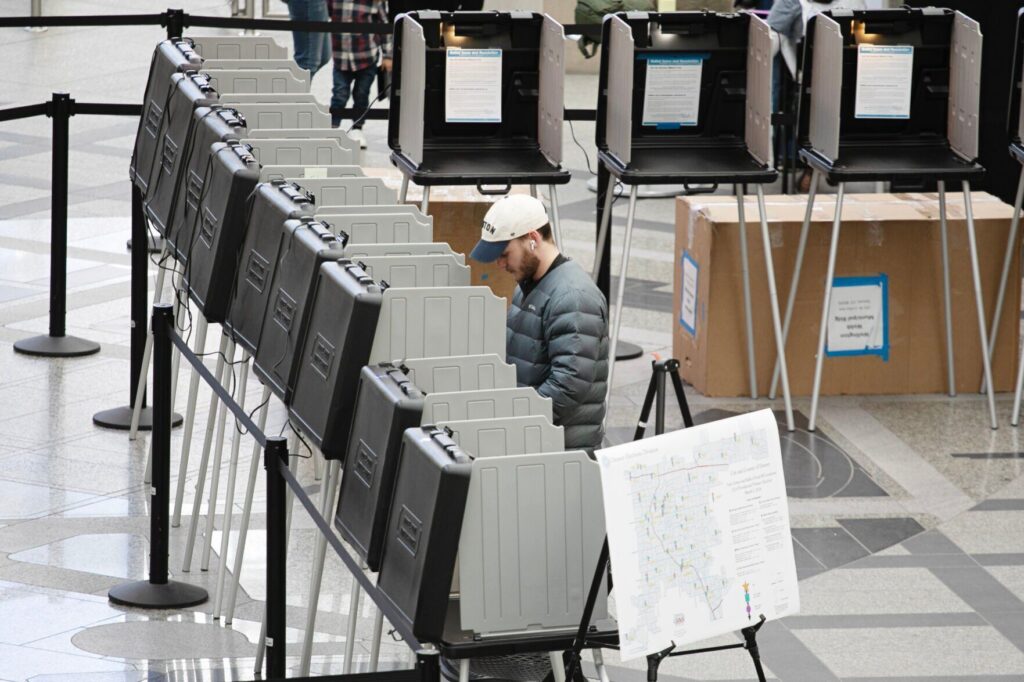
A federal judge upheld Colorado’s individual campaign contribution limits as constitutional on Thursday, finding that three Republican plaintiffs failed to prove the campaign finance framework violates their First Amendment rights. U.S. District Court Senior Judge John L. Kane recognized that...
Appeals court rejects theory that existing tax revenue undermines need for new fees
Michael Karlik
michael.karlik@coloradopolitics.com
Updated 1 day ago
Colorado’s second-highest court rejected a plaintiff’s claim on Thursday that the tax revenue generated by an existing activity should prevent local governments from imposing new fees aimed at regulating the activity. The question stemmed from Colorado’s unique constraints on taxation...
Colorado ski resorts announce early closures amid historic snowpack lows, high temperatures
Kyla Pearce
kyla.pearce@gazette.com
Updated 1 day ago
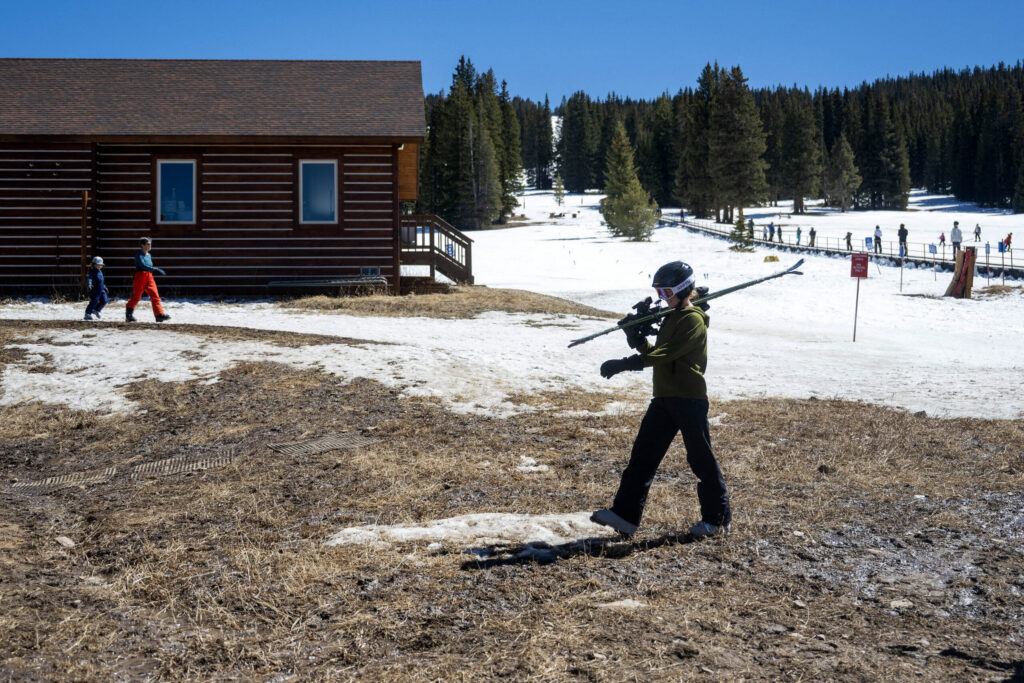
As Colorado’s historically low snowpack year comes to a close and spring conditions take over the mountains, the state’s major ski resorts are announcing closing dates — some of which are weeks before historic closing dates. Most of Colorado’s ski...

Marco Rubio’s star power rises at CPAC 2026
Mabinty Quarshie and Samantha-Jo Roth, Washington Examiner
mabinty.quarshie.and.samantha-jo.roth.washington.examiner@gazetteedit.wpenginepowered.com
Updated 1 day ago
GRAPEVINE, Texas — Secretary of State Marco Rubio’s popularity is growing and could possibly boost him to one of the top two spots in the 2028 GOP presidential race, if attendees at the Conservative Political Action Conference are to be believed. ...