Abortion stays legal in Wyoming as top court strikes down laws, including pill ban | OUT WEST ROUNDUP

WYOMING
Court strikes down abortion bans
FORT COLLINS — Abortion will remain legal in Wyoming after the state Supreme Court ruled on Jan. 6 that two laws barring the procedure, including the country’s first explicit ban on abortion pills, violate the state constitution.
The justices sided with the state’s only abortion clinic and others who had sued over the abortion bans passed since 2022, when the U.S. Supreme Court overturned the landmark Roe v. Wade decision.
Wyoming is one of the most conservative states, but the 4-1 ruling from justices all appointed by Republican governors was unsurprising in that it upheld every previous lower court ruling that the abortion bans violated the state constitution.
Wellspring Health Access in Casper, the abortion access advocacy group Chelsea’s Fund and four women, including two obstetricians, argued that the laws violated a state constitutional amendment ensuring competent adults have the right to make their own health care decisions.
Voters approved the constitutional amendment in 2012 in response to the federal Affordable Care Act. The justices recognized that the amendment wasn’t written to apply to abortion but said it’s not their job to “add words” to the state constitution.
“But lawmakers could ask Wyoming voters to consider a constitutional amendment that would more clearly address this issue,” the justices wrote.
The ruling upholds abortion as “essential health care” that shouldn’t be subject to government interference, Wellspring Health Access President Julie Burkhart said in a statement.
Attorneys for the state had argued before the state Supreme Court that abortion can’t violate the Wyoming constitution because it is not health care.
Gov. Mark Gordon, a Republican, said in a statement that the court ruling disappointed him. He called on state lawmakers meeting later this winter to pass a constitutional amendment banning abortion that would go before voters this fall.
Scholarship money goes unused
Hundreds of millions of scholarship dollars are going unused at the University of Wyoming because of a decentralized system and the inability to stack scholarships.
The university’s Board of Trustees Biennium Budget Committee met on Dec. 17 to discuss the scholarship structure and discuss potential changes for school year 2027-2028.
Trustee John McKinley told the committee about the excess scholarship money with the University of Wyoming Foundation.
“There’s no sense in dancing around this,” McKinley said. “We’re nine-digit numbers of funds over at the Foundation that don’t get awarded, don’t get put into play.”
McKinley asked if the board’s decision to prohibit stacking affected the ability to go outside the financial aid structure to award additional scholarships.
Vice President for Budget and Finance Alex Kean said the board’s prohibition on stacking aid hampered the ability to award additional scholarships, saying the process goes against donor wishes for their scholarship donations.
“Stacking” is when a student receives more than one scholarship in their financial aid packet. However, students can only stack scholarships up to the cost of attendance.
The university provides financial aid packets to students based on GPA and college-prep testing scores.
Scholarship structures require a 3.0 minimum GPA for its lowest award level.
The committee did not make any changes to the financial aid structure at the meeting as it was just for information for later consideration at the January meeting.
MONTANA
Court: Political spending ban unconstitutional
The Montana Supreme Court on Jan. 6 sided with Attorney General Austin Knudsen’s previous finding that a proposed ballot initiative aiming to end corporate spending in political campaigns is unconstitutional.
A group of former public officeholders last summer proposed a constitutional initiative to prevent corporations from donating to political campaigns. Specifically, the initiative would have altered the law that applies to businesses, nonprofits and other incorporated entities that operate in Montana, prohibiting them from contributing to campaigns and political committees that work to influence election outcomes. It would also have prevented individuals from making anonymous political donations by giving money to corporations that then donate to political committees. The ballot issue was seen as a way to undo the U.S. Supreme Court’s Citizens United ruling that allowed for unlimited corporate money in politics.
Knudsen in October rejected the proposed ballot initiative, saying it was legally insufficient because it affected more than one area of the state Constitution.
The state Supreme Court affirmed Knudsen’s ruling that the ballot initiative violated Montana’s Constitution, which states that if more than one constitutional amendment is submitted, voters must be able to vote on each issue separately.
The Supreme Court found that the proposed initiative would produce at least two constitutional changes. First, it limits the power of “artificial persons,” or business corporations, nonprofits and other entities. And second, it grants those same entities some powers unrelated to elections.
A spokesman for the measure’s sponsors said the group would refile the ballot issue quickly.
ARIZONA
Feds sue states for voter data
HARTFORD, Conn. — Officials in Connecticut and Arizona are defending their decision to refuse a request by the U.S. Justice Department for detailed voter information, after their states became the latest to face federal lawsuits over the issue.
“Pound sand,” Arizona Secretary of State Adrian Fontes posted on X, saying the release of the voter records would violate state and federal law.
The Justice Department’s Civil Rights Division announced it was suing Connecticut and Arizona for failing to comply with its requests, bringing to 23 the number of states the department has sued to obtain the data. It also has filed suit against the District of Columbia.
Attorney General Pam Bondi said the department will “continue filing lawsuits to protect American elections,” saying accurate voter rolls are the ”foundation of election integrity.”
Secretaries of state and state attorneys general who have pushed back against the effort say it violates federal privacy law, which protects the sharing of individual data with the government, and would run afoul of their own state laws that restrict what voter information can be released publicly. Some of the data the Justice Department is seeking includes names, dates of birth, residential addresses, driver’s license numbers and partial Social Security numbers.
Other requests included basic questions about the procedures states use to comply with federal voting laws, while some have been more state-specific. They have referenced perceived inconsistencies from a survey from the U.S. Election Assistance Commission.

Colorado oilmen may play key role in Trump’s Venezuelan oil takeover plan
Vince Bzdek
vince.bzdek@gazette.com
Updated 16 hours ago
When President Donald Trump summoned oil executives to the White House recently to push for major investment in Venezuela, an interesting sprinkling of smaller independent companies from Denver was invited along with the big names of American oil. One of...

Colorado Politics Calendar Jan. 19-25
Rachael Wright
rachael.wright@coloradopolitics.com
Updated 4 days ago
CoPo’s weekly political calendar will help you find political and public-policy events throughout Colorado. It includes candidate and issue campaign events, public policy meetings, court hearings, state and local party conventions, assemblies, debates, rallies, parades, speaking engagements, traveling dignitary appearances,...

Elder Groff attends opening day of state legislature to cheer on son | A LOOK BACK
Rachael Wright
rachael.wright@coloradopolitics.com
Updated 4 days ago
Twenty-Five Years Ago This Week: “There is a God,” sighed former state Sen. Regis Groff, D-Denver, as he watched the Democrats assume control of the Colorado Senate for the first time in 40 years. “Now they’re in the cubbyholes,” chuckled...
Colorado appeals Trump’s rejection of federal disaster declarations for flooding, fires
The Denver Gazette
the-denver-gazette@coloradopolitics.com
Updated 1 day ago
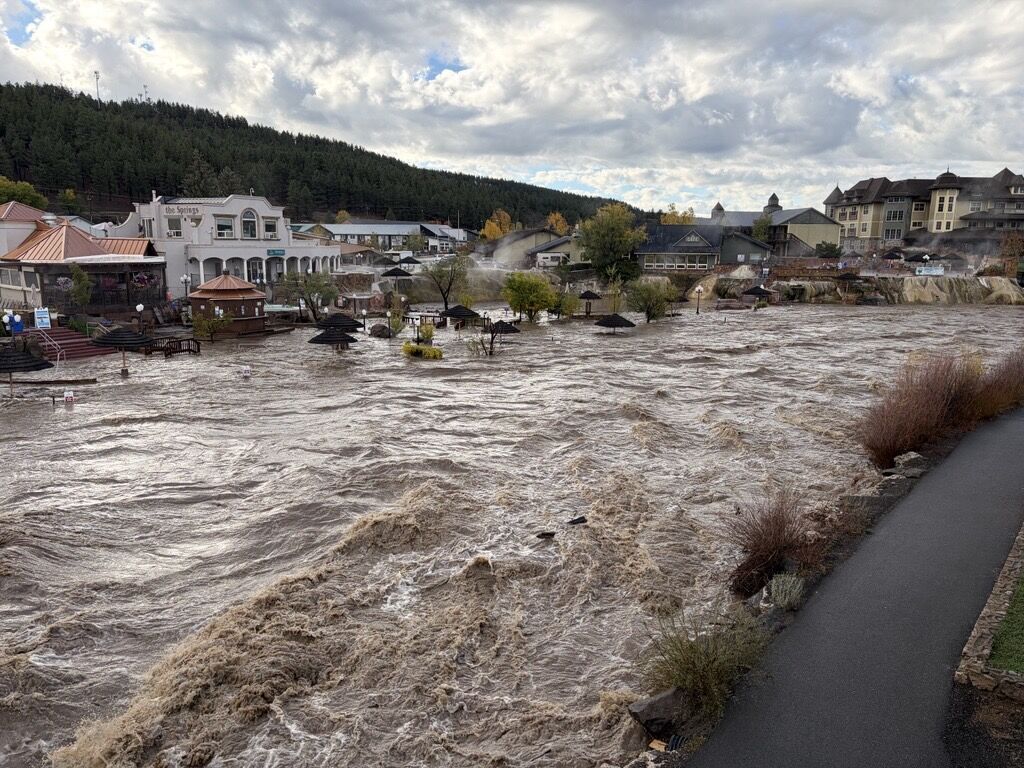
Colorado has formally appealed the Trump administration’s decision to deny requests for federal disaster declarations tied to two wildfires and flooding last year. Gov. Jared Polis said the state asked the federal government to reconsider its denials for the Elk...
10th Circuit oral arguments to feature trial judges for first time in 12 years
Michael Karlik
michael.karlik@coloradopolitics.com
Updated 2 days ago
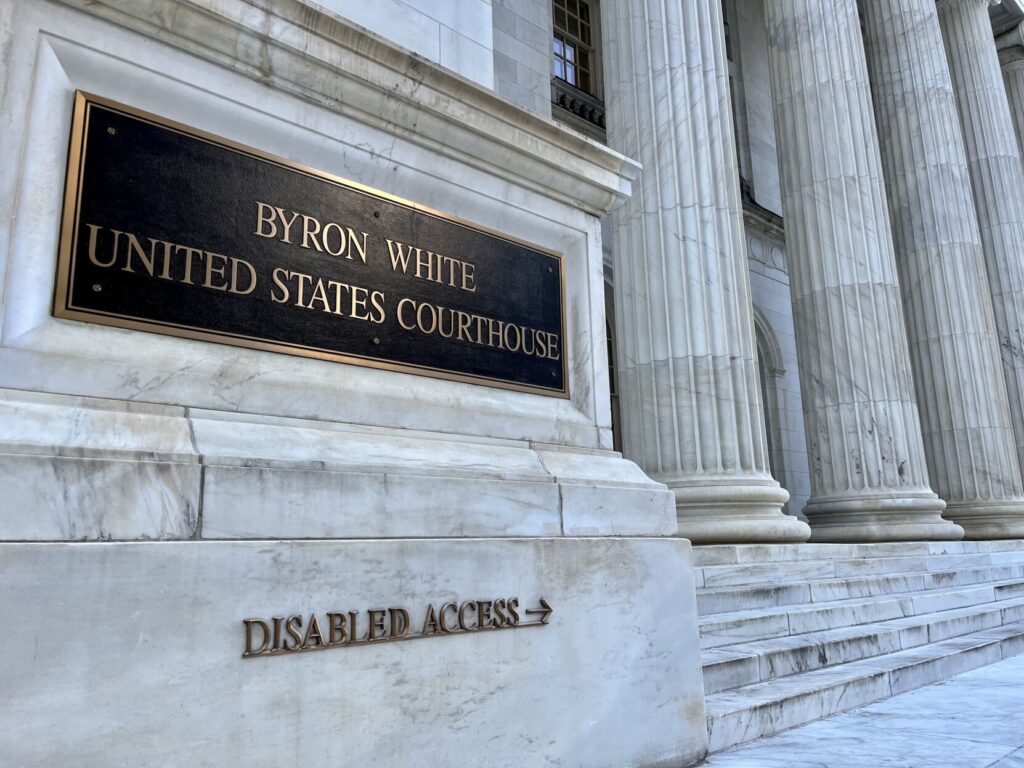
When the Denver-based federal appeals court convenes next week to hear oral arguments, six new faces will be staring down from the bench. No, the U.S. Court of Appeals for the 10th Circuit has not added six new members. It...
Federal judge says ICE cannot impose monitoring conditions beyond immigration judge’s order
Michael Karlik
michael.karlik@coloradopolitics.com
Updated 2 days ago
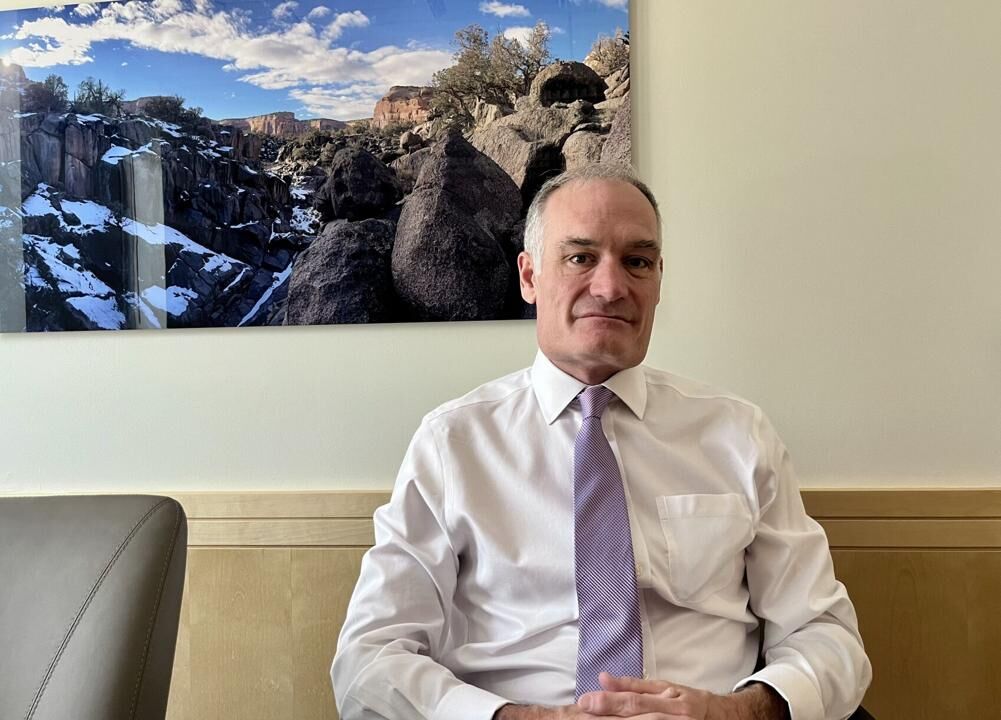
A federal judge told U.S. Immigration and Customs Enforcement on Thursday that it cannot impose additional restrictions or monitoring conditions beyond those ordered by an immigration judge when releasing a person on bond. In November, U.S. District Court Judge Gordon...
Colorado justices weigh constitutionality of student backpack search based on confidential tip
Michael Karlik
michael.karlik@coloradopolitics.com
Updated 13 hours ago
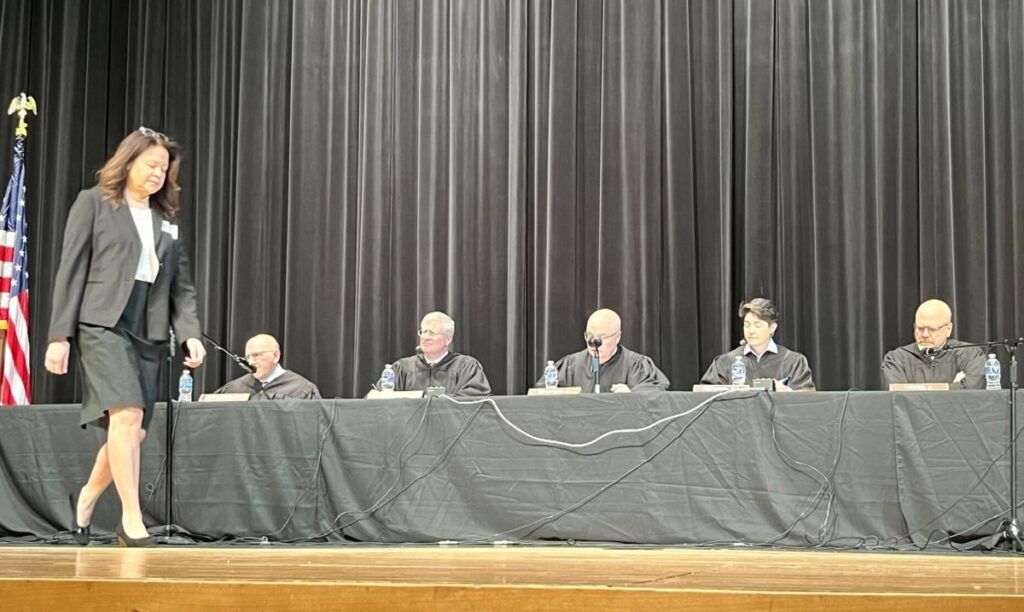
The Colorado Supreme Court considered on Wednesday whether a tip submitted through the state’s confidential school safety system provided a Douglas County administrator with reasonable suspicion to search a student’s backpack for drugs. A trial judge blocked evidence from the...
The odd couple: Vance and Rubio stick together through 2028 speculation
W. James Antle III Washington Examiner
wjamesantleiiiwashingtonexaminer@wpstage.coloradopolitics.com
Updated 2 days ago
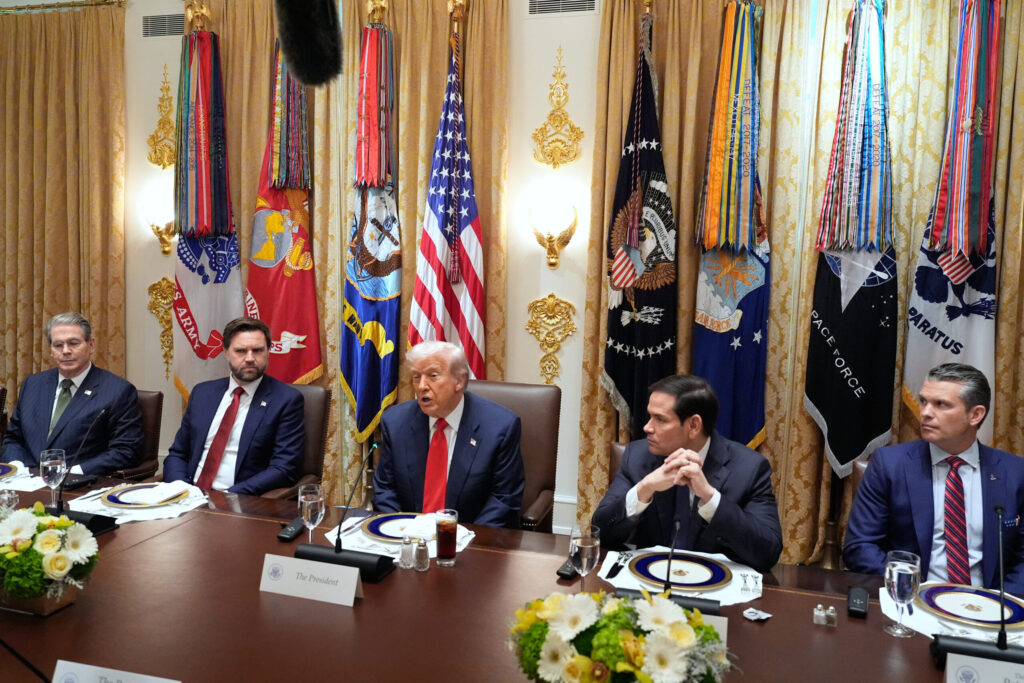
Washington insiders keep straining to see daylight between Vice President JD Vance and Secretary of State Marco Rubio, only for the two of them to maintain a united front. Vance and Rubio met together at the White House with Denmark’s...
Democrats ready war powers blitz to exploit a Trump ‘vulnerability’
Ramsey Touchberry, Washington Examiner
ramsey.touchberry.washington.examiner@gazetteedit.wpenginepowered.com
Updated 2 days ago
Senate Democrats believe they’ve uncovered a backdoor to limiting President Donald Trump’s military operations abroad and conducting oversight despite limited minority power and few Republicans willing to buck the administration. Democrats are prepared to force a flurry of votes on...
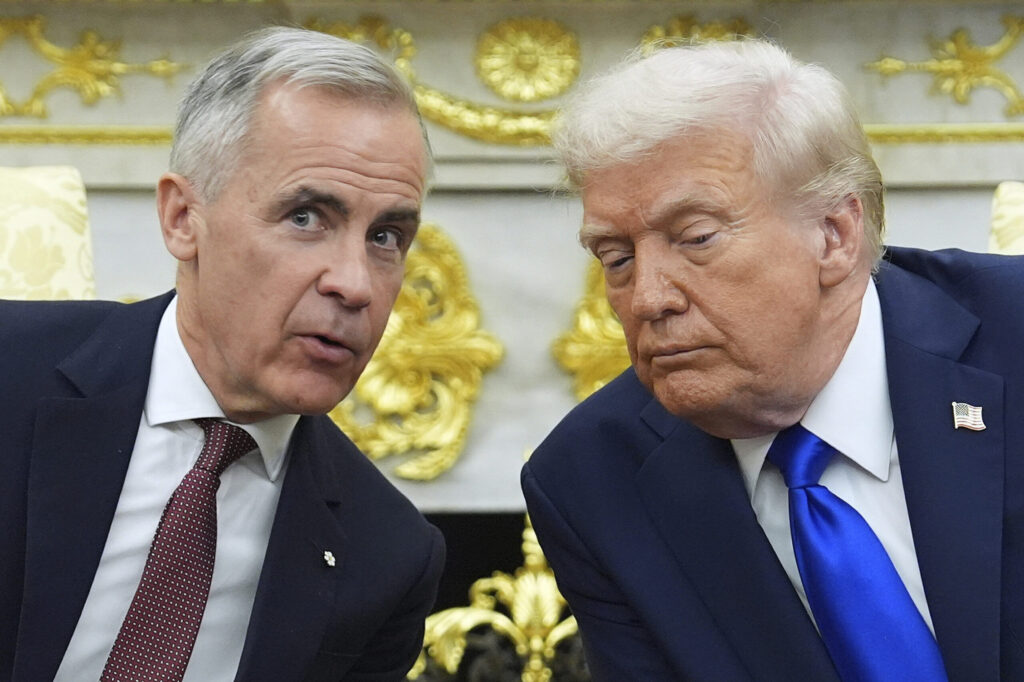
Canada drops US-aligned tariffs on Chinese EVs in ‘landmark’ trade deal
Emily Hallas, Washington Examiner
emily.hallas.washington.examiner@gazetteedit.wpenginepowered.com
Updated 2 days ago
Canadian Prime Minister Mark Carney announced on Friday he is dropping special tariffs on Chinese electric vehicles, marking Ottawa’s latest move to deepen ties with countries it views as more “predictable” than the United States. Under the “landmark” deal, Canada...