

Judge warns against expansive use of post-9/11 rule in immigration detentions
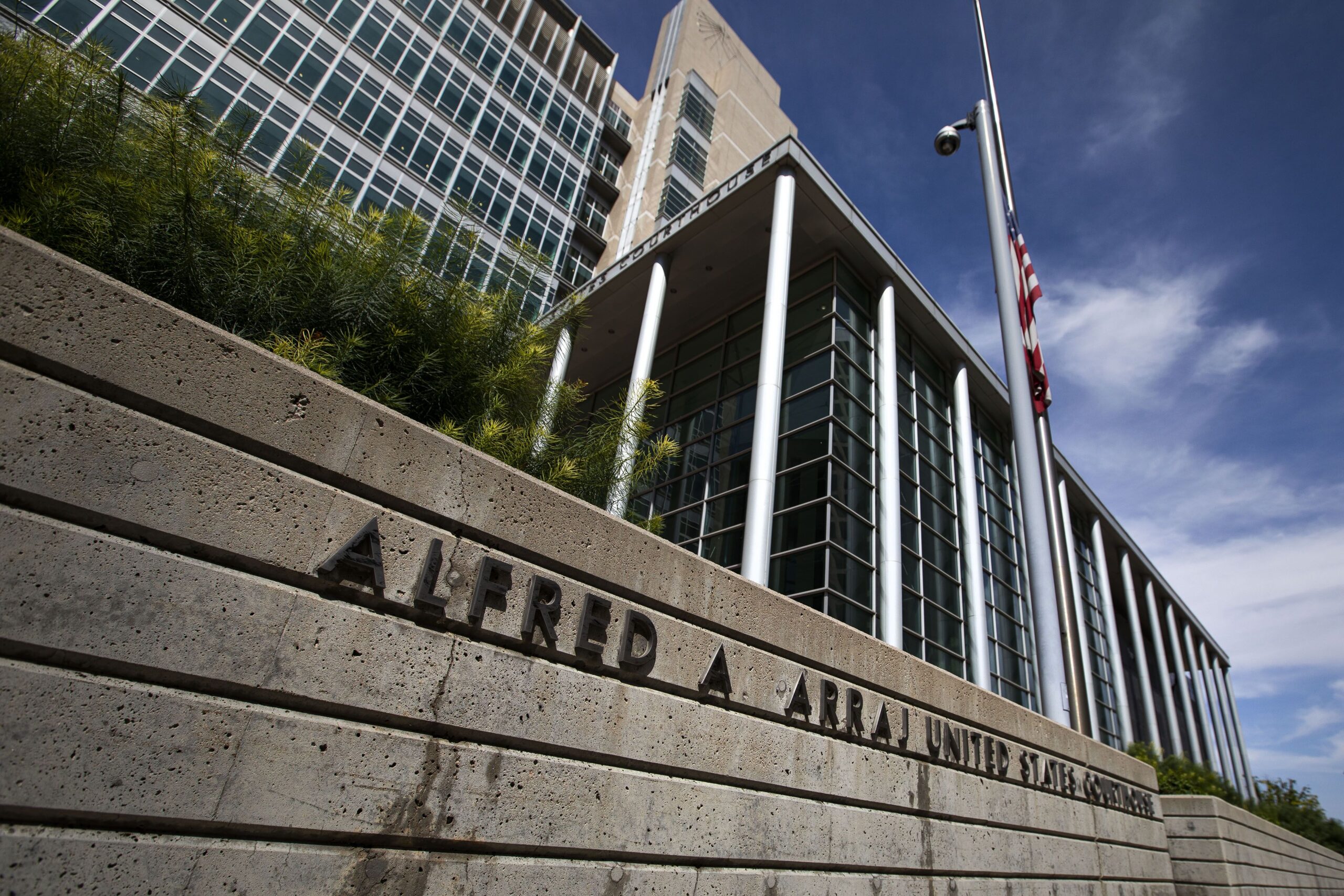
A federal judge concluded on Monday that the government applied a 9/11-era regulation to a man in immigration detention in violation of his constitutional rights, in seemingly the first decision out of Colorado addressing the increased use of the “automatic stay” to block release on bond.
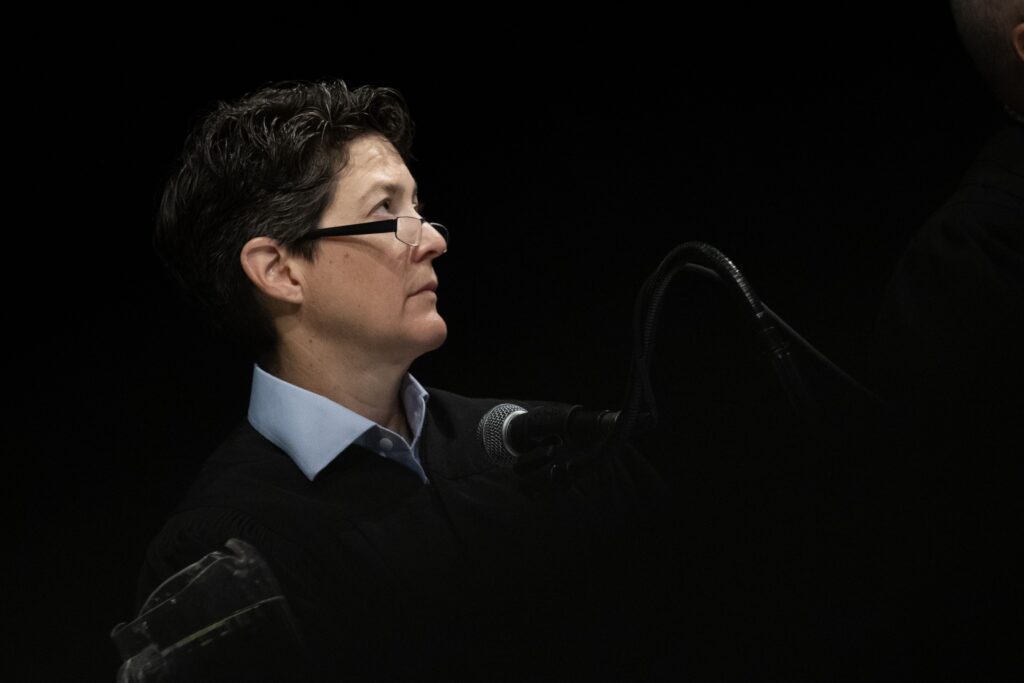
In a Jan. 12 order, U.S. Magistrate Judge Susan Prose further suggested the U.S. Department of Homeland Security is invoking the automatic stay far more frequently than the regulation envisions, keeping people detained even after they have been granted release.
“Although the court need not reach this issue here, the court is also not convinced that DHS has stayed within the bounds of its intended authority in recent months,” she wrote.
As the government has pushed to apprehend and detain people in immigration custody in record numbers, there has been a wave of litigation over the government’s authority to keep people in custody pending the resolution of their immigration proceedings. To date, trial judges have overwhelmingly concluded that the government is wrong about the scope of its authority to detain people without bond. Accordingly, judges have ordered hearings for immigration judges to decide whether to release detainees who are not a flight risk or a danger to the community.
However, according to data reported by Documented in December, the government has begun blocking immigration judges’ release decisions by invoking the automatic stay. As a regulation enacted soon after Sept. 11, 2001, to “prevent the release of aliens who may pose a threat to national security,” the automatic stay halts the release of a detainee for at least 90 days. If the attorney general intervenes, the stay can extend for the entirety of the custody proceedings, and the immigration judge’s release decision will not be implemented.
The government invoked the automatic stay 877 times over 12 weeks beginning in July, compared to three times total between 2020 and 2024, Documented reported.

In the case before Prose, Deniis Merchan-Pacheo filed a petition for habeas corpus, which is a longstanding legal tool to challenge one’s confinement. Although the federal rules largely shield the filings in Merchan-Pacheo’s case from public view, Prose’s order indicated he came to the United States from Ecuador in 2021 as a child, after which the government approved his U.S.-resident mother as his sponsor.
In 2023, the government initiated deportation proceedings against Merchan-Pacheo. He then filed an asylum application. In August, immigration authorities took him into custody and moved him to the privately run detention center in Aurora.
Immigration Judge Melanie Corrin determined Merchan-Pacheo was not subject to mandatory detention and could be released while his case proceeded. She set a $25,000 bond, which his family paid. The Department of Homeland Security then appealed the decision, invoking the automatic stay.
In her order, Prose reiterated that Merchan-Pacheo was eligible for bond, and she declined to review the immigration judge’s determination. She also rejected the government’s argument that, because detention during deportation proceedings is constitutionally permissible, Merchan-Pacheo’s specific detention was permissible.
Turning to the automatic stay, Prose worried about the Department of Homeland Security’s reliance on the procedural tool beyond its intended purpose.
“For instance, the court notes that despite the Attorney General’s statement that the automatic stay provision exists to enable DHS ‘to invoke the automatic stay with respect to aliens whom it believes are potentially dangerous, or are at risk of absconding prior to the conclusion of removal proceedings, or whose cases DHS believes otherwise present important considerations,'” she wrote, “no such concerns have been cited here, and it is clear that over the last few months, the automatic stay provision has been invoked across a much broader array of cases than this language would support.”

Analyzing the required factors, Prose concluded the government did not have a “strong” interest in continuing Merchan-Pacheo’s detention, given the immigration judge’s finding that he was suitable for release. Moreover, she cautioned that the automatic stay gives “the losing party in the bond hearing” a path to override an immigration judge’s release decision.
She ordered his release on the $25,000 bond.
Laura Lunn, an attorney with the Rocky Mountain Immigrant Advocacy Network who was not involved in the case, said Prose’s order was the first to her knowledge addressing the automatic stay’s legality in Colorado.
“This scheme severely undermines the authority of the immigration courts and serves to try to strip people of the right to discretionary release from custody,” she said. Prose’s observation about the government’s use of the stay “seemingly calls into question whether (U.S. Immigration and Customs Enforcement) is acting in good faith and within the bounds of the regulatory scheme.”
Immigration attorney Hans Meyer said he recently litigated a case involving an automatic stay, but the litigation was resolved on different grounds. He believed challenges to the automatic stay will become more prevalent, similar to the wave of litigation over mandatory detention. Meyer agreed with Prose’s concern that the government is using the automatic stay as a matter of course, regardless of the justification.
“They’re using their arguments against people without the wherewithal or firepower to push back. To us, it pretty clearly seems like a use of the legal system to advance the deportation machine,” he said.
The U.S. Attorney’s Office for Colorado declined to comment on Prose’s characterization of the government’s conduct. ICE’s Denver office did not respond to emailed questions about the automatic stay.
The case is Merchan-Pacheo v. Noem et al.

Colorado Supreme Court clarifies restraining order violations can always support burglary charge
Michael Karlik
michael.karlik@coloradopolitics.com
Updated 20 hours ago
The Colorado Supreme Court’s majority ruled on Monday that a violation of a restraining order can also serve as a basis for finding a defendant guilty of burglary. Under state law, a person commits second-degree burglary by unlawfully entering or...

10th Circuit judge creates vacancy, district court gets new chief judge | COURT CRAWL
Michael Karlik
michael.karlik@coloradopolitics.com
Updated 3 hours ago
Welcome to Court Crawl, Colorado Politics’ roundup of news from the third branch of government. A longtime member of the Denver-based federal appeals court will give the president a vacancy to fill, plus Colorado’s federal trial court will see a...

Morgan County man accused of killing wife, staging her suicide charged with first-degree murder
Kyla Pearce
kyla.pearce@gazette.com
Updated 3 hours ago
A grand jury announced the indictment Friday of 52-year-old Ronald Lowry, who is accused of killing his wife in October 2023 and staging the crime scene to look like a suicide. Lowry, who was arrested Friday in Morgan County, was...
Gov. Jared Polis moves to end ICE subpoena fight over Colorado workers’ personal data
Marianne Goodland
marianne.goodland@coloradopolitics.com
Updated 4 days ago
The effort by Gov. Jared Polis to comply with an administrative subpoena from U.S. Immigration and Customs Enforcement for information held by several state agencies is over. Polis, in a motion filed Feb. 20, asked for a permanent injunction and...

Ex-Colorado Sen. Sonya Jaquez Lewis avoids prison, gets probation for forged ethics letters
Marianne Goodland
marianne.goodland@coloradopolitics.com
Updated 4 days ago
Former state Sen. Sonya Jaquez Lewis, D-Longmont, was sentenced Friday to two years of supervised probation and 150 hours of community service, and a $3,000 fine, to be waived if she completes an additional 100 hours of community service. The...

Toll to sexual assault survivors rises if they feel blamed and disbelieved
Jenny Deam
jenny-deam@coloradopolitics.com
Updated 4 days ago
Natalie, a single mother, dropped off her son at daycare, went to therapy and then returned home. She swallowed a fistful of pills, washing them down with a six-pack of beer. She was ready to end her life. “I just...

Colorado rape cases rarely result in an arrest and prosecution
Evan Wyloge
evan-wyloge@coloradopolitics.com
Updated 20 hours ago
Authorities say they are especially difficult cases. In Colorado, most go nowhere. Over the past decade, for every 10 reports of rape, there is only one arrest. Warning: This story contains descriptions of sexual violence. Kiersten May remembered a fuzziness...
10th Circuit upholds finding of no misconduct against Colorado federal judge
Michael Karlik
michael.karlik@coloradopolitics.com
Updated 5 days ago
A judicial committee for the Denver-based federal appeals court upheld the chief judge’s finding last week that a federal judge in Colorado did not engage in misconduct by handling a civil case involving other attorneys and judges in the state....
SCOTUS whisperer? Justice Carlos Samour may get second opportunity to turn state dissent into national precedent
Michael Karlik
michael.karlik@coloradopolitics.com
Updated 4 days ago
For the second time in two years, Justice Carlos A. Samour Jr. occupies an unusual position: Having his dissent in a Colorado Supreme Court case potentially forming the basis of U.S. Supreme Court precedent. Earlier this week, the nation’s highest...
10th Circuit appoints ex-Colorado solicitor general to argue issue after federal government declines
Michael Karlik
michael.karlik@coloradopolitics.com
Updated 4 days ago
The Denver-based federal appeals court took the unusual step earlier this month of appointing an attorney to independently argue a key issue in a criminal sentencing appeal after the government indicated it would not contest the defendant’s view of the...
PREV
PREVIOUS

Tina Peters will ask appeals court to overturn her conviction today: Here's what you need to know.
Lawyers for former Colorado elections clerk Tina Peters will try to convince a state appeals court on Wednesday afternoon to overturn her conviction in a case involving a security breach at the election office she ran. Mesa County jurors convicted Peters last year for her role in a security breach of her office’s voting equipment when she […]

House Speaker urges colleagues to fight Trump, who 'would hold Colorado hostage'
A top Colorado Democrat on Wednesday characterized Colorado as under siege by the Trump administration, as she invoked Winston Churchill and urged colleagues to fight back. “In this moment, when the White House would hold Colorado hostage, I’m reminded of a Churchill saying: ‘You were given the choice between war and dishonor. You chose dishonor, […]