

Regime change, this time down Venezuela way | Kelly Sloan

As luck and the calendar would have it, I penned my annual “state of the world” column two days before the grand fireworks in Caracas took place, and the column was subsequently published two days after. To prove I was not sequestered in a monastery over the last week, herewith a few observations on the U.S. actions in Venezuela.
In the first place, the raid and the subsequent arrest of Venezuelan dictator Nicolás Maduro was, as the Wall Street Journal’s editorial board eloquently phrased it, an act of hemispheric hygiene, one which satisfied several important U.S. national security objectives. There was obviously the fact Maduro, a despot who brought misery to the Venezuelan people whose democratic verdict he roundly denied, was engaged in the business of funneling drugs into the U.S., a business for which he was appropriately indicted. But his misdeeds went well beyond merely America’s addiction market. He and his regime sowed discord throughout the region, much like his ideological partners in Cuba have done for decades. His alignment with America’s geopolitical rivals was not merely a nuisance, but instrumental in helping nations like Russia and Iran dodge economic sanctions, and in assisting communist China in securing their deepening foothold in Latin America.
We tend to forget it, but the United States is the dominant power in the hemisphere, a status to which is attached special responsibilities — responsibilities America has been largely negligent in husbanding since at least the time when JFK decided to abandon the Monroe Doctrine and allow Castro to hang in there. Opponents of President Donald Trump’s action in Venezuela — including Russia and China — wail about international law, and certain American Congress people and pundits become simultaneously hypnotized by those wailings, but we also tend to forget another maxim of international relations: that international law is whatever we — or Moscow, or Beijing, or Nairobi — says it is. One need look no further than the ridiculous carrying-on by the International Criminal Court over Israel to recognize the tendentiously political nature of that body. So enough with that nonsense.
There is the more pertinent question of whether what the president ordered to be done was done in adherence with U.S. law, and that resuscitates the question of congressional approval. Earlier this week the Senate issues something of a rebuke to the president, saying in effect that if you want to do something like that again, you need our permission. Fair enough, and it is refreshing every now and then to see Congress huff and puff and try to flex the constitutional muscles which they themselves allowed to atrophy. But the fact is the executive branch has the authority to execute its duties in response to national security objectives. And the reason for this is democratic lawmaking bodies have a tendency toward paralysis. If Trump asked Congress for permission, would he have received it? Would he have received it when he decided the time was nigh to reduce Iran’s nuclear weapons program to a smoldering pile of rubble? For that matter would Ronald Reagan have received that permission to liberate Grenada, or Bush I permission to extricate Panamanian Dictator Noriega exactly 25 years earlier?
Which brings up another interesting issue; the parallels with the Panamanian invasion go being the coincidental date, but the differences are probably more important. The two key differences are, one, Panama is a much smaller country to try and control in the aftermath of a decapitation strike, and, two, the U.S. maintains no organic military presence in Venezuela like it did in Panama, where the U.S. Marines were stationed to protect the Canal Zone. This alludes, of course, to the lingering question of what next? There is no suitable playbook for guiding successful regime change operations, short of occupation, which is something the U.S. has neither appetite nor, probably, capacity for. Trump seems to want to avoid the critical mistake made by Bush in Iraq — completely dismantling the existing military and security apparatus with nothing to replace it with — by leaving everything short of Maduro himself intact. This also recognizes a central truth, that Latin America is historically antagonistic toward muscular American intervention. But status quo is not a viable option, and the Trump team finds itself in a precarious situation that could turn south, and hard, at any moment.
What is needed is a resuscitation of democracy in a region that does not have a great track record at the scrupulous practice of democracy. The successful navigation of the next few months will go a long way to cementing America’s security objectives in the region and beyond, including the deterrent value the operation provided. Stay tuned.
Kelly Sloan is a political and public affairs consultant and a recovering journalist based in Denver.

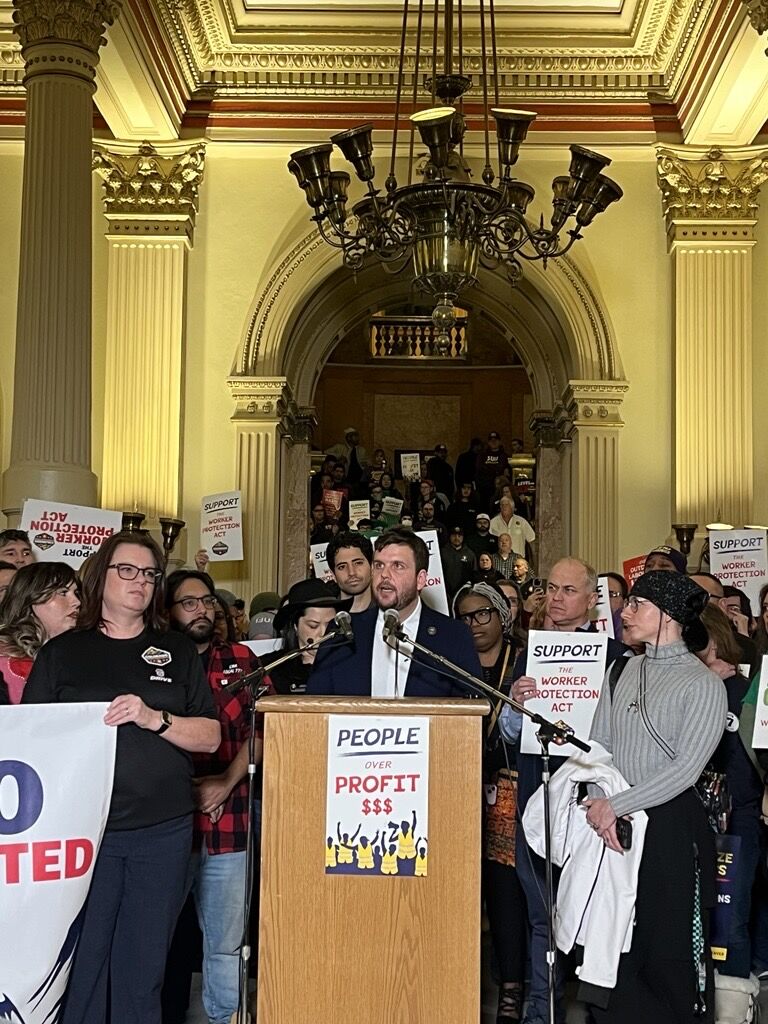
Gov. Jared Polis ‘frustrated, surprised’ at efforts to revive vetoed Worker Protection Act in 2026
Marissa Ventrelli
marissa.ventrelli@coloradopolitics.com
Updated 1 hour ago
Gov. Jared Polis was surprised that Democratic lawmakers and labor unions are seeking to revive the Worker Protection Act in the 2026 legislative session, less than a year after he vetoed the bill due to concerns about its impact on...
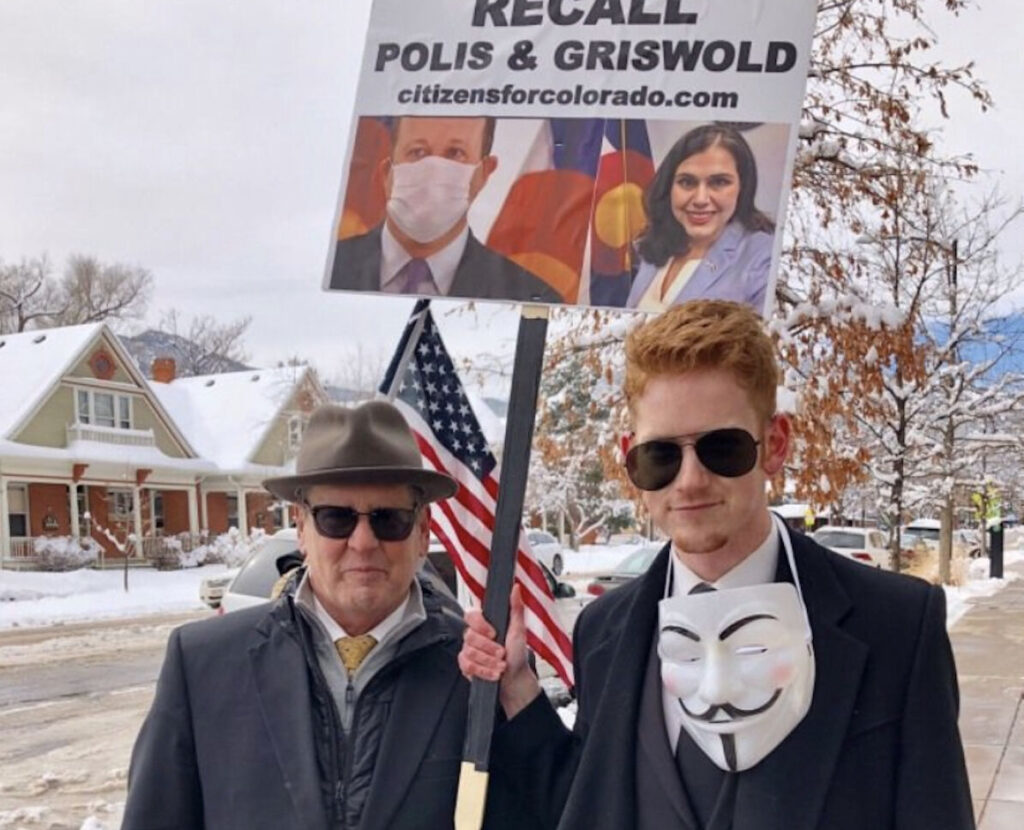
Colorado candidates switch parties, races as midterm election year looms | TRAIL MIX
Ernest Luning
ernest.luning@coloradopolitics.com
Updated 4 hours ago
The final days of 2025 saw an unusually high number of Colorado candidates switch parties and races, reshaping at least a few primaries ahead of this year’s midterm elections. The state has seen its share of switchers over the years,...

Final Lap: Gov. Jared Polis outlines his 2026 agenda for Colorado as he nears the end of his term
Marianne Goodland
marianne.goodland@coloradopolitics.com
Updated 22 hours ago
A year from now, Gov. Jared Polis will wrap up eight years as the state’s chief executive officer, take off the governor’s mantle and go back to private life. The governor recently reflected on what remains to do in his...

Protect young people while respecting their data, privacy | OPINION
Bruce Brown
bruce-brown@coloradopolitics.com
Updated 18 hours ago
After 40 years practicing law, first as a public defender in Los Angeles, then in private criminal defense, and serving eight years as the elected District Attorney for Colorado’s 5th Judicial District, I’ve developed a straightforward test for evaluating any...
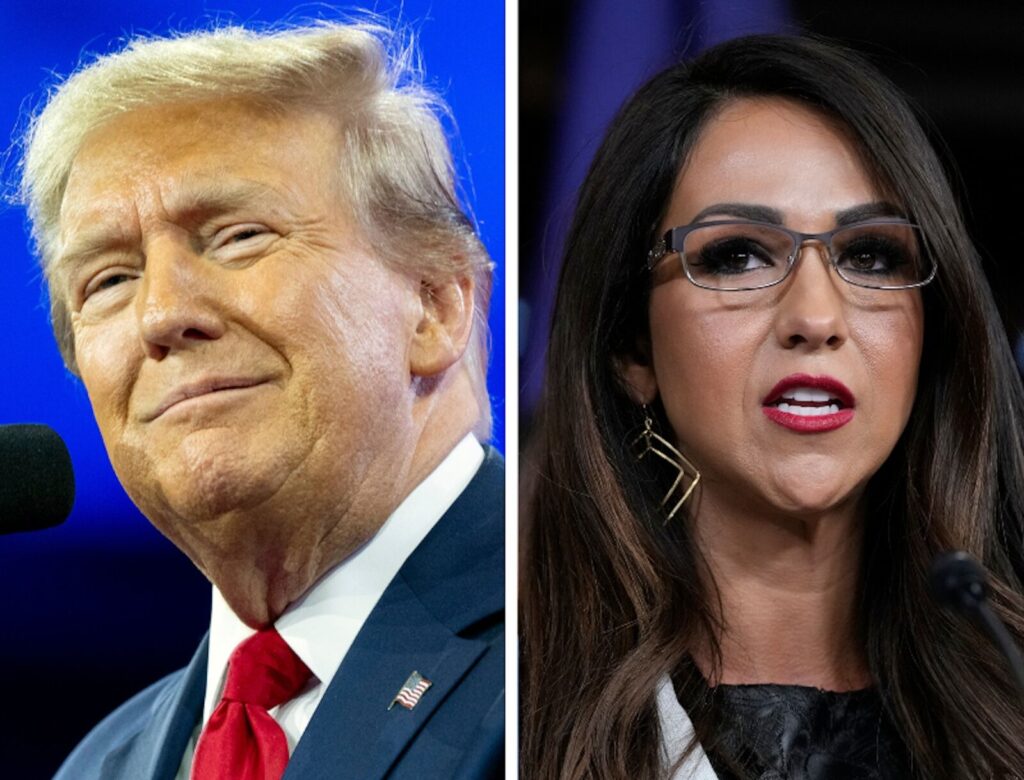
House rejects effort to override presidential veto for Colorado Water Project
Marianne Goodland
marianne.goodland@coloradopolitics.com
Updated 22 hours ago
The U.S. House of Representatives on Thursday rejected a Colorado-led effort to override a Dec. 30 presidential veto of a measure that would have helped finance the Arkansas Valley conduit. The measure, known as H.R. 131 and sponsored by U.S....
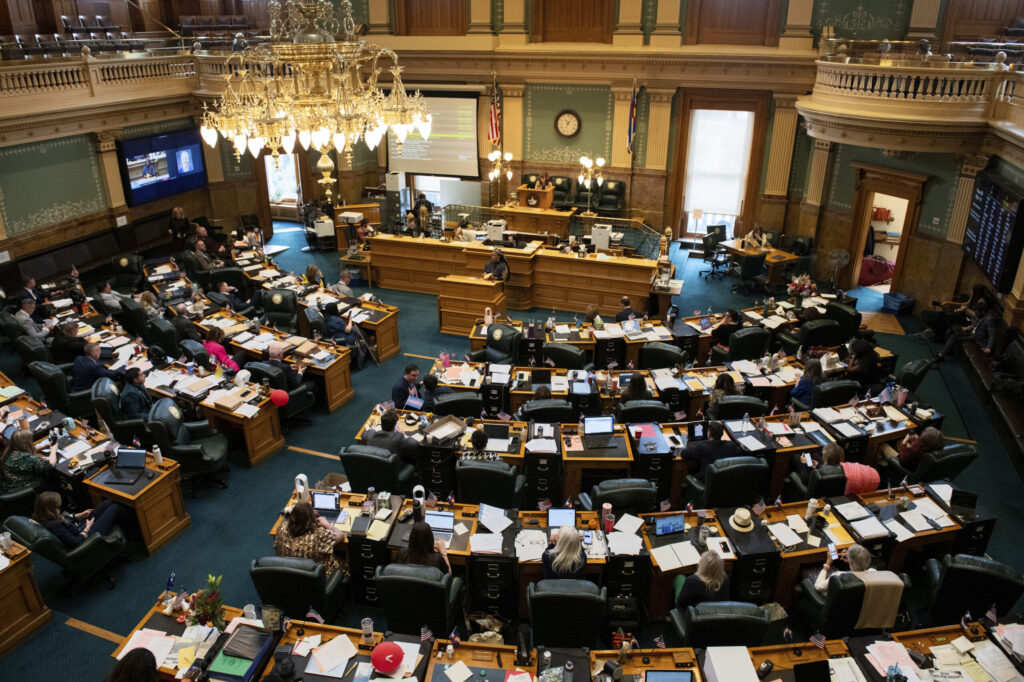
As lawmakers return, federal pressure and fiscal stress could shape Colorado’s 2026 session
Marissa Ventrelli
marissa.ventrelli@coloradopolitics.com
Updated 6 hours ago
The eight months since lawmakers wrapped up the 2025 legislative session have been anything but quiet. Federal funding cuts, a flurry of presidential executive orders, an election year fast approaching, and a projected $1.2 billion budget shortfall are all converging,...
Senate Democrats announce committee assignments for 2026 session
Marissa Ventrelli
marissa.ventrelli@coloradopolitics.com
Updated 1 day ago
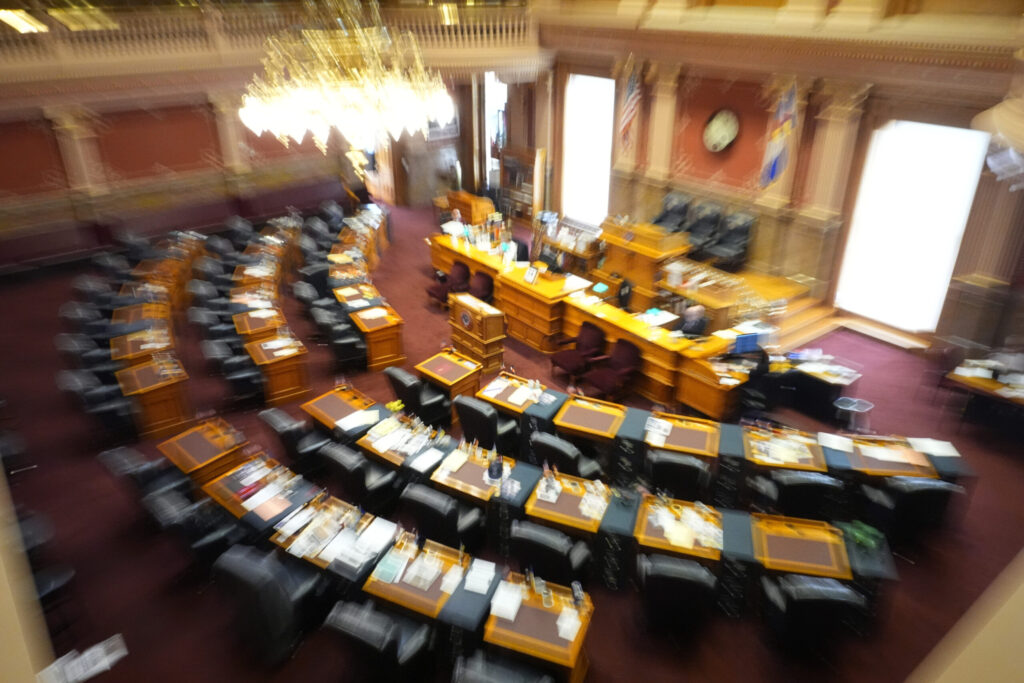
Democratic Senate Majority Leader Robert Rodriguez, D-Denver, announced committee assignments for the 2026 legislative session on Wednesday. “Committees are crucial to the legislative process – they’re where we deliberate, hear from the public, and fine-tune policies so that they can...
Lack of accountability in state standardized testing system | NOONAN
Paula Noonan
paula-noonan@coloradopolitics.com
Updated 2 days ago
The General Assembly kicks up its heels this month along with the National Western Stock Show. Both should offer some exciting bull rides. Last General Assembly produced one interesting bill on K-12 public education. It’s HB25-1278 on the education accountability...

Don’t punish the stores playing by the rules | OPINION
Colorado Politics
colorado-politics@coloradopolitics.com
Updated 2 days ago
By Mary Szarmach My family has been in business in this state for decades serving some of the hardest working Coloradans. And, yes, they buy tobacco products, and, yes, my staff and I card them every single time. We know the law, we...
Lawmakers, advocates seek reforms after cases expose gaps in Colorado’s competency system
Marissa Ventrelli
marissa.ventrelli@coloradopolitics.com
Updated 6 hours ago
After a series of high-profile crimes throughout the state last spring and summer exposed gaps in Colorado’s legal system for individuals declared incompetent to stand trial, lawmakers and an advocacy organization are pushing for changes this year. Extensive media coverage...
PREV
PREVIOUS

House rejects effort to override presidential veto for Colorado Water Project
The U.S. House of Representatives on Thursday rejected a Colorado-led effort to override a Dec. 30 presidential veto of a measure that would have helped finance the Arkansas Valley conduit. The measure, known as H.R. 131 and sponsored by U.S. Rep. Lauren Boebert, R-Windsor, sought to help local water providers with their share of the […]

Final Lap: Gov. Jared Polis outlines his 2026 agenda for Colorado as he nears the end of his term
A year from now, Gov. Jared Polis will wrap up eight years as the state’s chief executive officer, take off the governor’s mantle and go back to private life. The governor recently reflected on what remains to do in his final year and on what he looks back on from his time as the state’s […]