

Colorado Supreme Court reverses Jeffco judge’s order for fender-bender plaintiff to undergo mental evaluation

The Colorado Supreme Court concluded on Monday that a Jefferson County judge improperly ordered a plaintiff in a personal injury case to sit for a mental health examination after the defendant’s experts suggested her injuries were actually psychological.
The justices sided with plaintiff Spring Charlson, whose attorneys warned against allowing defense attorneys to delve into injured plaintiffs’ psychological histories in many more civil cases than they do now.
Charlson was rear-ended in May 2023, causing some damage to the two vehicles and back pain for Charlson. Compared with a medical scan she had two years prior, post-accident imaging revealed disc bulges in her lower back. Charlson received surgery, and her condition improved.
In suing the driver who crashed into her, Charlson underwent an examination by a defense expert. The doctor believed Charlson’s pain was likely caused by “overriding psychological factors,” rather than something physical.
Another defense expert, Hal Wortzel, reviewed Charlson’s medical records and likewise suggested that “efforts to explore cognitive, emotional, and/or behavioral contributions to Ms. Charlson’s course of illness are long overdue.”
The defense then sought to have Charlson sit for an evaluation with Wortzel. Charlson’s attorney objected, noting she had never put her mental health at issue in the lawsuit.
“What the defense is attempting to do here is to say that plaintiff has somehow waived her privilege to her mental health records or her mental health generally by the defense (injecting) her mental health into this,” argued attorney Cameron O. Hunter.
Based on the defense experts’ evaluations, “it has been put at issue by plaintiff, whether she intended to do it or not,” countered defense lawyer Andrew M. LaFontaine.
District Court Judge Russell Klein ordered Charlson to sit for an evaluation, while acknowledging he “ordinarily” would not find a litigant put her mental health at issue in a car accident case.
There is “something more concrete than simply a fishing expedition,” he said, while cautioning Wortzel’s exam should not “conduct a thorough sort of evaluation of the plaintiff’s entire psychological history.”
Charlson appealed to the Supreme Court, arguing the inquiry into her mental health should not occur because she had not put her own mental condition at issue.
“Were this Court to rule otherwise, this would open a veritable floodgate of defense-oriented experts opining that the injuries of plaintiffs, however legitimate, were really caused by some underlying mental illness,” Charlson’s lawyers wrote. “Were such an opinion by a defense expert all that were needed to place a plaintiff’s mental condition in controversy, defense attorneys would be able to place their opposing parties’ mental conditions in controversy in every single personal injury case.”
LaFontaine, representing defendant Julie Pribble, argued Klein was not obligated to accept Charlson’s “preferred theory” for her injuries. While it would likely be improper to require a plaintiff with a broken limb to reveal completely unconnected medical history, anything related to the potential underlying cause could be fair game.
“Defendant presented substantial and compelling evidence that Plaintiff’s complaint of low back pain, which she claimed was due to a bulging disc, was not caused by the collision at all,” wrote LaFontaine, “and instead was more readily explained by psychiatric factors.”
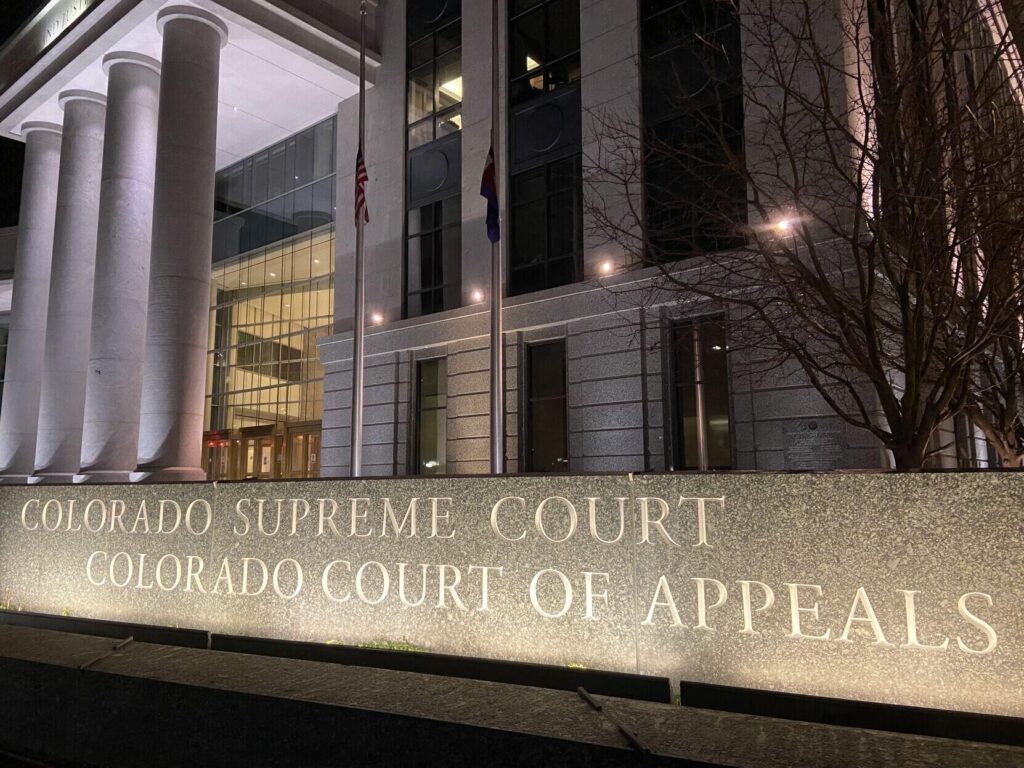
In a brief, unsigned order on Jan. 5, the Supreme Court rejected the idea that the defense could inject Charlson’s mental health into the case in a way that required her to undergo an examination for claims related to her physical injuries.
“None of these claims put Petitioner’s mental condition at issue,” the court wrote. Klein “erred because it was Respondent, not Petitioner, who put Petitioner’s mental condition at issue.”
The justices reversed Klein’s order.
The case is Charlson v. Pribble.

Judge Timothy Tymkovich to step aside, create Colorado-based vacancy on 10th Circuit
Michael Karlik
michael.karlik@coloradopolitics.com
Updated 2 hours ago
Judge Timothy M. Tymkovich of Colorado has announced his intent to step aside as an active member of the Denver-based federal appeals court, creating the first vacancy for President Donald Trump to fill in his second term. In a Feb....
Judge: CBI ordered to provide access to thousands of DNA cases
Jenny Deam
jenny-deam@coloradopolitics.com
Updated 6 hours ago
Boulder County District Judge Nancy W. Salomone on Monday ordered the Colorado Bureau of Investigation to provide access to thousands of cases where past DNA analysis could be in question or show a pattern. The ruling came in a pre-trial...
Divided appeals court reverses murder convictions due to faulty self-defense instruction
Michael Karlik
michael.karlik@coloradopolitics.com
Updated 1 day ago
Colorado’s second-highest court concluded last week that an incomplete self-defense instruction required the reversal of an El Paso County defendant’s murder convictions. Demetrius Montez Martin was among those present late at night at a club in Colorado Springs. An argument...

New Supreme Court member announced, justices hear oral arguments | COURT CRAWL
Michael Karlik
michael.karlik@coloradopolitics.com
Updated 1 day ago
Welcome to Court Crawl, Colorado Politics’ roundup of news from the third branch of government. The governor announced his pick to fill a vacancy on the state Supreme Court, and the justices heard oral arguments in multiple criminal and civil...
Colorado’s federal judges maintain approach to immigration detentions while escalating warnings
Michael Karlik
michael.karlik@coloradopolitics.com
Updated 3 days ago
Colorado’s federal judges are maintaining their view that the government’s assertion of broad immigration detention authority is unlawful, casting aside a recent appellate decision to the contrary as “unpersuasive” and out of step with the predominant interpretation by the judiciary....
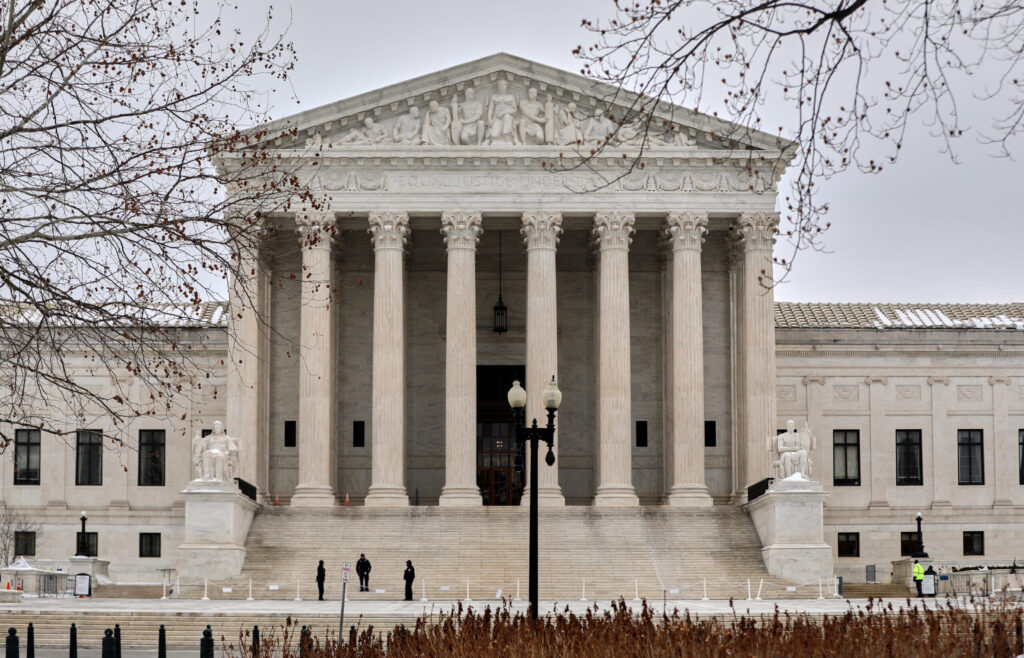
U.S. Supreme Court strikes down Trump’s tariffs, upending central plank of economic agenda
Lindsay Whitehurst
lindsay.whitehurst@associatedpress.com
Updated 4 days ago
WASHINGTON • The Supreme Court struck down President Donald Trump’s global tariffs on Friday, handing him a major loss on an issue crucial to his economic agenda. The 6-3 decision centers on tariffs imposed under an emergency powers law, including...
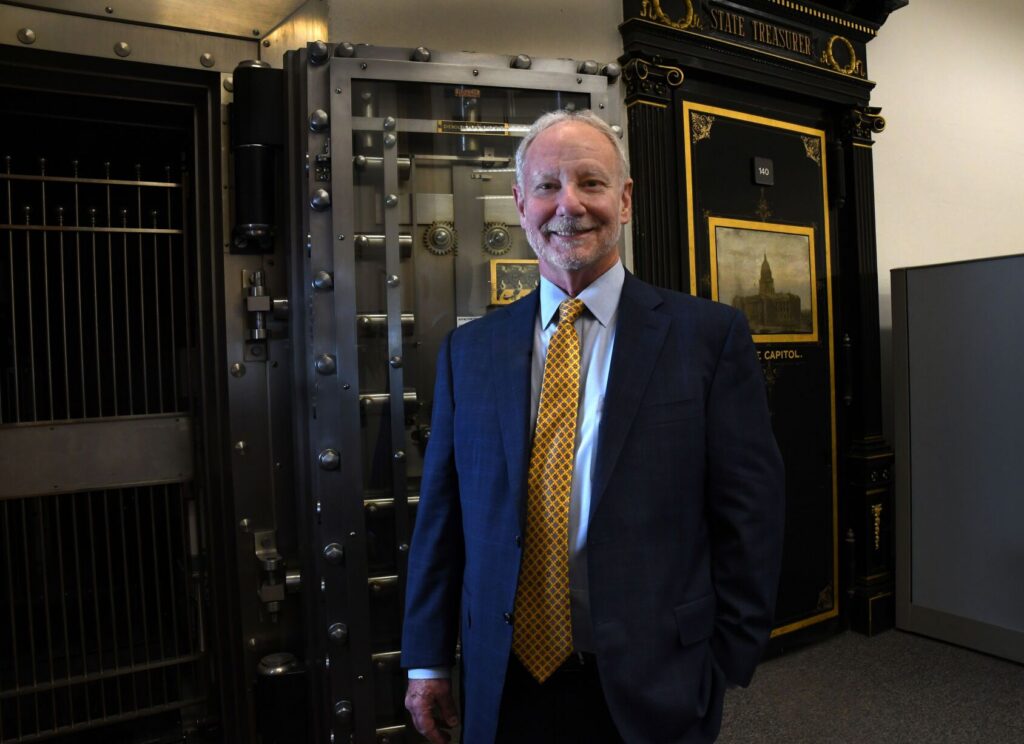
Federal judge partially allows challenge to proceed against Colorado unclaimed property program
Michael Karlik
michael.karlik@coloradopolitics.com
Updated 4 days ago
A federal judge allowed some claims to proceed last week against Colorado’s treasurer, based upon alleged constitutional violations flowing from the state’s process for reuniting people with their unclaimed property. Previously, U.S. District Court Judge Charlotte N. Sweeney dismissed the...
GoFundMe donations for victim do not lessen defendant’s restitution obligation, appeals court rules
Michael Karlik
michael.karlik@coloradopolitics.com
Updated 2 days ago
Donations made to a victim’s crowdfunding page do not necessarily reduce the defendant’s obligation to pay crime victim restitution, Colorado’s second-highest court concluded on Thursday. Under state law, crime victim compensation boards reimburse victims for certain monetary losses, including funeral...
Colorado senators initially push for — then drop ‘identity’ factor in parenting time decisions
Marissa Ventrelli
marissa.ventrelli@coloradopolitics.com
Updated 4 days ago
The sponsors of a proposal that would require suppression of records in name-change petitions for minors removed a provision that would have mandated the courts to factor in the issue of “identity” when allocating parenting time. In its original form,...
Appeals court divided over effect of retroactive sentence on parole calculation
Michael Karlik
michael.karlik@coloradopolitics.com
Updated 2 days ago
Colorado’s second-highest court grappled last week with the framework for calculating a defendant’s earliest possible parole date in light of two intersecting legal principles — a judge’s ability to make an order retroactive, and the requirement that separate, simultaneous sentences...
PREV
PREVIOUS

State Supreme Court vacancy opens, year in review | COURT CRAWL
Welcome to Court Crawl, Colorado Politics’ roundup of news from the third branch of government. The application period is now open for the first state Supreme Court vacancy in five years, plus Colorado Politics looked back on the significant judicial developments from 2025. At the Supreme Court • The Colorado Supreme Court halted the practice of […]

Denver mayor’s sanctuary city legal bill hits $2M limit
The bill for Denver Mayor Mike Johnston’s legal defense for that March 5 hearing before the U.S. House Oversight and Government Reform Committee on “sanctuary” cities has reached its $2 million contractual limit. Just as the year closed out on Dec. 30, a fifth payment, in the amount of $950,000 — almost half of the […]