

US Rep. Lauren Boebert: On representing Colorado, working with Trump and releasing the Epstein files

For years, U.S. Rep. Lauren Boebert’s name has become a shorthand for controversy in her home state and in the nation’s capital.
Recently, the outspoken Colorado Republican has drawn rare praise from some of her fiercest critics, particularly after breaking expectations during a key vote.
Boebert insisted the moment isn’t a departure from her values but a reflection of how she has matured as a lawmaker navigating power, loyalty, and accountability in Congress.
Epstein files
Boebert made national headlines when she was summoned to the White House and met with officials in the Situation Room last month. Many immediately pounced, painting the meeting as a bullying session and speculating that the president was likely pushing her to change her vote on releasing the Epstein files.
Boebert was one of a few Republicans who had signed a congressional petition to force a vote to release files related to disgraced financier, convicted sex offender and alleged sex trafficker Jeffrey Epstein.
Amid the speculation, Boebert said the meeting was “nothing really.” She went on to vote to release the Epstein files and stressed that Trump did not try to bully her into changing her vote.
“Certainly, I spoke with the President prior to going to the Situation Room, but there wasn’t a hateful conversation. It wasn’t a divisive conversation. It wasn’t a threatening conversation,” she told Colorado Politics in an exclusive interview. “He has concerns — rightful concerns — about Congress overstepping the judicial branch and overturning some of these sealed court documents. And I do agree that there’s a precedent there that, you know, it is risky.”
Boebert said that, during her meeting in the Situation Room, the discussion centered around Epstein’s alleged victims and the importance of hearing from them directly. They also discussed a broader examination of the files held by the Epstein estate.
“And, ultimately, I left deciding that I was still doing the right thing for the victims and also just to uphold integrity with the American voters, and doing what we said we would do,” she said.
Boebert said her decision to vote “yes” in releasing the files was for the victims.
“I did what I believe was right in pushing forward legislation,” she said. “I do not believe that we were being aggressive enough in some of the things we were doing with the committee. I did not believe we were receiving enough information, and so I felt that it was right to push forward that piece of legislation.”
She added: “I certainly don’t believe that the president is implicated in this. But I want the truth to come out. I want justice where it is needed. And you know, I want these victims to feel heard and seen and, you know, have some closure, hopefully, on the horrible things that have happened to them.”
The U.S. Attorney General’s Office began releasing the files on Dec. 19. Critics have said the release has been too slow. Others questioned the redactions and complained about the website’s speed. Meanwhile, the Attorney General’s Office has said it still has millions of documents to sift through.

‘I hope I’m always maturing’
As her erstwhile critics applauded her for standing up to Trump in the Epstein vote, Boebert said it wasn’t as out of character as they believe.
“I would ask those same people to look that closely into most of the legislating that I do — because the bills that I passed, they are largely bipartisan,” Boebert said. “And they’re directly impacting Colorado, and they’re upholding the promises that I made on the campaign trail. But unfortunately, there’s, you know, a tainted view across party lines and so rather than actually looking at what is happening, it’s just an immediate insult or criticism, rather than hearing all the points.”
She said her critics should, in fact, look at her record.
“Of course, I’m a Republican. Of course, I am conservative, but I also came here to be effective and get things done, and I’m very proud of the creative ways that I’ve come up with in bringing my Democratic colleagues on board with issues that I care about,” she said.
Boebert also reflected on how she’s evolved as a legislator, particularly as she works to reach across the ideological aisle.
“I hope I’m always maturing in everything that I do,” Boebert said. “You know, I never want to arrive in a new place and look like I did a year prior. But also, you have to remember the atmosphere that I was elected in and came into Congress and to serve in.”
Boebert had been elected in Colorado’s 3rd Congressional District in 2020. She won reelection in 2022 before switching to the 4th district last year. She started her political career during the COVID-19 pandemic.
The Republican said she was loud, standing up against pandemic policies.
“This was a time when our lives were being shut down,” she said. “Our children were kept out of school. Our military personnel were being dishonorably discharged for not taking an experimental vaccine. You know, small business owners, even myself, were being shut down by force. And so, it was a very, very hostile time arriving in Washington, DC.”
At the start of her second term, Boebert said it started a lot like her first term.
“In my second term, we were in the majority, and I didn’t start that majority off quiet,” she said. “I wanted to change the way the House operated. I felt I would never have a victim mentality, but I felt like we were all victims to the procedures of the House and the rules that we operate under.”
Boebert said House members were not empowered to represent their own districts, with amendments to legislation only being allowed during committee.
“And so we fought for common-sense changes, single-subject legislation, and individual appropriations bills,” Boebert said. “I wanted to end the days of you having to pass a bill to find out what’s in it.”
Fast forward to today, Boebert said the House is back with its bad habits, pointing to the “Arctic Frost provision,” which was discreetly added to a Senate bill and would have allowed some senators unique rights to sue the government over phone record requests.
“I wanted to end all of these processes,” Boebert said. “Give us 72 hours to read a bill before we vote on it, allow amendments on the floor. And, you know, we were doing pretty well with that for a period of time, but then when it came to big legislation, the powers that be in leadership reverted back to the old way of doing things.”
“Unfortunately, we still are seeing that,” she said.

Trump should ‘go after Denver’ — not Space Command
Boebert said she continues to support the Trump administration and its policies. When asked about decisions the president has made that directly affect Colorado, Boebert said the administration has not been aggressive enough.
“Well, to start, I don’t think President Trump is doing enough to really highlight the policies that are impacting Colorado negatively that are passed by our state legislature and even cities like Denver, which have doubled down, say, for instance, on their sanctuary policies in preventing any of their employees to coordinate with federal agents,” Boebert said.
“So, I would love to see President Trump not go after Space Command, but go after Denver. We have the Fed building in Denver. Let’s break that up and put it in the places that actually want to see a flourishing in these agencies and actually want to get something done and reward those counties that are abiding by the federal laws that we have and want to support President Trump’s agenda,” she said.
In September, Boebert joined all members of Colorado’s congressional delegation in criticizing Trump’s decision to move Space Command from its headquarters in Colorado to Alabama, charging it would weaken national security and “will directly harm our state and the nation.”
Most recently, the Trump administration announced its decision to shutter the National Center for Atmospheric Research in Boulder.
While Democrats decried the idea of dismantling one of the world’s leading climate and weather research institutions, Boebert is more supportive.
“I think that that is something that should be broken up. I think that the critical aspects of it will remain, and they should,” she said. “I’m not saying that this is entirely bad, but we’ve had a lot of woke extremist policies and direction come from this agency — you know, when it comes to the Green New Deal, when it comes to climate change. So, to break up some of that and reduce it, I am absolutely in favor of that, but not to get rid of it as a whole.”
She added: “And President Trump made it very clear that they are not going to do that. But in all of this, I’m never opposed to shrinking the size and scope of the federal government.”

Boebert pushes to delist the gray wolf
Most recently, Boebert is pushing to delist the gray wolf, which passed the U.S. House in December. The bill, titled the Pet and Livestock Protection Act, now heads to the Senate for debate.
The proposal directs the U.S. Secretary of the Interior to reissue the Endangered Species Act rule and remove the gray wolf from the list of endangered and threatened wildlife within 60 days of the law’s enactment.
The bill also blocks any effort to challenge the delisting in court.
In Colorado, Boebert said voters, primarily in the Denver metro area and Boulder, approved reintroducing the gray wolves in Colorado. Critics said the state botched the program’s rollout. The apex predators have now preyed upon livestock in areas where residents mainly voted against the reintroduction.
The program, which includes compensating ranchers for lost livestock and other expenses, is also costing more than the estimate.
“The biggest problem is with this predator — they do not adhere to arbitrary state lines, and so we have seen them go east of the Continental Divide, even into Elbert County,” Boebert said. “And this is something that certainly poses a risk to our farmers and ranchers and even simply our pets and our children, and we’ve seen them travel into Wyoming and other areas. So, I want the states and tribes to be able to manage this and get the federal government out of the way right now.”
Earlier this year, the U.S Fish and Wildlife Service barred Colorado from obtaining wolves from Alaska or Canada, ruling the state may only acquire the animals from certain parts of the Lower 48.
“I love it. I want more of it, and I want our states to actually follow federal law and stop going against blocking them from doing it.”
U.S. Rep. Lauren Boebert
‘Regulated into poverty’
While Democrats have largely opposed Trump’s crackdown on immigrants crossing the US border illegally, Boebert said she is happy to see it happening.
“I love it. I want more of it, and I want our states to actually follow federal law and stop going against blocking them from doing it,” she said.
Besides action on illegal immigration, Boebert also applauded Trump’s recent executive order to label fentanyl as a weapon of mass destruction.
“That is a piece of legislation that I have championed for years now, and I have had conversations in the House to get my bill through committee and to the floor,” she said. “So, if we can codify President Trump’s executive order and designate fentanyl as a weapon of mass destruction, that is good.”
According to studies, fentanyl-related deaths cost Colorado an estimated $16 billion a year. Advance Colorado is aiming to ask voters in 2026 to increase penalties for fentanyl manufacturing, distribution and possession.
On the healthcare front, Boebert is a proponent of the Republican legislation that would, among other provisions, pay for cost-sharing reductions for some enrollees in the Affordable Care Act marketplaces and expand association health plans. The legislation also seeks to increase transparency requirements for pharmacy benefit managers. The bill passed the House on a 216-211 vote.
Democrats criticized the bill for not extending the enhanced Affordable Care Act tax credits, which are set to expire on Dec. 31, a point of contention that led to the longest government shutdown in US history.
In response to the COVID-19 pandemic, Congress adopted the American Rescue Plan Act of 2021, which, among other provisions, temporarily expanded eligibility for the premium tax credits for tax years 2021 and 2022. Notably, the law eliminated the income limit of 400% of the federal poverty level, thereby allowing more Americans to qualify, and provided larger subsidies compared to the original Affordable Care Act. The Biden administration and Congress extended these enhanced tax credits in the 2022 Budget Reconciliation Law for another three years and established the sunset date of Jan. 1, 2026.
“I think (the GOP healthcare bill) will impact every single American in a positive way and save a lot of money. But health care needs to be personal,” Boebert said. “It needs to be portable, and it should be more doctor-patient focused, rather than big insurance focused. The issue with Obamacare is that we were just subsidizing these huge insurance companies and making them richer and richer while we struggled to have good health care.”
Boebert said she is excited to continue working with the Trump administration next year, adding she wants to focus on energy and improving affordability in Colorado.
Boebert, like many other lawmakers, believes Colorado can be a national leader in energy production. Accomplishing that, she said, will mean undoing policies and regulations put in place during the Biden administration.
“I know firsthand that in Colorado, it was affordable to live there when we had a booming energy industry, and unfortunately, we were regulated into poverty,” she said. “These companies were forced out of Colorado. Families were forced out. Families were broken up as dad went to work in another state for half of the year, and then, of course, some who just struggled to get by and had to work two and three jobs to make up for that good income that they once had.”
She added: “So, there’s a lot that President Trump is doing. I’m working side by side with him to do that. And, no, it’s not going to happen overnight, but we’re already seeing amazing progress.”


Raids, pushback and TdA indictments defined Denver’s immigration story in 2025
Nico Brambila
nico.brambila@denvergazette.com
Updated 2 days ago
The Trump administration’s push for a large-scale, deportation effort — built around campaign warnings about Tren de Aragua, the Venezuelan prison gang that established a foothold in Colorado — collided with the realities on the ground in Denver, where raids...
Denver’s budget deficit shaped 2025 news coverage
Deborah Grigsby
deborah.smith@denvergazette.com
Updated 2 days ago
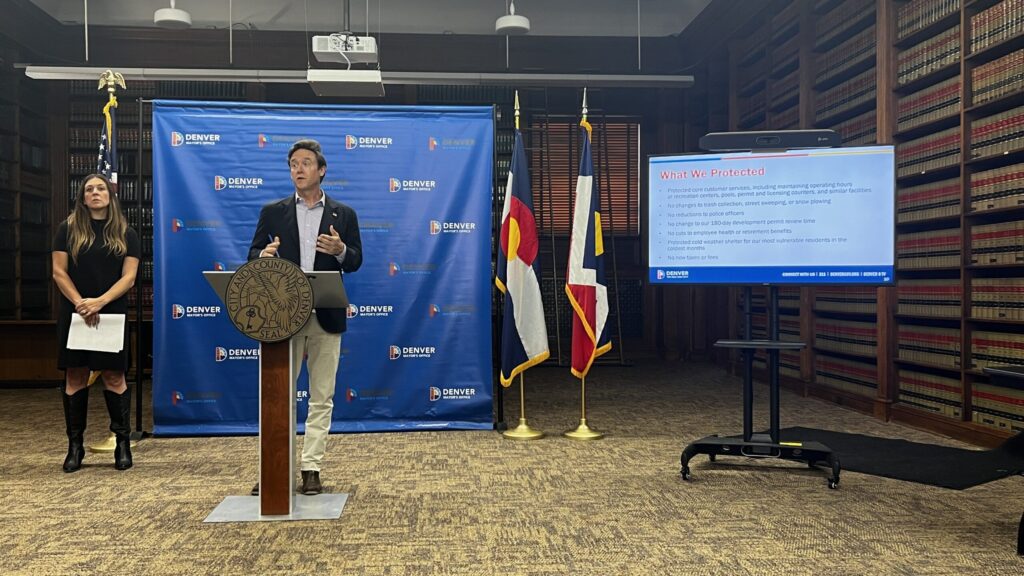
It was a year of big goals on a tight budget for the Mile High City, where Mayor Mike Johnston’s announcement of a $200 million city budget deficit dominated the news coverage. Facing a $50 million gap in its 2025...

Colorado podcaster who has called for political foes to be executed joins GOP primary for governor
Ernest Luning
ernest.luning@coloradopolitics.com
Updated 2 days ago
Joe Oltmann, the conservative Colorado podcaster who has repeatedly called for Colorado’s top elected officials to be executed and whose uncorroborated claims that the 2020 election was rigged spawned multiple defamation lawsuits, declared his candidacy for the Republican nomination for...

‘The canary in the democracy mine is local journalism’ | Vince Bzdek
Vince Bzdek
vince.bzdek@gazette.com
Updated 2 days ago
Colorado could do a lot more to save newspapers – and democracy – in rural areas By Vince Bzdek As another new year and another legislative session dawn for Colorado, it’s a good time to ask what the absolute most...
Colorado’s national correspondent recounts violent KKK march in D.C. | A LOOK BACK
Rachael Wright
rachael.wright@coloradopolitics.com
Updated 6 days ago
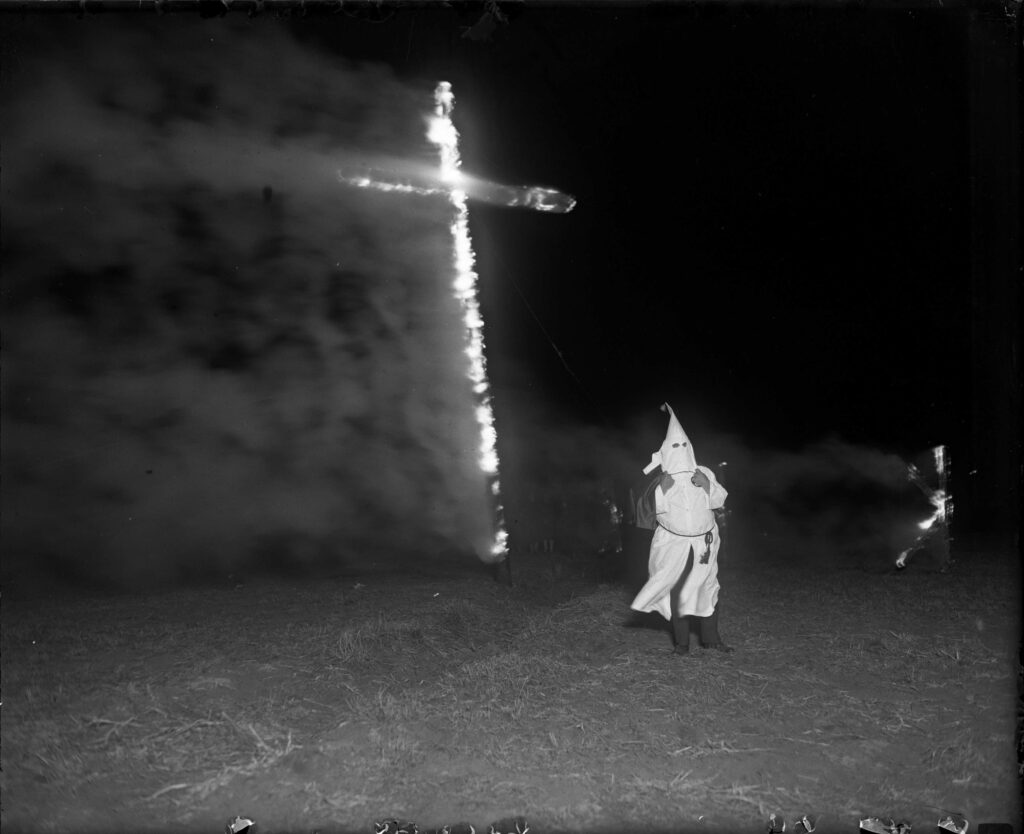
by Rachael Wright Thirty-Five Years Ago This Week: “I had forgotten about the Ku Klux Klan,” said Ann Downing Schmidt, The Colorado Statesman’s Washington, D.C., correspondent. In a commentary piece published in The Statesman, Schmidt described trying to make the ten-minute drive from...
2025 Unfiltered: Unions, guns and vetoes — inside Colorado’s political year
Marissa Ventrelli
marissa.ventrelli@coloradopolitics.com
Updated 2 days ago
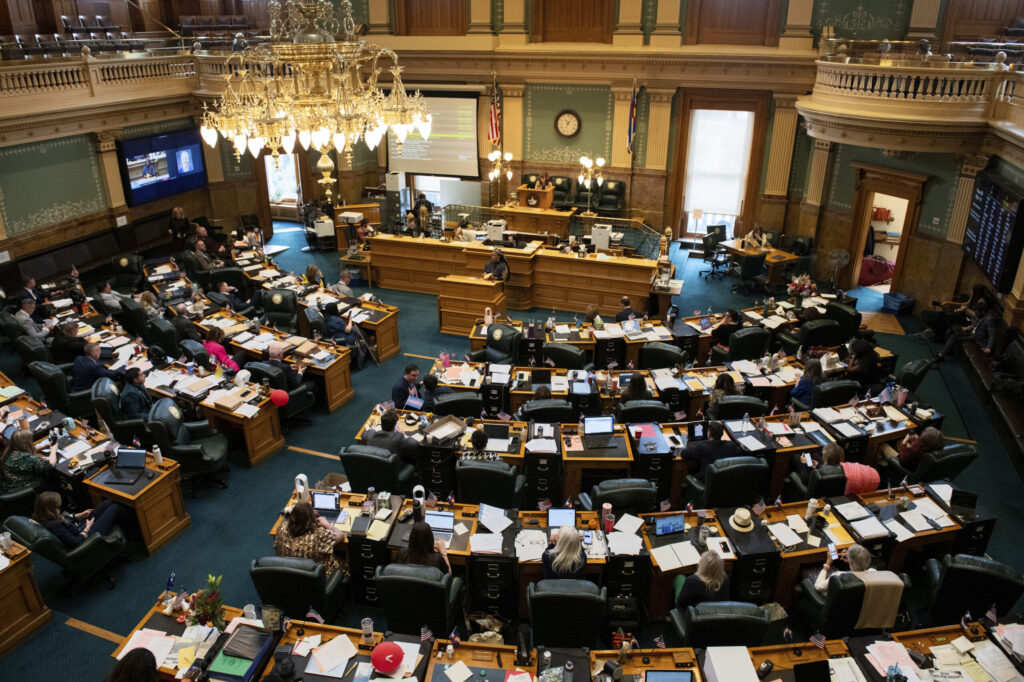
From affordability and labor rights to gun policy — as well as public safety and gubernatorial vetoes — 2025 proved to be one of the most consequential and contentious years in recent Colorado political history. Lawmakers entered the session pledging...
2025 Unfiltered: Ethics investigations, scandals plague Colorado Capitol
Marianne Goodland
marianne.goodland@coloradopolitics.com
Updated 2 days ago
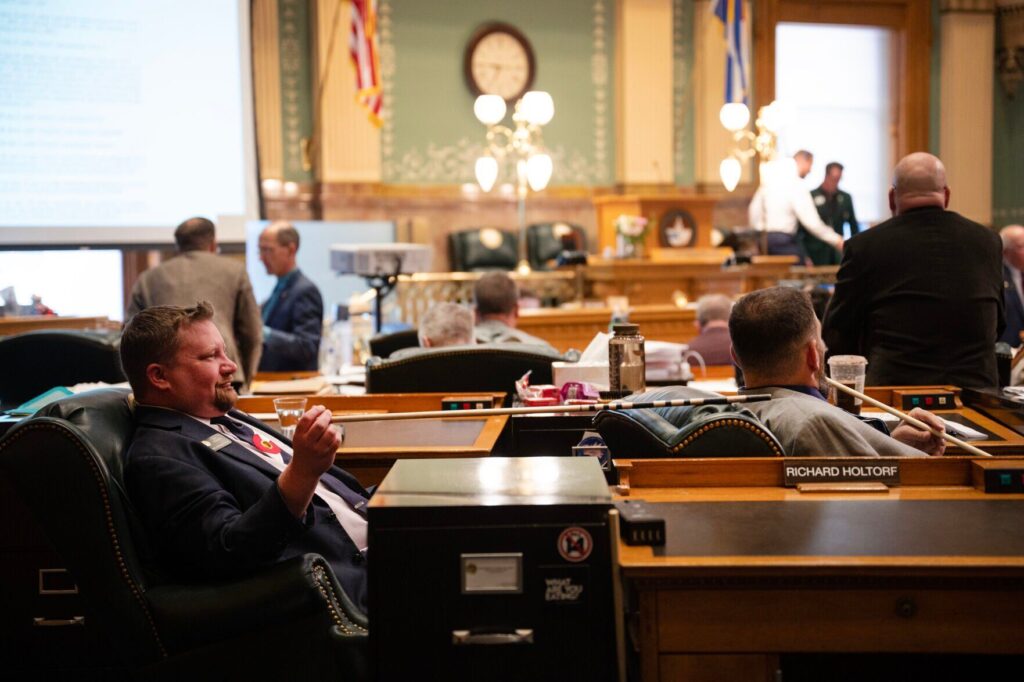
Over the course of the year, a series of investigations, allegations and controversies emerged at the state Capitol, drawing scrutiny to the behavior of elected officials and, in some cases, overshadowing policy debates. Here are some of the notable investigations,...

2025 Unfiltered: Top stories of the Colorado General Assembly
Marianne Goodland
marianne.goodland@coloradopolitics.com
Updated 13 hours ago
In 2025, the Colorado legislature faced a budget deficit, sought to tackle a lingering housing crisis and saw a wave of lawmakers leaving for other opportunities, prompting multiple vacancy committees to act. Here are a look at the year’s top...

Calendar Dec. 29-Jan. 4
Rachael Wright
rachael.wright@coloradopolitics.com
Updated 6 days ago
CoPo’s weekly political calendar will help you find political and public-policy events throughout Colorado. It includes candidate and issue campaign events, public policy meetings, court hearings, state and local party conventions, assemblies, debates, rallies, parades, speaking engagements, traveling dignitary appearances,...

2025 Unfiltered: Remembering those we lost in Colorado
Marianne Goodland
marianne.goodland@coloradopolitics.com
Updated 2 days ago
Rod Bockenfeld Former Rep. Rod Bockenfeld, R-Watkins, died on Feb. 13, 2025, at his home in Watkins. He was 69. Bockenfeld served in the Colorado House from 2019 to 2025, including on the Joint Budget Committee. He battled cancer during...
PREV
PREVIOUS

Thinking through what may be on tap in 2026 | HUDSON
When the three-million-year-old bones of Lucy were unearthed in an Ethiopian valley in 1974, paleoanthropologists anointed her as the Eve to all of us. Though her skull was not big enough to accommodate our larger, homo sapiens’ brain, she was a genetic hominid. Although a few bone fragments of a greater age have been discovered […]

China stages military drills around Taiwan to warn 'external forces' after US, Japan tensions
HONG KONG (AP) — China’s military on Monday dispatched air, navy and missile units to conduct joint live-fire drills around the island of Taiwan, which Beijing called a “stern warning” against separatist and “external interference” forces. Taiwan said it was placing its forces on alert and called the Chinese government “the biggest destroyer of peace.” […]