

Thinking through what may be on tap in 2026 | HUDSON

When the three-million-year-old bones of Lucy were unearthed in an Ethiopian valley in 1974, paleoanthropologists anointed her as the Eve to all of us. Though her skull was not big enough to accommodate our larger, homo sapiens’ brain, she was a genetic hominid. Although a few bone fragments of a greater age have been discovered since then, it’s Lucy who offers us a nearly complete skeleton. She would surely be surprised her remains are locked in a temperature-controlled vault in the Ethiopian capital of Addis Ababa all these millennia later. Her skeleton was returned after a decade of study and is regarded as a national treasure.
I recount this history because Lucy apparently resided in a rift valley where tectonic plates were pulling apart two ridgelines. Around the globe, these features have produced the oldest discoveries of human settlement. Such geological features offer rich alluvial soils washed onto their valley floors that support fertile agriculture and often include large, freshwater lakes. Twenty percent of the world’s fresh water is contained in Siberia’s Lake Baikal alone, the deepest rift water on the planet. Not as deep but larger is our own Lake Superior. Several of the hazards of rift valleys are periodic earthquakes, as well as a few which are ringed by active volcanoes and their unpredictable eruptions.
As 2025 reaches a close, I would like to suggest America is moving into 2026 in an environment of similar precarity. The sulfurous fumes poisoning our atmosphere may not be of volcanic origin but are no less threatening. Last week, my colleague and auld lang acquaintance, Eric Sondermann, reminded us of the occasional positive events witnessed in 2025 — identifying himself as an optimist. Though 2026 will start off with a welcome trip to the NFL playoffs on the part of our Denver Broncos while both the Avalanche and Nuggets are also on winning trajectories, substantial economic risks prevail. Examined separately, there is reason to dismiss most as improbable. Yet, taken together, what are the chances none will explode? Estimated likelihoods are derived from my own perusal of reports in the media. Alas, I identify as a pessimist.
Where should we start? Let’s examine crypto markets, which are scored by critics with a 15% to 30% chance of collapse. No less an investor than Warren Buffet labelled this fiscal sleight-of-hand as “rat poison squared.” On the bright side, most losses will accrue exclusively to that sliver of wealthy speculators who can afford to take the hit. Nonetheless, there are Cassandras who foresee toppling dominoes that could take down the entire financial system. Another depression-sized failure of Wall Street only rates a 5% probability but a Dow Jones index approaching 50,000 feels a lot like Greenspan’s warnings about “irrational exuberance.” (The Trump family seems likely to make it to the exit ahead of the rest of us who won’t receive any warning.)
While discussing domestic affairs, the likelihood that what is now an occasional shooting of alleged “illegal aliens” by ICE agents — including the mistaken targeting of random U.S. citizens — may soon produce full-fledged firefights as victims who choose to resist appears to come in at 15% to 25%. Where public sympathies will lie is anyone’s guess. The thuggishness of immigration sweeps to date fail to inspire widespread admiration. The more common response is to be appalled. As restaurant workers, farmworkers and construction laborers are swept up there has been no resulting rush of unemployed Americans demanding their jobs. Who is going to build the three million affordable homes we need each year?
Looking offshore, there are any number of festering sores. What are the chances Putin will agree to any settlement in Ukraine other than Russian victory. Observers think continued obstinacy is more likely than not. What will be the consequences of our adventurism in the Caribbean? Might violence spread from Venezuela across northern South America to include the drug trails from Columbia, Ecuador and Peru through Honduras, Guatemala and Mexico? That is pegged at 15% to 25%. Across Africa we’ve just sacked most of our career ambassadors while providing immigration preferences to white South Africans whose major complaint upon arrival here is black Americans won’t work as servants for the pittance they were paying in Johannesburg. Where might the bombing campaign in Nigeria on Christmas Day lead? Pity the safety of our embassy staff remaining across the Sahel countries of Islamic Africa.
Nor should we forget the quagmire created by Benjamin Netanyahu in the Middle East. Gaza could reignite at a moment’s notice together with the Palestinian West Bank. The recent bombing of ISIS outposts in Syria do not augur well for that region. Simmering fires threaten to spread in Yemen, Iraq and Sudan, where American allies supply weapons to both sides of a savage civil war. Thailand and Myanmar continue their desultory dispute, creating tens of thousands of refugees. NATO could disintegrate with little notice while Denmark tries to fend off American threats to annex Greenland.
Returning home, what are the chances of another pandemic or recurring epidemic of once defeated diseases in 2026. Odds of 15% to 30% are assigned to a lethal outbreak as Kennedy’s Health and Human Services Department cuts off access to immunizations. Just as researchers may have achieved a wide-spectrum, anti-COVID treatment, the CDC appears determined to block its distribution. Their mantra seems to be “better dead than vaccinated.”
Anyone with a grain of sense comprehends tariffs and inflation are linked. Not in our White House, however. The likelihood of a prolonged bout of stagflation is estimated as high as 50% without a reversal in economic policy. We can close with Artificial Intelligence (AI), whose data enter construction is almost single-handedly propping up the entire American economy as server farms gobble up available electricity and available water driving further inflation. The chance this investment constitutes a debt “bubble” also arrives at 15% to 30%, not to mention the worry AI won’t make us any smarter but may actually deliver us as slaves to our machines.
Of course, there is also the danger of a “black swan” event — the unanticipated catastrophe. Who ever heard of atmospheric rivers more than a decade ago, or fire tornadoes? What’s the real possibility we can dodge all these dangers in 2026? Slim to none is my guess. Colorado will not prove immune. If you are a dryland farmer, rancher or a resort worker, you can probably add drought to this list.
Miller Hudson is a public affairs consultant and a former Colorado legislator.


Colorado podcaster who has called for political foes to be executed joins GOP primary for governor
Ernest Luning
ernest.luning@coloradopolitics.com
Updated 1 day ago
Joe Oltmann, the conservative Colorado podcaster who has repeatedly called for Colorado’s top elected officials to be executed and whose uncorroborated claims that the 2020 election was rigged spawned multiple defamation lawsuits, declared his candidacy for the Republican nomination for...

‘The canary in the democracy mine is local journalism’ | Vince Bzdek
Vince Bzdek
vince.bzdek@gazette.com
Updated 1 day ago
Colorado could do a lot more to save newspapers – and democracy – in rural areas By Vince Bzdek As another new year and another legislative session dawn for Colorado, it’s a good time to ask what the absolute most...
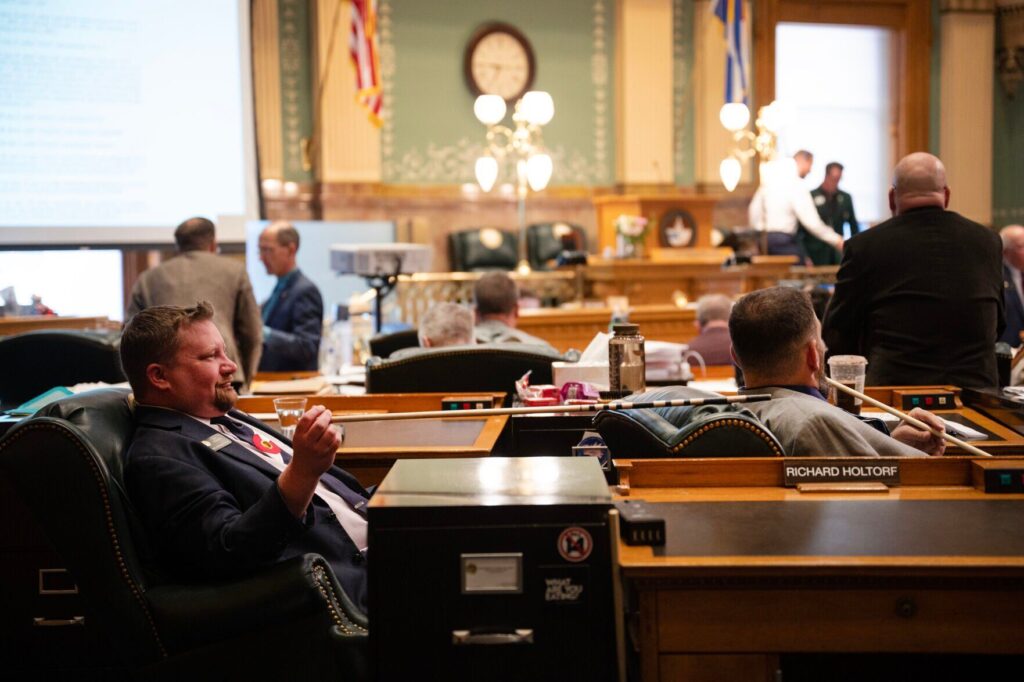
2025 Unfiltered: Ethics investigations, scandals plague Colorado Capitol
Marianne Goodland
marianne.goodland@coloradopolitics.com
Updated 1 day ago
Over the course of the year, a series of investigations, allegations and controversies emerged at the state Capitol, drawing scrutiny to the behavior of elected officials and, in some cases, overshadowing policy debates. Here are some of the notable investigations,...
2025 Unfiltered: Top stories of the Colorado General Assembly
Marianne Goodland
marianne.goodland@coloradopolitics.com
Updated 1 day ago
In 2025, the Colorado legislature faced a budget deficit, sought to tackle a lingering housing crisis and saw a wave of lawmakers leaving for other opportunities, prompting multiple vacancy committees to act. Here are a look at the year’s top...
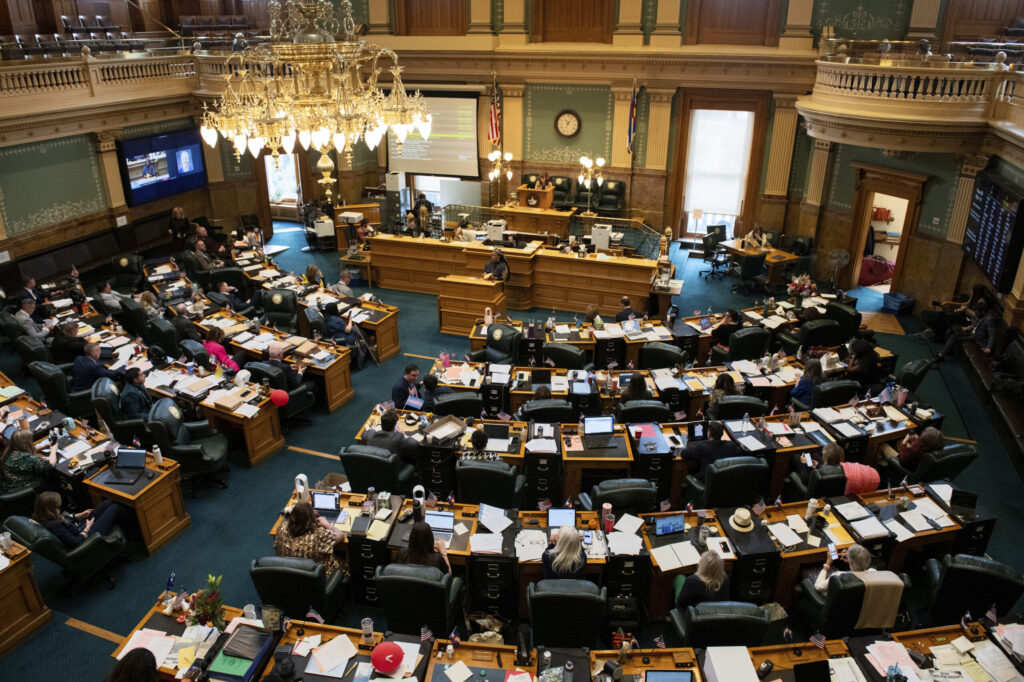
2025 Unfiltered: Unions, guns and vetoes — inside Colorado’s political year
Marissa Ventrelli
marissa.ventrelli@coloradopolitics.com
Updated 1 day ago
From affordability and labor rights to gun policy — as well as public safety and gubernatorial vetoes — 2025 proved to be one of the most consequential and contentious years in recent Colorado political history. Lawmakers entered the session pledging...

Calendar Dec. 29-Jan. 4
Rachael Wright
rachael.wright@coloradopolitics.com
Updated 5 days ago
CoPo’s weekly political calendar will help you find political and public-policy events throughout Colorado. It includes candidate and issue campaign events, public policy meetings, court hearings, state and local party conventions, assemblies, debates, rallies, parades, speaking engagements, traveling dignitary appearances,...
2025 Unfiltered: Remembering those we lost in Colorado
Marianne Goodland
marianne.goodland@coloradopolitics.com
Updated 1 day ago
Rod Bockenfeld Former Rep. Rod Bockenfeld, R-Watkins, died on Feb. 13, 2025, at his home in Watkins. He was 69. Bockenfeld served in the Colorado House from 2019 to 2025, including on the Joint Budget Committee. He battled cancer during...

Colorado Politics in focus: the year’s top in-depth cover stories and series | 2025 unfiltered
Thelma Grimes
thelma.grimes@coloradopolitics.com
Updated 1 day ago
In 2025, Colorado Politics went beyond the daily headlines, delivering in-depth reporting on the major issues shaping the state — from congressional action to legislative proposals to the urban-rural divide and the future of Colorado’s economy. Here’s a look at...

2025 Unfiltered: Moments that marked Colorado’s decidedly off-kilter political year
Ernest Luning
ernest.luning@coloradopolitics.com
Updated 4 days ago
From the flurry of executive orders that ushered in President Donald Trump’s second term to a blizzard of lawsuits filed by the state’s Democratic officials, the state’s political year was marked by near-constant conflict between the GOP-controlled federal government and...
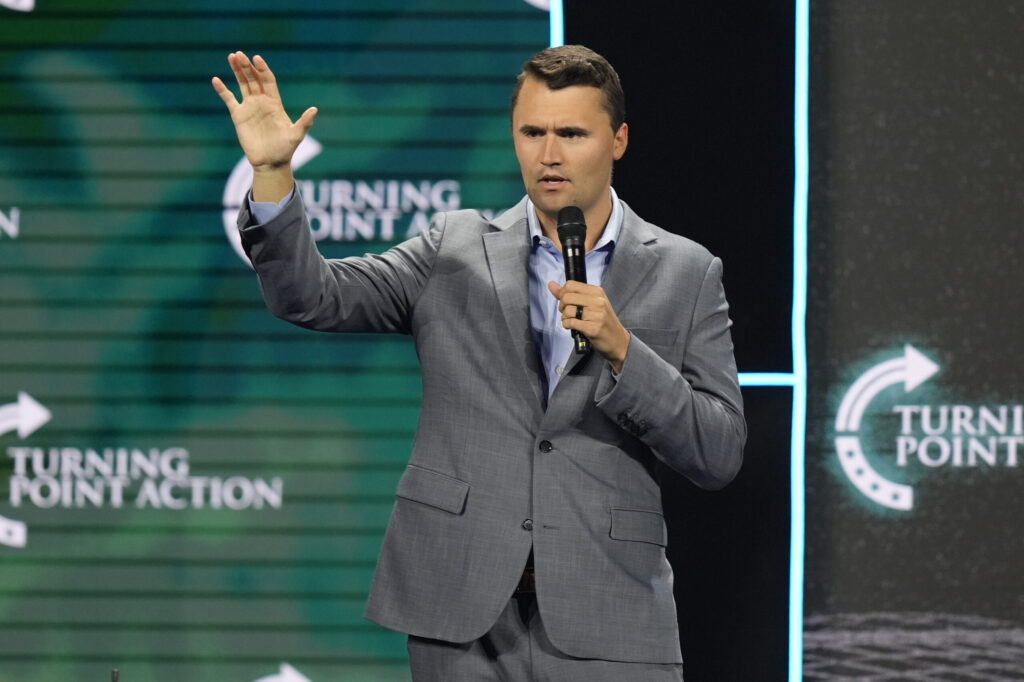
From Pope Francis to Charlie Kirk, many deaths in 2025 had a wide impact
The Associated Press
the-associated-press@coloradopolitics.com
Updated 2 days ago
The death of Pope Francis brought change to the Catholic Church, which counts 1.4 billion adherents and is now led — for the first time — by an American pope. The fatal shooting of conservative activist Charlie Kirk as he...
