

‘The canary in the democracy mine is local journalism’ | Vince Bzdek
Colorado could do a lot more to save newspapers – and democracy – in rural areas
By Vince Bzdek
As another new year and another legislative session dawn for Colorado, it’s a good time to ask what the absolute most important things are for our state to focus on in the coming year.
Affordability is certainly top of the list for many Coloradans, but I’d like to propose something that, in the long arc of history, may be even more crucial to laser in on.
Local journalism.
Clearly, I’m biased about the importance of journalism, but hear me out.
A full century before today’s distorting power of the internet and social media, a famous media critic, Walter Lippmann, wrote that the crisis of any democracy anywhere in the world is in its essence a crisis of journalism. Lippmann wrote that the sheer scale of modern life separated citizens from the information required for self-rule. The “stream of news that reaches the public,” he discerned, was democracy’s most glaring vulnerability.
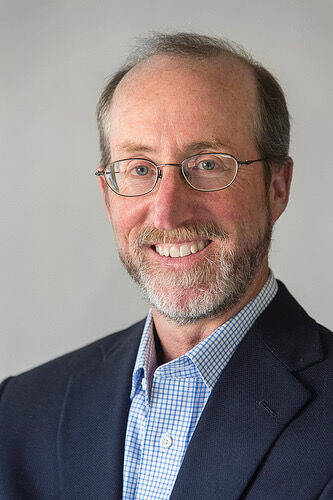
I recently interviewed a politician who has decided, as he has looked at the broader horizon for making the world a better place, that the hollowing out of local news and all the accountability it brings to our democracy are the most important things he could focus on in the remaining days of his political career.
“The canary in the democracy mine is local journalism,” Steven Glazer concluded. He is of the mind that American democracy cannot thrive properly without its lifeblood, local news and newspapers
“I came to the view in my last term in the senate, when you look at the big picture for what sustains a democracy, I always focused on the issue of trust. It’s all about earning the public trust. And then I began to see how the retrenchment in local journalism was interfering with the ability of the public to have oversight and accountability for what government does. So I committed my last term in the senate to focus on the issue more directly.”
Unfortunately, this crusader is not in Colorado.

Glazer, a former state senator in California, pushed through a bill to set aside $25 million for a local media scholarship program in California, the largest state commitment to local journalism in the country. The leadership in the state senate immediately agreed with the importance of Glazer’s request. The initiative has dispatched more than 70 journalism fellows to the far corners of the state, fully paid with salary and benefits.
“It’s not lost on elected leaders about the collapse of local news,” Glazer noted. “There’s no coverage of the work that they do. There’s nobody to talk to. There’s nobody to share the information with. It’s not a tough sell for people to understand why it’s important.”
The issue wasn’t as much the importance of the program as it was balancing that versus other needs in a state that had a $30 billion shortfall. Even given that tough economic climate, the state senate committed to the journalism subsidy anyway.
Two years later, they renewed the program, and expanded it by $15 million, for a total of $40 million to sustain journalism in the state.
The program has paid for 111 fellows for 110 newsrooms, produced more than 10,000 stories by reporters who are covering over 92 percent of the state. The smaller media outlets in the state have benefited the most, Glazer tells me. The program is effectively erasing news deserts all over California.
“That’s exactly what the program is trying to do, is to see the gaps in coverage across the state, and to step in and fill those gaps with news gatherers,” said Glazer.
So my question is this: Where is Colorado’s Steven Glazer?
When is our state going to do something about its own crisis in democracy, i.e., journalism? Fifty-two local newspapers have closed in the last decade. Why doesn’t our legislature care? Why aren’t the politicians in those communities screaming their heads off in panic right now? Can you imagine the hue and cry if 52 schools suddenly shut down, yet journalism is essentially school for adults.
Ironically, the strongest arguments Glazer faced against the program came from the California news industry itself because of a misplaced concern about government interference.

“I told everyone that my intent was to make this ownership-neutral, content-neutral, platform-neutral. Three neutrals. The program is set up to honor that standard,” said Glazer.
An independent entity — the Berkeley Graduate School of Journalism — manages the program rather than the state. Journalism administrators at the school decide who gets reporters and editors around the state.
“It’s not my responsibility to make those choices,” said Glazer. “I don’t get involved.”
Glazer has also been involved in efforts to require Google to fund $70 million in support for journalism as a settlement reached after his bill to force tech companies to pay $500 million in mitigation fees to media outlets stalled. He’s still fighting this fight on new tech fronts as we speak.
The California model is actually much more American at heart than the private enterprise model that is falling apart around the country because of challenges from social media, AI sites that scrape news without paying for it, and the internet in general stealing journalism’s ad base.
Our founders knew exactly how important information and journalism were to a populace that planned to rule itself. To make their brand-new democracy succeed, they knew they had to help build the pipelines to get information out to every citizen in the country. So they passed the Postal Service Act of 1792, which created deeply discounted mail rates for newspapers, about 1-1.5 cents per copy versus 6.25 cents for letters. And they allowed free exchanges between publishers.
“Part of the disconnect is that people have forgotten that the United States used to be a significant funder of public media in the early years of our country,” said Glazer. “They knew how important it was for information to get out to the citizenry. They actively subsidized the postal rates.”
In today’s dollars, that subsidy would amount to $50-55 billion. Before President Trump’s recent cuts to publicly funded media, current subsidies amounted to about $500 million a year, or about 100 times less than the founders thought necessary. Now those subsidies have been cut to 0.
So media outlets now have no equivalent discount on internet rates equivalent to the second-class mail rates they used to have. They pay as much to use the airwaves and e-ways as everyone else.
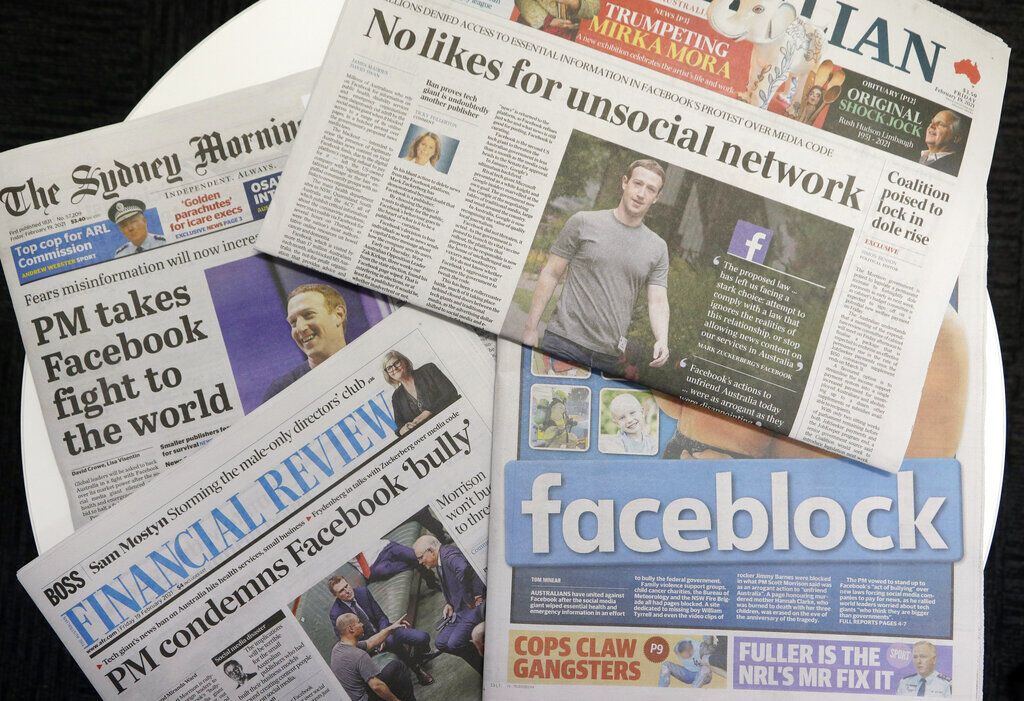
“Not only do we not have that now, but there’s been such a misunderstanding about how the public could be supportive of journalism in a way that doesn’t interfere with their independence,” said Glazer.
That’s why California decided to do something about it.
So has Illinois, New Mexico, New York, New Jersey, and Minnesota.
Illinois has begun supporting newsrooms with a five-year, $25 million refundable journalist employment tax credit program.
New Mexico recently added to its existing local journalist fellowship program with $350,000 for the University of New Mexico for an expanded local journalist program, as well as a high school journalism program.
New York is implementing a three-year, $90-million refundable employment credit for commercial news outlets.
New Jersey recently fended off the governor’s attempt to defund the Civic Information Consortium, which supports local news.
In an effort to push their states toward more local ad spending, Minnesota and Illinois enacted statutes requiring greater transparency in how government agencies spend ad dollars.
So how about Colorado?
In 2022, legislators introduced HB22-1121 to provide tax incentives and state advertising support for local newspapers. It failed.
Fortunately, Colorado still has a thriving ecosystem along the Front Range of private journalism outlets, including our own, The Denver Gazette, Colorado Springs Gazette, Colorado Politics, and Out There Colorado. It’s the rural areas that are hurting.
The Colorado Trust for Local News, Press Forward and the Colorado Media Project are all actively trying to rebuild local news, but they are philanthropic efforts, not government ones.
Steve Waldham, the founder of Report for America, has now launched a national organization, Rebuild Local News, that is working on national policy efforts state by state. He believes the collapse of local news is creating a civic emergency for the country, a crisis so severe that it is beyond the capacity of philanthropy and private enterprise to solve alone.
Glazer points out that before Trump’s cuts, the U.S. spent about $3.16 per capita to support local news. Canada spends $26 per capita, Japan $55, France $76, Britain $81 and Germany $142.
“The foundation of our democracy has always rested on the free press,” Glazer said. “People are led to authoritarian rule when the flow of information is limited.”
“You see the countries that are moving backwards toward autocracy, one of the early steps is to eliminate independent local news,” he said. “Which is happening in Turkey, Hungary and to some extent in Argentina. Seventy-one percent of the people on the earth live in countries with autocracies. Democracies are fragile spaces. It’s not if they fail, it’s when they fail. We have lost touch with the fragility of it, I think, in America. And that’s what is motivating me to work so hard to address it.”
Time for Colorado to work a lot harder, too.

PUC adds weekly comment after killing private talks
Scott Weiser
scott.weiser@gazette.com
Updated 3 days ago
The Colorado Public Utilities Commission will take public comment at the start of every commissioner’s weekly meeting beginning Sept. 9 as part of its new transparency mandate, the commission announced, expanding a slot previously limited to the second Wednesday of...

Healthcare Freefall: AI arms race hits rural healthcare as hospitals fight to keep up
Thelma Grimes
thelma.grimes@coloradopolitics.com
Updated 3 days ago
Editor’s Note: Colorado’s healthcare system is entering a period of accelerating instability — a “tsunami,” as multiple leaders describe it — driven by collapsing hospital finances, shrinking Medicaid reimbursements, disappearing services and a political fight over who is responsible for...
El Paso County upholds Buc-ee’s zoning appeal, clearing way for administrative approval
Savannah Eller
savannah-eller@coloradopolitics.com
Updated 3 days ago
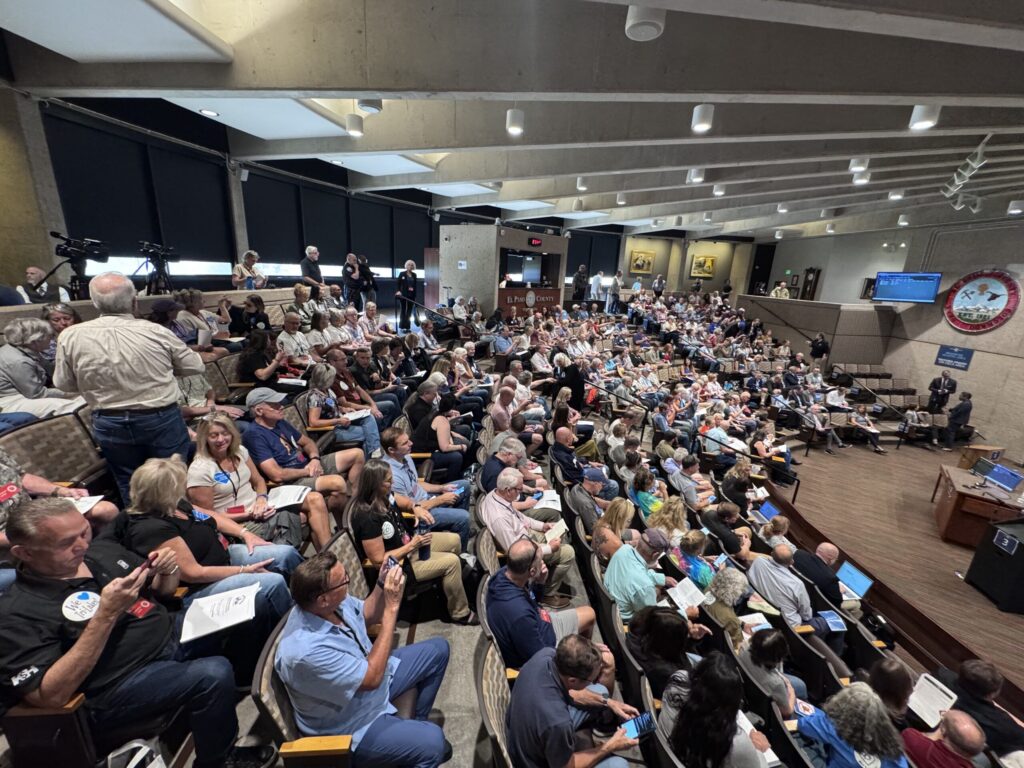
A packed, daylong meeting on Thursday resulted in a win for the Texas travel center chain Buc-ee’s, with El Paso County commissioners voting 4-1 to approve the developer’s zoning appeal. “I think the burden of proof has been met here,”...

Healthcare freefall: Economic ripple effects grow as Colorado hospitals face financial strain
Thelma Grimes
thelma.grimes@coloradopolitics.com
Updated 2 days ago
Colorado’s hospital systems aren’t just a network of clinics and emergency rooms — they are also one of the state’s largest economic engines. So some 10 hospitals identified at any given time as vulnerable to closure, the alarm extends far...

Castle Pines council approves annexation policy, opposes citizen ballot initiative
Nicholas Fogleman
nicholas.fogleman@denvergazette.com
Updated 3 days ago
Castle Pines approved its first annexation policy Tuesday while pushing back against a citizen ballot initiative that would create additional hurdles for developments seeking annexation into the city. In March, the city placed a moratorium on annexations until an official...
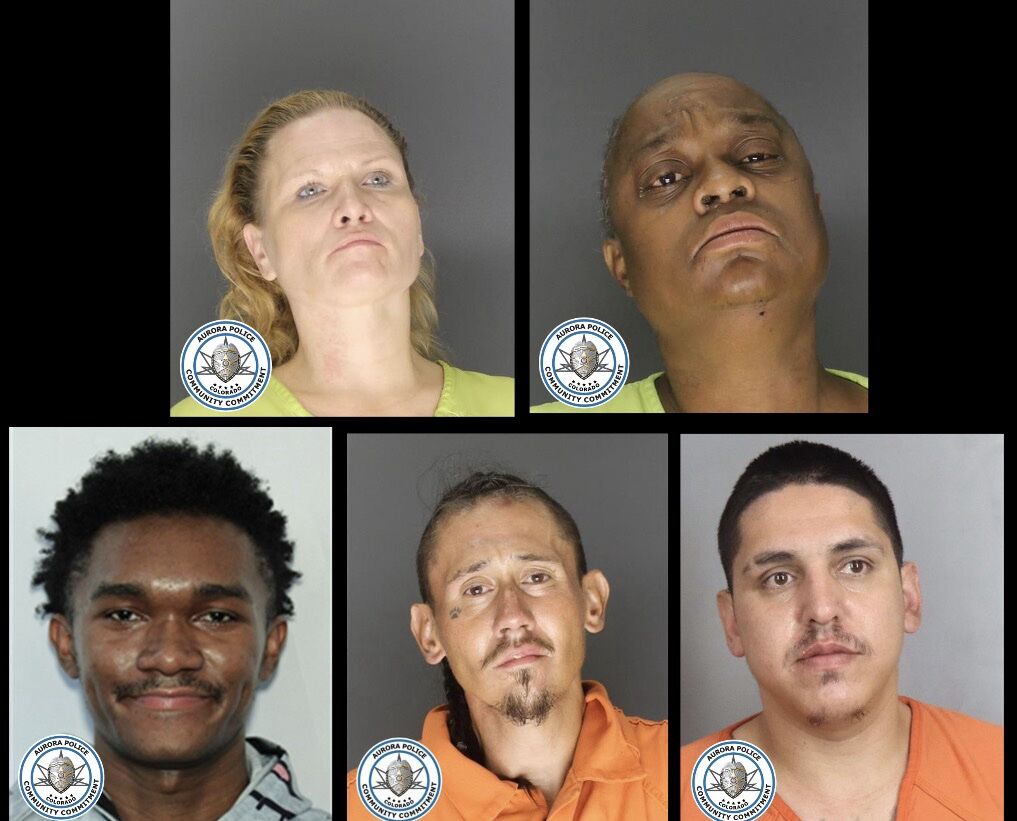
Aurora police warn businesses of 5 shoplifters involved in 139 crimes
Kyla Pearce
kyla.pearce@gazette.com
Updated 4 days ago
Aurora police are warning business owners to look out for five shoplifters involved in 139 crimes with some $60,000 in stolen merchandise. Four of the five shoplifters are wanted on active Aurora Police Department warrants, according to a news release...

Federal science agency gives CU Boulder $37.5M to supercharge its quantum studies
Bernadette Berdychowski
bernadette.berdychowski@denvergazette.com
Updated 4 days ago
The University of Colorado Boulder was awarded $37.5 million from a federal research agency to propel its quantum research, the U.S. National Science Foundation announced Tuesday. The school was one of eight academic institutions to receive a total of $290...

Dance pros and their celebrity partners give it their all at 16th Dancing with the Denver Stars | NONPROFIT REGISTER
Joanne Davidson Special to Colorado Politics
joanne-davidson-special-to-colorado-politics@coloradopolitics.com
Updated 2 days ago
CLEO PARKER ROBINSON DANCE Denver News: Take 13 community and business leaders, pair them with members of the Cleo Parker Robinson Dance Ensemble and its Cleo II dance artists for a four-month intensive course in moving to the music and what do you...

On a night packed with events, this fundraiser did very well | NONPROFIT REGISTER
Joanne Davidson Special to Colorado Politics
joanne-davidson-special-to-colorado-politics@coloradopolitics.com
Updated 2 days ago
DENVER ZOO CONSERVATION ALLIANCE Denver ews: There were at least three other major events taking place on Aug. 22, the night when the Denver Zoo Conservation Alliance hosted its annual Flock Party: Cleo Parker Robinson’s Dancing with the Denver Stars, the Morgan...

Third ‘Pepper ‘Em with Love’ gala gave 500 guests a rockin’ good time | NONPROFIT REGISTER
Joanne Davidson Special to Colorado Politics
joanne-davidson-special-to-colorado-politics@coloradopolitics.com
Updated 5 days ago
PEPPER’S SENIOR DOG SANCTUARY Littleton News: There was so much to love about Pepper ‘Em with Love, the Aug. 19 fundraising gala for Pepper’s Senior Dog Sanctuary, that it’s hard to know where to begin or what not to overlook. But we’ll try. About...
PREV
PREVIOUS

Colorado’s national correspondent recounts violent KKK march in D.C. | A LOOK BACK
by Rachael Wright Thirty-Five Years Ago This Week: “I had forgotten about the Ku Klux Klan,” said Ann Downing Schmidt, The Colorado Statesman’s Washington, D.C., correspondent. In a commentary piece published in The Statesman, Schmidt described trying to make the ten-minute drive from her home to take a visiting friend to the Vietnam Memorial. That day the main […]

Colorado podcaster who has called for political foes to be executed joins GOP primary for governor
Joe Oltmann, the conservative Colorado podcaster who has repeatedly called for Colorado’s top elected officials to be executed and whose uncorroborated claims that the 2020 election was rigged spawned multiple defamation lawsuits, declared his candidacy for the Republican nomination for governor last week. Oltmann joins a crowded field of Republicans seeking to take over from […]