

Forecast shows slowing growth in Colorado
Missing federal data complicates state forecast
Colorado’s economy is holding steady, though growing warnings, particularly in consumer demand and spending, are emerging, according to state economists’ latest forecast.
The December forecast presented on Friday was not as complete, given the six-week federal government shutdown and the loss of weeks of data for two key indicators: inflation and unemployment.
The shutdown canceled the October data, and it won’t be collected retroactively. It also led to less reliable data in November, while continuing to cause data delays, according to Emily Dohrman, the senior economist for the Legislative Council.
Greg Sobetski, the council’s chief economist, explained that if the economy is receding, he wouldn’t have enough information to determine it because the data hasn’t been published.
That missing data means the Joint Budget Committee, which heard forecasts from both the Legislative Council and the governor’s Office of State Planning and Budgeting, will have incomplete information to begin crafting the 2026-27 budget.
The 2026-27 budget is due to the House on March 30, just 10 days after the next revenue forecast that is usually intended to be a kind of “true-up” of last-minute data.
Lawmakers anticipate having to fill a $1 billion hole in the 2026-27 budget – on top of the $1.7 billion hole already addressed in the 2025-26 spending plan via a variety of corporate tax increases, spending cuts, a hiring freeze and tapping into the state’s general fund reserve.
The forecast, however, showed the 2025-26 budget still has a shortfall of some $399 million, about $92 million more than was estimated back in September.
Sobetski warned that changing the reserve requirement, as Gov. Jared Polis has suggested, will make the process of developing next year’s budget more difficult.
“How you balance this year’s budget will impact your available funds for next year’s budget,” he said. “If the budget is balanced by changing the reserve requirement from 15% to 13% of general funds, you’re not really changing the next year’s budget picture at all” and will end up in the same situation for 2026-27.”
When lawmakers return to the state Capitol for the 2026 session on Jan. 14, the Joint Budget Committee’s first work will be on agency supplemental requests or changes to cover the shortfall.
Based on available data, the forecasts indicate a growing economy, albeit one slowing, and a rising risk of recession.
Dohrman told the Joint Budget Committee on Friday that the economy is showing mixed signals.
The housing market, household finances and labor markets all show signs of weakness. Unemployment is ticking up nationwide, but remains low in Colorado, which could also indicate that people aren’t looking for work, Dohrman said.
On the consumer side, household savings are declining, and credit card delinquencies are on the upswing.

Continued risks to the economy, in addition to weak household finances and deteriorating labor market conditions, include the ongoing effects of tariffs changes and what economists call an artificial intelligence investment “bubble.”
The potential positives include tariff reductions, lowered interest rates from the Federal Reserve, and stimulus funds from federal tax breaks.
The downside also includes developments in the general fund revenue forecast and the Taxpayer’s Bill of Rights surplus. General fund revenue collections, which come from individual and corporate income tax and sales taxes, have been revised downward for the current year and future years.
Lower general fund revenues mean the TABOR surplus is gone for 2025-26, as revenues have fallen below the spending limit.
That also means no TABOR refunds in 2025-26, said Sobetski, and the homestead property tax exemption for seniors and disabled veterans will have to be funded from the general fund.
That’s been anticipated by Polis, who has proposed privatizing Pinnacol Assurance, the state’s largest provider of workers’ compensation insurance, as a funding source, at about $194 million.
State tax credits based on revenue forecasts are all being reduced or eliminated, the legislative council forecast said. That includes e-bikes, electric vehicles, heat pump credits, workforce shortage, family affordability, and the expanded earned income tax credit.
The latter two will not be available in 2026 and will only be partially available in the two following years.
General fund revenues are expected to drop by $465 million for 2026-27, the forecast added.
For 2026-27, if the legislature spent the same amount of money as in 2025-26 – without accounting for inflation or caseload growth – there would be $164 million less to spend, Sobetski said.
That doesn’t include the general fund dollars lawmakers will have to find to cover TABOR refunds from 2024-25 and the homestead exemption, Sobetski explained.
The Office of State Planning and Budgeting’s forecast also struggled with incomplete data but said the economy is holding up well, driven by investment in artificial intelligence and healthcare.
But that forecast also indicates a growing number of cracks, tied to the labor market, spending, and inflation. Consumer demand is also weakening, according to the forecast.
Higher-income households and large businesses are doing well, said senior analyst Clint Saloga, but lower-income and small businesses are struggling.
That’s reflected in disparities in wage growth, the forecast said.
Lower wage growth for low-income households is putting strain on those families.
The AI investments outweigh investments in other parts of the economy, Saloga said.
Small businesses are shedding employees, and that could be due to tariffs; the forecast noted that employers’ hiring plans are at the lowest level since 2010. Seasonal, meanwhile, hiring is at its lowest on record, indicating limited optimism for holiday-season hiring. Saloga said Amazon is now doing the most hiring during the holiday season, which he described as unusual.
The forecast examined the impact of tariffs, stating that inflation growth is likely a result. Tariffs are at their highest levels in almost 100 years and are expected to climb, according to the forecast.

Then there’s beef – or what OSPB called “beef-urcation.” Historically small herds and lack of beef “trim” – that’s the leftovers after trimming steaks and roasts, and is used in hamburger for fast food, for example – is driving up beef costs to historic levels. It’s suitable for beef producers but not so good for consumers, the forecast explained.
In contrast, nationwide soybean production, despite strong crop production, has been stymied by China’s boycott. Colorado farmers do not grow soybeans.
One risk to the forecast is a 50% chance of a recession, which is unchanged from September.
The governor’s budget office also does not expect TABOR refunds for the 2025-26 year, which would be payable in 2027. The governor’s economists additionally revised their general fund revenue forecast down by $89 million.
In a statement, Polis blamed the Trump administration’s trade wars for the economic woes. Those trade wars “continue to hurt our economy, skyrocket costs, and worsen inflation ahead of the holidays. Despite this, we are maintaining a healthy reserve to secure Colorado’s fiscal future,” he said.
JBC Vice-Chair Sen. Jeff Bridges, D-Greenwood Village, noted in a statement the magic tricks the JBC had to come up with to cover the 2025-26 budget.
“We pulled a rabbit out of the hat with last year’s budget, cutting a billion dollars with minimal impact on the people of Colorado,” he said.
“This year, we’re all out of rabbits,” Bridges said. “Despite a growing economy, we’ll have to cut another billion dollars from Colorado’s budget because of TABOR’s rationing cap.”
He said people will feel those cuts in their clinics, schools and communities.

Power grid shutdowns in Colorado bring protection — and problems
Scott Weiser
scott.weiser@gazette.com
Updated 2 hours ago
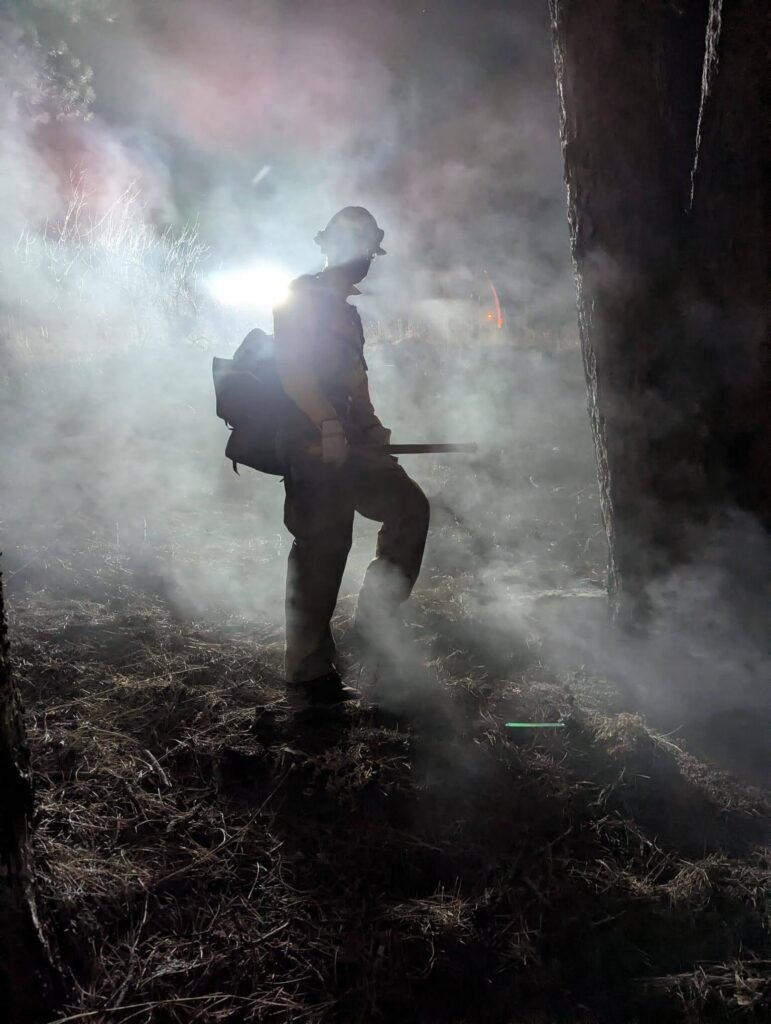
A downed power line in Sunshine Canyon in the mountains west of Boulder in December posed an electrocution risk to firefighters and bystanders after Xcel Energy re-energized it without repairing it, despite being notified of the break the day before....
Aurora wildland fire contained at Buckley Space Force Base
Nicholas Fogleman
nicholas.fogleman@denvergazette.com
Updated 2 hours ago
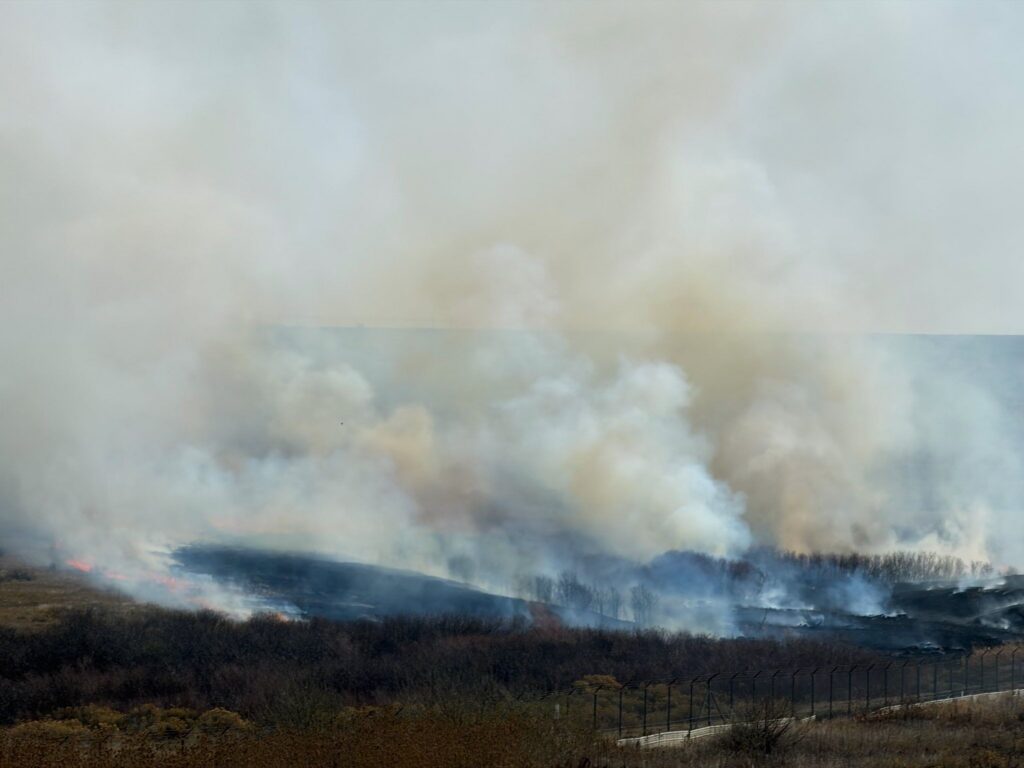
A wildland fire burned Sunday morning on the southwest end of Buckley Space Force Base in Aurora, authorities said. The fire no longer posed a threat and crews were clearing the scene as of 10:53 a.m., according to Aurora Fire...

Unsustainable: How Colorado’s Medicaid spending exploded
Nico Brambila
nico.brambila@denvergazette.com
Updated 4 hours ago
The state’s Medicaid program — which covers about one in four Coloradans — is poised for its largest single-year jump in at least two decades, with officials proposing a $2.3 billion increase, even as lawmakers face a $1.5 billion budget...

Phil Weiser wins top spot in Colorado’s Democratic gubernatorial primary at party’s state assembly
Ernest Luning
ernest.luning@coloradopolitics.com
Updated 2 days ago
Attorney General Phil Weiser’s name will appear first on Colorado’s Democratic gubernatorial primary ballot after his overwhelming win Saturday at the party’s state assembly in Pueblo. Weiser joins U.S. Sen. Michael Bennet in the June 30 primary for the office...

‘No Kings’ protest draws tens of thousands to Colorado state Capitol
Matt Kyle
matt.kyle@denvergazette.com
Updated 2 days ago
The third round of the national No Kings Day protests hit Denver Saturday, when tens of thousands gathered near the Colorado state Capitol to criticize the Trump administration. Organizers addressing the crowd estimated there were 30,000 present for the Saturday...
Denver Democrat Diana DeGette trails challenger Melat Kiros at assembly as both qualify for primary
Ernest Luning
ernest.luning@coloradopolitics.com
Updated 2 days ago
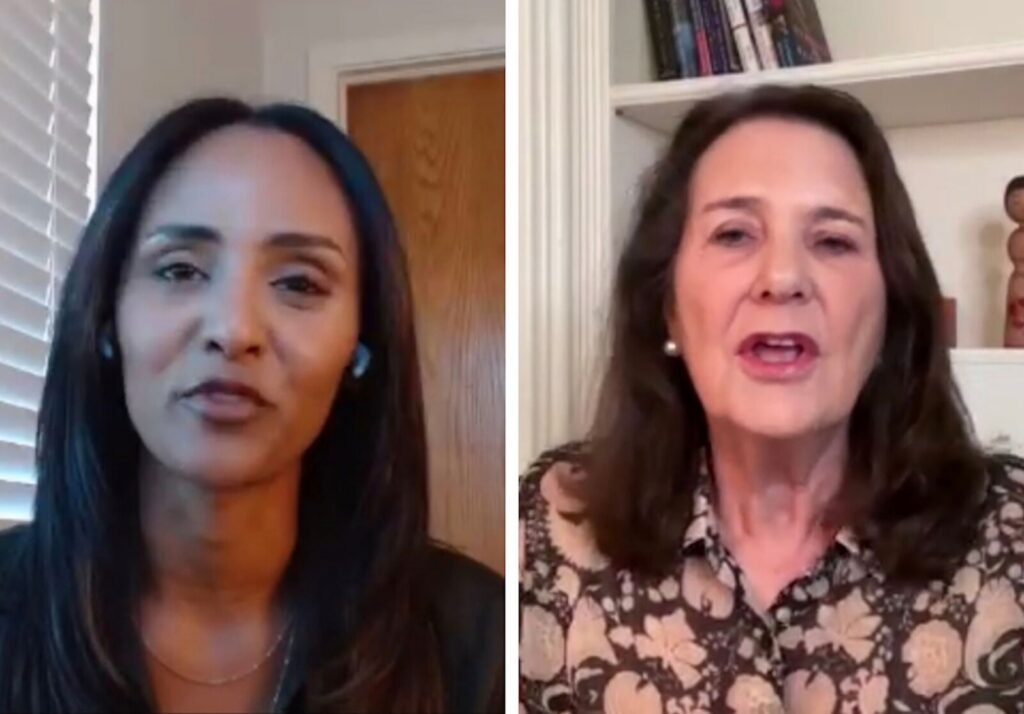
U.S. Rep Diana DeGette, a Denver Democrat, qualified for Colorado’s June primary by the skin of her teeth Friday at the party’s district assembly, where the 15-term incumbent received fewer than half as many delegate votes as her challenger, 28-year-old...
Jeffco adopts updates to wildfire resiliency code
Sage Kelley
sage.kelley@denvergazette.com
Updated 2 hours ago
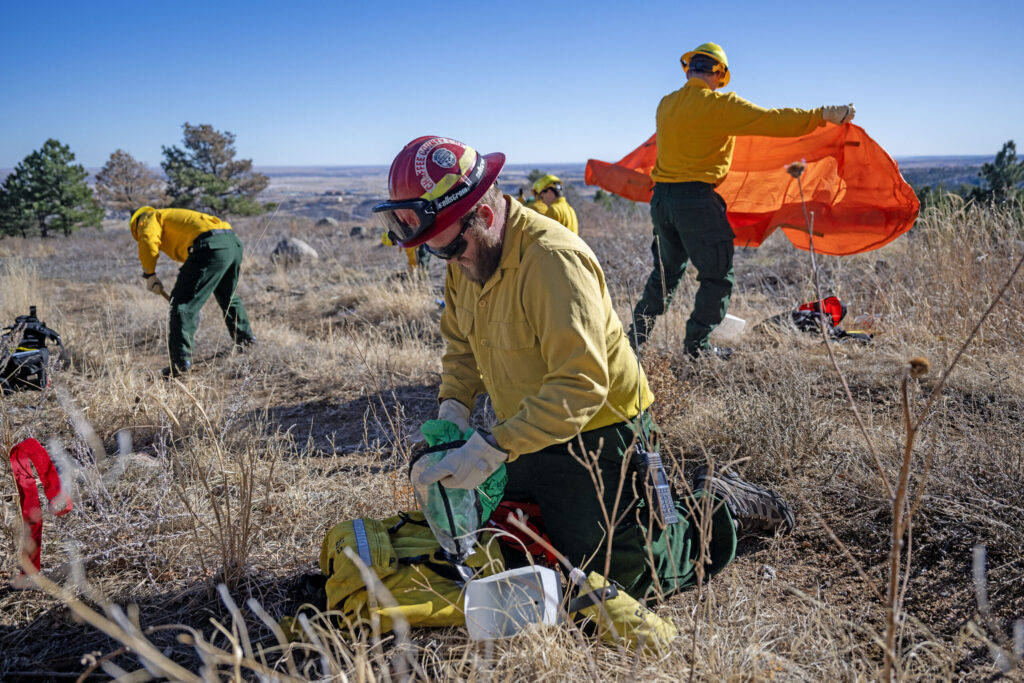
Jefferson County is one of the most at-risk counties for wildfires in the country, and the board of commissioners is attempting to lessen the danger. The Jefferson County commissioners approved updates to the Wildfire Resiliency Code on March 10, including...
Colorado ski resorts announce early closures amid historic snowpack lows, high temperatures
Kyla Pearce
kyla.pearce@gazette.com
Updated 3 days ago
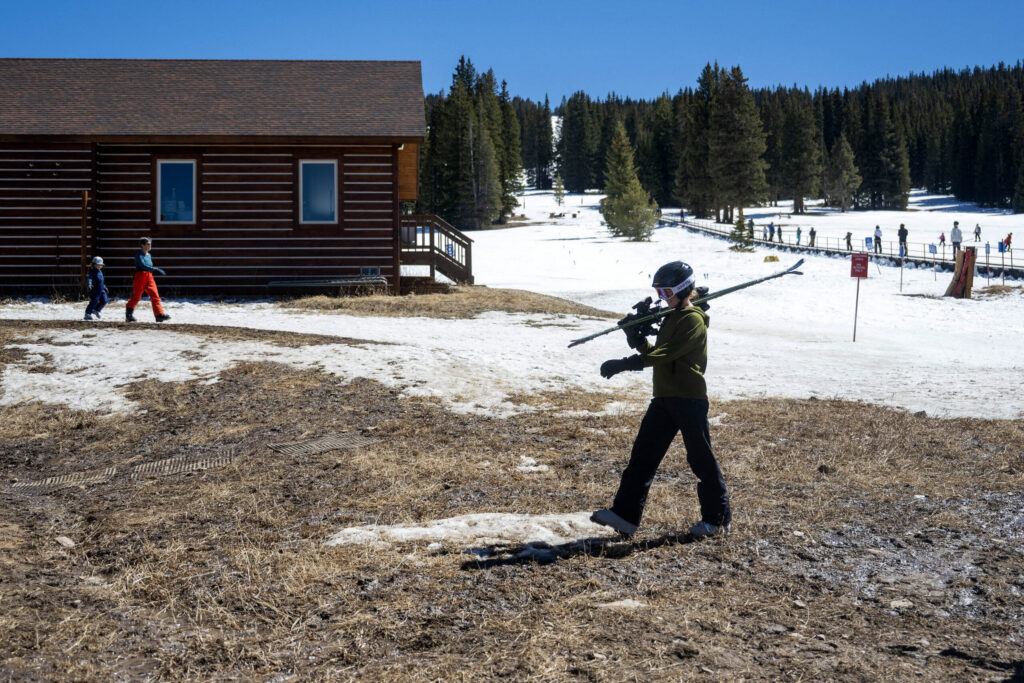
As Colorado’s historically low snowpack year comes to a close and spring conditions take over the mountains, the state’s major ski resorts are announcing closing dates — some of which are weeks before historic closing dates. Most of Colorado’s ski...

Boulder police investigate sexual assault, ‘drugging’ at bar near CU
Matt Kyle
matt.kyle@denvergazette.com
Updated 3 days ago
The Boulder Police Department is investigating reports of sexual assault and “suspected drugging” involving underage girls at a bar. There may be additional victims who have not yet come forward, the department said in a news release. The bar, Scrooge...

Democratic US Sen. John Hickenlooper qualifies for Colorado primary by petition, will skip assembly
Ernest Luning
ernest.luning@coloradopolitics.com
Updated 4 days ago
U.S. Sen. John Hickenlooper has qualified for Colorado’s Democratic primary after the first-term incumbent submitted enough valid petition signatures to make the ballot, state officials said. Hickenlooper is facing primary challenges from state Sen. Julie Gonzales, D-Denver, and university professor...
PREV
PREVIOUS

Women's soccer stadium package up for final Denver City Council vote
Monday is shaping up to be a big night for the Denver Summit FC, as the Denver City Council is set to vote on the construction of a women’s soccer stadium. Council Bill 25-1541, which proposes changing the land’s zoning classification to permit the construction of the stadium, will return to the chamber floor during […]

Divided appeals court nullifies defendant's $37,000 restitution obligation due to faulty order
Colorado’s second-highest court concluded on Thursday that a defendant has no obligation to pay nearly $37,000 in crime victim restitution due to a faulty order that even the trial judge acknowledged was contrary to the law. In Colorado, as part of sentencing, judges must consider whether defendants owe financial restitution to their victims. If so, […]