

Q&A with the Colorado Springs Chamber & Economic Development Corporation | FISCAL ROCKIES
| Editor’s Note: Once among the nation’s fastest-growing economies, Colorado today confronts mounting challenges that threaten its momentum. This series reveals how a state once defined by prosperity is navigating economic cliffs and ridges. We explore the impact that increased regulations, tariffs, shifting tax policies, the high cost of living and widening urban–rural divides have on businesses, workers, and communities. The series also highlights the push to leverage Colorado’s outdoor economy — one of its most valuable assets — for renewed growth, while working to attract industries like quantum and aerospace. |

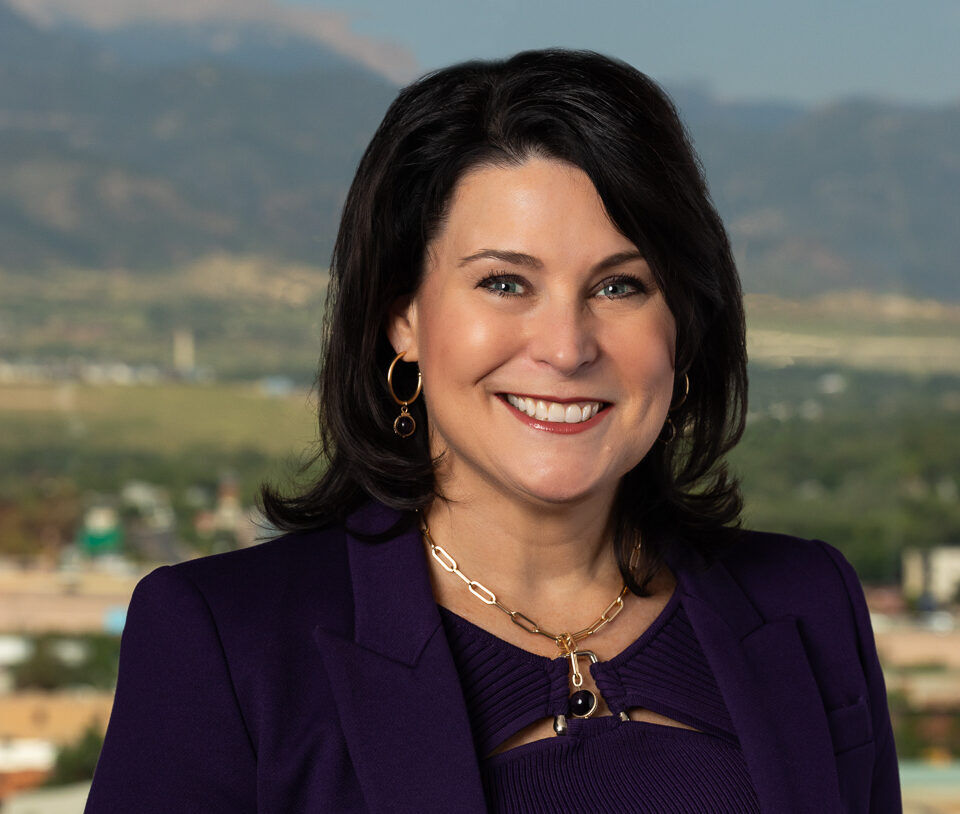
As part of a special series examining state’s economic policies, the Colorado Springs Chamber & Economic Development Corporation President and CEO Johnna Reeder Kleymeyer answered questions about the impact of state policies on the local economy, the challenges emerging and how businesses are adapting to federal changes.
Colorado Politics: Can you reflect on the last decade in terms of the Colorado economy and business health in your region?
Johnna Reeder Kleymeyer: Over the last decade, Colorado has experienced rapid growth — in population, wages, and investment — but also mounting structural pressures. Housing supply hasn’t kept pace with demand, business costs have climbed due to the state legislature’s overreaching regulatory and fee growth, and the state’s job gains have tilted heavily toward the public sector, rather than the private sector that drives innovation and long-term prosperity.
According to the Common Sense Institute, 10,900 of the 16,500 jobs created in Colorado between July 2024 and July 2025 — about 66% — were government positions, giving the state the fifth-highest rate of public-sector growth in the nation and ranking Colorado 48th in state private-sector expansion. This imbalance makes it harder for employers to compete, innovate and plan for growth.
To keep Colorado’s economy strong, we must focus on smart, well-managed growth that strengthens private-sector competitiveness, supports housing affordability and sustains the infrastructure that allows our communities and businesses to thrive.
CP: Colorado is ranked sixth as the most regulated state in the nation. How does that affect existing, new, and prospective businesses in your region?
Reeder Kleymeyer: When a state moves into the top tier for regulatory burden, the effects are predictable. Existing businesses face higher compliance costs and greater uncertainty when rules change or accumulate, reducing funds available for hiring and company investment. New businesses encounter higher startup friction through licensing and permitting delays, discouraging entrepreneurship. Prospective investors compare states, and Colorado’s regulatory complexity makes it a tougher sell than states with more predictable operating environments.
That said, Colorado’s strong workforce, innovative business community, and collaborative partnerships across sectors continue to make it an attractive place to do business. The state’s entrepreneurial energy remains one of its greatest assets. By focusing on regulatory review and simplification, policymakers have the opportunity to create an environment where smart safeguards coexist with flexibility — helping businesses of all sizes grow, innovate, and thrive.
CP: Are businesses in your region seeing the trickle-down effects of the Trump administration tariffs?
Reeder Kleymeyer: Some industries in our region have experienced cost increases due to tariffs. The impact varies by sector. Some businesses have absorbed the added costs, while others have passed them along to customers. Despite these challenges, many Colorado companies have demonstrated adaptability by finding new suppliers, streamlining operations, or identifying alternative markets to stay competitive. That resilience and creativity continue to be hallmarks of our local business community.
CP: How would you rate the performance in terms of the economy and business support from Gov. Jared Polis and, in recent years, the Democratic-led legislature?
Reeder Kleymeyer: The Polis administration has invested in infrastructure, workforce programs, and targeted business initiatives. However, the rapid pace and complexity of new legislation, 1,000 new bills passed over two legislative sessions, have created significant challenges for business planning and housing production. Increased regulatory complexity is slowing economic momentum and making it harder for private-sector employers to grow. Refocusing on policies that promote predictability, job creation, and smart growth will strengthen Colorado’s competitiveness, grow our tax base, and benefit businesses and workers alike.
CP: What are some of the biggest issues businesses in your region are facing?
Reeder Kleymeyer: Workforce shortages, rising costs, and regulatory uncertainty and complexity remain top concerns. Employers across industries cite difficulty finding and retaining workers, with affordable housing and insurance and childcare among the biggest barriers. The state demographer reports that net migration — the number of people moving to Colorado versus those leaving — has dropped more than 50% over the last decade, tightening the labor pool. Meanwhile, the cost of doing business continues to climb, squeezing margins and slowing expansion. Local governments are also under pressure. Colorado Springs faces a $31 million budget shortfall driven by a $20 million increase in costs and flat sales tax revenue, putting additional strain on roads, parks, and public safety.
CP: How is the Colorado cost of living impacting businesses regarding workforce, housing and other issues?
Reeder Kleymeyer: High housing and insurance costs and overall affordability remain major constraints on the labor market. The National Association of Realtors reports that the average age of a first-time homebuyer in the U.S. is now 38, up from 31 in 2016 — a reflection of how difficult it’s become for younger workers to enter the market. As a result, many employees face long commutes or are priced out of the communities where they work, increasing turnover and reducing workforce stability.
Locally, El Paso County’s 18- to 24-year-old and 35- to 49-year-old populations are both projected to grow 14% between 2024 and 2029, while residents aged 70 to 84 are expected to grow by 26%, underscoring the need for more diverse housing from smaller starter homes to downsized condos for older adults. This creates both opportunity and urgency. Expanding attainable housing options will help employers attract and retain talent while keeping our communities vibrant, diverse and economically strong.
CP: Describe the Colorado economy in your region pre-COVID, during COVID and post-COVID. What issues still linger? What has improved?
Reeder Kleymeyer: Before COVID, the regional economy was marked by steady growth, tight labor markets and rising housing costs, although signs of a housing supply gap were already emerging. The pandemic brought major disruption, from temporary business closures and supply chain breakdowns to workforce dislocation. Sectors, such as retail, restaurants and hospitality, were hit hardest, while others, such as some in the tech industry, were able to adapt quickly. Recovery programs helped many businesses stay afloat, but also masked deeper issues like housing, childcare, and skilled labor shortages. In the post-COVID period, demand rebounded, but then collided with limited housing supply, higher operating costs and national inflation, and an increasingly complex regulatory environment. On the positive side, investment in infrastructure and workforce development has grown, but affordability challenges and regulatory uncertainty continue to weigh on long-term business planning.
Read more from the Fiscal Rockies series:
Q&A: Colorado Chamber of Commerce CEO sees warning signs for state economy, despite strengths
Can you afford to live in Denver?
After years of leading the nation, Colorado’s economy shows signs of cooling
Q&A with Denver Metro Chamber of Commerce | ‘Getting harder, more expensive to do business’ in Colorado
Regulatory layers turn cost of doing business in Colorado into ‘death by a thousand cuts’
Site selectors praise Colorado workforce — but flag regulatory hurdles
‘Evolving’ regulatory landscape among Colorado cities is pricey, problematic, small businesses say
Q&A with the Colorado Springs Chamber & Economic Development Corporation | Struggling with workforce shortages, high cost, regulatory uncertainty
Once a step ahead, Colorado’s economy cools, burdened by rising costs and regulations


Xcel gets an earful from public for power shutoffs in Colorado
Scott Weiser
scott.weiser@gazette.com
Updated 17 hours ago
Residents, business owners and local officials gave Xcel Energy an earful during a hearing convened by Colorado’s utility regulators on Wednesday, accusing the power company of using power shutoffs as a liability dodge that burdens communities. Xcel’s ability to trigger...

Colorado hit a population milestone in 2025; numbers ‘don’t lie,’ but what do they say?
Stephanie Earls
stephanie-earls@coloradopolitics.com
Updated 1 day ago
Colorado is: full Standing room only How ‘bout, More crowded than it was but less crowded than we thought? Local takeaways from the U.S. Census Bureau’s most recent data drop are too complex for bumper sticker treatment, but here’s the...

We tested vapes in Colorado for signs of hemp. This is what we found.
Christopher Osher
chris.osher@gazette.com
Updated 1 day ago
This article was produced for ProPublica’s Local Reporting Network in partnership with The Denver Gazette. Sign up for Dispatches to get our stories in your inbox every week. Leaders in the Colorado marijuana industry have complained in recent years that...
Gov. Polis highlights Colorado’s business climate and affordability during annual gathering
Marissa Ventrelli
marissa.ventrelli@coloradopolitics.com
Updated 16 hours ago
Gov. Jared Polis used his annual meeting with Colorado business leaders on Wednesday to take stock of his time in office, highlighting the state’s pandemic response, ongoing challenges facing downtown economies, and what he described as continued efforts to balance...

$200M in federal funds to be deployed in Denver area for heat pumps aimed at reducing emissions
Sage Kelley
sage.kelley@denvergazette.com
Updated 17 hours ago
The Denver Regional Council of Governments (DRCOG) has officially launched a $200 million program to help reduce carbon emissions with heat pumps. The regional organization announced its new initiative, “Power Ahead Colorado,” which also includes partnerships with the Colorado Energy...

Colorado’s unemployment rate fell again in December
Bernadette Berdychowski
bernadette.berdychowski@denvergazette.com
Updated 3 days ago
Colorado’s unemployment rate fell to 3.8% in December, according to new data released Tuesday. The rate dropped one-tenth of a percentage point, following a monthslong trend of declining unemployment in the state, according to the Colorado Department of Labor and...

‘South Park’ creators to receive award at Feb. 10 fundraiser | NONPROFIT REGISTER
Joanne Davidson Special to Colorado Politics
joanne-davidson-special-to-colorado-politics@coloradopolitics.com
Updated 3 days ago
WORLD’S WONDER VIEW TOWER Genoa, CO News: Matt Stone and Trey Parker, creators of the animated sitcom “South Park,” will receive the inaugural Towering Achievement Award a Feb. 10 event that raises money for the restoration of the World’s Wonder View Tower. Festivities begin at 6 p.m. at...

Greenland is now Colorado’s problem. And that’s a good thing. | Vince Bzdek
Vince Bzdek
vince.bzdek@gazette.com
Updated 3 days ago
The conclusion to the dizzying odyssey over Greenland this week reminded me a little of the ending of the “Wizard of Oz.” If you recall, Dorothy, the Scarecrow, the Lion and the Tin Man finish a great and frightful quest...

Cowgirls & Cocktails adds to Stock Show’s record-breaking year | NONPROFIT REGISTER
Joanne Davidson Special to Colorado Politics
joanne-davidson-special-to-colorado-politics@coloradopolitics.com
Updated 4 days ago
WOMEN OF THE NATIONAL WESTERN Denver News: Leave it to the ladies to have a big hand in helping the 120th National Western Stock Show cross the line to a record-breaking finish. The numbers for the “Best 16 Days in January” were impressive. There were 750,039 visitors, a...

Colorado Democrats introduce bills on pricing, data privacy
Marissa Ventrelli
marissa.ventrelli@coloradopolitics.com
Updated 2 days ago
Democratic lawmakers have introduced a trio of bills dealing with data privacy and the retail and wholesale prices of goods. Sponsors said the bills would help Colorado consumers and small businesses tackle affordability woes. They are among a slew of...
PREV
PREVIOUS

Colorado officials react as Trump weighs reclassifying marijuana
Colorado policymakers and advocacy groups are responding to reports that the federal government could begin loosening restrictions on marijuana, according to insiders in Washington. According to the Washington Post, President Trump is expected to sign an executive order directing federal agencies to pursue reclassification of marijuana from a Schedule I controlled substance to Schedule III, […]

Xcel Energy prepares for power shutoffs due to high winds
Forecast high winds along the Front Range on Wednesday revive memories of the devastating 2021 Marshall fire that destroyed more than 1,000 homes when gusts downed energized power lines. Xcel Energy now weighs proactive power cuts to avoid similar ignitions amid dangerously dry conditions. The Marshall fire erupted under comparable wind events with gusts exceeding […]