

Denver’s minimum wage: Boon or bane? | FISCAL ROCKIES

| Editor’s Note: Once among the nation’s fastest-growing economies, Colorado today confronts mounting challenges that threaten its momentum. This series reveals how a state once defined by prosperity is navigating economic cliffs and ridges. We explore the impact that increased regulations, tariffs, shifting tax policies, the high cost of living and widening urban–rural divides have on businesses, workers, and communities. The series also highlights the push to leverage Colorado’s outdoor economy — one of its most valuable assets — for renewed growth, while working to attract industries like quantum and aerospace. |

In 2019, Denver councilmembers created the city’s local minimum wage, which requires annual adjustments based on the Consumer Price Index.
To supporters, it would directly address the rising cost of living in Denver.
Among industries, none has been affected more than restaurants. Today, the industry blames the minimum wage requirement as among the factors driving numerous restaurants aground.
“Wage stagnation and income inequality are part of a national economic challenge that has been decades in the making,” then-Denver Mayor Michael Hancock said in a 2019 statement. “The wage gap has kept people in poverty and threatens the ability of working families to meaningfully participate in the economic prosperity cities like Denver are experiencing. This proposal was a critical step we could take as a city to ensure all our residents have equitable access to opportunity in Denver.”
As a result of the new mandate, the City and County of Denver will again increase the local minimum wage, this time to $19.29 per hour from $18.81. For tipped food and beverage workers, the minimum wage will go up to $16.27 per hour from $15.79, provided they earn at least $3.02 in actual tips.
The stateside minimum wage stands at $14.81 per hour. Like Denver, other localities have also set their own pay requirements.
The federal minimum wage is $7.25.
Earlier this year, Colorado Gov. Jared Polis signed House Bill 25-1208 into law, designed to soothe some of the economic stress on the restaurant industry, including the minimum wage mandates in Denver.
The bill, sponsored by Reps. Steven Woodrow and Alex Valdez, and Sens. Judy Amabile and Lindsay Daughtery – all Democrats – will allow some to reduce the minimum wage for tipped employees in localities with minimum wages higher than the state’s.
This means that cities – such as Denver, Boulder and Edgewater – could establish a lower tipped minimum wage, with the floor set as low as the statewide minimum tipped wage of $11.79 per hour, according to Holland & Knight, a labor and employment litigation firm.
Advocates of the minimum wage requirements have long argued that the pay bump is needed to keep up with the rising costs of living in the Denver metro area.
Some employers countered that the annual hikes add to the “woes of doing business in Denver.”
But it’s not the only reason businesses in the state’s Capitol, particularly restaurants, struggle, they said.

Leave or shutter: Restaurants face conundrum
In July, the Cap City Tavern, a longtime downtown Denver bar and restaurant, announced it would be closing after almost two decades in business.
“The increase in minimum wage, cost of food, and the taxes and fees that the city of Denver is imposing on restaurants has become too much to bear,” Cap City Tavern owners posted on Instagram. “Sadly, we are not alone, as the community of independently owned restaurants in Denver is literally going extinct.”
According to Holland and Knight, in 2024, Denver accounted for 82% of the 200 restaurant closures statewide.
“Restaurant owners have identified the increased local minimum wage as one of the significant factors contributing to their reduced profit margins,” Holland and Knight reported. “Additionally, restaurateurs blame the high minimum wage for the disparity between front and back-of-house workers, leading to increased operation costs and service fees.”
Some don’t accept that rationale. For retired Denver restaurant owner Jason Bailey, the city’s minimum wage requirement is not as significant a factor as it is often portrayed to be.
“I know that’s not the opinion that you hear from restaurant owners throughout Denver,” Bailey said.
Bailey pointed to a restaurant he has frequented on Broadway Avenue that recently announced it will be moving out of Denver.
“You know, I’ve been eating there for 30 years, and I know why they moved,” Bailey said, declining to name the restaurant. “They moved because of their lease situation, but I’m hearing them, in the news, saying it’s because of minimum wage.”
What the data says
Denver and Colorado aren’t the only jurisdictions that have adopted minimum wage requirements.
And those jurisdictions, too, have either put themselves in a predicament or not, depending on who is asked.
In California, Gov. Gavin Newsom signed the FAST Recovery Act into law in September 2022, imposing a $20 minimum wage for fast-food workers.
He called the legislation a win-win-win that would benefit restaurant owners, their employees, and customers alike.
Fast forward two years and all those wins he touted are turning into big losses, according to the Employment Policies Institute.
Since the FAST Recovery Act was signed, restaurants have been forced to cut staff, raise menu prices, and turn to automation, according to the Employment Policies Institute.
Menu price data by Datassential shows fast-food prices in California rose more than 13% after April 2024, which is double the rest of the country.
Competing research analysis by UC-Berkeley’s Center on Wage and Employment Dynamics found the opposite to be true.

The center’s September analysis concluded that the $20 wage did not reduce fast-food employment, did not change the hours worked, and only led to a 2.1% increase in fast-food prices, or about 8 cents for a $4 item.
Like Denver, Seattle passed a similar minimum wage ordinance in 2015.
On Jan. 1, 2026, all employers in Seattle will be required to pay a minimum wage of $21.30, regardless of business size and they cannot count tips or medical benefit payments toward minimum compensation, as reported by Seattle ABC affiliate KOMO. Like Denver, the results have been mixed.
Grateful for pay hike, worried about losing jobs
Even as industry wages have risen an average of 30% across the state, local restaurants struggled with hiring qualified staff, according to the Colorado Restaurant Association.
All told, workers seemed to agree that the extra money helps, especially in high-cost of living areas like Denver.
But employees – like Alejandro Santos, 22, who works for a small family-owned sandwich shop on Hampden Avenue – said while he’s grateful for the pay, he sees the stress it puts on his employer, and he worries if he will have a job next year.
“I’m already working two jobs as it is — one in Denver and one in Aurora,” he said. “Losing this job in Denver would probably force me to move back in with family.”
A recent report from the Economic Policy Institute suggested that subjecting tipped workers to a separate and lower minimum wage “creates a host of problems,” among them, making them more vulnerable to wage theft.
The Economic Policy Institute also reported that, in seven states and several cities, where policymakers and voters have eliminated the tip credit – so that all employees receive the regular minimum wage regardless of any tip income – the tipped workers “have lower poverty rates and higher take-home pay.”
Denver Labor, a division of the Auditor’s Office that audits certified payrolls and investigates wage complaints, concluded a year-long effort to recover more than $2 million owed to 4,505 workers.
A record $2,070,153 in restitution was recovered by the city in 2024, marking the third consecutive year of record-breaking recoveries, highlighting the need – the auditor’s office said – for continued wage theft enforcement and education.
According to the Denver Labor website, wage theft is the failure to pay workers the full wages to which they are legally entitled. This can include not paying workers minimum wage, overtime, paid sick time, or illegally withholding employee-earned tips.
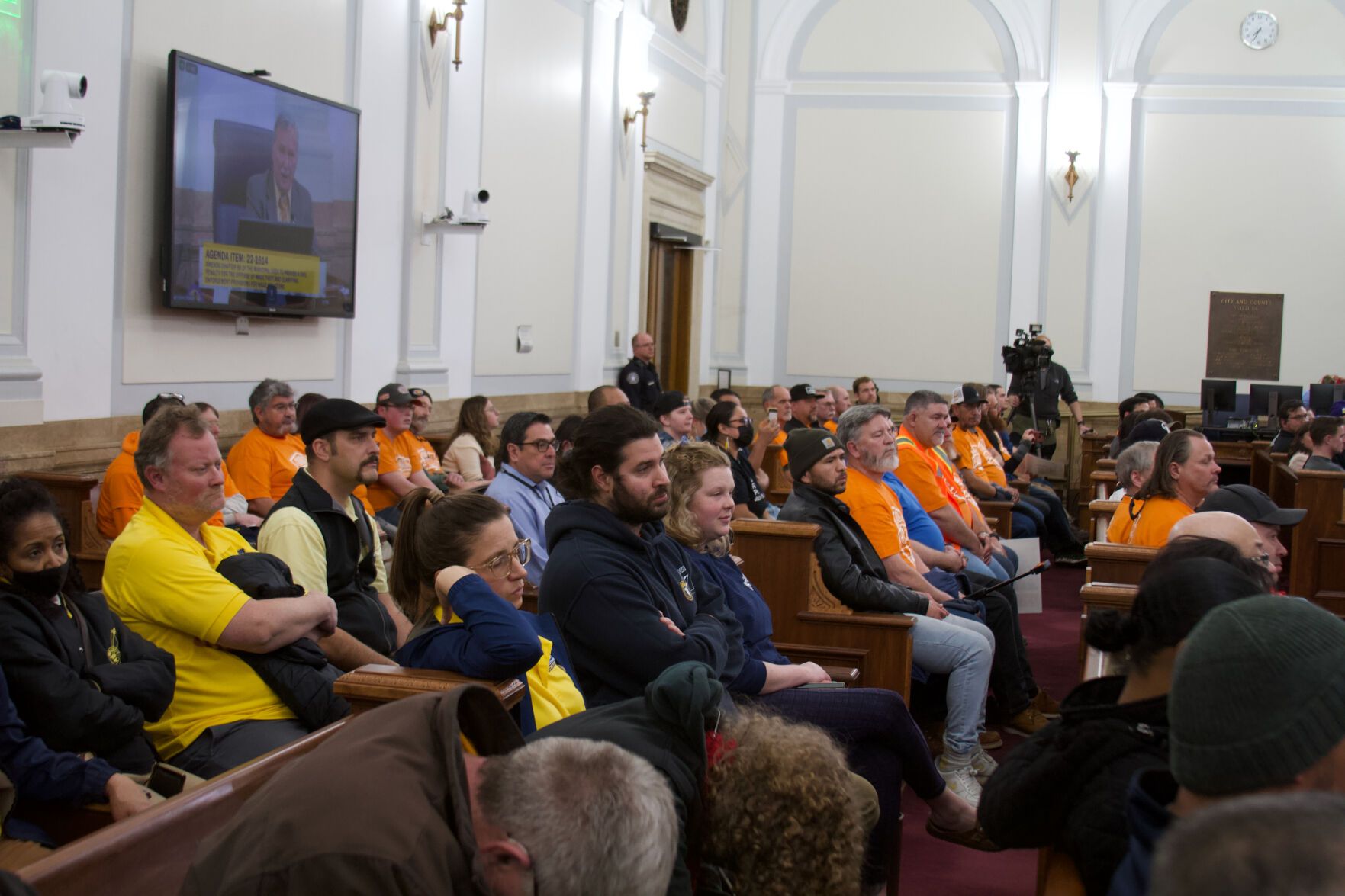
The Denver City Council passed the Civil Wage Theft Ordinance on Jan. 9, 2023, creating more substantial penalties and vesting responsibility for implementation and enforcement with the Denver Auditor’s Office.
Denver City Auditor Timothy O’Brien also has the authority to issue “investigatory subpoenas” to businesses that have allegedly committed pay violations.
Before Denver implemented the ordinance, victims of wage theft who suffered losses of less than $2,000 had limited recourse and few options for restitution, officials said.
In one wage theft complaint investigated by the city auditor, a restaurant was required to return $77,606 to 304 workers after it was determined it was paying its employees below Denver’s tipped minimum wage. The restaurant promptly paid its workers. The restitution for the case included $32,045.80 in unpaid wages, $32,360.94 in damages, and a 12% annual interest of $3,913.74.
Local gig workers — those who work short-term jobs or as independent contractors — were also victims of wage theft this year, according to the city.
Denver Labor also issued extensive liability determinations against gig staffing companies for misclassifying nearly 3,000 employees as independent contractors. As a result, the companies “violated nearly every applicable wage and hour law,” the office said.
Washington Examiner reporter Barnini Chakraborty contributed to this story.
Read more from the Fiscal Rockies series:
Once a step ahead, Colorado’s economy cools, burdened by rising costs and regulations
Q&A: Colorado Chamber of Commerce CEO sees warning signs for state economy, despite strengths
Can you afford to live in Denver?
After years of leading the nation, Colorado’s economy shows signs of cooling

Colorado House launches ethics review of Republican Rep. Ron Weinberg
Marianne Goodland
marianne.goodland@coloradopolitics.com
Updated 20 minutes ago
The Colorado House will convene an ethics committee to review a complaint filed by Rep. Brandi Bradley, R-Roxborough Park, against fellow Republican Rep. Ron Weinberg, R-Loveland. It will be the first time since 2012 that the House has formed an...

Colorado lawmakers roll out bipartisan plan aimed at lowering home insurance risk
Marianne Goodland
marianne.goodland@coloradopolitics.com
Updated 18 hours ago
Homeowners’ insurance rates continue to rise, prompting a bipartisan group of lawmakers to introduce a bill Wednesday aimed at reducing damage from hail and wildfire. The measure would encourage homeowners and homeowner associations to take additional mitigation steps and, in...

Tax bill shock: Colorado homeowners could see property taxes jump by as much as 40%
Marianne Goodland
marianne.goodland@coloradopolitics.com
Updated 2 days ago
Mike Fitz, 76, who lives in Centennial in a single-family home he has owned since 2001, paid $3,876.98 in property taxes to Arapahoe County two years ago. Fitz just learned after checking the website of the Arapahoe County Assessor’s Office...
Voters will decide proposal to repeal Colorado limits on police cooperation with immigration authorities
Marianne Goodland
marianne.goodland@coloradopolitics.com
Updated 3 days ago
A ballot initiative backed by the group Advance Colorado has qualified for the November general election, setting up a statewide vote on whether to undo limitations placed upon state and local law enforcement agencies’ ability to work with federal authorities....

Greenland is now Colorado’s problem. And that’s a good thing. | Vince Bzdek
Vince Bzdek
vince.bzdek@gazette.com
Updated 3 days ago
The conclusion to the dizzying odyssey over Greenland this week reminded me a little of the ending of the “Wizard of Oz.” If you recall, Dorothy, the Scarecrow, the Lion and the Tin Man finish a great and frightful quest...
Border Patrol shooting in Minneapolis sparks tense debate on Colorado Senate floor
Marianne Goodland
marianne.goodland@coloradopolitics.com
Updated 4 days ago
The death of Alex Pretti in Minneapolis in the hands of Border Patrol agents over the weekend prompted a debate among Colorado senators on Monday, with Democrats saying he and others were just exercising their rights, while Republicans questioned bringing...
Palmer Lake terminates town attorney
Doug Fitzgerald
doug.fitzgerald@gazette.com
Updated 4 days ago
The Town of Palmer Lake has chosen to put itself in legal limbo. Near the end of a seven-hour-plus meeting Thursday evening and into Friday morning, the Palmer Lake Board of Trustees voted to terminate Town Attorney Scott Krob. Krob...

Capitol M: Return to Gold Dome High, 2026 edition, and a salute to old IU
Marianne Goodland
marianne.goodland@coloradopolitics.com
Updated 1 week ago
Welcome back, campers! The 2026 legislative session is upon the good citizens of Colorado, and for a few, the first Monday of the session, Jan. 19, was pretty special. There are at least four folks in the Capitol who are...
Rep. Ron Weinberg won’t seek reelection
Marianne Goodland
marianne.goodland@coloradopolitics.com
Updated 1 week ago
Republican Rep. Ron Weinberg of Loveland announced on Thursday evening that he will not seek another term in the Colorado House. “Serving this community has been one of the greatest honors of my life,” the two-term state representative said on...

PUC schedules virtual hearing on proposed rules for public safety power shutoffs
Scott Weiser
scott.weiser@gazette.com
Updated 4 days ago
The Colorado Public Utilities Commission will hold a virtual public comment hearing to gather input on proposed new rules for Public Safety Power Shutoff events, a wildfire prevention measure that temporarily cuts power to reduce ignition risks from utility equipment...
PREV
PREVIOUS

Family files lawsuit over 2023 Jeffco inmate death
The family of 27-year-old Ashley Jo Raisbeck filed a lawsuit against the Jefferson County Sheriff’s Office nearly two years after the woman died in custody. Jaime Raisbeck, Ashley’s mother, stood outside of the Alfred A. Arraj Courthouse Wednesday morning, a line of family holding memoriam signs behind her. “I don’t want another parent in my […]

Site selectors praise Colorado workforce — but flag regulatory hurdles | FISCAL ROCKIES
Editor’s Note: Once among the nation’s fastest-growing economies, Colorado today confronts mounting challenges that threaten its momentum. This series reveals how a state once defined by prosperity is navigating economic cliffs and ridges. We explore the impact that increased regulations, tariffs, shifting tax policies, the high cost of living and widening urban–rural divides have on businesses, […]