

CDOT did not violate constitutional rights of outdoor advertising company, appeals court says
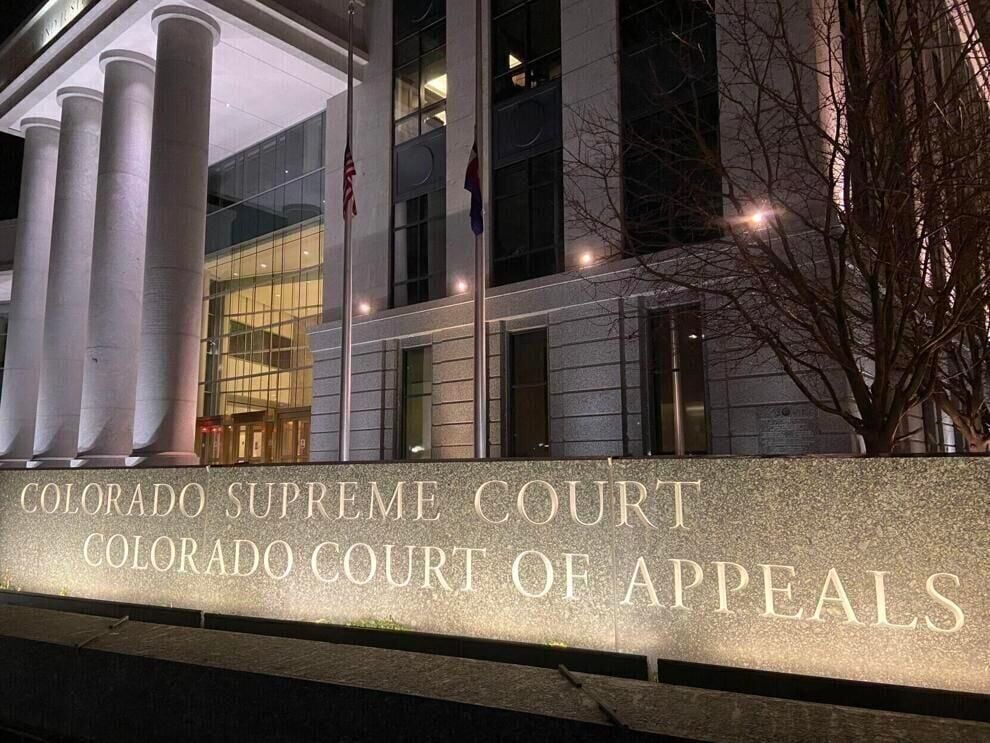
Colorado’s second-highest court concluded last month that the Colorado Department of Transportation did not violate the constitutional rights of an outdoor advertising company by denying two permits for billboards in Adams County.
StreetMediaGroup, LLC argued CDOT violated its right to equal protection under the law by allowing “large, influential competitors” to maintain signs not in compliance with regulations, while denying StreetMedia’s request. A Denver judge initially agreed with the company that the differential treatment constituted a violation, but a three-judge Court of Appeals panel disagreed.
For StreetMedia to claim it fell into a “class of one” in which it experienced less favorable treatment than its peers, wrote Judge Grant T. Sullivan, it would need to show that CDOT acted intentionally in approving noncompliant permits for others but not for StreetMedia.
But an administrative law judge found “CDOT granted at least some of the earlier permits by mistake. Mere mistakes or errors of judgment don’t rise to the level of intentional or purposeful discrimination that will support a claim under the Equal Protection Clause,” Sullivan elaborated in the Nov. 20 opinion.
Case: StreetMediaGroup, LLC v. Department of Transportation
Decided: November 20, 2025
Jurisdiction: Denver
Ruling: 3-0
Judges: Grant T. Sullivan (author)
Craig R. Welling
Steve Bernard
StreetMedia sought to place two billboards on either side of Interstate 25. In 2018, CDOT denied permits for both, citing the “interchange rule,” which prohibits the placement of advertising devices near an interchange in unincorporated areas.
After holding a hearing, Administrative Law Judge Timothy L. Nemecheck reversed CDOT’s denial, relying on a different rule than the interchange rule. Both sides challenged the decision, and in 2023, CDOT issued a final order finding a denial was appropriate under the interchange rule.
StreetMedia sought judicial review. District Court Judge Sarah B. Wallace rejected one of StreetMedia’s constitutional arguments, that CDOT’s actions violated StreetMedia’s free speech rights under the First Amendment. She noted that the alleged differential treatment was not based on the content of StreetMedia’s billboards and therefore did not constitute a violation.
However, Wallace did find that StreetMedia had shown that at least six permits for competitor companies, Lamar, Outfront, and Mile High, were continuously renewed by CDOT despite violating the interchange rule.
“The Court also cannot find any legitimate state activity that would support such differential treatment,” she wrote. “CDOT offered no concrete explanation for its continued blessing of those devices.”
In its appeal, CDOT noted the administrative law judge had concluded that the issuance of the noncompliant permits was based upon “specific facts and circumstances related to the site in question.” Therefore, he was “unable to conclude from the evidence in the record that Respondent volitionally violated the statute or rules governing outdoor advertising in each of
the specific instances.”
Based on that, contended CDOT, Wallace improperly substituted her own view of the evidence for that of the administrative judge.
But with the exception of one permit, “there really wasn’t any record as to why they were granted, notwithstanding the violation of the interchange rule,” said Judge Craig R. Welling during oral arguments.
“Why should CDOT be given carte blanche to come in and say anything that it wants, as long as it’s not, ‘We gave the exemptions to other companies for reasons that we don’t care to disclose here?'” added Judge Steve Bernard.
Yet, the panel was also concerned that Wallace strayed from the administrative judge’s finding of no “volitional violation.”
“Isn’t it possible that the ALJ decided there was no volition because it’s equally likely CDOT was simply sloppy?” asked Bernard.
“We should not be punished in a situation where other people are getting to do things that we want to do and should be able to do, but are not because of sloppiness from CDOT,” responded attorney Charles R. Whybrew for StreetMedia.
Sullivan observed that even if StreetMedia’s three competitors had the noncompliant permits now through CDOT’s essentially automatic renewal process, they were not necessarily the original applicants.
“The six noncompliant permits that have been discussed at the district court, those three larger companies didn’t own any of those six permits,” he said. “It was McDonald’s and other companies that you don’t complain about favorable treatment. Does that matter?”
Ultimately, the panel held that StreetMedia could not compare its initial permit application to competitors who benefited from the automatic renewal process. Therefore, the administrative law judge’s original finding that CDOT did not intentionally approve noncompliant permits doomed StreetMedia’s equal protection claim.
The case is StreetMediaGroup, LLC et al. v. Department of Transportation et al.

Colorado justices accept appeals on Netflix taxation, children pursuing neglect cases
Michael Karlik
michael.karlik@coloradopolitics.com
Updated 14 hours ago
The Colorado Supreme Court announced on Monday that it will decide whether Netflix subscriptions are subject to the state’s sales tax as “tangible personal property.” At least three of the court’s seven members must agree to hear an appeal. The...
Denver judge denies Gov. Polis request to dismiss ICE-related records case
Marianne Goodland
marianne.goodland@coloradopolitics.com
Updated 17 hours ago
A year after blocking the release of state records to federal immigration agents, a Denver judge has now denied Gov. Jared Polis’ effort to end the lawsuit at the center of the dispute. The lawsuit filed against the governor in...
10th Circuit grants rare all-judges’ review of Colorado banking regulation
Michael Karlik
michael.karlik@coloradopolitics.com
Updated 18 hours ago
The Denver-based federal appeals court announced on Thursday that it will hold a rare all-judges review of a recent decision that permits Colorado to require out-of-state banks to abide by the state’s maximum interest rates when they lend to in-state...
Colorado appeals court orders new sentencing for Tina Peters, upholds convictions
Michael Karlik
michael.karlik@coloradopolitics.com
Updated 13 hours ago
Colorado’s second-highest court determined on Thursday that a trial judge improperly sentenced former Mesa County clerk Tina Peters based upon her exercise of protected speech, while at the same time upholding her convictions. The three-judge Court of Appeals panel also...
Judge rules that Colorado law makes it too hard for parties to bar unaffiliated voters from primaries
Ernest Luning
ernest.luning@coloradopolitics.com
Updated 20 hours ago
A federal judge ruled in favor of the Colorado Republican Party late Tuesday, saying that a portion of the state law that allows unaffiliated voters to cast ballots in party primaries is unconstitutional because it imposes an unrealistic burden on...
10th Circuit upholds regulator’s methodology for Tri-State exit fees
Michael Karlik
michael.karlik@coloradopolitics.com
Updated 20 hours ago
The Denver-based federal appeals court upheld a regulatory agency’s methodology for calculating the fee owed by entities seeking to withdraw from Tri-State Generation and Transmission Association last week. Tri-State is a Westminster-based cooperative that provides and transmits electricity to member...

Federal judge proposes sanctions against Mike Lindell’s lawyers for continued fake citations
Michael Karlik
michael.karlik@coloradopolitics.com
Updated 2 days ago
A federal judge is once again pursuing sanctions against lawyers for MyPillow CEO Mike Lindell for continuing to cite to court cases that do not exist, likely based on the faulty output of artificial intelligence tools. Last year, a jury...
Susan Blanco signals views on role of appellate courts in first opinion as Colorado justice
Michael Karlik
michael.karlik@coloradopolitics.com
Updated 2 days ago
Justice Susan Blanco’s first solo opinion as a new member of the Colorado Supreme Court made clear her view of the guardrails that keep the state’s highest court tethered to the issues it is asked to decide. On Monday, the...

Colorado leaders weigh next steps after Supreme Court rejects state ban on ‘conversion therapy’
Marissa Ventrelli
marissa.ventrelli@coloradopolitics.com
Updated 3 days ago
Colorado leaders said they are weighing next steps after the U.S. Supreme Court on Tuesday rejected the state’s ban on “conversion therapy” for children, as critics and supporters cheered or lambasted the ruling. The court’s near-unanimous decision called the Colorado...
Federal judge dismisses U.S. government lawsuit against Colorado, Denver’s ‘sanctuary’ laws
Michael Karlik
michael.karlik@coloradopolitics.com
Updated 2 days ago
A federal judge dismissed the U.S. government’s lawsuit against Colorado and Denver on Tuesday, which alleged that various local policies impermissibly infringed on federal immigration enforcement. U.S. District Court Judge Gordon P. Gallagher followed the lead of judges in Illinois...
PREV
PREVIOUS
Colorado Rep. Brittany Pettersen cheers President Trump signing into law 2 bipartisan bills she led
President Donald Trump has signed into law two bills led by U.S. Rep. Brittany Pettersen that address a pair of the Colorado Democrat’s signature issues —opioid addiction treatment and parents traveling by air with breast milk. Known as the SUPPORT Act and the BABES Act, respectively, the bipartisan bills passed the U.S. House and Senate […]

Rocky Mountain National Park at 'tipping point' with moose
Moose’s impact on one of Colorado’s most cherished landscapes has been a concern over the years. Now, Rocky Mountain National Park officials are launching an effort to address it. A recent webinar marked “the very beginning of this planning process,” Will Deacy – the park’s large mammal ecologist – emphasized to the virtual audience. This […]