

Appeals judge believes revised ‘reasonable doubt’ definition is unconstitutional
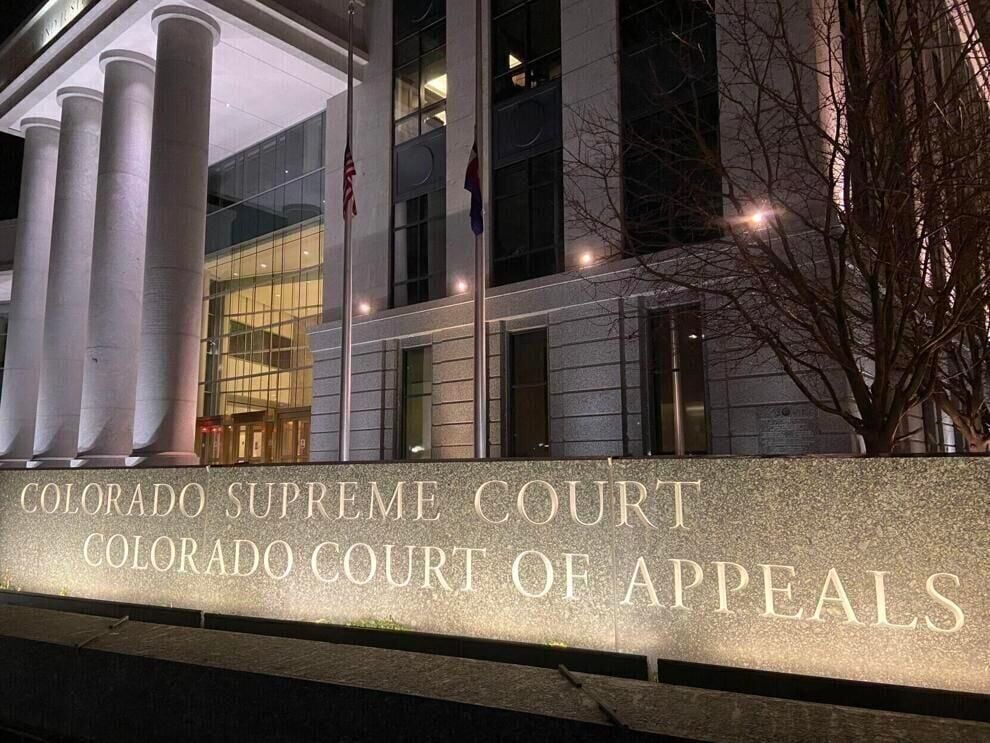
Although Colorado’s second-highest court has issued multiple decisions in recent months upholding a revised definition of “reasonable doubt” from three years ago, an appellate judge became the first on Thursday to argue that a key phrase violates defendants’ constitutional right to due process.
Judge Michael H. Berger warned that, in his view, it is problematic to instruct jurors they must acquit when there is “a real possibility the defendant is not guilty.” Among other things, he worried that the phrasing appeared to assume the defendant’s guilt.
“It suggests that the defendant is guilty unless there is a real possibility that he is not guilty. However, a defendant has no obligation to prove that he is not guilty or even that there is a real possibility that he is not guilty,” Berger wrote.
Before 2023, Colorado’s template jury instructions for criminal cases contained a longstanding explanation of reasonable doubt: A doubt based upon reason and common sense, which was not vague or speculative, that would “cause reasonable people to hesitate to act in matters of importance to themselves.”
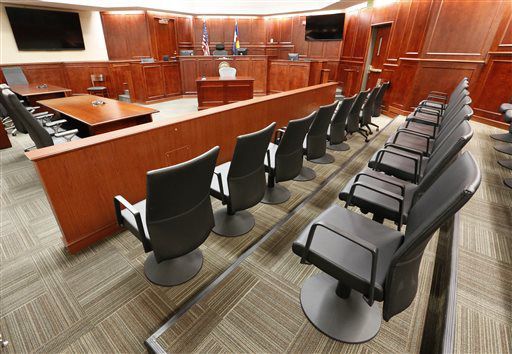
Then, in January 2023, the judicial branch announced a small group of judges had voted to change the language of the model instruction. The revision advised jurors to vote to convict if they were “firmly convinced of the defendant’s guilt.”
“But if you think there is a real possibility that the defendant is not guilty,” the instruction continued, “then the prosecution has failed to prove the crime charged beyond a reasonable doubt.”
The 2023 update resembled the reasonable doubt instruction used in Colorado’s federal trial court, and the language was endorsed by U.S. Supreme Court Justice Ruth Bader Ginsburg in 1994 as a “clear, straightforward, and accurate” definition of reasonable doubt for jurors.
Nonetheless, defense attorneys were concerned the change lessened the prosecution’s burden to prove a defendant guilty. Earlier this year, the state’s Court of Appeals issued a pair of precedent-setting decisions upholding the new wording as constitutional. Multiple other opinions have since followed suit.
In the current case, a Broomfield jury found Ever Ulises Berumen guilty on three counts of sexual exploitation of a child and one count of invasion of privacy. He challenged the use of the 2023 reasonable doubt instruction, but a three-judge appellate panel maintained there was no problem.
The Dec. 11 majority opinion acknowledged that some courts elsewhere in the country have disapproved of the “firmly convinced” language, but only because it tracked too closely with the lower standard of “clear and convincing evidence.”
Colorado’s revised instruction “makes the distinction between the two standards clear,” wrote Judge Craig R. Welling for himself and Judge Grant T. Sullivan — both of whom participated in the earlier precedent-setting decisions upholding the new definition.
Case: People v. Berumen
Decided: December 11, 2025
Jurisdiction: Broomfield
Ruling: 2-1
Judges: Craig R. Welling (author)
Grant T. Sullivan
Michael H. Berger (dissent)
Berger, a retired judge who sat on the panel at the chief justice’s assignment, did not believe the new language provided a constitutionally sound definition of reasonable doubt, given the instruction to acquit if there is a “real possibility that the defendant is not guilty.”
“Juries may acquit on many permissible bases,” he wrote, “including that (1) there is no evidence of guilt; (2) while there is some evidence of guilt, the prosecution has not presented proof establishing guilt beyond a reasonable doubt; or (3) the prosecution has not disproved beyond a reasonable doubt any affirmative defense” like self-defense.
He elaborated that juries may think a defendant committed the charged offense but ultimately acquit because the prosecution has not proven everything it must prove. With Berumen’s case, Berger thought jurors potentially convicted him because they saw no “real possibility” he did not commit sex acts with the victim — even though the disputed issue was whether he knew the victim was under 18.
It is “unwise to continue to use a model instruction that is reasonably susceptible of that meaning,” Berger concluded.
The Colorado Supreme Court announced in September that it would review the constitutionality of the revised definition in another case.
The case is People v. Berumen.


10th Circuit rejects ‘penalty’ for children of naturalized citizens seeking visas
Michael Karlik
michael.karlik@coloradopolitics.com
Updated 6 hours ago
The Denver-based federal appeals court joined three of its peers earlier this month and determined the child of a newly naturalized U.S. citizen is not moved to a longer visa line as a result of his parent gaining citizenship, and...
Appeals court recognizes longer window to sue insurers for withholding policy details
Michael Karlik
michael.karlik@coloradopolitics.com
Updated 1 hour ago
Colorado’s second-highest court split with its own prior decision earlier this month and concluded injured motorists have two years, not one, to sue insurance companies for withholding relevant information about an at-fault driver’s policy. In 2019, Colorado lawmakers enacted a measure to...

Appeals court decides free speech cases, error-prone judge reversed again | COURT CRAWL
Michael Karlik
michael.karlik@coloradopolitics.com
Updated 13 hours ago
Welcome to Court Crawl, Colorado Politics’ roundup of news from the third branch of government. The state’s Court of Appeals decided multiple cases implicating free speech rights, plus Colorado’s most error-prone judge was reversed on appeal yet again. Heard on...

Federal judge dismisses claims against medical contractor for Eagle County jail suicide
Michael Karlik
michael.karlik@coloradopolitics.com
Updated 3 days ago
A federal judge dismissed the claims against a medical contractor for the Eagle County jail and its employees earlier this month, concluding there were insufficient allegations that they violated the constitutional rights of a man who died by suicide in...
Federal judge advances lawsuit seeking overtime compensation for Aurora firefighter trainees
Michael Karlik
michael.karlik@coloradopolitics.com
Updated 5 hours ago
A federal judge gave preliminary approval earlier this month to a class of Aurora firefighter trainees who may sue the city over allegations that they were denied overtime pay in violation of federal law. Joseph Elias, who attended Aurora’s fire...
Appeals court says jury not obligated to apply discounts to determine value of stolen merch
Michael Karlik
michael.karlik@coloradopolitics.com
Updated 5 hours ago
Colorado’s second-highest court concluded on Thursday that it was up to a Douglas County jury to determine the value of stolen merchandise at a defendant’s theft trial, after both sides presented different estimates of the items’ value. Under state law,...
Public figures have limited path to sue over accusations of criminality, says appeals court
Michael Karlik
michael.karlik@coloradopolitics.com
Updated 4 days ago
Colorado’s second-highest court ruled last week that a public figure cannot sue for defamation solely because a person publicly accuses them of committing a crime, as the statement may be constitutionally protected opinion. A three-judge Court of Appeals panel narrowed...
Federal judge to consider sanctioning ex-Colorado judicial discipline director
Michael Karlik
michael.karlik@coloradopolitics.com
Updated 4 days ago
A federal judge ordered Colorado’s former head of judicial discipline on Wednesday to explain why she should not sanction him for making inaccurate statements about the defendants in his lawsuit against the Colorado Supreme Court and related entities. U.S. District...

Federal judge green-lights trial against Denver officer over race-based enforcement
Michael Karlik
michael.karlik@coloradopolitics.com
Updated 3 days ago
A federal judge green-lit a jury trial last week on a man’s claim that a Denver police officer engaged in racially selective enforcement of the law by arresting him for video recording at a police station, while not arresting a...
Federal judge says 8 years in solitary confinement not grounds to reduce man’s sentence
Michael Karlik
michael.karlik@coloradopolitics.com
Updated 5 days ago
A federal judge concluded earlier this month that a man’s eight years allegedly spent in solitary confinement did not justify granting his request for a sentence reduction. However, U.S. District Court Senior Judge William J. Martínez signaled his willingness to...
PREV
PREVIOUS

DOJ sues Colorado Secretary of State for refusing to release voter information
The U.S. Department of Justice has filed a lawsuit against Colorado Secretary of State Jena Griswold after she refused to provide the agency with certain voter information. Last week, the DOJ’s Civil Rights Division asked Griswold’s office to provide unredacted voter data, including full names, dates of birth, residential addresses, and driver’s license numbers. Federal […]

Colorado's cost of living soars, ranks third-most expensive in the U.S.
Colorado is now the third most expensive state to live in, according to a new report by a business group. Released on Thursday, the Colorado Scorecard “presents a mixed outlook,” according to the state chamber’s president and CEO, Loren Furman. While Colorado saw improvements in many areas, including the cost of doing business, GDP and […]