

What the Minnesota fraud case teaches Colorado about grant oversight | PODIUM
By Erik Clarke
State and local governments across the country rely heavily on nonprofit partners to deliver social-service programs. When these partnerships work well, they expand reach and improve outcomes for vulnerable communities. When oversight is weak, the consequences can be severe. The scale of the fraud case unfolding in Minnesota is a stark reminder of how quickly taxpayer dollars can be misused when accountability systems fail.
As of December 2025, federal prosecutors have charged more than 70 defendants in Minnesota with allegedly stealing about $250 million from federal child nutrition programs. Organizations involved in the scheme claimed to be serving thousands of meals per day to low-income children, but investigators found many of those meals never existed. False invoices, fabricated data, and nonexistent service sites were allegedly used to extract large volumes of public money. Funds intended to feed children were instead spent on luxury homes, high-end cars, foreign properties and shell companies.
The case may feel distant from Colorado, but the underlying vulnerabilities exist in every state and city across the country. Colorado and Denver manage a wide range of publicly funded partnerships with nonprofit organizations across housing, youth development, food assistance, behavioral health, workforce training, and more. Most organizations perform their work responsibly and deliver real value to the people they serve. The risk lies in self-certified reporting, outdated or inaccurate data systems, limited onsite verification, and fragmented or unclear oversight responsibilities.
Strong program integrity depends on accurate, timely and standardized data reporting. Grantors need reporting structures that make inconsistencies visible. When outcomes and expenditures can be cross-checked through digital reporting, independent records and third-party analytics, risks become far more manageable. These tools are essential for oversight teams to actively monitor programs.
In-person verification is equally important. Many of the red flags in Minnesota could have been identified earlier by observing operations or confirming basic facts about program delivery. Site visits and direct confirmation of service levels are essential components of accountability whenever public dollars flow to third-party organizations.
Colorado and Denver should learn from Minnesota’s experience. Whenever large volumes of funding move between public entities and third-party providers, strong oversight is essential. Nonprofits vary widely in size, maturity and operational capacity, creating opportunities for legitimate errors, control weaknesses, and, in some cases, fraud.
This is also why we have independent oversight functions in the Denver Auditor’s Office and the Office of the State Auditor. These offices hire professionals with experience assessing government programs and bringing to light waste, fraud, abuse, and opportunities for improvement through performance auditing.
The point of examining Minnesota’s failure is not to cast suspicion on Colorado’s nonprofit community or on the practice of using public grants to serve people in need. The purpose is to emphasize public trust and program performance rely on strong oversight. When data is reliable, verification is effective, and performance audits test whether programs are delivering for taxpayers, the entire system operates more efficiently and effectively.
Throughout my career, I’ve managed large-scale audit programs for public organizations and major institutions. I’ve led multi-disciplinary teams that identified waste, weaknesses and systemic risks across complex operations. The lessons from those engagements are remarkably consistent. Without modern data systems, verification, and clear accountability, problems go undetected. Performance audits are one of the most effective tools for reducing risk and improving results. The Minnesota case demonstrates how unaddressed vulnerabilities can play out at scale.
Colorado’s public agencies and nonprofit partners work hard to meet community needs. Strengthening oversight is a way to protect that critical work. When programs are well-managed, when results and spending are verified, and when public dollars are safeguarded, we all benefit.
Erik Clarke is a finance and audit executive in the private sector and was formerly in management roles at large accounting firms with a focus on internal auditing. His experience includes overseeing major performance audit programs of public agencies at the local, state and federal levels.

Denver Democrat Diana DeGette trails challenger Melat Kiros at assembly as both qualify for primary
Ernest Luning
ernest.luning@coloradopolitics.com
Updated 3 hours ago
U.S. Rep Diana DeGette, a Denver Democrat, qualified for Colorado’s June primary by the skin of her teeth Friday at the party’s district assembly, where the 15-term incumbent received fewer than half as many delegate votes as her challenger, 28-year-old...
Federal judge upholds constitutionality of Colorado campaign contribution limits
Michael Karlik
michael.karlik@coloradopolitics.com
Updated 16 hours ago
A federal judge upheld Colorado’s individual campaign contribution limits as constitutional on Thursday, finding that three Republican plaintiffs failed to prove the campaign finance framework violates their First Amendment rights. U.S. District Court Senior Judge John L. Kane recognized that...
Seligman, Bridges, Gonzales lead downballot races heading into Colorado Democrats’ state assembly
Ernest Luning
ernest.luning@coloradopolitics.com
Updated 21 hours ago
As Colorado Democrats prepare to designate candidates to the June primary ballot at the party’s state assembly in Pueblo on Saturday, three candidates appear poised to win top-line designation in downballot statewide races, according to data compiled by the state...
Planned Parenthood, groups launch campaign against transgender ballot measures in Colorado
Marissa Ventrelli
marissa.ventrelli@coloradopolitics.com
Updated 20 hours ago
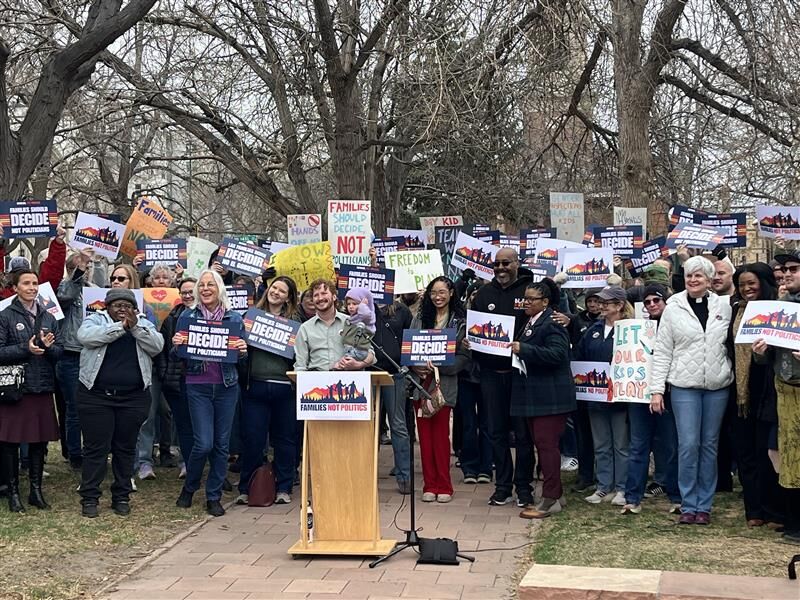
Planned Parenthood and other groups have launched a coalition to oppose two ballot measures that would ban transgender surgeries among children and require student athletes to only join sports teams that correspond to their biological sex. The two measures will...
From pause to progress — a better path on AI policy | OPINION
Colorado Politics
colorado-politics@coloradopolitics.com
Updated 2 days ago
By Brittany Morris Saunders and Loren Furman Last year, following the Special Legislative Session, we wrote in Colorado Politics that delaying Colorado’s AI Act was not a setback. It was an opportunity. We asked state leaders to pause, bring more...

Cutting Prop 123 would cost Colorado far more than it saves | OPINION
Colorado Politics
colorado-politics@coloradopolitics.com
Updated 1 day ago
By Luke Teater Colorado’s legislative budget writers are about to receive updated revenue forecasts and begin making final cuts to close a historic budget gap, and Proposition 123’s affordable housing financing tools are on the chopping block. But in their...

Democratic US Sen. John Hickenlooper qualifies for Colorado primary by petition, will skip assembly
Ernest Luning
ernest.luning@coloradopolitics.com
Updated 2 days ago
U.S. Sen. John Hickenlooper has qualified for Colorado’s Democratic primary after the first-term incumbent submitted enough valid petition signatures to make the ballot, state officials said. Hickenlooper is facing primary challenges from state Sen. Julie Gonzales, D-Denver, and university professor...

Democratic bill would let recipients of ‘conversion therapy’ sue Colorado providers with no statute of limitations
Marissa Ventrelli
marissa.ventrelli@coloradopolitics.com
Updated 2 days ago
Colorado lawmakers have advanced a proposal that would allow people who underwent conversion therapy to sue licensed providers for damages, moving the measure forward on a party-line vote in the House Judiciary Committee. House Bill 1322, proposed by Democratic Reps....
Pinnacol separation bill delayed as Colorado budget remains in flux due to $1.5B deficit
Marianne Goodland
marianne.goodland@coloradopolitics.com
Updated 2 days ago
A bill that would allow Pinnacol Assurance to formally sever its remaining ties with the state appears unlikely to emerge anytime soon, as House leaders juggle a massive budget shortfall, unresolved negotiations with key stakeholders, and growing doubts about whether...
U.S. Sen. Michael Bennet qualifies by petition for Colorado’s Democratic gubernatorial primary
Ernest Luning
ernest.luning@coloradopolitics.com
Updated 2 days ago
U.S. Sen. Michael Bennet on Tuesday became the first gubernatorial candidate to qualify for Colorado’s June primary ballot after state election officials determined the three-term Democrat’s campaign submitted enough valid petition signatures. Bennet is running against Attorney General Phil Weiser...
PREV
PREVIOUS

What are we doing in the Caribbean exactly? | SLOAN
There is, perhaps oddly, a chance the Trump administration is acting with a degree of geopolitical and strategic prudence regarding the endeavors directed toward Venezuela, but you would not know it from the administration itself. There are several dimensions to this, more than what the White House, inexplicably, is letting on; but the main issue […]
Colorado legislators review wolf program as funding challenges persist
Wolves took center stage during a Tuesday review by Colorado legislators of the budget proposal from the Department of Natural Resources, which includes the division that manages the reintroduction program. The Joint Budget Committee reviewed the budget proposal for 2026-27 from the department, with an eye toward potential cuts. The annual budget briefing is an […]