

Trump administration seeks to roll back protections for imperiled species | OUT WEST ROUNDUP

MONTANA
Endangered species rollback sought
BILLINGS — President Donald Trump’s administration moved on Nov. 19 to roll back protections for imperiled species and the places they live, reviving a suite of changes to Endangered Species Act regulations from the Republican’s first term that were blocked under former Democratic President Joe Biden.
The proposed changes include the elimination of the U.S. Fish and Wildlife Service’s “blanket rule” that automatically protects animals and plants when they are classified as threatened. Government agencies instead would have to craft species-specific rules for protections, a potentially lengthy process.
The administration’s announcement answers longstanding calls for revisions to the Endangered Species Act from Republicans in Congress and industries including oil and gas, mining and agriculture. Critics argue the landmark 1973 environmental law has been wielded too broadly, to the detriment of economic growth.
But environmentalists warned the changes could cause yearslong delays in efforts to save species such as the monarch butterfly, Florida manatee, California spotted owl and North American wolverine.
Scientists and government agencies say extinctions are accelerating globally because of habitat loss and other pressures.
Interior Secretary Doug Burgum said in a statement that the administration was restoring the Endangered Species Act to its original intent while respecting “the livelihoods of Americans who depend on our land and resources.”
Another proposed change tasks officials with analyzing economic impacts when deciding whether habitat is critical to a species’ survival.
The Endangered Species Act protects more than 1,600 species in the United States and its territories. It is credited with helping save the bald eagle, California condor and scores more animals and plants from extinction since Republican President Richard Nixon signed it into law.
ARIZONA
State sues Temu for data theft
Arizona Attorney General Kris Mayes announced on Dec. 2 that Arizona is the latest state to sue Temu and its parent company PDD Holdings Inc. over allegations that the Chinese online retailer is stealing customers’ data.
Mayes said the app deceives customers about the quality of its low-cost products and collects what she described as a shocking amount of sensitive data without the consent of users, including GPS locations and a list of other apps on users’ phones.
According to the lawsuit, prosecutors are concerned about Temu being subject to laws in China that require Chinese companies to hand over data requested by the government, and that its code is designed to evade security reviews.
Arizona’s top prosecutor also said the state wants to protect businesses from being “ripped off” by the online retailer, alleging the company has copied the intellectual property of brands that include the Arizona Cardinals and Arizona State University.
In a statement early Wednesday, Temu denied the allegations.
Attorneys general in Kentucky, Nebraska and Arkansas have filed similar lawsuits in recent years.
Mayes suggested there should be greater intervention by the federal government to protect consumers.
Through a forensic review, investigators in Arizona found the app’s code has portions recognized by experts as malware or spyware and allows exfiltration of data from a user’s mobile device while concealing that the app is doing so. The review also found in the app “large swaths” of previously banned code from the platform’s precursor version.
Mayes urged Arizonans to delete their Temu accounts, uninstall the app and scan their devices for malware.
WYOMING
Bills to kill property taxes advance
CHEYENNE — The Wyoming Legislature’s Joint Revenue Committee on Nov. 19 advanced two controversial measures that together would fundamentally restructure taxation and government revenue in the state.
One is a constitutional resolution to eliminate residential property taxes entirely, while an accompanying bill would replace the lost local revenue primarily through a significant increase in the statewide sales tax rate.
The proposed constitutional amendment to repeal property taxes reads, “the percentage of value prescribed for residential real property shall be 0%, and no property tax shall be assessed on residential real property.” If signed into law, it would put the revocation of residential property taxes to a statewide vote.
To make up the revenue, lawmakers propose an additional 2% sales and use tax, bringing the statewide rate up to 6%. The Department of Revenue estimated this would generate about $475 million in additional revenue. It would then be transferred to a new state account to reimburse local governments.
Lawmakers asserted the proposal was not a cut, but a reform aimed at changing the government funding philosophy. Sen. Bob Ide, R-Casper, argued that a consumption tax, such as a sales tax, is fairer than property tax.
However, the opposition was vocal and wide-ranging, including a warning that shifting the burden risks cutting essential systems like fire departments, emergency medical services and mental health services.
Casper attorney and tax expert Jennifer McDowell testified in an email to the committee that a sales tax is more regressive than property tax, and disproportionately hurts lower-income individuals and families.
Ultimately, the committee passed both bills after the sales tax bill was amended to only go into effect if voters approve of the constitutional resolution, and it would delay implementation until April 1, 2027, allowing for the 90-day delay needed to implement the sales tax increase.
OKLAHOMA
1st Native woman drives Sooner Schooner
NORMAN — For the first time in its 60-year history, the Sooner Schooner, the University of Oklahoma’s iconic covered wagon mascot, was driven by a Native American woman.
Brianna Howard, a junior at OU and a citizen of the Choctaw Nation, first drove the Schooner onto the field during the football team’s Nov. 22 season opener against Illinois State.
First introduced in 1964, the Sooner Schooner is pulled across the field before the game and after Oklahoma scores by matching white ponies named “Boomer” and “Sooner.”
Because the scaled-down Conestoga wagon is reminiscent of those pioneers used while settling Oklahoma Territory in the late 1800s, Howard acknowledged that some see the Schooner mascot as a symbol of oppression against Native people. But she said to her, driving the wagon represents taking ownership of that symbol.
“I know that for me, it’s a representation of taking back something that was used to oppress my people and my culture, and now that I’m in charge, it’s giving us the power,” she said. “Not everyone’s going to see it that way, and that’s OK.”

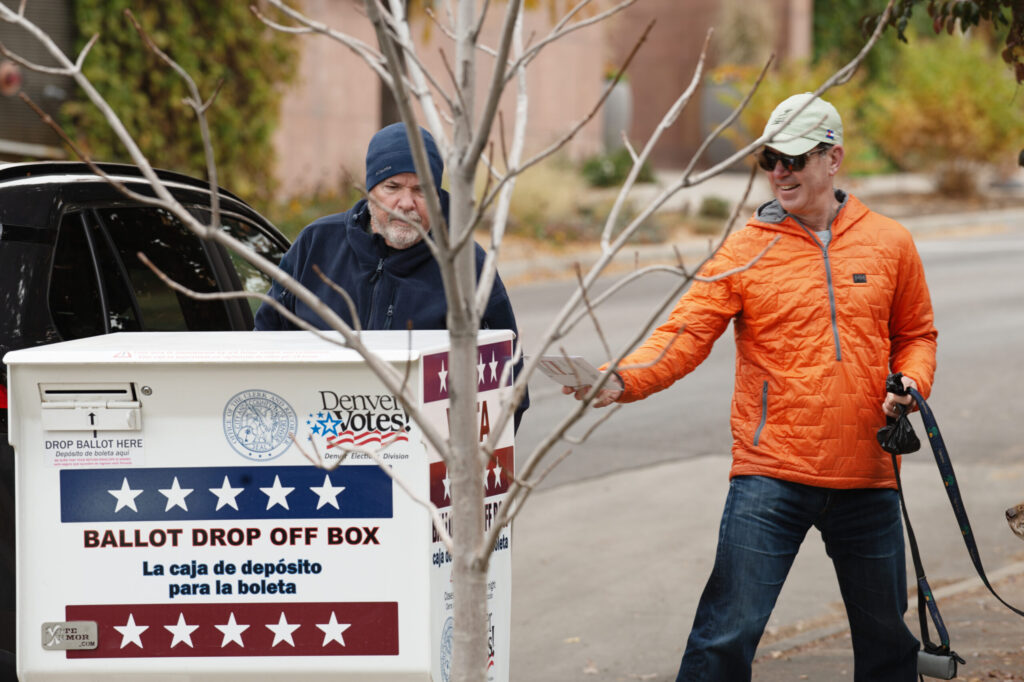
Colorado joins multi-state call to keep ICE away from polling locations
Jacob Mauk
jacob.mauk@denvergazette.com
Updated 6 minutes ago
Colorado Secretary of State Jena Griswold announced Monday that the state has formally requested written confirmation from the Department of Homeland Security that ICE agents will not be stationed at polling locations during the 2026 election cycle, according to a...

Colorado prostitution decriminalization bill shelved after sponsor says it lacks votes
Marianne Goodland
marianne.goodland@coloradopolitics.com
Updated 23 minutes ago
A bill that would have decriminalized prostitution among consenting adults in Colorado will not move forward this year after its sponsor said it lacks the votes to pass its first committee. Sen. Nick Hinrichsen, a Pueblo Democrat, said he will...
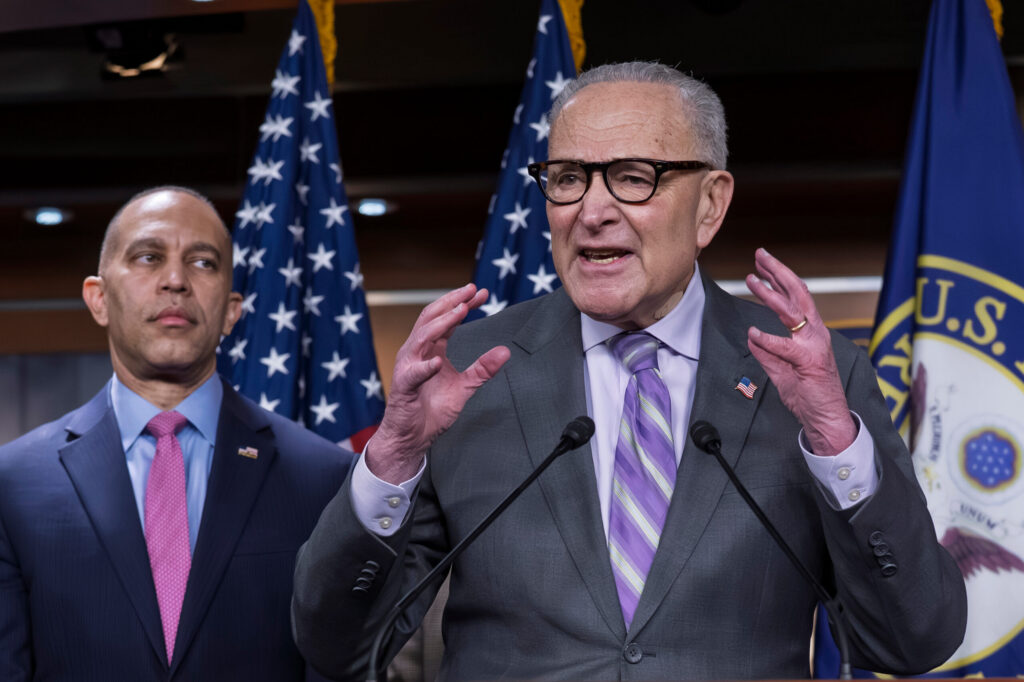
GOP senators push back against Schumer’s ‘Jim Crow 2.0’ description of SAVE Act
Asher Notheis, Washington Examiner
asher.notheis.washington.examiner@gazetteedit.wpenginepowered.com
Updated 47 minutes ago
Sens. Rick Scott (R-FL) and Mike Lee (R-UT) pushed back on Senate Minority Leader Chuck Schumer’s (D-NY) framing of the SAVE America Act as “Jim Crow 2.0” on Sunday. President Donald Trump announced Sunday that he will not sign any...
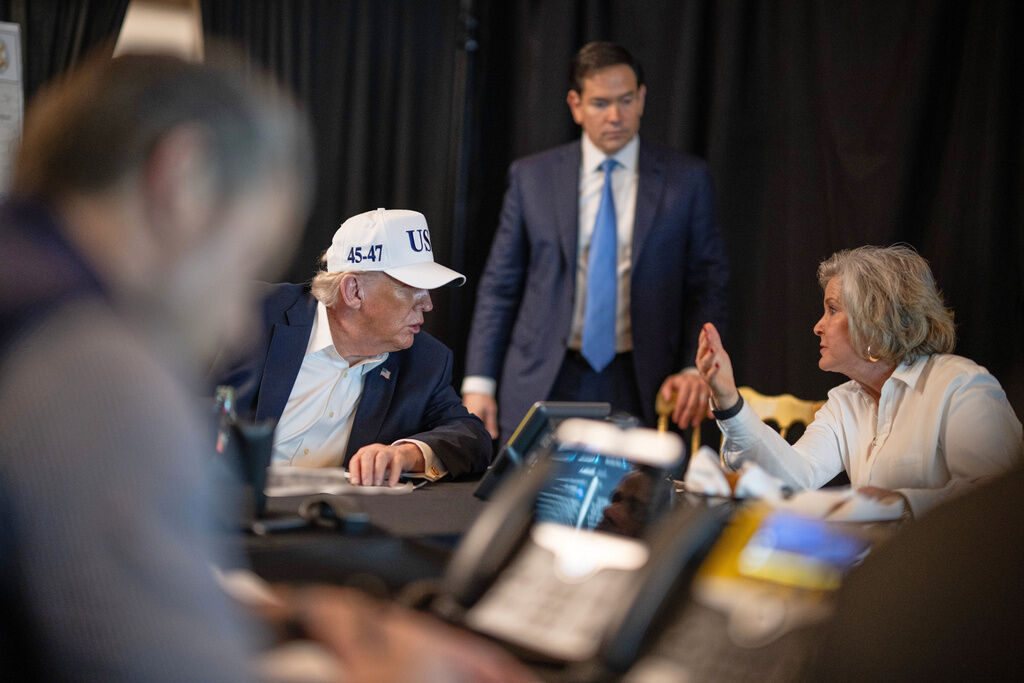
Rubio warns US will no longer tolerate ‘hostage diplomacy,’ claims Iranian military is ‘being eviscerated’
Timothy Nerozzi, Washington Examiner
timothy.nerozzi.washington.examiner@gazetteedit.wpenginepowered.com
Updated 52 minutes ago
Secretary of State Marco Rubio is warning hostile state actors, Iran in particular, that the United States will no longer engage in “hostage diplomacy.” Rubio made the remarks ahead of a flag-raising ceremony at the State Department to mark U.S....

Colorado justices, by 5-2, say Longmont detective did not violate suspect’s Miranda rights
Michael Karlik
michael.karlik@coloradopolitics.com
Updated 2 hours ago
The Colorado Supreme Court’s majority ruled on Monday that a Longmont detective did not coerce a suspect into talking by making references to how a judge would look at his character, and by suggesting he may get out of prison...
Colorado justices find Fort Collins police lacked probable cause to arrest suspect in park
Michael Karlik
michael.karlik@coloradopolitics.com
Updated 4 hours ago
The Colorado Supreme Court agreed on Monday that Fort Collins police lacked probable cause to arrest a man for a child sex offense based on his presence in a public park around the time they intended to meet with their...

Colorado board delays vote on banning soda purchases with SNAP benefits
Marissa Ventrelli
marissa.ventrelli@coloradopolitics.com
Updated 3 hours ago
The Colorado Board of Human Services voted to delay its decision on whether to allow Supplemental Nutrition Assistance Program recipients to use benefits to buy soft drinks. Under the “Healthy Choice Waiver,” SNAP recipients would be prohibited from using benefits...

Supreme Court to hold oral arguments, discipline commission releases report | COURT CRAWL
Michael Karlik
michael.karlik@coloradopolitics.com
Updated 5 hours ago
Welcome to Court Crawl, Colorado Politics’ roundup of news from the third branch of government. The state Supreme Court is holding oral arguments this week, plus Colorado’s judicial discipline commission released its annual report. Colorado Supreme Court news • The Supreme...

Bill to roll back Colorado Lottery credit card purchases clears Senate committee in tight vote
Marianne Goodland
marianne.goodland@coloradopolitics.com
Updated 2 hours ago
A bill seeking to reverse the Colorado Lottery’s recent move to allow credit card purchases for tickets narrowly cleared its first legislative hurdle last week, advancing from the Senate Finance Committee on a 5-4 vote after hours of debate over...
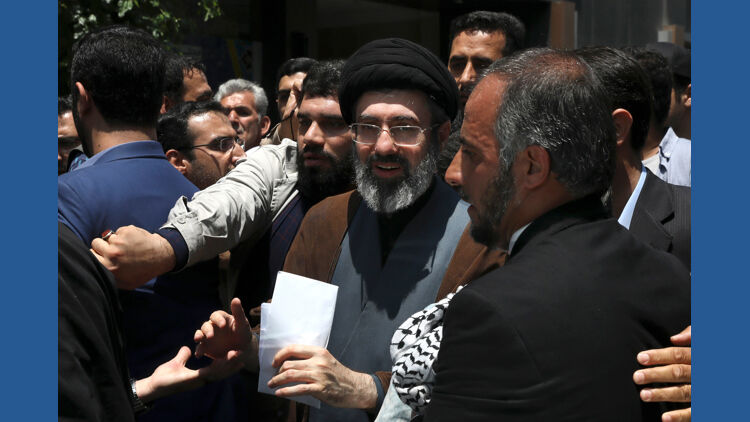
Iran names Khamenei’s son to succeed him, signaling no letup in war as oil prices surge
Jon Gambrell
jon.gambrell@associatedpress.com
Updated 1 hour ago
DUBAI, United Arab Emirates (AP) — Iran named the hard-line Ayatollah Mojtaba Khamenei to succeed his late father as supreme leader on Monday, signaling no letup in the war launched by the United States and Israel. Oil prices surged as...
PREV
PREVIOUS

Clash of the titans: Democratic race for governor pits two candidates similar in focus, but very different in style | Vince Bzdek
By Vince Bzdek The race for governor is shaping up to be a clash of Democratic titans, U.S. Sen. Michael Bennet and Attorney General Phil Weiser. They are two of Colorado’s highest profile politicians with deep track records who are remarkably similar in their visions for Colorado’s future, and their choice of our state’s […]

Democrat Shannon Bird to step down from Colorado legislature to campaign full-time for Congress
State Rep. Shannon Bird, a Westminster Democrat, said Sunday that she plans to resign from the Colorado legislature next month in order to focus on running for the 8th Congressional District seat held by Republican U.S. Rep. Gabe Evans. Bird is one of four Democrats — two of whom are state lawmakers — seeking the […]