

Outgoing CPW director Jeff Davis lands new role, same salary amid Colorado hiring freeze
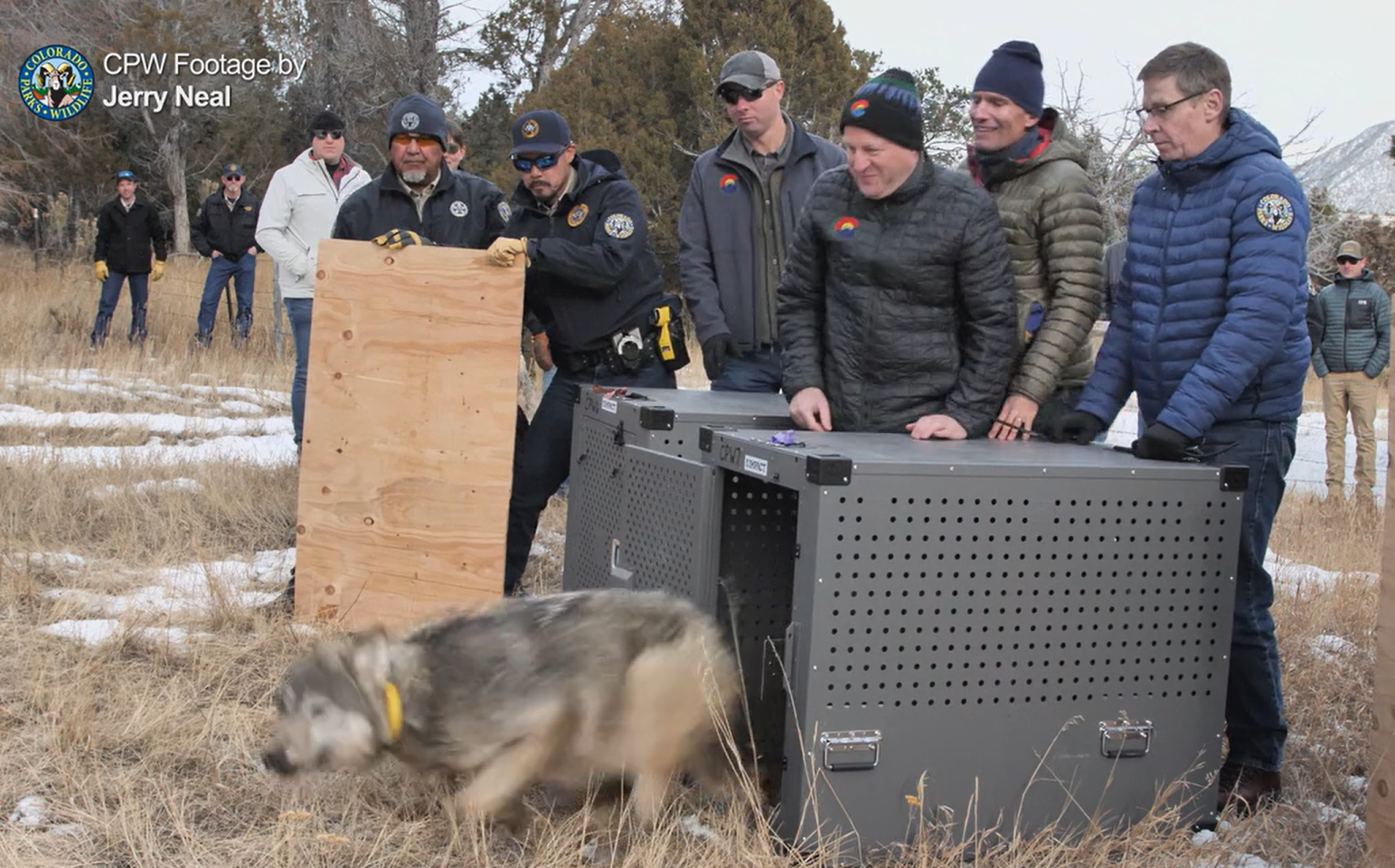
Jeff Davis, who resigned as director of Colorado Parks and Wildlife late last month, will continue to receive the same salary in his new role as a senior policy adviser to the Department of Natural Resources, according to the department.
Davis will still make $186,470 annually.
Davis chose to step down, rather than be fired, according to 9News, which reported that he signed a settlement agreement on Nov. 22 that also stated he would not sue the department. No reason was provided in the settlement agreement for why Davis would be fired.
Davis’s new role as senior policy adviser for strategic priorities began on Dec. 1 and will continue until May 15, 2026, according to the agreement.
The position did not exist until Davis was appointed to it, according to the leadership list for the executive director’s office. Davis is also not currently listed as an employee in the executive director’s office.
Davis landed the new position despite an August order from Gov. Jared Polis for a hiring freeze that would last until the end of the year, intended to help address a significant deficit in the 2025-26 budget.
The director’s position at Colorado Parks and Wildlife is not yet listed on the state’s job opportunities website, where, despite the hiring freeze, more than state 450 jobs are currently posted. That includes 24 positions at the Department of Natural Resources, although all but a few are temporary.
Davis became Colorado Parks and Wildlife (CPW) director in May 2023, coming to Colorado after almost 23 years with Washington’s Department of Fish and Wildlife, including as its deputy assistant director and assistant director of the agency’s habitat program.
His biggest job at CPW, a division of the natural resource agency, was managing the state’s wolf reintroduction program, which Front Range voters narrowly approved in 2020. That program mandated that wolves would be on the ground in Western Slope counties by late 2023.
The ballot measure did not specify how many would be necessary to sustain the population – that came from a management plan that calls for 30 to 50 of the apex predators to be brought to Colorado. To date, the state had brought in 25, of which 10 came from Oregon and 25 from British Columbia, the Canadian province. Of the 25, 10 have died from a variety of causes.
While the wolves’ reintroduction isn’t the only program that Colorado Parks and Wildlife manages – the state has 43 parks, manages 960 species and 350 wildlife areas – it has dominated board meetings and visits by Davis to the state legislature.
Lawmakers have heavily criticized Davis for the program’s problems, including dead wolves and a cost to taxpayers that is, so far, five times the estimate provided to voters in 2020.
Dozens of livestock have also been killed in seven counties, costing the state more than $600,000 in compensation for ranchers, far exceeding the amount of money set aside for those expenses. Ranchers have also complained that Colorado Parks and Wildlife failed to provide deterrents for wolf depredations until after the slaughters began, both in 2024 and 2025.
The Copper Creek pack, a mating pair and four of five offspring born in 2024, were captured in September 2024 after multiple claims that the male of the mating pair was killing livestock in Grand County.
The male died shortly after being captured due to a gunshot wound. The female and four offspring were released in Pitkin County in January and, within a few months, also began killing livestock in the area. Two of the yearlings, including the fifth, which was uncollared, were killed by CPW staff because they were killing livestock in Pitkin and Rio Blanco counties.
One of the Copper Creek yearlings killed a heifer in eastern Gunnison County two weeks ago.
During a special session in August, legislators attempted to pause the reintroduction program, but under the threat of a veto from the governor, instead decided that Colorado Parks and Wildlife could not spend state dollars for the next batch of wolves.
The state had signed a contract with British Columbia for $400,000 for more wolves, but where or how Colorado will get its next batch of wolves – the state plan calls for up to 50 – is up in the air. The U.S. Fish & Wildlife Service told the state it may not bring in gray wolves from Canada or Alaska. Any wolf brought to Colorado as part of its reintroduction program must come from one of the lower 48 states, the federal agency said.
Major General Laura Clellan, a retired adjutant general and executive director of the Colorado Department of Military and Veterans Affairs, has been appointed acting head of Colorado Parks and Wildife while a search is underway.

Colorado open records reform bill dies in Senate committee
Marianne Goodland
marianne.goodland@coloradopolitics.com
Updated 1 hour ago
Efforts to overhaul Colorado’s open records law have stalled again. Senate Bill 107, which would have extended response times for public records requests and added accountability measures for late responses, failed to advance out of its first committee and will...
Colorado joins multi-state call to keep ICE away from polling locations
Jacob Mauk
jacob.mauk@denvergazette.com
Updated 1 hour ago
Colorado Secretary of State Jena Griswold announced Monday that the state has formally requested written confirmation from the Department of Homeland Security that ICE agents will not be stationed at polling locations during the 2026 election cycle, according to a...
Colorado prostitution decriminalization bill shelved after sponsor says it lacks votes
Marianne Goodland
marianne.goodland@coloradopolitics.com
Updated 1 hour ago
A bill that would have decriminalized prostitution in Colorado will not move forward this year after its sponsor said it lacks the votes to pass its first committee. Sen. Nick Hinrichsen, a Pueblo Democrat, said he will ask to postpone...

Bill to roll back Colorado lottery credit card purchases clears Senate committee in tight vote
Marianne Goodland
marianne.goodland@coloradopolitics.com
Updated 49 minutes ago
A bill seeking to reverse the Colorado Lottery’s recent move to allow credit card purchases for tickets narrowly cleared its first legislative hurdle last week, advancing on a 5-4 vote after hours of debate over gambling addiction, consumer debt and...

‘Larger than life’ and ‘logistically challenging:’ Getting to know wolverines and Colorado’s restoration plan
Seth Boster
seth-boster@coloradopolitics.com
Updated 9 hours ago
Last month inside a Denver conference room, as the Colorado Parks and Wildlife Commission moved to the next agenda item, a whisper could be heard. “I’m excited for this one.” Bob Inman stepped to a microphone. “Colorado has many remarkable...

Colorado health equity funder’s redirection debated
DEBBIE KELLEY
debbie-kelley@coloradopolitics.com
Updated 3 days ago
A redirection in grantmaking that began two years ago for The Colorado Trust, a 40-year-old Denver-headquartered funder, has led some employees to now voice concerns, which has reportedly put their jobs in jeopardy. The vice president of communications for the...
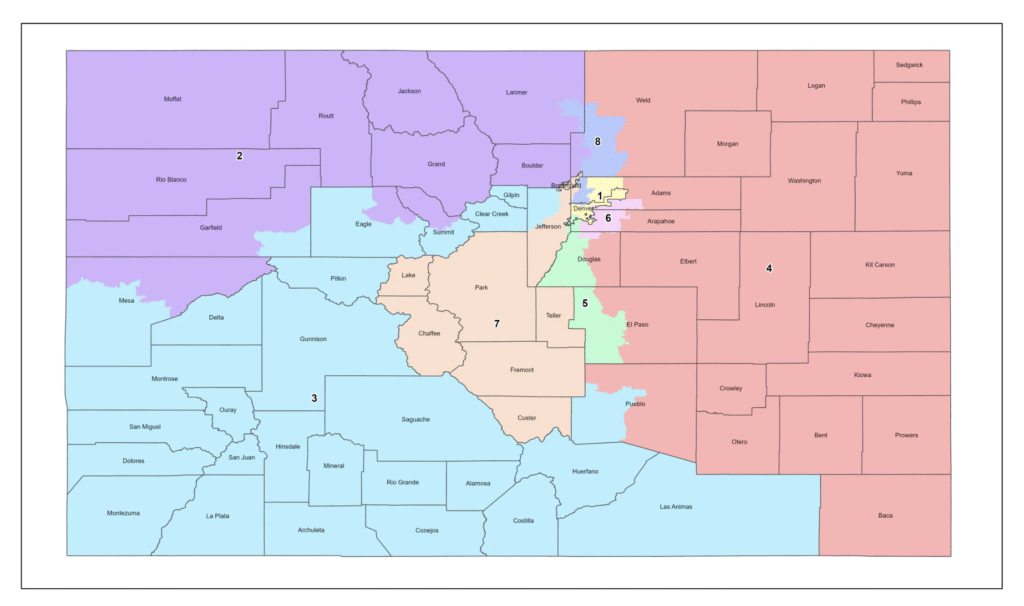
Redistricting scheme would give Colorado Democrats seven House members, split El Paso County | Bob Loevy
Bob Loevy
bob-loevy@coloradopolitics.com
Updated 1 day ago
A proposed redistricting plan, which could give Colorado seven Democratic members of the U.S. House of Representatives and only one Republican, would split El Paso County into two parts and thereby weaken the county’s influence in Congress. El Paso County,...

Can deliberation save democracy? | Vince Bzdek
Vince Bzdek
vince.bzdek@gazette.com
Updated 6 hours ago
In September 2019, 523 Americans traveled to Dallas for an experiment called “America in One Room.” The gathering was designed to test a theory: Could representative citizens deliberate productively even in an era of intense polarization? The event focused on...

Democrats eye new taxes on alcohol, marijuana to fund Colorado mental health spending
Marissa Ventrelli
marissa.ventrelli@coloradopolitics.com
Updated 7 hours ago
Facing hundreds of millions in budget shortfall, Colorado lawmakers are searching for ways to fund mental health services in a state that consistently ranks among the worst in the nation for mental health outcomes. Several proposals this session aim to...

Hopes and fears: Colorado Iranians speak out on widening war
Mark Samuelson Special to The Denver Gazette
mark.samuelson@denvergazette.com
Updated 2 days ago
Group talks about young people protesting against the Islamic Republic, and Reza Pahlavi and the monarchy When Denver area real estate agent Fara Novin dined out for her birthday Friday night, Feb. 27, she blew out a candle on a...
PREV
PREVIOUS

From Pope Francis to Charlie Kirk, many deaths in 2025 had a wide impact
The death of Pope Francis brought change to the Catholic Church, which counts 1.4 billion adherents and is now led — for the first time — by an American pope. The fatal shooting of conservative activist Charlie Kirk as he spoke before a crowd horrified many and prompted somber conversations about political violence. And when […]

Denver mayor’s legal bill for sanctuary city hearing tops $1 million
The bill for Denver Mayor Mike Johnston’s legal defense for a March 5 hearing before the U.S. House Oversight and Government Reform Committee on “sanctuary” cities just crossed the $1 million mark. City financial records show that a fourth payment of $250,000 was made to Covington & Burling LLC, the D.C.-based law firm that represented […]