

Q&A: Denver Metro Chamber of Commerce VP says it’s ‘getting harder, more expensive to do business’ in Colorado | FISCAL ROCKIES
| Editor’s Note: Once among the nation’s fastest-growing economies, Colorado today confronts mounting challenges that threaten its momentum. This series reveals how a state once defined by prosperity is navigating economic cliffs and ridges. We explore the impact of increased regulations, tariffs, shifting tax policies, the high cost of living and widening urban–rural divides have on businesses, workers, and communities. The series also highlights the push to leverage Colorado’s outdoor economy — one of its most valuable assets — for renewed growth, while working to attract industries like quantum and aerospace while capitalizing on unique industries that call Colorado home. |
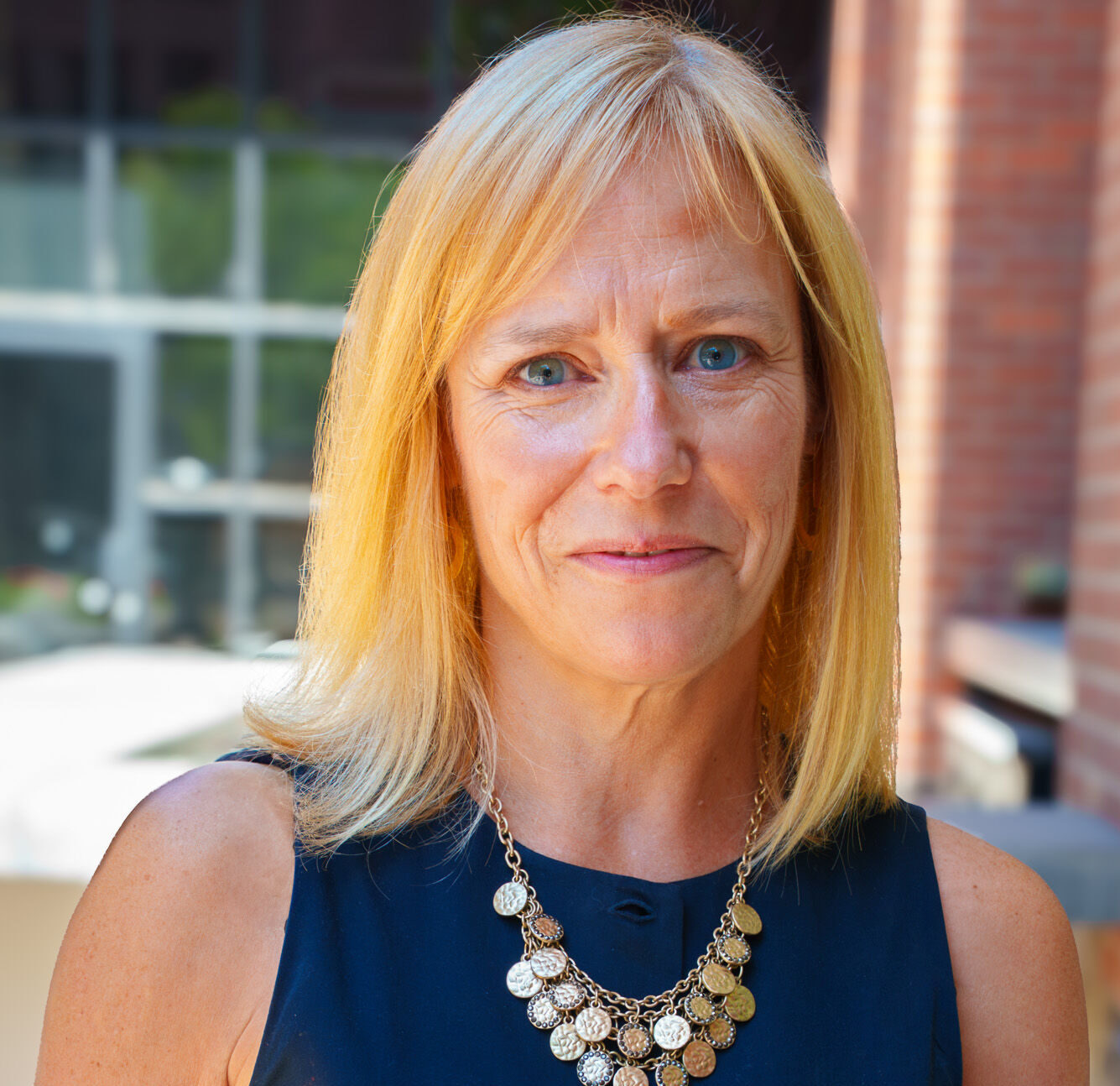
As part of a special series examining Colorado’s economy, Leslie Oliver, the vice president of external affairs for the Denver Metro Chamber of Commerce, responded to questions regarding the current challenges businesses face in complying with a growing number of regulations, cost of living and a growing sense of uncertainty.
Colorado Politics: Can you reflect on the last decade in terms of the Colorado economy and business health in your region?
Leslie Oliver: Over the last decade, Colorado’s economy has continued to grow and diversify, with new industries taking root and wages and job growth on paper looking strong. But, for our members, 85% of whom are small businesses, the story is more complex.
Through the Denver Metro Chamber of Commerce, we have seen firsthand how rising regulatory complexity, higher costs of living and housing, and a growing number of taxes, fees and litigation risks are putting real pressure on businesses. These are not abstract challenges. They affect whether a small business can hire that next employee, expand to a new location, or keep its doors open at all.
The proof is in our numbers. Our membership has grown 34% in just the last three years. Small businesses are concerned with, and looking for, resources. That is when we step in to help them navigate these complex issues. Let’s face it – they are way more complicated than they need to be.
We are bullish about the resilience and diversity of Colorado’s economy. But at the same time, we are sounding the alarms on some very real concerns that threaten our competitiveness and long-term growth.
Throughout our state’s history, when the private sector steps up, that is when we have seen true change and resilience take shape, and the chamber has been at the forefront at each of those pivotal points. For example, in the 1980s, we were a boom or bust town, reliant on oil and gas – so with the vision of Tom Clark, we formed the Metro Denver EDC. We believe we are at that crossroads again, and our members and the business community must play a leading role in charting the path forward for Colorado’s economy.
CP: Colorado is ranked sixth as the most regulated state in the nation. How does that affect existing, new, and prospective businesses in your region?
Oliver: Our members are living this reality every day. Whether they are small businesses trying to make payroll, mid-sized companies planning to expand, or large employers managing compliance, they all tell us the same thing: It is getting harder and more expensive to do business in Colorado.
Businesses and the decision makers who help them choose where to locate and grow are watching Colorado’s regulatory environment closely. It is something we all need to be very aware of.
When we hosted a group of national site selectors, experts who advise companies on where to locate and expand, they told us that Colorado remains a place where businesses want to be and people want to live, work, and raise their families. That is an incredible strength for our state.
At the same time, those same experts noted that predictability matters. When rules constantly change or become more complex, it creates uncertainty that affects every level of business. Small companies have less money for payroll or growth, mid-sized employers spend more time on compliance than innovation, and large companies face higher operating costs.
These are the kinds of challenges that make Colorado less competitive than states like Utah, Texas, and North Carolina, where the rules are clearer and more consistent. More certainty means more high-paying jobs, more opportunities for upward mobility, and less strain on hardworking Coloradans.
CP: Are businesses in your region seeing the trickle-down effects of the Trump administration tariffs?
Oliver: Our members, particularly those in manufacturing, aerospace, and industries that rely on global supply chains, are feeling the ripple effects of ongoing tariff and trade policy uncertainty. Many of our manufacturing members depend on imported materials and components, and shifting tariffs can quickly increase costs, disrupt supply chains, and make it harder to stay competitive.
The Denver Metro Chamber of Commerce supports free and fair trade because it strengthens Colorado’s economy and opens doors for businesses of all sizes to compete globally. Tariff policy, almost by definition, distorts free markets and creates uncertainty for employers making long-term investment decisions.
We believe the United States should work in coordination with our trading partners rather than acting unilaterally, and that American products, including those made right here in Colorado, should receive the same fair treatment abroad that we extend to imports here at home.
CP: How would you rate the performance in terms of the economy and business support from Gov. Jared Polis and, in recent years, the Democratic-led legislature?
Oliver: One hundred percent of the site selectors at our recent Site Selection Conference said they had clients who would not even consider Colorado if the Labor Peace Act were to be rescinded. Site selectors are the decision makers who advise companies on where to locate and expand, and they help determine where some of the most important job-creating projects in the country land. That feedback is powerful, and it underscores how closely the business community and decision makers are watching Colorado’s policy environment.
Gov. Polis’ engagement and his veto of Senate Bill 5 during the 2025 legislative session recognized that Colorado’s existing Labor Peace Act is already a unique and carefully balanced framework. It gives workers the ability to organize, while ensuring our state remains an attractive place for employers to grow and create jobs.
We need Gov. Polis and his administration to continue recognizing how critical policy stability and predictability are for economic development. When our Metro Denver Economic Development Corporation team competes for major projects, state policy plays a significant role in whether those employers choose Colorado or go elsewhere.
The Metro Denver EDC, the economic development initiative of the Denver Metro Chamber of Commerce, is the largest privately funded economic development organization in the state. It unites 12 counties and more than 130 cities to recruit and retain jobs in Colorado. No public dollars support this work. It is fully funded by the private sector through membership, which is essential because it allows us to advocate for the right kind of economic development projects to come to Colorado — those that create quality jobs, strengthen communities, and build long-term prosperity. This kind of collaboration and privately driven leadership is unheard of in most states and sought after by others. It is something uniquely Colorado.
If we want a future that lifts communities, grows opportunity, and secures prosperity for the next generation, we need to create an environment where businesses can thrive, innovate, and invest in Colorado’s people and places. That is how we build a stronger, more inclusive economy for everyone.
CP: What are some of the biggest issues businesses in your region are facing?
Oliver: Whether you are a 16th Street shop or a major employer, the story is the same – rising costs, regulatory uncertainty, an increasingly litigious environment, and a shaky workforce pipeline are making it harder to grow in Colorado.
Our members, especially small businesses, feel this most acutely. They are the backbone of Colorado’s economy, yet they are carrying an increasing share of the burden when new rules and regulations are passed. Too often, government has insulated itself from the very challenges it places on the private sector. For example, the state’s own energy usage requirements are goals that even government agencies cannot meet, yet they have exempted themselves from those rules, leaving small businesses to do what the government itself cannot.
At the same time, some policymakers who may not have first-hand experience running a business are setting expectations that are difficult, if not impossible, to meet either technically or financially. That creates frustration and uncertainty for employers who are doing their best to grow, hire, and serve their communities.
Our members tell us they feel these pressures every day. Small businesses see it in their margins. Mid-sized firms feel it in their ability to scale and deliver what customers need, and large employers face challenges in planning long-term investments and expansion.
Colorado succeeds when business is seen as a partner in progress, not a problem to solve. We want to work with policymakers to build practical, predictable solutions that allow small businesses and the people they employ to thrive.
CP: How is the Colorado cost of living impacting businesses regarding workforce, housing, and other issues?
The cost of living in Colorado is something real people feel every single day. It is not just a line item on a spreadsheet. When housing costs rise much faster than wages, as they did from 2020 through 2022, it becomes harder for employers to fill jobs and harder for families to build stable lives.
Our members tell us that businesses wanting to grow and offer more high-paying opportunities are increasingly constrained, not by ambition or innovation, but by affordability barriers that make it difficult to recruit and retain talent. We recently heard from an aerospace CEO who said the next 200 jobs at his company will be in Texas because employees earning $150,000 salaries cannot find reasonably priced homes within a reasonable commute to work.
These are companies that are doing good things for our economy. They want to do right by their employees and keep their jobs in Colorado. But they are finding they simply cannot afford to anymore. And what we know is that companies also chase talent. When talent cannot afford to live here, we are in a tough spot, not just for business growth but for our state’s long-term competitiveness.
Colorado’s rising cost of living compared to competitor states reduces our value proposition for attracting and retaining both jobs and talent. It also affects the next generation, our ability for our kids to stay here, work here, live here, and start their own businesses here.
Adding more government fees and tax burdens only makes that harder. We need to focus on creating an environment where employers can thrive, employees can afford to live, and families can see a future in Colorado.
CP: Describe the Colorado economy in your region pre-COVID, during COVID and post-COVID. What issues still linger? What has improved?
Oliver: Before COVID, Colorado’s economy was firing on all cylinders. We saw broad-based job growth across nearly every sector, record-low unemployment, and strong business creation. That growth was fueled by people who wanted to be here, people who came to Colorado to start businesses, build careers, and enjoy a quality of life that was both attainable and inspiring.
When the pandemic hit, in-person service industries were hit the hardest, and we began to see the start of a permanent shift toward hybrid and remote work. That shift has had a lasting impact on our downtowns, where reduced office traffic continues to challenge restaurants, retailers, and service providers that rely on a steady daytime workforce.
The post-COVID recovery was, by many measures, remarkably strong. Colorado regained jobs faster than most states and saw continued strength in key industries, such as aerospace, technology, and professional services. But even today, not all sectors have fully recovered. Public sector employees, for example, still have not returned to in-person work in meaningful numbers, which has slowed the recovery of downtown cores. Retail and restaurant businesses in central business districts continue to feel those ripple effects.
Our members tell us that during this same period, a series of policy choices have created unintended consequences for Colorado’s business community. Reducing penalties on the possession of Schedule 1 and 2 narcotics and inconsistent enforcement of existing laws have contributed to spikes in crime and major theft that directly impact small businesses and their employees. Added layers of energy reduction mandates and other costly regulations have also made it more difficult for employers to operate, grow, and reinvest in their communities.
At the same time, the hiring boom that defined the immediate post-COVID rebound has cooled into slower, steadier employment gains. Our members are navigating a tight labor market, higher costs, and shifting workforce expectations while continuing to invest in innovation and job creation.
Colorado’s economic fundamentals remain strong. We have a diverse industry base, a well-educated workforce, and an unparalleled quality of life that continue to attract top talent and investment. The opportunity now is to align our policies with those strengths so businesses can grow, downtowns can thrive again, and Colorado remains a place where both employers and employees can succeed.
Read more from the Fiscal Rockies series:
Once a step ahead, Colorado’s economy cools, burdened by rising costs and regulations
Q&A: Colorado Chamber of Commerce CEO sees warning signs for state economy, despite strengths
Can you afford to live in Denver?
After years of leading the nation, Colorado’s economy shows signs of cooling

Can you afford to live in Denver? | FISCAL ROCKIES
Michael Braithwaite
michael.braithwaite@gazette.com
Updated 44 minutes ago
Editor’s Note: Once among the nation’s fastest-growing economies, Colorado today confronts mounting challenges that threaten its momentum. This series reveals how a state once defined by prosperity is navigating economic cliffs and ridges. We explore the impact of increased regulations, tariffs,...

After years of leading the nation, Colorado’s economy shows signs of cooling | FISCAL ROCKIES
Marissa Ventrelli
marissa.ventrelli@coloradopolitics.com
Updated 52 minutes ago
Editor’s Note: Once among the nation’s fastest-growing economies, Colorado today confronts mounting challenges that threaten its momentum. This series reveals how a state once defined by prosperity is navigating economic cliffs and ridges. We explore the impact of increased regulations, tariffs,...
Q&A: Colorado Chamber of Commerce CEO sees warning signs for state economy, despite strengths | FISCAL ROCKIES
Thelma Grimes
thelma.grimes@coloradopolitics.com
Updated 55 minutes ago
Editor’s Note: Once among the nation’s fastest-growing economies, Colorado today confronts mounting challenges that threaten its momentum. This series reveals how a state once defined by prosperity is navigating economic cliffs and ridges. We explore the impact of increased regulations, tariffs,...

Once a step ahead, Colorado’s economy cools, burdened by rising costs and regulations | FISCAL ROCKIES
Thelma Grimes
thelma.grimes@coloradopolitics.com
Updated 58 minutes ago
Editor’s Note: Once among the nation’s fastest-growing economies, Colorado today confronts mounting challenges that threaten its momentum. This series reveals how a state once defined by prosperity is navigating economic cliffs and ridges. We explore the impact of increased regulations, tariffs,...

Wings Museum helps mark Marine Corps’ 250th anniversary | NONPROFIT REGISTER
Joanne Davidson Special to Colorado Politics
joanne-davidson-special-to-colorado-politics@coloradopolitics.com
Updated 2 days ago
WINGS OVER THE ROCKIES AIR & SPACE MUSEUM Denver News: With the United States Marine Corps celebrating its 250th anniversary this year, the folks at Wings Over the Rockies Air & Space Museum agreed that it was only appropriate to have its annual fundraising gala be a...
National Renewable Energy Laboratory renamed to fit Trump’s energy policy
Bernadette Berdychowski
bernadette.berdychowski@denvergazette.com
Updated 21 hours ago
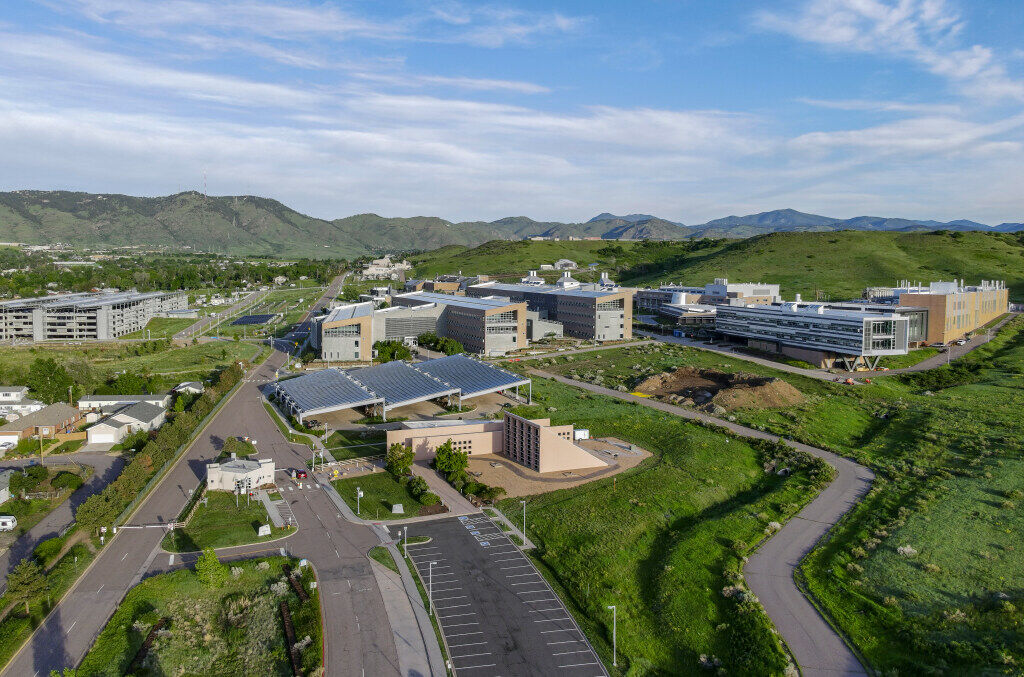
The National Renewable Energy Laboratory based in Golden has a new name to match the shift in U.S. energy policy under President Donald Trump. The Department of Energy announced it renamed the National Renewable Energy Laboratory to the “National Laboratory...
Historic Denver YMCA to be transformed into affordable housing
Deborah Grigsby
deborah.smith@denvergazette.com
Updated 1 day ago
U.S. Vice President Charles W. Fairbanks placed the original cornerstone for the Denver YMCA at the corner of 16th Avenue and Lincoln Street in late 1906 in an “elaborate and formal ceremony.” And as this year comes to an end,...

Heading into holidays, shoplifting on the rise in Colorado, study says
Mark Samuelson Special to The Denver Gazette
mark.samuelson@denvergazette.com
Updated 3 days ago
Shoplifting and other forms of retail crime are seeing a sharp rise as Colorado heads into the holidays, according to a study. After falling from a recent-record 24,975 thefts reported in 2015 to around 18,000 in 2021, Colorado Bureau of...

Denver Art Museum gala honors treasured benefactors Kent and Vicki Logan | NONPROFIT REGISTER
Joanne Davidson Special to Colorado Politics
joanne-davidson-special-to-colorado-politics@coloradopolitics.com
Updated 3 days ago
DENVER ART MUSEUM Denver News: Kent and Vicki Logan, who 25 years ago made the largest gift in the history of the Denver Art Museum’s modern and contemporary art department, were the honorees when the DAM hosted the 43rd edition of its...
A lost generation of news consumers? Survey shows how teenagers dislike the news media
David Bauder
david.bauder@associatedpress.com
Updated 3 days ago
NEW YORK (AP) — Cat Murphy, a college student, has wanted to be a journalist since she was 11. Many of her friends don’t understand why. When they engage with the news — if they do — they hear a...
PREV
PREVIOUS

Can you afford to live in Denver? | FISCAL ROCKIES
Editor’s Note: Once among the nation’s fastest-growing economies, Colorado today confronts mounting challenges that threaten its momentum. This series reveals how a state once defined by prosperity is navigating economic cliffs and ridges. We explore the impact of increased regulations, tariffs, shifting tax policies, the high cost of living and widening urban–rural divides have on businesses, […]

Cause of death revealed for self-proclaimed Planned Parenthood gunman
The self-proclaimed gunman in the Planned Parenthood shooting in Colorado Springs in November 2015 died from congestive heart failure and other related medical conditions, the Federal Bureau of Prisons said in a recent court filing. The Federal Bureau of Prisons database shows that Robert Dear Jr., 67, died Nov. 22, at the U.S. Medical Center […]