

Appeals court wipes away defendant’s $66,000 restitution obligation after trial judge did not follow law
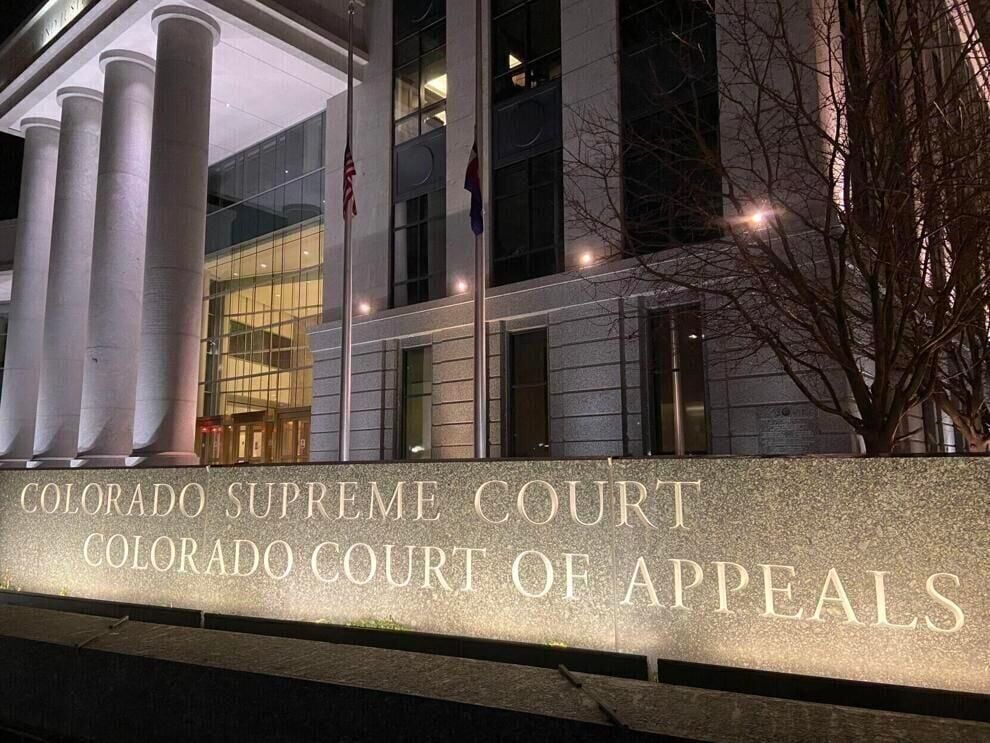
Colorado’s second-highest court voided a defendant’s obligation to pay more than $66,000 in crime victim restitution last week, finding a Mesa County judge neglected to follow the process laid out in state law.
In Colorado, as part of sentencing, judges must consider whether defendants owe financial restitution to their victims. If so, prosecutors generally need to provide the requested amount by the time of sentencing or within 91 days of sentencing. Judges must also impose the restitution amount typically within 91 days of sentencing.
In People v. Weeks, the Supreme Court ruled in November 2021 that judges’ historical process of awarding compensation to crime victims did not comply with Colorado law. The justices noted that a lackadaisical approach had taken hold in the trial courts, with courts neglecting clear deadlines and procedural requirements. Consequently, if trial judges fail to follow the law, they may lose authority to issue a restitution order.
Specifically, the Supreme Court disapproved of the then-commonplace scenario of prosecutors informing judges at sentencing that they would like to “reserve the issue” of restitution for 91 days, and the judge granting that request. Justice Carlos A. Samour Jr., a former trial judge, noted there are multiple options available at sentencing, ranging from an order to impose the exact amount of restitution to an order finding no restitution is required.
“Reserving the issue of restitution in its entirety until a later date isn’t one of them,” he wrote.
More than a year after the Weeks decision, Stephen Cramer pleaded guilty to vehicular assault after he crashed into another car and seriously injured the driver. His plea agreement indicated Cramer “agrees to pay the restitution,” which “will be left open.” District Court Judge Gretchen B. Larson confirmed at sentencing that Cramer’s restitution “would be left open for 91 days.”
She added that “if the (prosecution is) requesting restitution, they must file a written motion.”
Three months later, and within the 91-day deadline, then-District Court Judge Valerie Robison ordered Cramer to pay $66,589 in crime victim restitution.
Case: People v. Cramer
Decided: November 26, 2025
Jurisdiction: Mesa County
Ruling: 3-0
Judges: Terry Fox (author)
Jaclyn Casey Brown
Melissa C. Meirink
Cramer appealed, arguing that his restitution obligation was not authorized by law for multiple reasons. A three-judge Court of Appeals panel agreed with one of his arguments: Larson’s decision to leave restitution open at sentencing was not one of the options available to her.
Judge Terry Fox, in the panel’s Nov. 26 opinion, pointed to a Supreme Court decision from May that clarified its prior ruling in Weeks. The justices reiterated that Colorado law does not authorize judges “to simply defer the issue of restitution in its entirety.” If a judge fails to impose any of the listed options for a restitution order, the sentence is illegal and the restitution obligation must be voided.
In Cramer’s case, wrote Fox, that is what happened.
“Because the court improperly deferred restitution in its entirety, the restitution order must be vacated,” she concluded.
The case is People v. Cramer.

10th Circuit oral arguments to feature trial judges for first time in 12 years
Michael Karlik
michael.karlik@coloradopolitics.com
Updated 1 day ago
When the Denver-based federal appeals court convenes next week to hear oral arguments, six new faces will be staring down from the bench. No, the U.S. Court of Appeals for the 10th Circuit has not added six new members. It...
Federal judge says ICE cannot impose monitoring conditions beyond immigration judge’s order
Michael Karlik
michael.karlik@coloradopolitics.com
Updated 2 days ago
A federal judge told U.S. Immigration and Customs Enforcement on Thursday that it cannot impose additional restrictions or monitoring conditions beyond those ordered by an immigration judge when releasing a person on bond. In November, U.S. District Court Judge Gordon...
Colorado justices weigh constitutionality of student backpack search based on confidential tip
Michael Karlik
michael.karlik@coloradopolitics.com
Updated 11 hours ago
The Colorado Supreme Court considered on Wednesday whether a tip submitted through the state’s confidential school safety system provided a Douglas County administrator with reasonable suspicion to search a student’s backpack for drugs. A trial judge blocked evidence from the...
10th Circuit rebuffs Jeffco’s attempt to expand immunity footprint
Michael Karlik
michael.karlik@coloradopolitics.com
Updated 2 days ago
The Denver-based federal appeals court confirmed on Wednesday that it would not treat a judge’s decision to move a civil case forward as the automatic equivalent of denying immunity to governmental officials. The order from the U.S. Court of Appeals...

Colorado Supreme Court to hear cases on witness retaliation, slip-and-fall
Michael Karlik
michael.karlik@coloradopolitics.com
Updated 2 days ago
The Colorado Supreme Court announced on Monday that it will decide whether defendants can be convicted of retaliating against a victim or witness when that person has not yet testified and is not scheduled to testify. At least three of...
Colorado Supreme Court struggles with rubric for significant reductions in parenting time
Michael Karlik
michael.karlik@coloradopolitics.com
Updated 2 days ago
The Colorado Supreme Court attempted to identify on Wednesday the circumstances under which judges may reduce the number of days a parent spends with their child post-divorce without it rising to the level of a “restriction” that requires more rigorous...

Douglas County Sheriff, DA sue Polis administration over immigration policy
Marissa Ventrelli
marissa.ventrelli@coloradopolitics.com
Updated 2 days ago
Douglas County Sheriff Darren Weekly and District Attorney George Brauchler filed a lawsuit against Colorado Gov. Jared Polis, challenging the constitutionality of a state statute on immigration visas. Filed on Wednesday, the suit also named Colorado Attorney General Phil Weiser,...

Colorado justices wary of expanding rezoning by ballot initiative
Michael Karlik
michael.karlik@coloradopolitics.com
Updated 10 hours ago
The Colorado Supreme Court appeared wary on Wednesday of allowing rezonings of planned-unit developments to occur through a vote at the ballot box, rather than a municipality’s detailed review process that accounts for specific factors. In contrast to traditional, or...

In Tina Peters appeal, judges telegraph some degree of reversal | ANALYSIS
Michael Karlik
michael.karlik@coloradopolitics.com
Updated 3 days ago
Former Mesa County clerk Tina Peters seems poised to walk away from the state’s Court of Appeals with her criminal convictions largely intact, even as a three-judge appellate panel raised concerns about her sentence and one specific conviction. Peters, a...
Judge warns against expansive use of post-9/11 rule in immigration detentions
Michael Karlik
michael.karlik@coloradopolitics.com
Updated 4 days ago
A federal judge concluded on Monday that the government applied a 9/11-era regulation to a man in immigration detention in violation of his constitutional rights, in seemingly the first decision out of Colorado addressing the increased use of the “automatic...
PREV
PREVIOUS

Colorado governor pushes back against suspension of Direct File tax service
Gov. Jared Polis is asking the federal government to reverse its decision to suspend a free tool that streamlines tax filing. Last month, the U.S. Treasury Department announced it is officially suspending Direct File, a free online tax filing platform launched by the IRS last year. Taxpayers in 25 states could access the program during […]
Duckworth rips Trump FAA bonus as ‘insult,’ demands equal shutdown pay for all workers
Sen. Tammy Duckworth (D-IL) on Wednesday urged the Trump administration to expand bonuses awarded during the recent government shutdown to qualifying Federal Aviation Administration workers to more employees at the agency. Transportation Secretary Sean Duffy announced last month that air traffic controllers and technicians who had a perfect work attendance record during the shutdown would […]