

Shall future military leaders be mere ideological drones? | BIDLACK
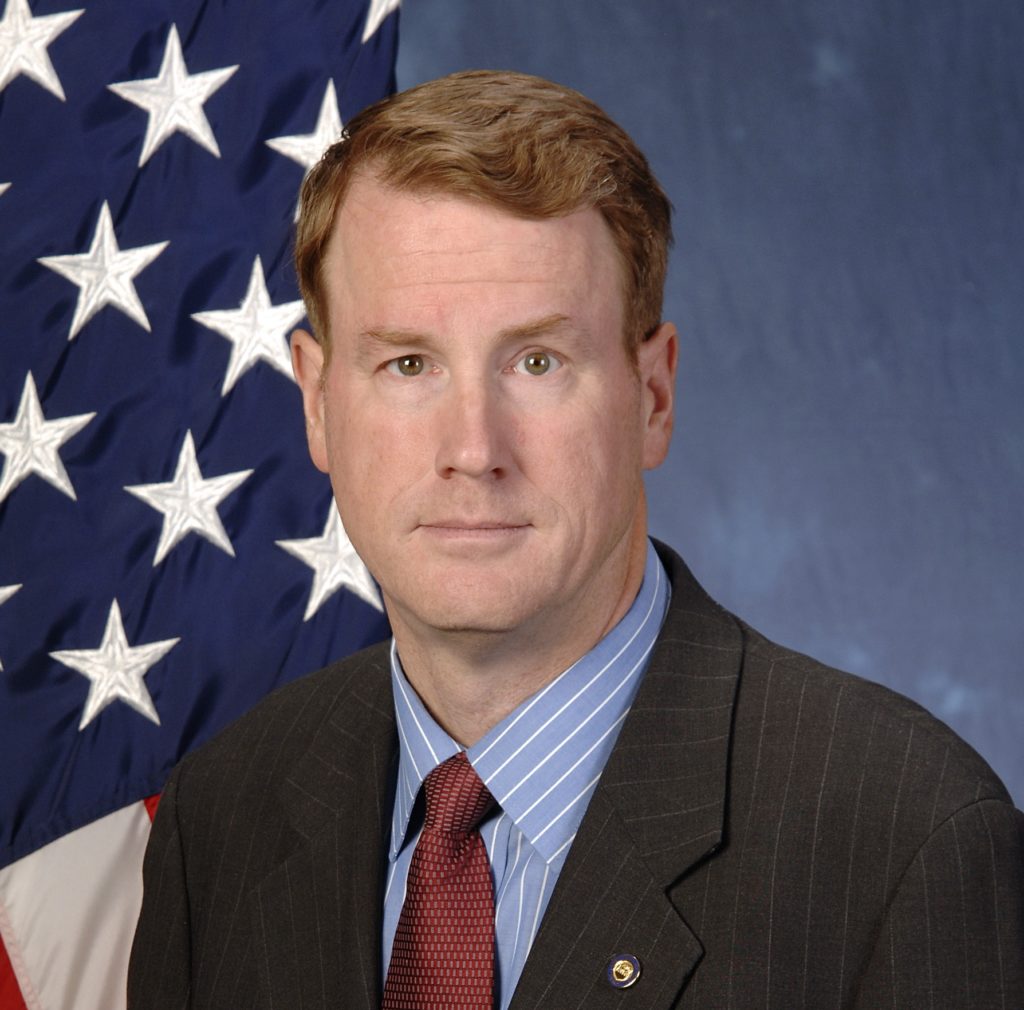
As my regular reader will recall (Hi, Jeff!) from my mentioning it here dozens of times, I spent the largest part of my 25-plus years as an active-duty Air Force officer teaching at the Air Force Academy in Colorado Springs. Though I taught a wide range of courses during the 15 years I spent there in uniform and the two years I spent teaching as a civilian professor after my military retirement, I primarily specialized in American government and the Constitution. The very best thing about the academy’s academic program is, or perhaps now was, the core curriculum required of every cadet.
Though cadets often resented being forced to take a wide variety of courses, the roughly 25 required core courses back in my day were exceptionally helpful in creating future officers who had the needed critical thinking skills for a modern military.
Thus, every chemistry major took English, every poli-sci major took calculus and every mechanical engineering major took history and philosophy. When looking back on their educations during their military careers, academy graduates, albeit sometimes begrudgingly, credit the core curriculum for a wider and more informed world view, a skill needed now more than ever.
During my time on the faculty, individual faculty members were, usually, funded to attend one academic conference per year, and a second if they were presenting a paper at a conference. The types of conferences attended varied by department, but in the poli-sci department, we were encouraged by our leadership to stretch our perspectives and to listen to views that might be opposed to “traditional” military thought, or even radical ones. The idea is simple: cadets will be better taught by instructors with a wide range of expertise and the ability to challenge the cadets’ points of view.
Like most young people, cadets arrived at the academy (as they do at most universities) pre-wired with a belief set largely installed by their parents. On the first day of class, I’d ask the cadets to raise their hands if they were of a significantly different political point of view than their parents, and I would usually get only one or two hands in the air. Therefore, part of my job was to test and challenge the belief sets installed by mommy and daddy. I would tell them I didn’t care if they were liberal or conservative or moderate, as long as their position was a function of critical thinking skills: logic, evidence and reason, and not just because mommy said so.
I told the cadets on day one I would argue the opposite point they make, and they would need to defend their thinking with, again, logic, evidence, and reason. Because the cadets leaned right (something for another column), I ended up arguing the “left” position most, but not all, of the time.
Now, I want to bring your attention to a recent Colorado Politics story about the Air Force Academy “tightening” rules on which conferences and public appearances faculty members could attend or make.
And let’s be clear here: the issue isn’t to tighten down on silly or non-sequitur attendance, as no faculty member from, say, the physics department is trying to get the academy to pay for his or her attendance at a music festival. The goal is to ensure what might be called a Trumpian purity of thought, wherein the only views supported are those that squawk the “Department of War” pure talking points handed down by, let’s admit it, the least qualified Secretary of Defense ever.

It is a good thing for academic faculty members (of any school) to be exposed to a wide variety of ways of thinking. Now, I’m not talking about astronautical engineering instructors attending, say, a conference on 15th-century music, but I do think it might be a good idea for those same instructors to attend a conference focused on lessons learned from observing the Soviet or Chinese space programs, yet those conferences could look “fishy” to the uninformed.
When I was a relatively young captain in poli-sci, I attended an annual meeting of the Federalist Society, an organization that was then about as far-right as you can get. I found the speakers fascinating, as they explained and importantly justified a quite conservative interpretation of constitutional rights. I didn’t agree, but I learned important lessons on how to think about such things from all sides.
Ironically, I suspect the current academy leadership would be OK with going to the Federalist Society meeting, but I doubt a conservative faculty member would be allowed to attend, say, a conference put on by “Pod Save America.” And that’s a shame.
Equally concerning is the apparent crackdown on to which groups academy faculty may speak. It again seems clear the goal is to limit any outreach to groups that are not Trumpian. That’s just dumb, frankly. Again, back in my days as a young captain, I spoke on the military and its mission to one of the annual meetings of the Windstar Foundation, an environmental education organization founded by my late friend, John Denver. Not surprisingly, the audience leaned pretty far left.
At that conference, I spoke on traditional military roles, but also noted the military, due to the unintended consequence of owning huge tracts of land during the Cold War, had become the guardians of lots of endangered species and other environmental treasures. I noted to the audience the Air Force (way back then in the 1990s) had more than 1,500 people assigned to environmental stewardship jobs. I do believe I opened a few eyes to the military and its responsibilities.
I’m not sure why the Trump people at DOD want to do so much damage to the service academies. I get, in a cynical way, why they went after colleges and universities that had the audacity to teach challenging and thoughtful topics. But why the service academies? The steps being taken could, unless reversed, lead to a loss of academic accreditation for the service academies, and that would be disastrous for a number of reasons, and that too must await a later column.
I admit I am rather glad to have retired from the Air Force back in 2006. I’d find teaching in today’s ideologically purified world very difficult. Indoctrination is not education, and a faculty with a wide range of experiences and points of view, often stimulated through conference attendance, is vital. We will see if the battle to destroy the academic independence of the service academies is a permanent disability, or a transitory inconvenience, to be repaired by a different administration. Shall service academy faculty be mere drones, repeating the approved dogma?
Oh, and just so you know, if it happened, calling in a second strike on a drug boat to kill survivors would have been an illegal order and a war crime. Just say’n.
Stay tuned.
Hal Bidlack is a retired professor of political science and a retired Air Force lieutenant colonel who taught more than 17 years at the U.S. Air Force Academy in Colorado Springs.


DeGette challenger Melat Kiros trounces 15-term Democratic incumbent in Denver delegate vote
Ernest Luning
ernest.luning@coloradopolitics.com
Updated 13 hours ago
The 28-year-old, first-time candidate challenging Democratic U.S. Rep. Diana DeGette in this year’s primary soundly defeated the 15-term incumbent in a delegate preference poll conducted Saturday at a county party assembly in Denver. Melat Kiros, the daughter of Ethiopian immigrants...
Army veterans Jessica Killin, Joe Reagan qualify for Democratic primary ballot in Colorado’s 5th CD
Ernest Luning
ernest.luning@coloradopolitics.com
Updated 10 hours ago
Democratic congressional candidates Jessica Killin and Joe Reagan secured spots Saturday in Colorado’s June primary to decide who will run against Republican U.S. Rep. Jeff Crank in a district that’s only ever sent GOP lawmakers to Congress. The two Democrats,...

Latest death brings down wolves’ survival rate to 44% in Colorado
Marianne Goodland
marianne.goodland@coloradopolitics.com
Updated 2 days ago
The female wolf of the mating pair for the King Mountain pack has died, bringing total fatalities to 14 out of the 25 animals reintroduced in Colorado. The wolf, identified as No. 2310, was among the 10 wolves brought to...
Roasts, get yer roasts, here: Capitol M | Week of March 14, 2026
Marianne Goodland
marianne.goodland@coloradopolitics.com
Updated 5 days ago
The lighter side of the Capitol, especially in the past week Apparently, the pending and eventual switch to daylight stupid time has put people in some pretty funny moods. And thank goodness! On March 4, the Senate approved the appointments...

Boebert challenger Eileen Laubacher joins lawsuit aimed at blocking her from Democratic assembly
Ernest Luning
ernest.luning@coloradopolitics.com
Updated 2 days ago
A Denver District Court judge on Thursday permitted Democratic congressional candidate Eileen Laubacher to join a lawsuit filed by one of her primary opponents seeking to prevent Laubacher from participating in the party’s assembly process in a bid to qualify...
House Ethics Committee to begin hearing on Weinberg complaint
Marianne Goodland
marianne.goodland@coloradopolitics.com
Updated 2 days ago
The House Ethics Committee on Tuesday will begin a hearing requested by Rep. Ron Weinberg, R-Loveland, tied to an ethics complaint filed against him by Rep. Brandi Bradley, R-Roxborough Park. The ethics committee had found probable cause on two issues...

Colorado plans to slash interim committee work amid budget woes
Marianne Goodland
marianne.goodland@coloradopolitics.com
Updated 6 hours ago
In a tight-budget year, the work of interim committees — those off-session groups that look at transportation, agriculture, water, healthcare, wildfires, pensions, and anything else lawmakers want to look at — is on the chopping block. And this year, no...
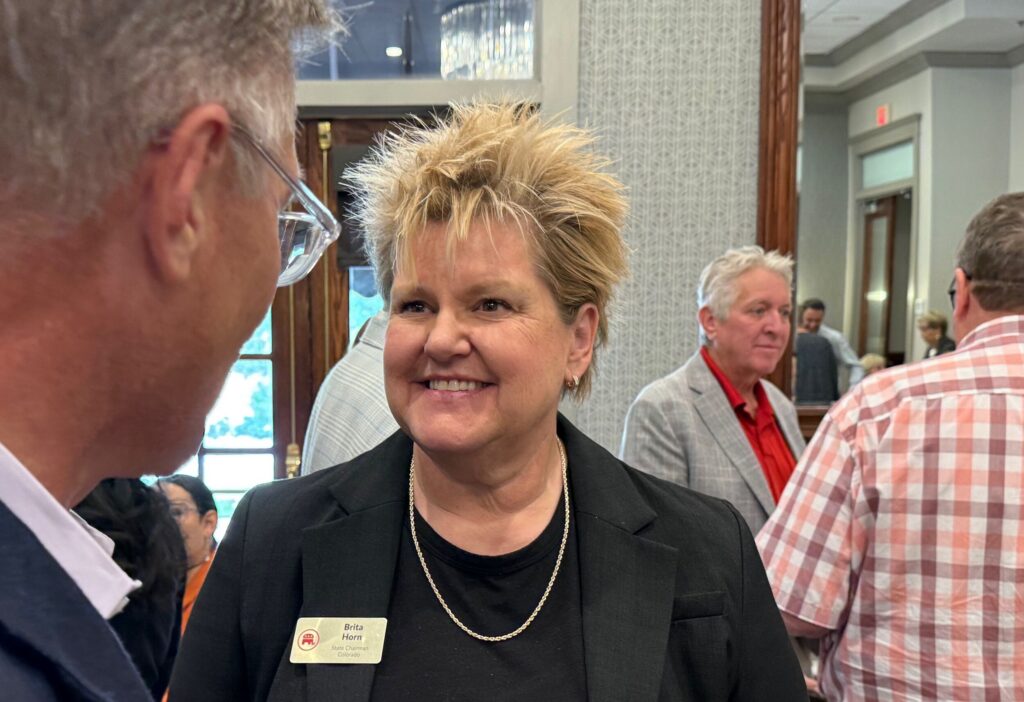
Colorado GOP chair Brita Horn says she’ll resign next month, points to ‘divide within our party’
Ernest Luning
ernest.luning@coloradopolitics.com
Updated 3 days ago
Colorado Republican Party Chair Brita Horn said Thursday that she will resign her position next month following the GOP’s state assembly, citing what she described as an “enduring divide” within the party “marked by vitriol and hostility.” Horn’s announcement came...
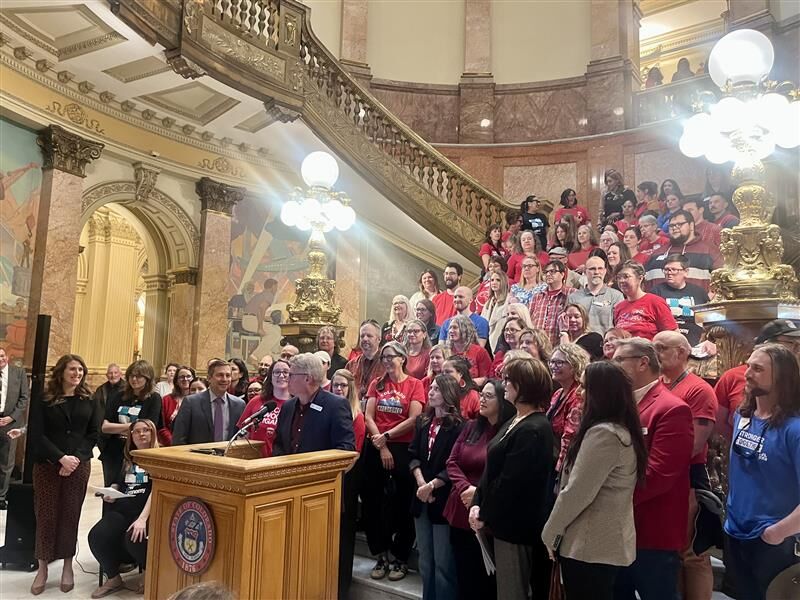
Senate committee moves forward with Colorado ballot measure to redirect TABOR refunds to schools
Marianne Goodland
marianne.goodland@coloradopolitics.com
Updated 2 days ago
A Senate panel on Thursday voted along party lines to move forward with a bill that would ask voters for permission to eliminate Taxpayer’s Bill of Rights refunds and redirect those dollars to K-12 public education. The 6-3 vote in...

Wolf depredation payouts in Colorado top $700,000 in 2025
Marianne Goodland
marianne.goodland@coloradopolitics.com
Updated 2 days ago
The Colorado Parks and Wildlife Commission approved more than $706,000 in wolf depredation claims for 2025 during its March meeting last week, an amount that exceeds the state’s annual wolf compensation fund by more than double. The commission rejected another...
PREV
PREVIOUS

Funeral for Sen. Faith Winter will be held Friday at the Colorado Capitol
Colorado Sen. Faith Winter will be remembered on Dec. 5 at 2 p.m. in a funeral service on the state Capitol’s west steps. A celebration of life reception will follow. Winter died on Wednesday, Nov. 26, in a three-vehicle accident on I-25 near East Dry Creek Road. The accident is still under investigation by the […]

Colorado title board to review graduated income tax proposal for 2026 election
The Secretary of State’s title board on Wednesday will review another attempt at a graduated income tax ballot measure for the 2026 general election. In October, the title board had rejected two proposals submitted by the Bell Policy Center because they did not fit the state’s single-subject rule. A third was withdrawn. The two ballot […]