

Compounding isn’t an emergency measure, it’s everyday medicine | OPINION


By Joe Bagan and Paul Granberry
Recent commentary has suggested pharmaceutical compounding is a “break in case of emergency” fix. That view couldn’t be further from the truth.
Compounding isn’t a workaround or a last resort. It’s a legal, vital part of modern medicine that keeps patients treated when commercial drugs can’t meet individual needs. Licensed pharmacists and FDA-inspected outsourcing facilities prepare customized medications every day — adjusting doses, combining therapies and producing discontinued drugs that are no longer made by large manufacturers.
These facilities aren’t loopholes in a system; they are the system for countless Coloradans whose care depends on precision and safety.
Both state and federal law tightly regulate compounding, and oversight from the Food and Drug Administration (FDA). The Colorado Board of Pharmacy ensures sterility, traceability and accountability.
The sudden handwringing over compounding isn’t about keeping patients safe — it’s about keeping competitors out. When big pharma blurs the line between legitimate compounding and bad actors, patients pay the price.
Lawmakers shouldn’t fall for that narrative. Colorado doesn’t need more bureaucracy, it needs clarity. Strengthen enforcement against unregistered importers and counterfeit sellers but protect the licensed professionals who already meet the highest national standards.
If lawmakers treat compounding as a crisis-only activity, they endanger real people: children needing custom dosages, hospice patients who can’t tolerate standard formulations, hospitals relying on ready-to-use medications for surgery and emergency care.
Compounding is not what happens when the system breaks, it’s what keeps the system working for everyone else.
Joe Bagan is chief executive of STAQ Pharma. Paul Granberry is president and chief executive of Leiters Health.


House Ethics Committee dismisses some claims, advances others against Rep. Ron Weinberg
Marianne Goodland
marianne.goodland@coloradopolitics.com
Updated 4 hours ago
The House Ethics Committee voted on Wednesday to accept three allegations filed against Rep. Ron Weinberg, R-Loveland, but combined two into one subject area. The two issues involve inappropriate comments made to female lawmakers in two separate incidents and the...
Bipartisan opposition sinks eviction bill in Colorado
Marissa Ventrelli
marissa.ventrelli@coloradopolitics.com
Updated 2 hours ago
Two Democrats sided with Republicans on a legislative panel to reject a proposal that would have made several changes to eviction filings and proceedings, including requiring judges to suppress court records. Sponsored by Rep. Junie Joseph, D-Boulder, House Bill 1047...
Colorado lawmakers react along partisan lines to Donald Trump’s State of the Union address
Ernest Luning
ernest.luning@coloradopolitics.com
Updated 3 hours ago
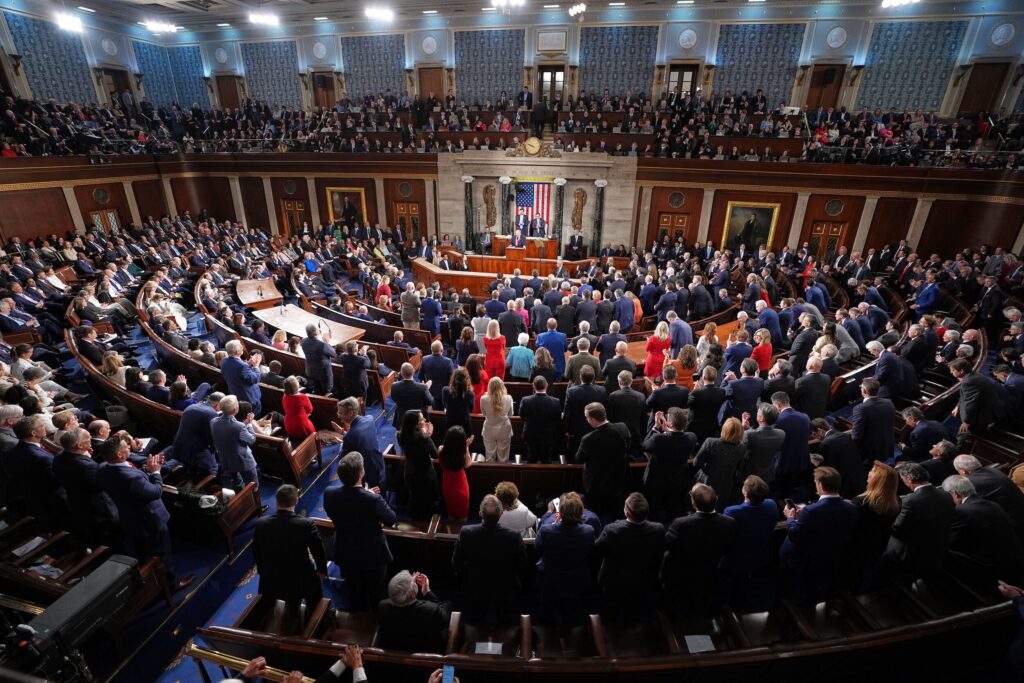
President Donald Trump could have been describing two different countries in Tuesday’s State of the Union address — one entering a “Golden Age” and the other enduring daily stress under a “lawless” regime — at least as far as the...

Colorado is turning its back on agriculture | PODIUM
Byron Pelton
byron-pelton@coloradopolitics.com
Updated 21 hours ago
Colorado’s farmers and ranchers already face significant challenges, including volatile commodity prices, rising input costs, labor shortages and unpredictable weather. They should not also have to contend with a state legislature that increasingly seeks to regulate how they protect crops...
Housing, building depend on natural gas in Colorado | OPINION
Colorado Politics
colorado-politics@coloradopolitics.com
Updated 22 hours ago
By Tyrone Adams and Stephen Shepard Across Colorado, the organizations and industries that develop, sell, and manage homes and commercial buildings want pragmatic energy policies and a strong future. However, recent moves to speed up electrification mandates under the state’s...
New venue, same nonsense with proposed fur ban | OPINION
Colorado Politics
colorado-politics@coloradopolitics.com
Updated 21 hours ago
By Dan Gates Animal rights activists have introduced a new petition to the Colorado Parks and Wildlife Commission to ban the sale of fur in Colorado. Regardless of when commissioners take a formal vote on the petition — either at...

Affordable housing requires real reform, not more regulation | OPINION
Colorado Politics
colorado-politics@coloradopolitics.com
Updated 9 hours ago
By Ryan Gonzalez Time and time again, we hear calls for “affordable housing” across party lines. Yet Colorado has failed to deliver meaningful reform that addresses the ever-rising cost of housing. Instead, the legislative majority has passed laws and policies...

Colorado House advances bill to ban pet stores from selling dogs and cats, as opponents warn of black market surge
Marissa Ventrelli
marissa.ventrelli@coloradopolitics.com
Updated 2 hours ago
Colorado lawmakers advanced legislation Monday that would prohibit pet stores from selling dogs and cats sourced from large-scale commercial breeders, a move sponsors said would shut down the “puppy mill pipeline” but which critics warned would push sales into unregulated...

Laura Clellan officially named director of Colorado Parks and Wildlife
Marianne Goodland
marianne.goodland@coloradopolitics.com
Updated 1 day ago
Laura Clellan, who has been acting director of Colorado Parks and Wildlife since Nov. 25, was named the agency’s permanent director Monday by the Colorado Parks and Wildlife Commission. She replaced Jeff Davis, who resigned in lieu of termination weeks...

Colorado group files 6 ballot measures to counter redistricting proposals backed by Democrats
Marianne Goodland
marianne.goodland@coloradopolitics.com
Updated 1 day ago
A half-dozen congressional redistricting ballot measures were filed Friday by a Colorado advocacy group in response to proposals filed last week from a group seeking to flip three Republican-held U.S. House seats in two years. “The gist of it is...
PREV
PREVIOUS

Colorado residents can save up to $14K under this energy rebate program
The Colorado Energy Office has launched the first set of energy rebates for homeowners on Thursday. Part of the federally funded Home Energy Rebate Program, low-income Coloradans can save up to $14,000 for making eligible energy-efficient upgrades to their homes, including improvements to appliances, insulation, and electric panels. Funding for the incentives comes from the […]

Colorado's consequential role in the Unites States-China tech race | OPINION
By Tony Henderson From farmers and entrepreneurs to ranchers and tech hubs, Colorado’s economy is one of the most diverse in the nation. It’s a place where hard work and ingenuity can thrive. But that doesn’t mean there aren’t challenges and threats. One of the biggest is China’s economic and political influence sneaking into our state, from farmland […]