

Appeals court says claims cannot be based on increased risk of future health problems

Colorado’s second-highest court concluded last week that state law does not recognize a plaintiff’s claim that a defendant’s actions increased their risk of illness in the future.
A three-judge Court of Appeals panel acknowledged that courts in some states have sided with plaintiffs’ arguments that the need to spend money on medically monitoring their exposure to toxins can form the basis of a civil claim.
“In recent years, however, a trend has emerged as courts throughout the country have repeatedly held that a toxic (exposure) claim cannot proceed in the absence of a present physical injury,” wrote Judge Matthew D. Grove in an Oct. 30 opinion.
In an unusual move, Grove also authored a separate concurring opinion asking the Colorado Supreme Court to clarify a procedural issue in a way that could limit plaintiffs’ ability to revise their claims to make them more viable.
Smith v. Terumo BCT, Inc.
Decided: October 30, 2025
Jurisdiction: Jefferson County
Ruling: 3-0
Judges: Matthew D. Grove (author and concurrence)
Craig R. Welling
Sueanna P. Johnson
In the underlying case, Edward Smith Jr., who lives in Jefferson County, sued Terumo BCT, Inc., which has a facility in Lakewood for sterilizing medical equipment. The process uses ethylene oxide gas (EtO), which the U.S. Environmental Protection Agency recognizes as a carcinogen. Smith alleged the Lakewood facility released large volumes of EtO over several decades.
Smith’s lawsuit, intended as a class action, included claims of negligence and nuisance. But rather than allege he was currently sick from Terumo’s EtO use, Smith argued the gas put class members at an “increased risk of illness,” making it “reasonably medically necessary to undergo and incur the cost of diagnostic testing for the early detection” of disease.
In February 2021, District Court Judge Lindsay VanGilder granted Terumo’s motion to dismiss. She indicated she could not find a single case in Colorado recognizing a plaintiff’s future medical monitoring costs as the basis for a claim. As such, Smith had not alleged an injury from Terumo’s conduct.
“Plaintiff concludes he has been exposed to EtO based on how the chemical disperses in the atmosphere but provides no tangible information to support the claim that he has been exposed or has experienced any physical manifestation of injury from the exposure,” VanGilder wrote.
Several weeks after the dismissal, Smith moved to amend his complaint. Terumo opposed the move. More than three years went by with no action from VanGilder, until Terumo filed a motion asking her to “clarify that the case is terminated.”
In a June 2024 order, VanGilder confirmed that, procedurally, her dismissal was a final judgment and Smith had no right under the procedural rules to automatically file an amended complaint. But even with Smith’s revised allegations, VanGilder noted he still had not alleged any current illness from EtO exposure.
Smith then turned to the Court of Appeals. Weighing in on behalf of Terumo was a collection of industry groups, including the Chamber of Commerce and trade associations for insurers, medical technology suppliers and paint manufacturers.
“These claims invite unlimited liability, diverting judicial and financial resources away from those who are genuinely injured and in need of compensation,” the organizations wrote.
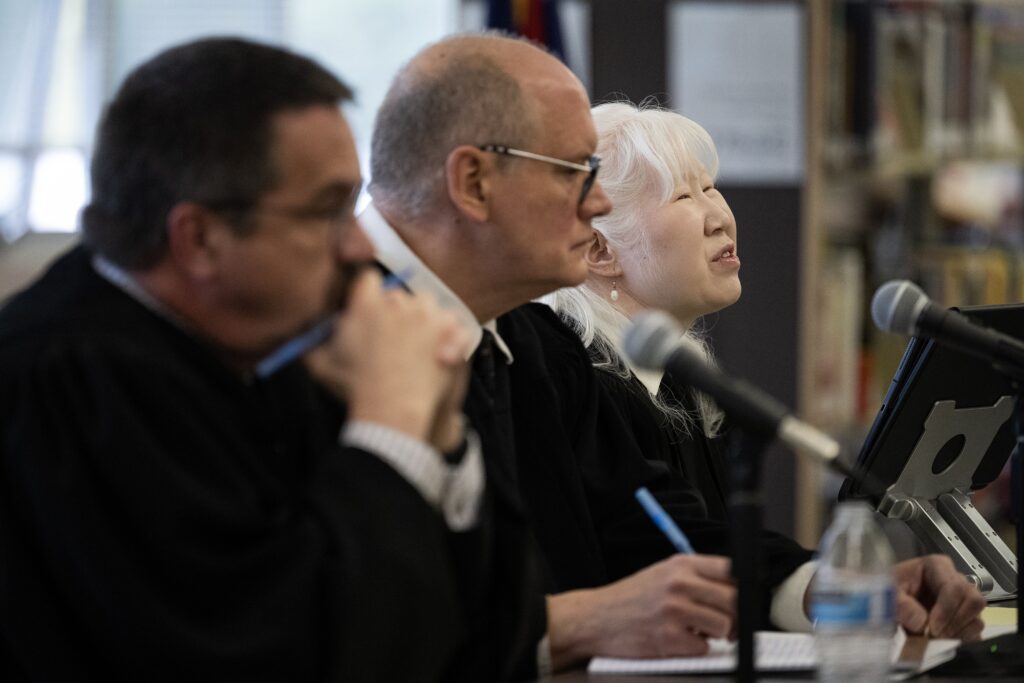
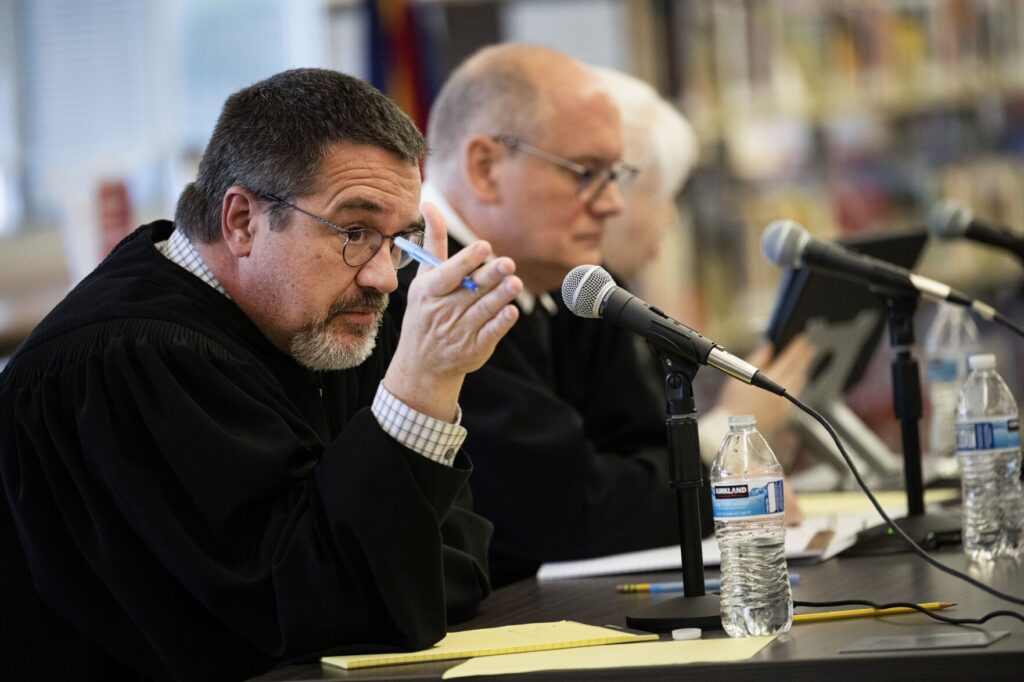
During oral arguments, the appellate panel was concerned about the consequences of allowing exposure-based claims.
“I worry that this proves too much. Anything I breathe in or anything I eat, I have a chemical reaction with and I absorb it,” said Grove. “So, if that’s true, then everything I do, every interaction I have with the environment, results in a change in my bodily structure.”
Ultimately, the panel upheld the dismissal based on how “Colorado law currently stands.”
“Because Smith’s allegation that EtO exposure increases his risk of cancer or other disease amounts to nothing more than a hypothetical claim of ‘future physical injury’,” wrote Grove, “the district court correctly concluded that he had not alleged an injury ‘where there was no manifestation of illness or disease.'”
Grove also wrote a separate solo opinion focusing on a different aspect of the case: Smith’s attempt to amend his complaint after VanGilder dismissed it.
He noted there is a similar rule in Colorado and federally governing that scenario. The Colorado Supreme Court, in a 2021 decision, held that plaintiffs do not automatically have a right to amend their allegations in those circumstances. But if the amendment addresses the identified shortcomings, the Supreme Court suggested trial judges should accept the amended complaint.
However, earlier this year, the U.S. Supreme Court interpreted the parallel federal rule to require “extraordinary circumstances” before a plaintiff can amend their complaint after a final judgment.
Grove wrote that if the federal standard applied to Smith’s case, the attempt to amend the complaint would have easily failed for lack of extraordinary circumstances. But, more broadly, Grove was concerned that Colorado has seemingly not adopted the more restrictive federal standard, to the confusion of trial judges.
“Because of the apparent inconsistency,” he wrote, “I urge the Colorado Supreme Court to clarify whether a plaintiff who seeks to amend his complaint after final judgment is entered must demonstrate ‘extraordinary circumstances’ before being permitted to do so.”
The case is Smith v. Terumo BCT, Inc. et al.


Out-of-state judges address ex-discipline director’s lawsuit, Colorado justices accept federal invitation | COURT CRAWL
Michael Karlik
michael.karlik@coloradopolitics.com
Updated 4 hours ago
Welcome to Court Crawl, Colorado Politics’ roundup of news from the third branch of government. A pair of out-of-state judges got down to business in a lawsuit brought by Colorado’s former judicial discipline director, plus the state Supreme Court has...
Federal judge upholds constitutionality of Colorado campaign contribution limits
Michael Karlik
michael.karlik@coloradopolitics.com
Updated 3 days ago
A federal judge upheld Colorado’s individual campaign contribution limits as constitutional on Thursday, finding that three Republican plaintiffs failed to prove the campaign finance framework violates their First Amendment rights. U.S. District Court Senior Judge John L. Kane recognized that...

Appeals court rejects theory that existing tax revenue undermines need for new fees
Michael Karlik
michael.karlik@coloradopolitics.com
Updated 3 days ago
Colorado’s second-highest court rejected a plaintiff’s claim on Thursday that the tax revenue generated by an existing activity should prevent local governments from imposing new fees aimed at regulating the activity. The question stemmed from Colorado’s unique constraints on taxation...
Appeals court finds no illegal sentence when defendants forfeit time-served credit
Michael Karlik
michael.karlik@coloradopolitics.com
Updated 2 days ago
Colorado’s second-highest court ruled on Thursday that criminal defendants may agree to relinquish the credits they earned while incarcerated pending trial, despite a state law guaranteeing that such time “shall be deducted” from a person’s sentence. Kerry Ellis Endsley pleaded...
Appeals court reinstates Garfield County arson charge
Michael Karlik
michael.karlik@coloradopolitics.com
Updated 23 hours ago
Colorado’s second-highest court reinstated a Garfield County defendant’s arson charge on Thursday, concluding a trial judge improperly credited a witness’s claim that she alone was responsible for starting the fire. A sheriff’s deputy responded to a brush fire near Parachute...
Federal judges rebuke ex-Colorado judicial discipline director for conduct in lawsuit
Michael Karlik
michael.karlik@coloradopolitics.com
Updated 4 days ago
A pair of federal judges expressed a desire on Thursday to break the logjam on a lawsuit by Colorado’s former judicial discipline director against the state Supreme Court and related entities, while simultaneously showing little tolerance for the plaintiff’s scorched-earth...

Democratic bill would let recipients of ‘conversion therapy’ sue Colorado providers with no statute of limitations
Marissa Ventrelli
marissa.ventrelli@coloradopolitics.com
Updated 4 days ago
Colorado lawmakers have advanced a proposal that would allow people who underwent conversion therapy to sue licensed providers for damages, moving the measure forward on a party-line vote in the House Judiciary Committee. House Bill 1322, proposed by Democratic Reps....
Federal judge refuses to authorize immediate appeal in World Cup trafficking lawsuit
Michael Karlik
michael.karlik@coloradopolitics.com
Updated 5 days ago
A federal judge declined to authorize an immediate appeal last week of a prior decision allowing companies operating out of Colorado to be sued for allegedly participating in a human trafficking venture involving Filipino laborers who constructed facilities for the...
Federal judge considers second round of sanctions against ex-Colorado judicial discipline director
Michael Karlik
michael.karlik@coloradopolitics.com
Updated 5 days ago
A federal judge ordered Colorado’s former judicial discipline director on Tuesday to explain why she should not sanction him a second time for filing documents for improper purposes, such as harassment or delay. U.S. District Court Senior Judge Kathryn H....

Colorado justices agree to review insurance question that has divided federal judges
Michael Karlik
michael.karlik@coloradopolitics.com
Updated 5 days ago
The Colorado Supreme Court granted a federal judge’s request on Friday to address an issue that has produced conflicting answers in policyholders’ lawsuits against insurance companies over unpaid benefits. “Parties (and judges) regularly spend undue time and money fighting in...
PREV
PREVIOUS

Settlement funds to be used to refrigerate food banks
The Attorney General’s Office directed $400,000 in settlement funds to the Department of Human Services to be used for food storage improvements at Colorado food banks. Attorney General Phil Weiser announced Thursday that the office will be taking the money from a recent settlement with Dollar General. The settlement occurred in October, with investigators finding […]

DIA to cut flights until government shutdown ends
Denver International Airport will reduce its flights by up to 10% while the government shutdown persists. The news comes after the Federal Aviation Administration announced Wednesday that it would be reducing air traffic across 40 “high-volume” markets, as air traffic controllers have become increasingly strained amid the shutdown. DIA is on that list. Reductions are […]