

Judge in Barry Morphew case rules to limit pre-trial publicity
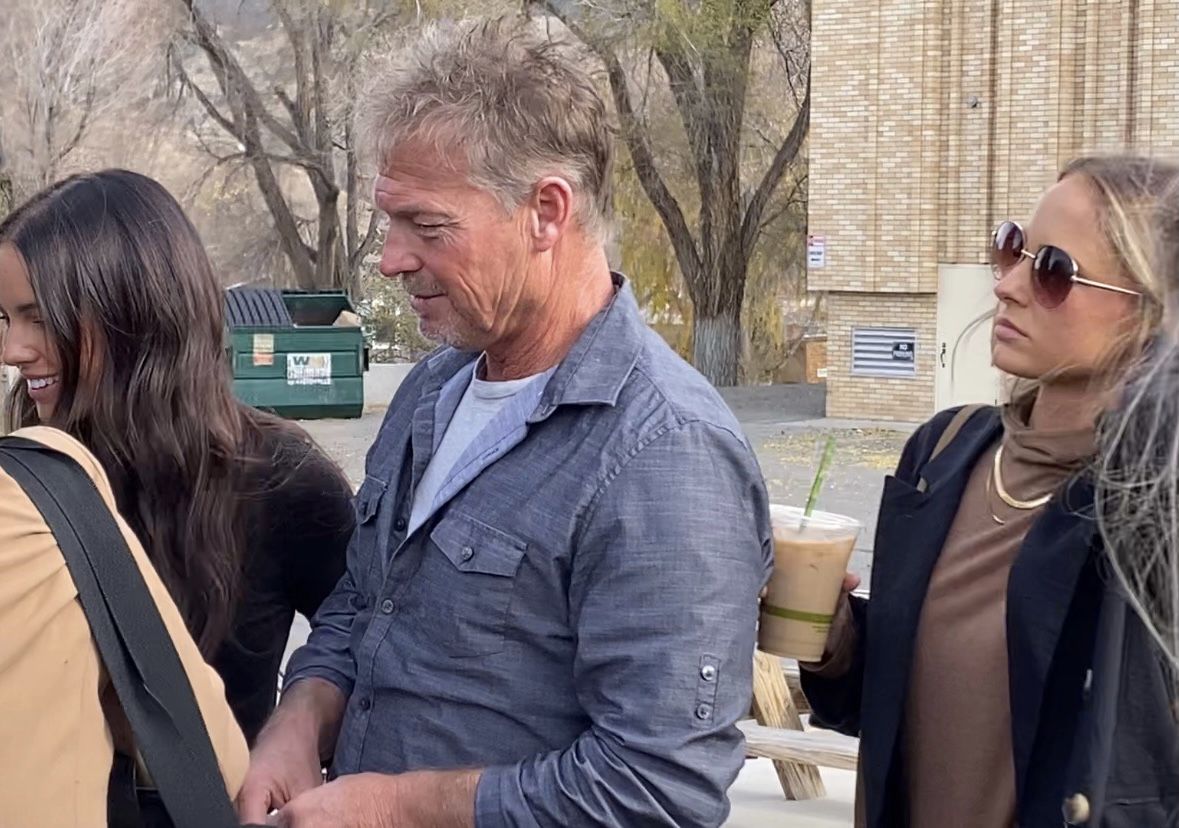
ALAMOSA — Barry Morphew, the Colorado man accused of killing his wife and leaving her body in a remote field in the San Luis Valley, will likely face trial next summer.
During a brief hearing in the case on Monday, his attorney, David Beller, told 12th Judicial District Chief Court Judge Amanda Hopkins that his team continues to work through “a voluminous discovery” of evidence prosecutors plan to present at the trial, and he hopes to be ready for Morphew to be arraigned and enter a plea by the middle of January.
Hopkins made several rulings to limit pre-trial publicity, including allowing only credentialed media to view live-streamed court hearings.
Suzanne Morphew, a mother of two, went missing after leaving their Salida-area home for a bike ride in 2020. Though Barry Morphew was initially charged in the crime, no body was found and charges against her husband were dropped.
But in 2023, human remains were found in rural Saguache County in the San Luis Valley that were identified as Morphew’s. According to a grand jury indictment, the bones tested positive for a wildlife tranquilizer for which Morphew had access, and that he is the only person in Colorado with access to it. Prosecutors allege he and Suzanne Morphew were in a combative relationship and that his phone was turned off for a long period the day she vanished.
Morphew walked into the courtroom Monday clad in jeans, a sport coat and an ankle monitor, after his supporters posted $300,000 to guarantee the $3 million in bail set by the judge when he was extradited from Arizona earlier this year. One of his two daughters — who has publicly maintained his innocence — sat behind him.
The case has garnered national media attention since Suzanne Morphew went missing, the sort of story tabloids and evening television crime shows love: A young woman missing in the heartland, the husband at the center of suspicion.
Dozens of journalists are expected to follow the case when it goes to trial.
Anticipating the impact of such media focus at a rural courthouse, the judge has taken strict measures to limit media intrusions, like banning interviews, photos or filming on courthouse property.
In a recent order, Hopkins also restricted access to the trial’s live stream to credentialed media, after earlier hearings were streamed on YouTube by true crime enthusiasts, with thousands of views and comments.
Prosecutors said they still anticipate going to trial next summer, and the judge made it clear the Jan. 12 hearing will be the last time she approves a continuance.

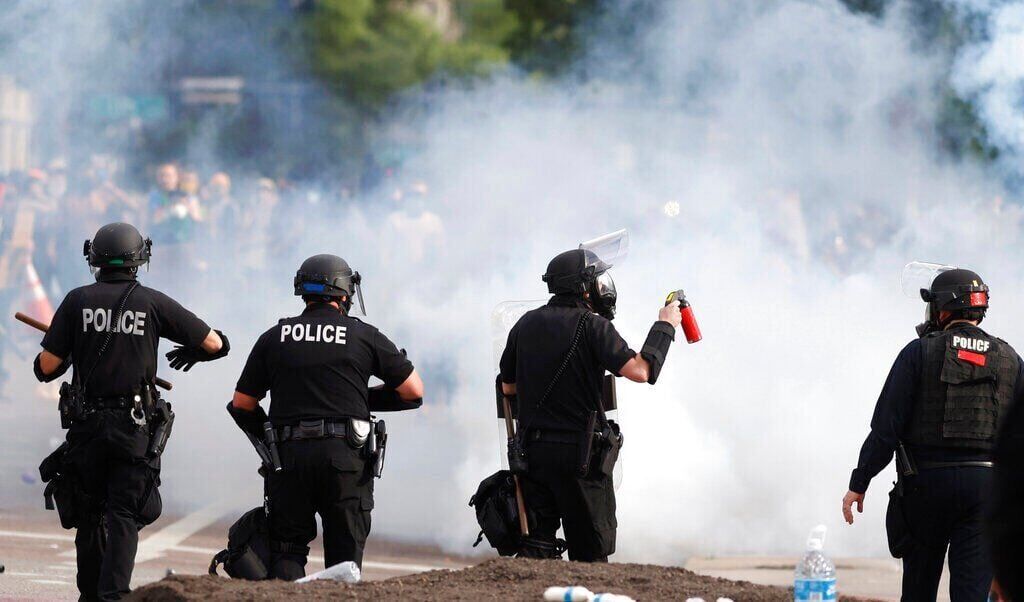
10th Circuit partially revives lawsuit over 2020 Denver protest injuries
Michael Karlik
michael.karlik@coloradopolitics.com
Updated 2 days ago
The Colorado-based federal appeals court revived a man’s claims against Denver on Friday after concluding a trial judge resolved the case in the city’s favor without analyzing two of the three instances of alleged excessive force and other constitutional violations....
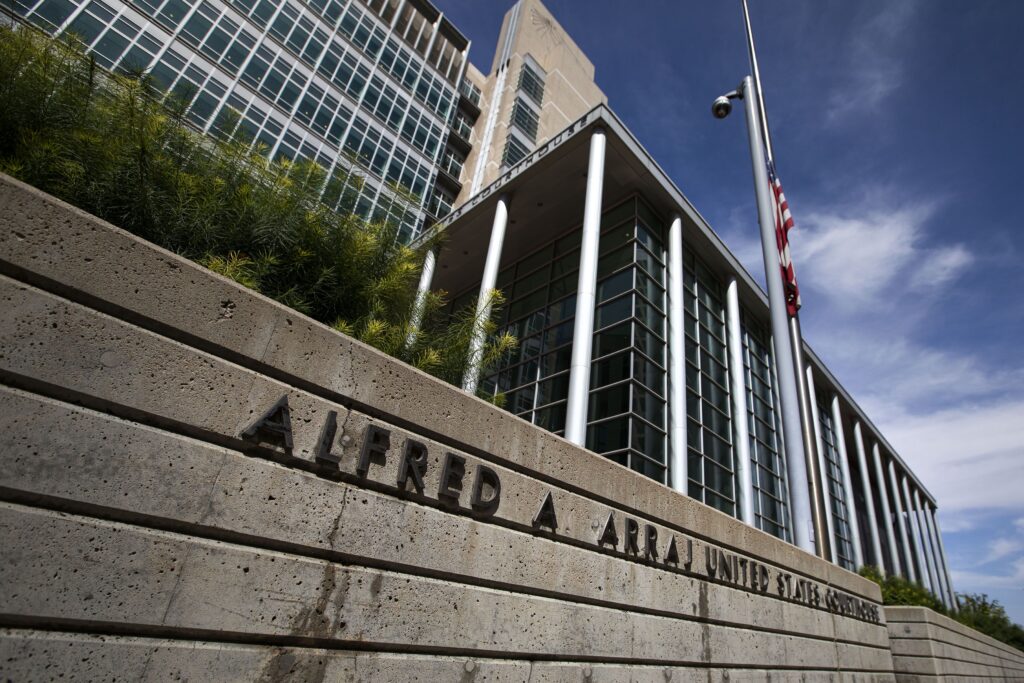
Federal judges find Colorado immigration judge violated several orders
Michael Karlik
michael.karlik@coloradopolitics.com
Updated 17 hours ago
Multiple federal judges in Colorado have freed people from immigration custody after determining that one immigration judge violated their directives for properly conducting bond hearings. For nearly a year, Colorado’s U.S. District Court has faced a flood of habeas corpus petitions...
Misconduct complaints from ex-Colorado judicial discipline director dismissed against federal judges
Michael Karlik
michael.karlik@coloradopolitics.com
Updated 3 days ago
The administrative body for the Denver-based federal appeals court upheld a finding last week that misconduct complaints against Colorado’s chief federal trial judge and the chief appeals judge warranted dismissal and appeared to be a “litigation tactic” by the complaining...

First-ever Red Rocks naturalization ceremony draws most diverse group of new citizens
Michael Karlik
michael.karlik@coloradopolitics.com
Updated 14 hours ago
Colorado’s federal trial court held its first-ever naturalization ceremony for nearly 300 new citizens on Thursday at Red Rocks Park and Amphitheatre. “We’re doing it to commemorate the 250th anniversary of the Declaration of Independence and the United States. Red...
Jeffco taxpayers could be on the hook for a possible child sex assault settlement
Matt Kyle
matt.kyle@denvergazette.com
Updated 2 days ago
Taxpayers may end up on the hook for a child sexual assault settlement, possibly worth up to $15 million, after Jeffco Public Schools failed to notify its insurance company in a timely manner about the case. The incident stems from...
10th Circuit finds no fair housing violation by Littleton landlord for worker’s alleged rape of tenant
Michael Karlik
michael.karlik@coloradopolitics.com
Updated 17 hours ago
The Denver-based federal appeals court concluded on Monday that Littleton’s housing authority could not be held liable for a maintenance worker’s alleged rape of a tenant, as the worker’s employment did not provide any special access to the victim. A...

Jeffco Public Schools sues Trump administration to protect funding after alleged transgender policies violation
Matt Kyle
matt.kyle@denvergazette.com
Updated 3 days ago
In the wake of several threats by the Trump administration to revoke federal funding, Jeffco Public Schools filed a lawsuit against the Department of Education seeking to protect that badly needed money. Jeffco has been under investigation by the DOE’s...
Denver detox center did not violate man’s rights with 10-hour hold, 10th Circuit says
Michael Karlik
michael.karlik@coloradopolitics.com
Updated 5 days ago
The Colorado-based federal appeals court concluded on Tuesday that Denver’s detoxification facility did not violate a man’s rights by holding him against his will for 10 hours until his blood alcohol content was projected to reach zero. Unusually, Brian Garrett’s...
Federal judge clarifies ex-GOP treasurer candidate’s burden to prove defamation claims
Michael Karlik
michael.karlik@coloradopolitics.com
Updated 5 days ago
A federal judge clarified last week that businessman and former Republican statewide candidate Brian Watson will need to surmount a higher hurdle in proving his claim that a party guest’s alleged description of him as a “criminal” amounted to defamation....
Colorado board permits state to appeal injunction against arthritis drug price cap
Marissa Ventrelli
marissa.ventrelli@coloradopolitics.com
Updated 5 days ago
A Colorado board voted Friday to allow the Attorney General’s Office to fight an injunction against a price cap on a drug that treats arthritis. A U.S. district court judge had granted the company Amgen a preliminary injunction, temporarily blocking...
PREV
PREVIOUS

Appeals judge asks Colorado Supreme Court to clarify process for returning seized property to defendants
A member of Colorado’s second-highest court asked the state Supreme Court on Thursday to address the consequences of its 2022 decision outlining how convicted defendants are supposed to seek the return of property seized by law enforcement. In Woo v. El Paso County Sheriff’s Office, the justices concluded that defendants cannot bring a separate civil […]
Appeals court reverses murder conviction after Denver judge violated public trial right
Colorado’s second-highest court reversed a defendant’s murder conviction on Thursday because a Denver judge violated his constitutional right to a public trial. Due to an unusually large jury pool at Edward R. Sandoval’s 2022 trial, Chief Judge Christopher J. Baumann did not allow observers to be present in his courtroom during jury selection. Although the […]