

Appeals judge asks Colorado Supreme Court to clarify process for returning seized property to defendants
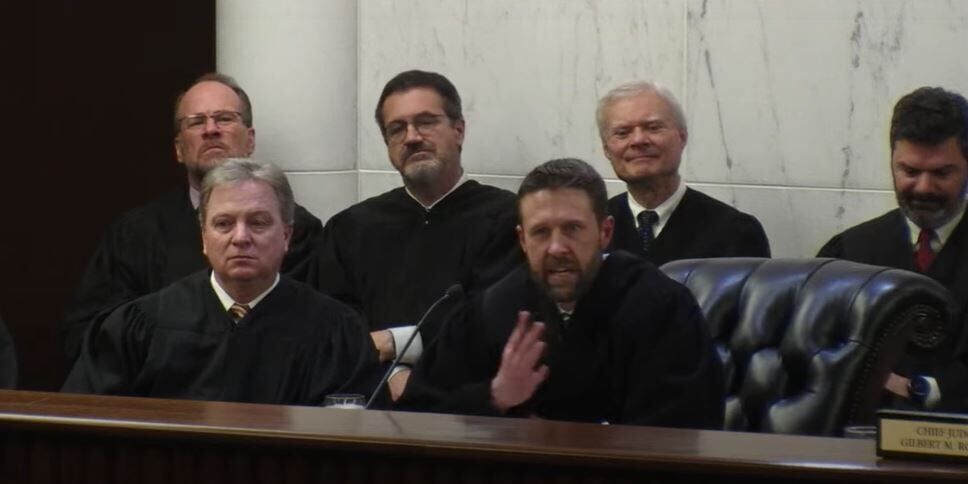
A member of Colorado’s second-highest court asked the state Supreme Court on Thursday to address the consequences of its 2022 decision outlining how convicted defendants are supposed to seek the return of property seized by law enforcement.
In Woo v. El Paso County Sheriff’s Office, the justices concluded that defendants cannot bring a separate civil case to get their possessions back. Instead, they should use their existing criminal case to make the request. Defendants can do so only when the trial court has jurisdiction over their case, meaning before the time to appeal has expired, after the appeal is decided, or during postconviction proceedings.
But what if none of those things is happening?
“So a defendant who just wants their property returned and has no legitimate basis to challenge their conviction or sentence must nevertheless file such a motion (no matter how meritless) simply to give the motion for return of property something to attach to,” wrote Judge Karl L. Schock in an Oct. 30 concurring opinion. “I see no reason why a defendant’s right to seek the return of their property should hinge on whether the defendant can conjure up a (potentially meritless) direct appeal or postconviction motion.”
Case: People v. Thomson
Decided: October 30, 2025
Jurisdiction: Denver
Ruling: 3-0
Judges: Elizabeth L. Harris (author)
Sueanna P. Johnson
Karl L. Schock (concurrence)
In the underlying case, Jason C. Thomson pleaded guilty to identity theft and was sentenced in January 2022. Although his lawyer mentioned at the time that police had seized Thomson’s personal property and Thomson intended to ask for its return, the defense did not file a motion for more than a year.
In August 2023, then-Denver District Court Judge Darryl F. Shockley ordered the government to return Thomson’s personal cell phone and a safe. But he concluded that Thomson’s remaining electronic devices were connected to criminal activity and should remain in police hands.
Thomson appealed Shockley’s decision, but the prosecution countered that under Woo, Shockley could not have considered the request in the first place.
“Defendant filed his motion for return of property more than one year after the deadline to file a direct appeal expired,” wrote Assistant Attorney General Josua J. Luna, noting there is a 49-day window for appealing a trial judge’s decision.
A three-judge Court of Appeals panel agreed.
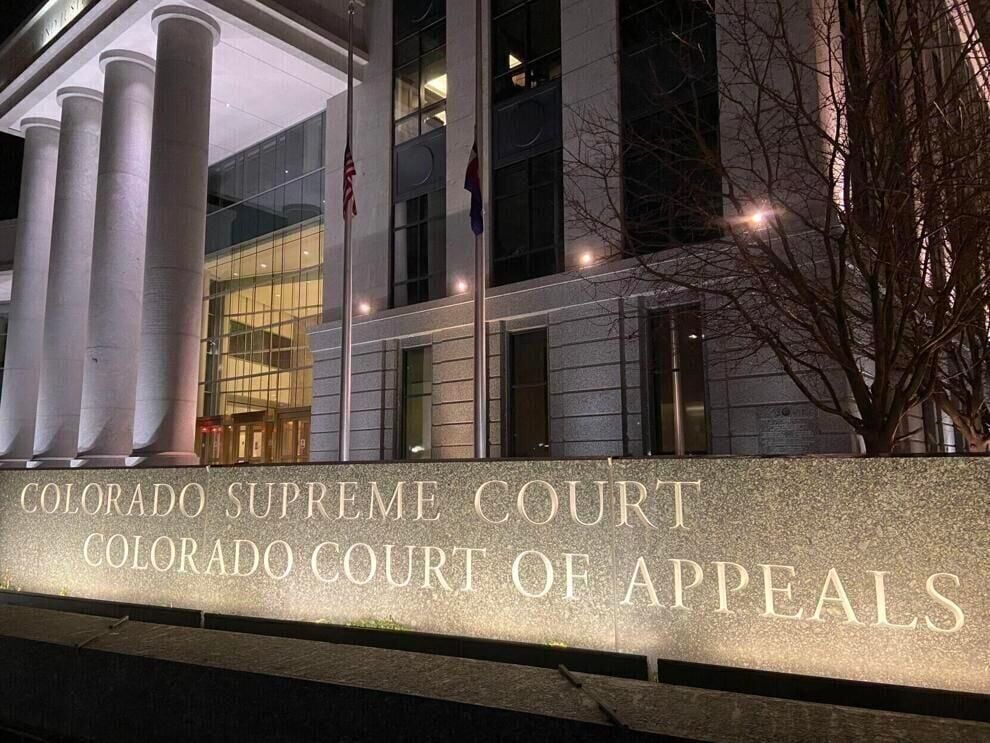
“Thomson did not file a direct appeal or a postconviction motion. Therefore, the trial court lost subject matter jurisdiction forty-nine days after the sentencing hearing,” wrote Judge Elizabeth L. Harris for herself and Judge Sueanna P. Johnson. “Thomson filed the motion seeking return of property more than a year later. Filing the motion did not revive the court’s jurisdiction.”
Schock, writing separately, also believed the Woo decision dictated that outcome. However, he argued the Supreme Court’s stated procedure “leads to some strange results, and I question whether it is what the supreme court intended.”
Schock elaborated that a defendant who files an appeal and loses can seek the return of his property over a longer period than a defendant who does not appeal in the first place.
Moreover, during the 49-day window to appeal, “the defendant’s focus will inevitably be directed toward the decision of whether to file an appeal,” rather than on his seized property, Schock wrote.
The procedure in Woo could also incentivize a defendant to file a non-viable motion for postconviction relief, on grounds such as ineffective assistance of counsel or new evidence, just to get a trial judge to address the unrelated request for the return of property.
Schock believed the Supreme Court probably intended for judges to entertain return-of-property requests under two scenarios. Narrowly, they can act after a defendant is successful on appeal and the case goes back to the trial court. Or, more expansively, trial courts can consider such motions so long as the case is not actively being appealed.
“I would respectfully urge the supreme court to clarify this rule,” he wrote.
The case is People v. Thomson.


Colorado leaders weigh next steps after Supreme Court rejects state ban on ‘conversion therapy’
Marissa Ventrelli
marissa.ventrelli@coloradopolitics.com
Updated 7 hours ago
Colorado leaders said they are weighing next steps after the U.S. Supreme Court on Tuesday rejected the state’s ban on “conversion therapy” for children, as critics and supporters cheered or lambasted the ruling. The court’s near-unanimous decision called the Colorado...
Federal judge dismisses U.S. government lawsuit against Colorado, Denver’s ‘sanctuary’ laws
Michael Karlik
michael.karlik@coloradopolitics.com
Updated 6 hours ago
A federal judge dismissed the U.S. government’s lawsuit against Colorado and Denver on Tuesday, which alleged that various local policies impermissibly infringed on federal immigration enforcement. U.S. District Court Judge Gordon P. Gallagher followed the lead of judges in Illinois...
Federal judge finds DOJ adequately searched for, disclosed records related to Bidens
Michael Karlik
michael.karlik@coloradopolitics.com
Updated 11 hours ago
A federal judge determined on Friday that the U.S. Department of Justice adequately searched for and disclosed records to a Colorado attorney in response to his request for documents related to former President Joe Biden’s son and brother. In November...
10th Circuit warns lawyers after finding fake case in filing
Michael Karlik
michael.karlik@coloradopolitics.com
Updated 4 hours ago
The Denver-based federal appeals court warned attorneys to be more careful last month after discovering one lawyer cited a fake case in his arguments. In recent months, federal and state judges in Colorado have begun cautioning lawyers explicitly about the...

10th Circuit rules cognitively impaired man’s risk of lobotomy, mistreatment in Mexico not ‘torture’
Michael Karlik
michael.karlik@coloradopolitics.com
Updated 1 day ago
The Denver-based federal appeals court concluded last month that a man’s risk of mistreatment or forced lobotomy in his native Mexico did not amount to “torture” that should shield him from deportation. A three-judge panel of the U.S. Court of...
Colorado justices side with news organizations for disclosure of high-level child abuse data
Michael Karlik
michael.karlik@coloradopolitics.com
Updated 7 hours ago
The Colorado Supreme Court ruled on Monday that the state must disclose the number of child abuse reports at individual group living facilities in response to an open records request, as the addresses are already in the public domain. The...
Divided Colorado Supreme Court finds Denver detective did not violate defendant’s Miranda rights
Michael Karlik
michael.karlik@coloradopolitics.com
Updated 1 day ago
The Colorado Supreme Court determined on Monday that a Denver detective did not improperly resume questioning of a defendant in custody after he invoked his right to counsel. By 4-3, the justices reversed a trial judge’s order that found a...

Out-of-state judges address ex-discipline director’s lawsuit, Colorado justices accept federal invitation | COURT CRAWL
Michael Karlik
michael.karlik@coloradopolitics.com
Updated 2 days ago
Welcome to Court Crawl, Colorado Politics’ roundup of news from the third branch of government. A pair of out-of-state judges got down to business in a lawsuit brought by Colorado’s former judicial discipline director, plus the state Supreme Court has...
Federal judge upholds constitutionality of Colorado campaign contribution limits
Michael Karlik
michael.karlik@coloradopolitics.com
Updated 4 days ago
A federal judge upheld Colorado’s individual campaign contribution limits as constitutional on Thursday, finding that three Republican plaintiffs failed to prove the campaign finance framework violates their First Amendment rights. U.S. District Court Senior Judge John L. Kane recognized that...

Appeals court rejects theory that existing tax revenue undermines need for new fees
Michael Karlik
michael.karlik@coloradopolitics.com
Updated 4 days ago
Colorado’s second-highest court rejected a plaintiff’s claim on Thursday that the tax revenue generated by an existing activity should prevent local governments from imposing new fees aimed at regulating the activity. The question stemmed from Colorado’s unique constraints on taxation...
PREV
PREVIOUS

Judges speak about public trust and criticism, ICE's warrantless arrests under scrutiny | COURT CRAWL
Welcome to Court Crawl, Colorado Politics’ roundup of news from the third branch of government. A handful of federal and state judges spoke last week about trust and communications challenges with the public, plus a federal judge seemed to believe immigration authorities are making warrantless arrests in violation of the law. ‘Put our heads down’ […]

Colorado joins lawsuit against U.S. Dept. of Education over student loan forgiveness
Colorado has joined 21 states in a lawsuit against the U.S. Department of Education over placing restrictions on a student loan forgiveness program for public service employees. It’s the latest lawsuit filed by Attorney General Phil Weiser, who is running for governor, against the Trump administration. He has so far pursued more than 40 lawsuits […]