

Colorado responds to Nebraska’s ‘unserious’ Supreme Court lawsuit over water diversion
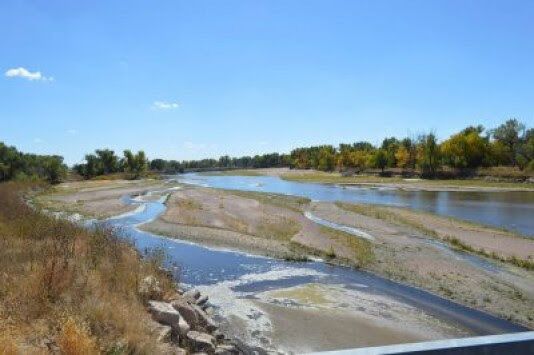
Colorado has filed its response to what it called an “unserious” lawsuit filed by the state of Nebraska over its efforts to build a canal that would acquire land from Colorado property owners in northeastern Colorado.
The lawsuit is tied to a 1923 compact between Colorado and Nebraska over the South Platte River.
In its filing to the U.S. Supreme Court, Nebraska claimed that Colorado is in breach of its compact obligations by diverting water that should go to Nebraska. Attorney General Phil Weiser and Gov. Jared Polis disputed that claim, insisting Colorado has always honored compact obligations.
“We won’t sit by while Nebraska chases a meritless and premature lawsuit that circumvents Colorado’s rights under the agreement,” Polis said in a new conference on Wednesday.
The Perkins canal has been disputed by the two states going back well before the 1923 compact. The canal’s name comes from the Nebraska county where it was started.
As proposed by Nebraska in a 2022 report, the canal would be built in three sections, totaling 109 miles, stretching from one mile west of Ovid to Lake Maloney, six miles south of North Platte, Nebraska. Water would reach six reservoirs, according to the report.
In the 1890s, according to a brief to the Supreme Court filed by Nebraska Attorney General Mitchell Hilgers, Nebraska water users developed plans for a canal that would divert water from the South Platte into Nebraska during the irrigation season that runs between April 1 and Oct. 15.
The canal was never built back then due to lawsuits between the two states.
That, along with other lawsuits, eventually led to the 1923 compact, which said Nebraska would have the right to build the canal to divert water during the non-irrigation season from Oct. 16 to March 30. The canal would start in Nebraska and cross the state line into Colorado near Ovid in Sedgwick County.
According to Nebraska, the problem surfaced in the early 2000s, when drought began to reduce the water supply, leading to more lawsuits.
In 2022, over a period of 100 days, Nebraska did not receive the amount of water it was promised by the compact, which was a flow of about 120 CFS, or about 7,200 cubic feet per second.
The lack of water led to “substantial crop failures” in Nebraska’s Western Irrigation District, and the district had to shut down operations due to the lack of water supply, Hilgers’ brief said.
The following year, Nebraska began to seek discussions with Colorado about compact compliance, a request that Hilgers said Colorado ignored until November 2024. His brief said Colorado dismissed the concerns as “misguided.”
By then, the Nebraska legislature, at the behest of then-Gov. Pete Ricketts, had already passed the “Perkins County Canal Project Act,” with a price tag of $628 million and a completion date of 2032.
Property owners land at stake
The canal site would require six landowners in Colorado’s Sedgwick County to give up their land for the canal through eminent domain. Weiser has said it would be unprecedented for one state to seize land in another.
On Jan. 17, Nebraska sent letters to the six landowners, announcing the state would launch eminent domain proceedings if they refused to agree to sell their property to Nebraska. The letter set a deadline of April 17 for a decision.
It didn’t take that long for the landowners to say “no.”
On March 7, attorney Donald Ostrander from the Englewood-based law firm of Hamre, Rodriguez, Ostrander & Prescott, PC., representing the landowners, turned down the request.
The five-page letter sent to Nebraska stated that the diversion would dry up 30,000 to 60,000 acres of land relying on groundwater for all or part of their irrigation supply, resulting in property damage of up to $270,000 in Sedgwick, Logan, and Washington counties.
“These figures do not account for the potential impact on over 40 municipal wells supplying water to residents, businesses, parks, schools, hospitals and fire stations in Northern Colorado,” Ostrander wrote.
April 17 came and went with no apparent action from Nebraska. On July 16, Nebraska filed a lawsuit against Colorado with the U.S. Supreme Court.
Noting that Supreme Court action could affect condemnation proceedings, Nebraska withdrew its offer to the landowners and its threat of eminent domain on July 28.
An ‘unserious boondoggle’
Colorado’s response to the Nebraska filing doesn’t dispute the neighboring state’s right to build the canal. Still, the issue appears to be that Nebraska hasn’t followed the process of working with Colorado, according to officials here.
“There’s no evidence we have stood in the way of progress,” Polis said.
But, he added, Nebraska has yet to take any steps that Colorado could dispute.
“This is a runaround of the normal process” to get the courts to take the extraordinary step of inserting itself into this issue, Polis said.
“The landowners in northeastern Colorado are depending on us to fight for them,” Weiser said. This is an “unserious boondoggle that perplexes us.”
Weiser said the lawsuit brings up two issues for the nation’s highest court: Claims that Colorado is interfering with Nebraska’s efforts to build the canal and assertions that Colorado violates the 1923 compact.
That’s an assertion Nebraska made only after it started talking about the canal, Weiser said.
The other issue is whether different ways and steps could be taken to address the matter, which would, in effect, bar the Supreme Court from taking the case.
The answer to that, Weiser maintained, is yes, adding that Nebraska has not followed the process it could have taken, which would include filing for permits or launching condemnation proceedings.
“It’s important to let those processes move forward,” although it’s uncertain whether any of that will happen, Weiser said.
He noted the court will not take up issues that are not ripe for adjudication. “These claims are premature, speculative, and not ripe” for a court decision, he said.
“We don’t see a dispute,” Weiser said. “These hypothetical concerns don’t warrant Supreme Court review.”
State engineer Jason Ullmann of the Division of Water Resources said Colorado has been committed to working with the water users and Nebraska before it grew into a legal dispute, and that they having those discussions when Nebraska filed the lawsuit.
“At no time did Colorado deny Nebraska the right to build the canal,” Ullmann said.
The timeline for resolving the lawsuit could be a decade or more, Weiser estimated.
Should the court decide to take the case, which Weiser believes is unlikely, that decision would come out toward the end of the 2026 term in June or July.
The justices would first appoint a special master who would oversee a process of discovery.
The facts discovered would provide a basis for the special master to write an opinion with proposed legal findings. That takes years, Weiser said.
Once the opinion is issued, the case would go back to the court, which would decide whether to accept the special master report or hear objections from either party.
Weiser noted a dispute over the Rio Grande River took a decade to resolve.
Compact is silent on issue of eminent domain
State Sen. Byron Pelton, R-Sterling, whose district includes the three counties that the canal could impact, told Colorado Politics the good thing is that it will probably take a “gazillion years” to work through the process.
But he’s troubled that the landowners will continue to be at risk of losing their land, regardless of what happens with the lawsuit.
“At some point, it’s going to happen,” Pelton said.
Pelton also raised another issue that will eventually be at play — just which state’s eminent domain process would be followed?
He believes the two states may have different rules and laws on how that happens. The compact is silent on that issue.
This could all be done without using eminent domain if Nebraska chose to be a good actor, Pelton said. But, he added, the neighboring state has never done that.
“They’ve always threatened eminent domain,” he said.
The last question is just how much Nebraska is willing to spend to make the canal happen, including the legal costs.
Pelton said he has heard the total cost could be as high as $8 billion to $10 billion and that some Republican lawmakers are worried about spending money for a canal that would never be built.
“If Nebraska was smart, they’d go out and buy a bunch of land in Colorado and trade with the landowners, but they’re not going to do that,” Pelton said.
Nebraska Gov. Jim Pillen has said he would abandon the project if the legal costs got too high.
As reported by Nebraska Public Media, at a town hall in York, Nebraska in March 2024, Pillen said, “If it gets tied up and lawyers start taking it all, I would go to the Unicameral (the Nebraska legislature) and abandon it.”

More than 20 Colorado counties receive grants to improve land record-keeping systems
Maren Prince
maren.prince@denvergazette.com
Updated 6 days ago
More than 20 Colorado counties received a total of $2.5 million to improve their land record-keeping systems, according to a Monday news release. The State’s Electronic Recording Technology Board awarded 22 counties with grants ranging from $5,000 to $350,000, according...
JBS strike could trip up Greeley’s economic surge
Hap Fry, Special to The Gazette
hap-fry@gazette.com
Updated 4 weeks ago
GREELEY – The upward trajectory of Greeley has been hard to match by other Colorado communities in the here and now. The city is on the verge of experiencing dramatic growth and change. Greeley is in the midst of developing a...
A fight over seeds and bees: Colorado Democrats target neonicotinoid pesticides
Marianne Goodland
marianne.goodland@coloradopolitics.com
Updated 4 weeks ago
Colorado lawmakers are weighing new restrictions on a class of pesticides after Gov. Jared Polis signaled support for a Democratic-backed bill aimed at protecting pollinators — a proposal that has raised sharp worries from farmers who rely on treated seeds...

We tested vapes in Colorado for signs of hemp. This is what we found.
Christopher Osher
chris.osher@gazette.com
Updated 1 month ago
This article was produced for ProPublica’s Local Reporting Network in partnership with The Denver Gazette. Sign up for Dispatches to get our stories in your inbox every week. Leaders in the Colorado marijuana industry have complained in recent years that...

Colorado farmers warn U.S. Sen. John Hickenlooper tariffs and research cuts endanger agriculture
Marianne Goodland
marianne.goodland@coloradopolitics.com
Updated 2 months ago
Northern Colorado farmers told U.S. Sen. John Hickenlooper this week that tariffs and President Donald Trump’s decision to import $40 billion worth of beef from Argentina have hurt Colorado’s agricultural industry. But the administration’s cuts to scientific research are almost...

47th Citizen of the West: ‘Epitome of Western traditions and values’
Joanne Davidson Special to Colorado Politics
joanne-davidson-special-to-colorado-politics@coloradopolitics.com
Updated 2 months ago
The 47th Citizen of the West, George Eidsness, grew up on a farm in North Dakota where his appreciation for the Western way of life took shape as he rode horses, showed cattle in 4-H and shared in the often back-breaking chores necessary to maintain a farm. It was that hard work and a deep...

Boots ‘n Business Luncheon: ‘It’s something very special.’ | NONPROFIT REGISTER
Joanne Davidson Special to Colorado Politics
joanne-davidson-special-to-colorado-politics@coloradopolitics.com
Updated 2 months ago
DENVER METRO CHAMBER OF COMMERCE Denver News: With a capacity crowd of 1,400, a waiting list of 120 and an after-party attended by 600, it wasn’t a stretch for Denver Metro Chamber of Commerce President/CEO J.J. Ament to describe the 2026 Boots ‘n Business Luncheon as...
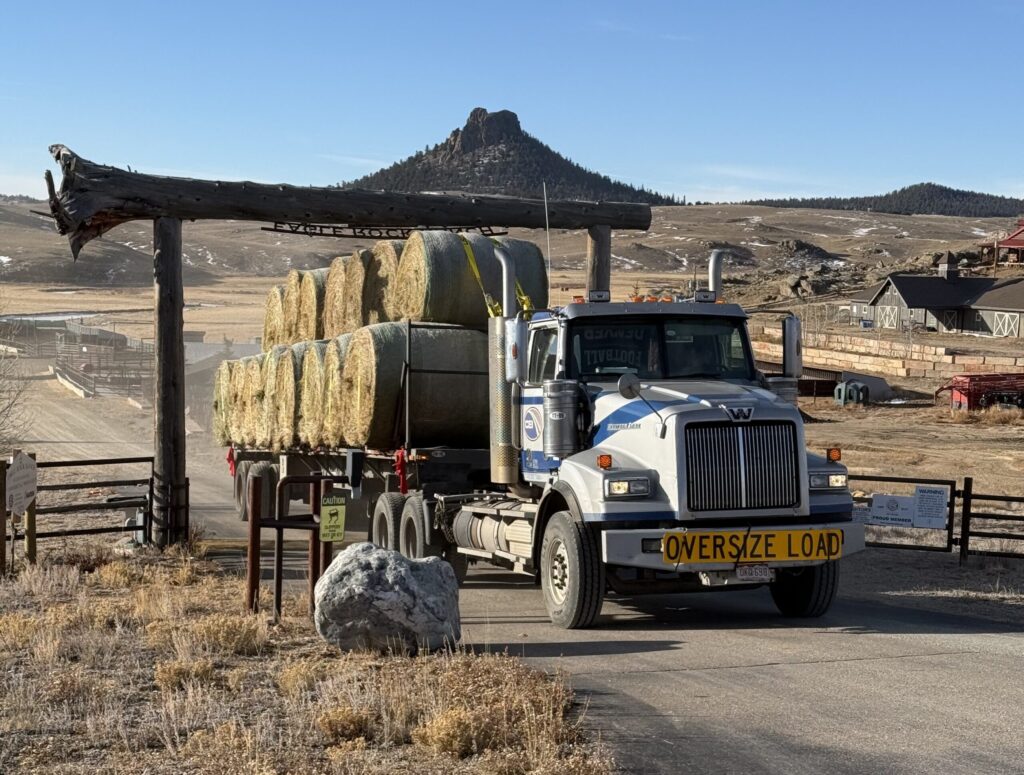
Colorado rancher donates 72,000 pounds of hay to ranchers affected by Lee fire
Jonathan Ingraham
jonathan.ingraham@denvergazette.com
Updated 3 months ago
“We’re grateful that we can be a part of it. It’s the Western way.” The Lee fire burned more than 138,000 acres of grassland used by ranchers and wildlife in northwestern Colorado in August and September, affecting the livelihoods of...

Trump administration announces $12 billion soybean aid package
RACHAEL WRIGHT Special to The Gazette
rachael-wright-special-to-the-gazette@coloradopolitics.com
Updated 3 months ago
President Donald Trump and Secretary of Agriculture Brooke Rollins announced Monday that the administration was planning to disburse a $12 billion dollar aid package as part of the Farmer Bridge Assistance (FBA) Program, to make targeted, one-time payments to crop...

Clash of the titans: Democratic race for governor pits two candidates similar in focus, but very different in style | Vince Bzdek
Vince Bzdek
vince.bzdek@gazette.com
Updated 3 months ago
By Vince Bzdek The race for governor is shaping up to be a clash of Democratic titans, U.S. Sen. Michael Bennet and Attorney General Phil Weiser. They are two of Colorado’s highest profile politicians with deep track records who...
PREV
PREVIOUS

Plaintiffs ask for over $13 million in damages from former DPD officer for 2022 shooting into LoDo crowd
After an eight-day civil trial, a jury will place a dollar amount on the physical and emotional pain caused by two bullets. Attorneys representing six plaintiffs injured after former Denver Police Department officer Brandon Ramos shot in the direction of a late-night LoDo crowd in July 2022 asked jurors to award over $13 million in […]

Medicaid spending surge for therapy sessions prompts Colorado to reinstate limits
Colorado’s health agency will reinstate prior authorization requirements for Medicaid patients’ therapy sessions next year as part of its efforts to control costs, which soared following a state law passed in 2022. That year, the state legislature adopted a bill prohibiting health plans from requiring prior authorization for psychotherapy sessions for Medicaid recipients. While the […]