

Bloomberg wades into Denver’s fight over flavored tobacco ban with big-dollar contribution
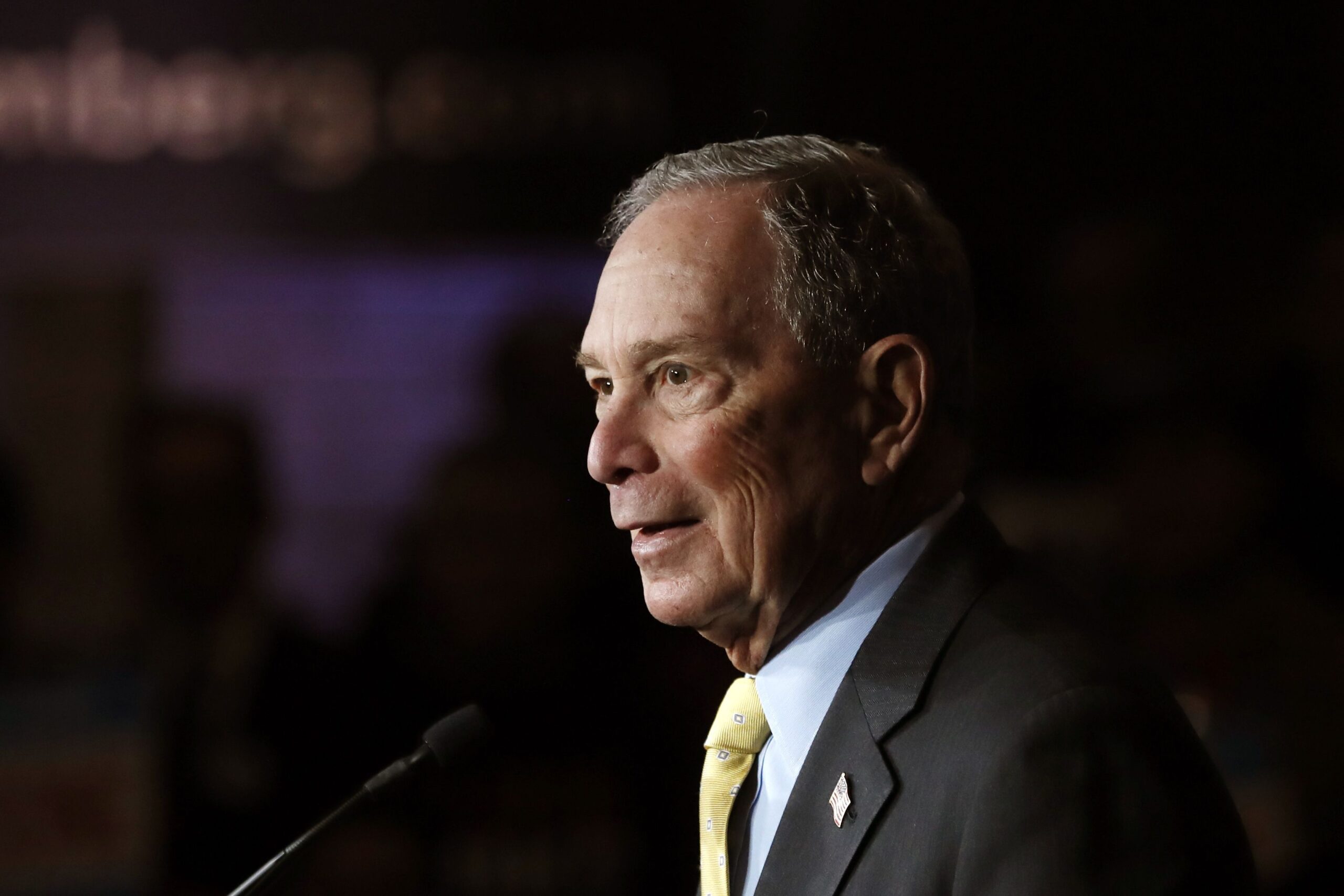
Michael Bloomberg, the former mayor of New York City, is wading into the fight over Denver’s flavored tobacco ban, which is the subject of a ballot measure seeking to repeal.
Bloomberg contributed $1.5 million to Denver Kids vs Big Tobacco, according to Denver Searchlight, the city’s online database for campaign and finance disclosure.
Bloomberg, known for being anti-tobacco, has tried to advance policies that discourage the use of tobacco and tobacco-related products through his organization, Bloomberg Philanthropies.
That $1.5 million comes on top of an earlier in-kind contribution of $73,500 made to Denver Kids vs Big Tobacco, a campaign advocating to maintain the ban.
A fight over the sale of “candy-flavored” tobacco came to a head in December, when the Denver City Council voted to make it illegal for any retail tobacco store to “sell, offer for sale, give, barter, deliver or furnish any flavored tobacco product or samples of such products.”
In March, a group of vape shop owners — Phil Guerin, Ellen Rochelle, Shanna Finch, Kristen Hensel and Russel Hensel — pushed back by turning in 17,000 signatures to the city, almost twice the 9,500 needed, to put a measure on the Nov. 4 ballot that would repeal the ban.
Guerin, president of the Rocky Mountain Smoke-Free Alliance Board of Directors and owner of Myxed Up vape stores, said getting Referendum 310 on the ballot has been expensive — it cost his group more than $240,000, most of which went to pay the firm that collected and verified the signatures.
A “yes” vote on Referendum 310 keeps the ban in place, while a “no” vote repeals it.
City records show that, in September, Denver Kids vs Big Tobacco spent more than $500,000 on production and media advertising tied to the ballot measure.
As of Oct. 8, contributions to the campaign to keep the ban totaled more than $2 million, compared to $468,000 for critics who want it repealed.
Guerin said the money from Bloomberg is an effort to influence local politics without fully understanding “the nuances of our city.”
He said people who support the flavored tobacco ban because they are worried about kids getting hooked on nicotine and then smoking cigarettes should focus on banning cigarettes.
“It’s the same old argument,” he told The Denver Gazette. “We’re over here talking about vapes, and they’re over there talking about cigarettes, and cigarettes are still legal.”
Contributions to the Yes on 310 campaign have come from individuals, public health advocacy organizations and health providers, according to Jodi Radke of Tobacco Free Kids, a Washington, D.C.-based organization that supports the flavored tobacco ban in Denver.
“Our supporters are committed to protecting the health of Denver kids and stopping Big Tobacco from hooking them into a lifetime of nicotine addiction,” Radke said. “Meanwhile, Big Tobacco companies like Philip Morris International and Altria have joined forces with vape shop owners and other tobacco interests to pour money into defeating this lifesaving measure.”
Guerin’s group, Rocky Mountain Smoke-Free Alliance, has estimated the ban has affected close to 550 retailers that once sold flavored tobacco products and will cost Denver more than $13 million in lost sales tax revenue.
“That $13 million is like 6% of what they (City and County of Denver) need to solve their (budget deficit) problems,” Guerin said.
Meanwhile, city officials and medical experts said the economic impact of flavored tobacco product consumption in Colorado amounts to $2.2 billion in annual healthcare costs, $4.4 billion in smoking-caused productivity losses and $415 million in estimated Medicaid costs, which they described as a $772 per household tax burden.
This is not the first time Denver has waged a battle over flavored tobacco products.
The City Council passed a measure in 2021 but then-Denver Mayor Michael Hancock vetoed it.
Ballots will be mailed to Denver voters on Friday.

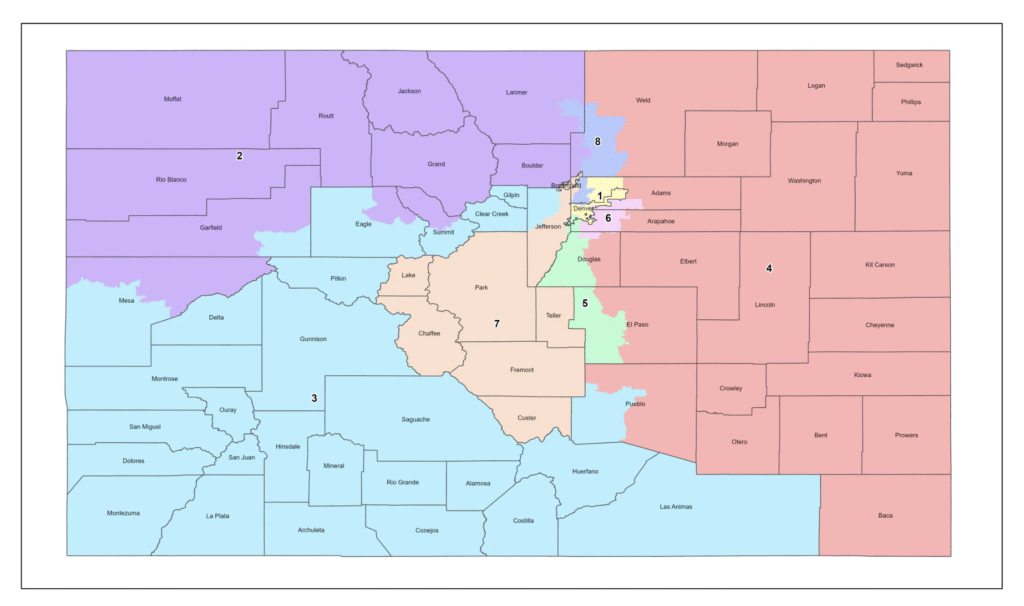
Colorado Title Board advances competing redistricting proposals and revised Pinnacol measure as April ballot deadline nears
Marianne Goodland
marianne.goodland@coloradopolitics.com
Updated 7 hours ago
With just two meetings left before an April 15 deadline, the state’s Title Board on Wednesday pushed through a slate of ballot measures — including a revised proposal to privatize Pinnacol Assurance and dueling plans to redraw Colorado’s congressional map...
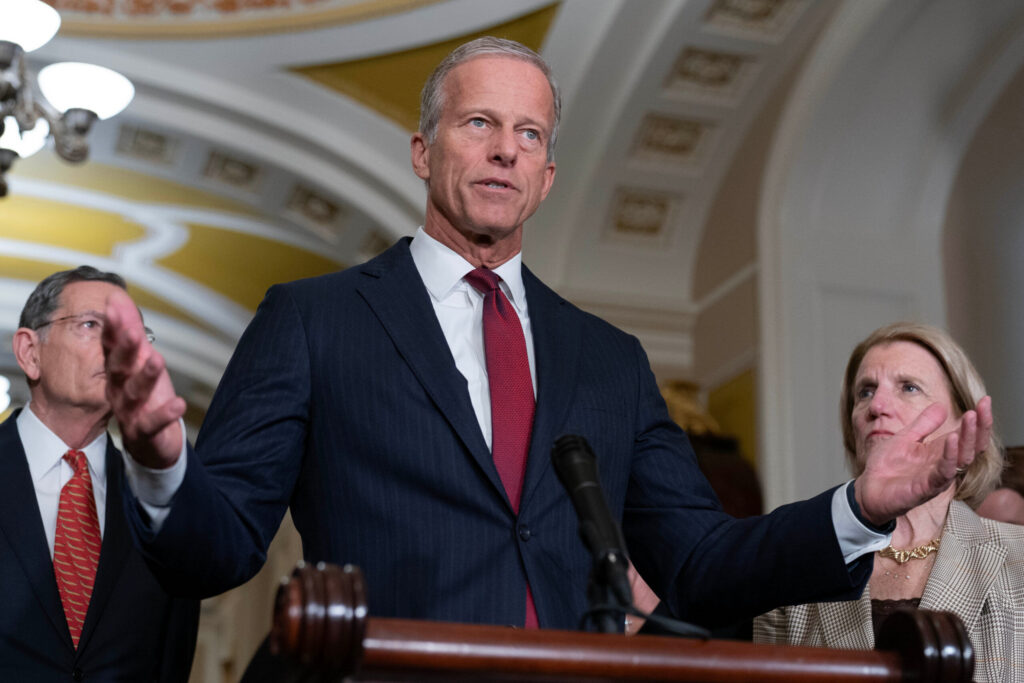
SAVE America Act showdown relished by GOP and Democrats alike
Ramsey Touchberry, Washington Examiner
ramsey.touchberry.washington.examiner@gazetteedit.wpenginepowered.com
Updated 8 hours ago
Both political parties have found rare agreement in a divided Washington, convinced that the GOP’s federal voter ID and election bill is a slam-dunk messaging opportunity. But that’s where the bipartisanship quickly ends. The two sides are diametrically opposed over...

Senate panel advances bill to tighten Colorado sports betting rules amid youth addiction concerns
Marissa Ventrelli
marissa.ventrelli@coloradopolitics.com
Updated 6 hours ago
A divided Senate Finance Committee on Tuesday narrowly advanced a bill to impose new restrictions on Colorado’s booming sports betting industry, as lawmakers cited rising concerns about youth gambling and addiction while operators warned the changes could drive bettors to...

Federal judge green-lights trial against Denver officer over race-based enforcement
Michael Karlik
michael.karlik@coloradopolitics.com
Updated 8 hours ago
A federal judge green-lit a jury trial last week on a man’s claim that a Denver police officer engaged in racially selective enforcement of the law by arresting him for video recording at a police station, while not arresting a...

Federal judge says 8 years in solitary confinement not grounds to reduce man’s sentence
Michael Karlik
michael.karlik@coloradopolitics.com
Updated 8 hours ago
A federal judge concluded earlier this month that a man’s eight years allegedly spent in solitary confinement did not justify granting his request for a sentence reduction. However, U.S. District Court Senior Judge William J. Martínez signaled his willingness to...

Democrat Matt Cavanaugh ends campaign in Colorado’s 5th CD, says petition firm came up short
Ernest Luning
ernest.luning@coloradopolitics.com
Updated 5 hours ago
Democratic congressional candidate Matt Cavanaugh said Wednesday that he was ending his bid to challenge Republican U.S. Rep. Jeff Crank in Colorado’s 5th District because the firm his campaign hired to gather petition signatures failed to deliver. Cavanaugh, an Army...

Colorado voters to decide whether to ban gender surgeries for minors
Marissa Ventrelli
marissa.ventrelli@coloradopolitics.com
Updated 4 hours ago
Colorado voters will decide this November whether to prohibit gender surgeries for minors and bar public funding or insurance coverage for procedures that alter children’s biological sex characteristics. The measure qualified for the ballot amid a push by the federal...

Democrats want to bar use of consumer data to set Colorado prices, employee wages
Marissa Ventrelli
marissa.ventrelli@coloradopolitics.com
Updated 6 hours ago
A closely divided House committee advanced a bill aimed at curbing the use of personal data to set individualized prices and wages, reviving a proposal that failed last year and setting up a broader debate over how far the state...
10th Circuit rejects ‘potential for violence’ when police arrest vehicle occupant’s romantic partner
Michael Karlik
michael.karlik@coloradopolitics.com
Updated 11 hours ago
The Denver-based federal appeals court rejected the idea on Tuesday that a vehicle occupant poses a danger to police solely because they are romantically involved with another occupant who officers are arresting. By 2-1, a three-judge panel of the U.S....

Colorado justices grill debt collector about compliance with law
Michael Karlik
michael.karlik@coloradopolitics.com
Updated 5 hours ago
The Colorado Supreme Court repeatedly pressed a debt collection company last week to explain how its lawsuit against a Boulder woman for an unpaid credit card balance complied with the specific requirements that state lawmakers have created. Portfolio Recovery Associates,...
PREV
PREVIOUS

Federal judge to government: Shutdown not an excuse for delaying noncitizen's challenge to detention
A federal judge rejected the government’s request last week to extend the deadlines in an immigration-related case due to the lapse in congressional funding, reminding the U.S. Department of Justice that constitutional rights are at stake. “The Government is constitutionally obligated to provide due process to Petitioner,” wrote U.S. District Court Judge Gordon P. Gallagher […]

Jefferson County Sheriff partners with Rep. Duran for bill on street racing
The Jefferson County Sheriff’s Office partnered with House Majority Leader Monica Duran to support new legislation to “crack down” on street racing in the state. The bill will be introduced in the 2026 legislative session of the Colorado General Assembly and will look create stronger penalties regarding illegal street racing, stunt driving and street takeovers, […]