

Colorado justices deliver favorable ruling for organizations raising open meetings violations

The Colorado Supreme Court ruled on Tuesday that organizations are entitled to the same recovery of their costs as individuals when they successfully pursue a public entity’s violation of the state’s open meetings law.
The Colorado Open Meetings Law permits “any person” to challenge a violation of the law. At the same time, it grants “the citizen” who proves a violation the right to relief and to recover the cost of litigation for holding the government accountable. The question for the Supreme Court was whether an organization, such as a newspaper, is a citizen entitled to the benefits of the law.
By 6-1, the court answered yes.
“It would be absurd to allow corporations — who are recognized as persons in one part of the statutory scheme and by (the Court of Appeals) — to have standing to pursue COML claims but then deny them the ability to seek injunctions to prevent violations and compensation for their efforts to protect public rights,” wrote Justice Melissa Hart in the Oct. 7 opinion. “Nothing in the legislative history suggests that the legislature intended to draw any distinction.”

Chief Justice Monica M. Márquez dissented. She argued an individual citizen, such as a reporter, could logically benefit from the law even if their employer organization could not.
“After all, the purpose of the COML is to ensure that members of the public, i.e., the individual human citizens who make up the People of Colorado, are apprised of governmental decision-making,” she wrote.
Márquez indicated she also believes organizations cannot sue to enforce the open meetings law because they are not “persons,” but that issue was not before the court.
The case marks the sixth time Márquez has dissented since the Supreme Court began its 2025-2026 term last month. She has now dissented more often than she has been in the majority.
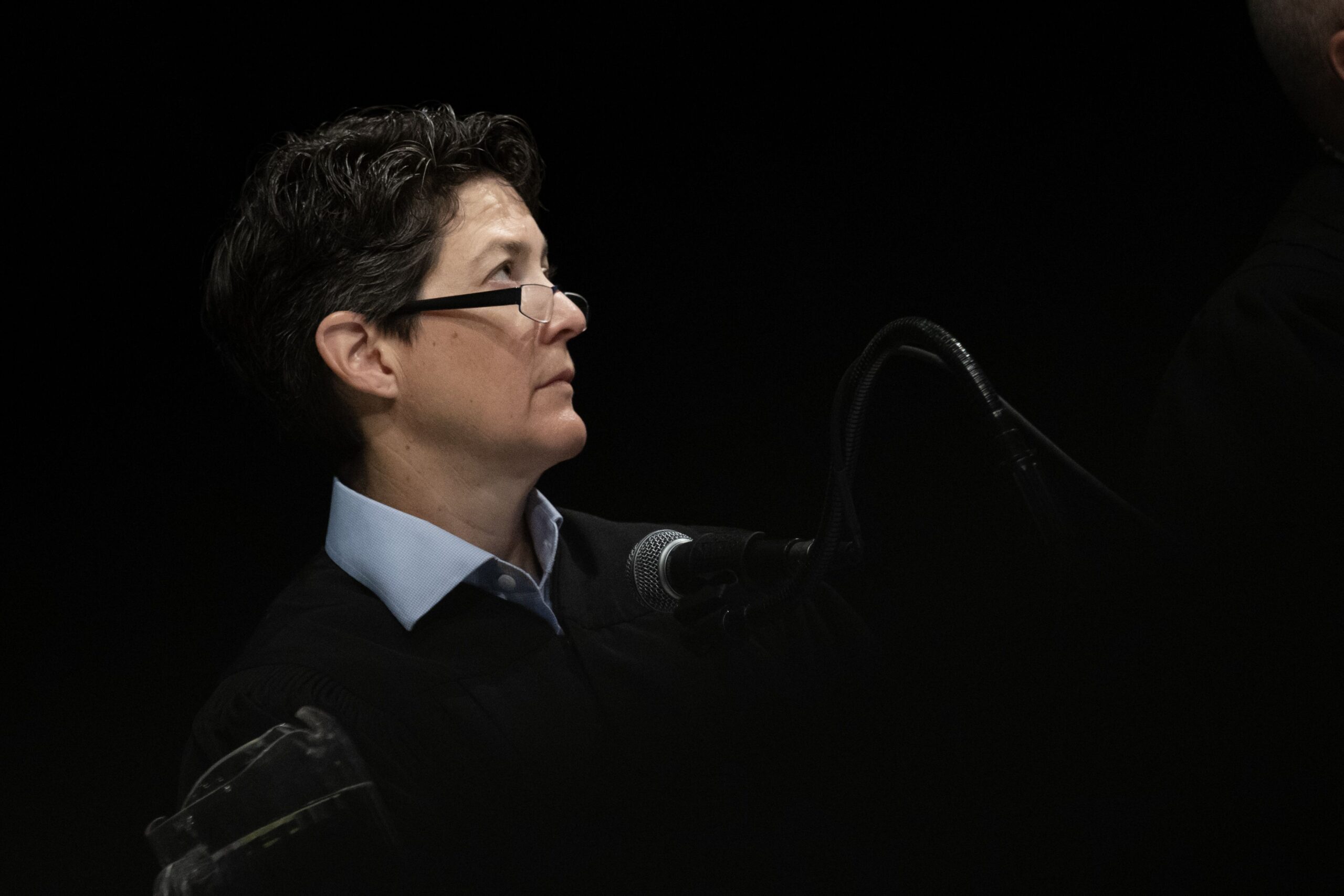
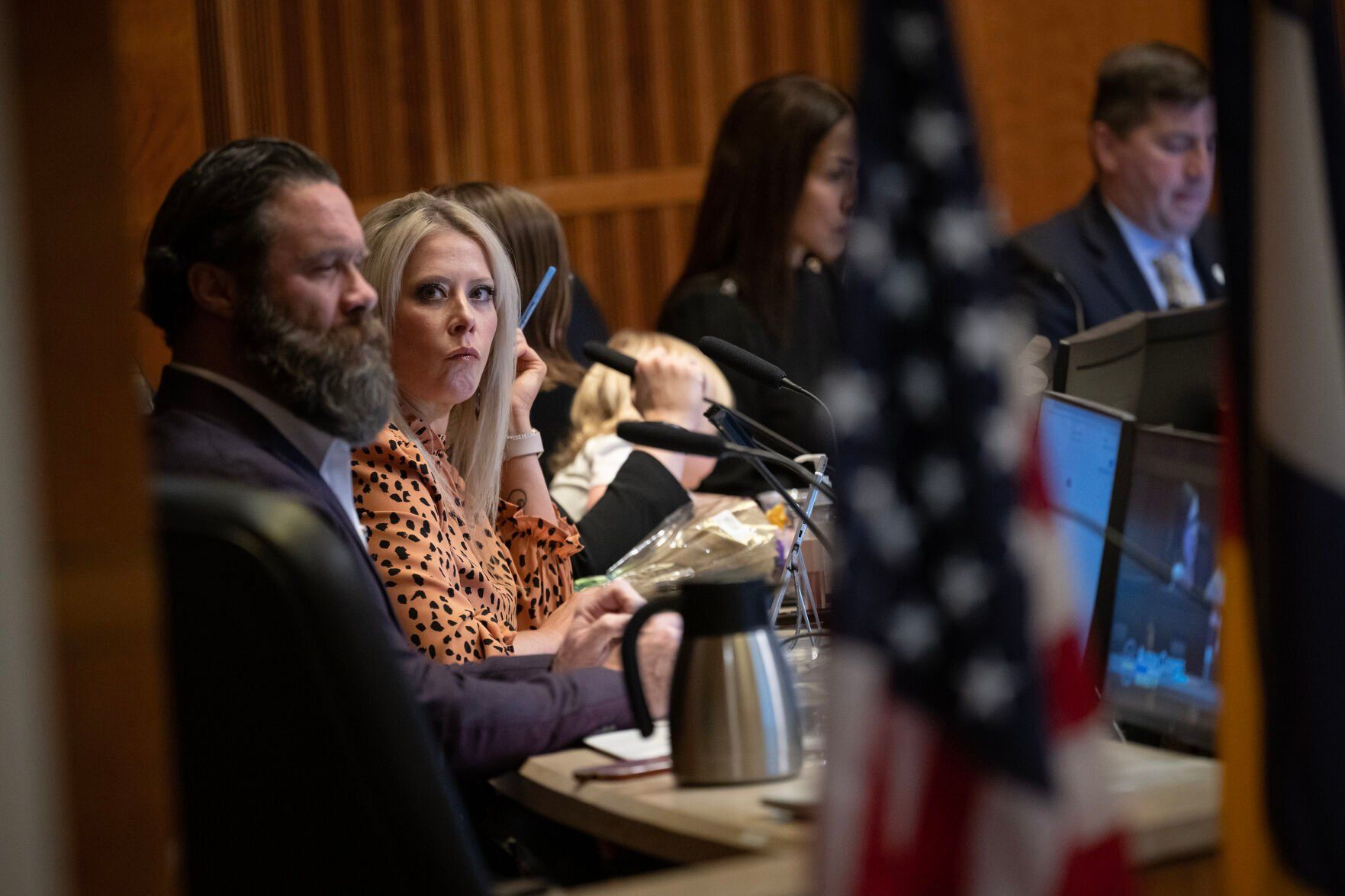
The dispute arose from the Aurora City Council’s brief pursuit of a censure against Councilmember Danielle Jurinsky. After Jurinsky called the city’s police chief “trash” on a radio talk show, then-Council Member Juan Marcano moved to censure her. On March 14, 2022, the council held a closed-door executive session to discuss the advertised topic of “legal advice.” Four days later, a reporter for The Sentinel asked for the recording of the discussion about Jurinsky’s censure, only to be denied.
The council held another meeting that included an item about the censure with a statement explaining that during the executive session, the council “directed and instructed special legal counsel to end the investigation” and to dismiss the charges against Jurinsky.
The Sentinel filed suit, leading Arapahoe County District Court Judge Elizabeth B. Volz to review the documentation and learn the council had taken a roll call vote about how to proceed. Moreover, the description of the executive session “does not appear to comply with the requirements of the applicable statutes,” she wrote.
However, Volz gave the city the opportunity to argue that attorney-client privilege shielded the recording from disclosure. After reconsidering her decision, Volz decided the council’s subsequent description of what took place at the March 14 executive session cured the original violation. She ended the case on those grounds.
A three-judge Court of Appeals panel disagreed, finding the notice of the executive session contained a deficient level of detail and violated the open meetings law as a result. Although the city argued the executive session recording was nonetheless shielded from release due to attorney-client confidentiality, the panel seized on the council’s subsequent description of what happened to conclude it had waived its confidentiality.
Finally, in response to The Sentinel’s request for attorney fees for prevailing, then-Judge David Furman noted the law only provided fees to a “citizen.”
“‘Citizen’ is commonly defined as ‘a native or naturalized person who owes allegiance to a government and is entitled to protection from it,'” he wrote. “The Sentinel does not meet this definition.”
The Sentinel asked the panel to reconsider, citing other instances where the Court of Appeals allowed organizations to recover costs or fees. In a brief order, Furman indicated he changed his mind, but the remaining panel members rejected the paper’s request.

Both sides appealed to the Supreme Court.
“Nothing in the legislative intent shows that the General Assembly only intended for natural persons to recover fees under the statute,” The Sentinel’s attorney, Rachael Johnson, said during oral arguments.
The Supreme Court’s majority determined the Court of Appeals incorrectly decided both issues.
Barring organizations from the benefits of proving an open meetings violation “would exclude certain members of the public — media corporations like The Sentinel — from the ability to protect public interests in open meetings and collect attorney fees for successful litigation. This is illogical and even absurd,” wrote Hart.
While acknowledging the term “citizen” was not defined in the law itself, she disapproved of the Court of Appeals relying solely on the dictionary definition of the word without looking at the context of the law.
The court also found the council had not waived its attorney-client confidentiality to the executive session. The publicly released description of what happened contained only “factual assertions,” and did not detail the advice given by a lawyer, Hart wrote.
The Supreme Court returned the case to the Court of Appeals to determine if The Sentinel is a “prevailing party.” Although Hart wrote that it was undisputed an open meetings violation occurred, it was unclear whether the justices’ conclusion about the city’s attorney-client privilege affected The Sentinel’s status as the prevailing party.
Lawyers for both sides did not immediately provide an answer to the question.
The case is The Sentinel Colorado v. Rodriguez.


Fort Carson soldier’s wife could be deported
Carol McKinley
carol-mckinley@coloradopolitics.com
Updated 2 minutes ago
As the country’s largest immigration enforcement crackdown continues in Minnesota’s Twin Cities, a Fort Carson sergeant is fighting a personal immigration crisis — one that may implode his family. Sgt. Tyler Garza’s wife, Jennifer Maradiaga Baca, is not a legal...
Elizabeth School District dismisses challenge to book-ban injunction on eve of appellate arguments
Michael Karlik
michael.karlik@coloradopolitics.com
Updated 6 hours ago
An Elbert County school district has dismissed its challenge to a judge’s injunction ordering it to return banned books to library shelves, days before the Denver-based federal appeals court was set to hear oral arguments this week. Although a three-judge...

Colorado Supreme Court to hear cases on insurance coverage for COVID, witness credibility
Michael Karlik
michael.karlik@coloradopolitics.com
Updated 21 hours ago
The Colorado Supreme Court announced on Tuesday that it will decide the degree to which a virus or other hazard must affect a commercial property before it can trigger loss-or-damage coverage under an insurance policy. At least three of the...
Federal judge says prisoner cannot sue for dog-bite injury
Michael Karlik
michael.karlik@coloradopolitics.com
Updated 1 day ago
A federal judge concluded last week that a man cannot sue the government for injuries he sustained when a dog allegedly attacked him while he participated in a prison program. Kenneth M. Chandler, representing himself, was participating in the “FIDOS”...

Federal judge recommends dismissing trans athletics lawsuit by area school districts
Eric Young
eric.young@gazette.com
Updated 1 day ago
A judge has recommended dismissing a federal lawsuit filed by multiple school districts against the Colorado Attorney General’s and Civil Rights Offices over their policies dictating students’ participation in athletics and activities based on their biological sex rather than gender...
Appeals judge asks Colorado Supreme Court to once again clarify magistrate rules
Michael Karlik
michael.karlik@coloradopolitics.com
Updated 2 days ago
A member of Colorado’s second-highest court urged the state Supreme Court last week to revise confusing language in the rules governing magistrates, less than two weeks after an attempted cleanup of the rules took effect. Magistrates are judicial employees who are...
10th Circuit dismisses paralyzed man’s claims against Colorado Springs, officer
Michael Karlik
michael.karlik@coloradopolitics.com
Updated 2 days ago
The Denver-based federal appeals court upheld the dismissal last week of a man’s excessive force claims against the city of Colorado Springs and the officer who tased him, causing him to fall down a sloped surface and break his neck....
Colorado justices weigh overlap between child prostitution offenses
Michael Karlik
michael.karlik@coloradopolitics.com
Updated 2 days ago
Members of the Colorado Supreme Court last week appeared willing to uphold a man’s conviction for an attempted child prostitution offense, which the state’s second-highest court previously found to be a violation of his right to equal protection under the...

State Supreme Court holds oral arguments, 10th Circuit revives dormant initiative | COURT CRAWL
Michael Karlik
michael.karlik@coloradopolitics.com
Updated 3 days ago
Welcome to Court Crawl, Colorado Politics’ roundup of news from the third branch of government. The state Supreme Court heard oral arguments last week in multiple civil and criminal cases, plus the Denver-based federal appeals court is doing something unusual...
Is a pardon for Tina Peters coming? Colorado governor confirms he is weighing options
The Denver Gazette
the-denver-gazette@coloradopolitics.com
Updated 3 days ago
Gov. Jared Polis on Friday strongly indicated he is considering clemency for Tina Peters, the former county clerk convicted of a security breach at her election office. When pressed about the matter, Polis didn’t offer an explicit answer, but he...
PREV
PREVIOUS

Wall Street edges back from its records after gold tops $4,000 per ounce
NEW YORK (AP) — Wall Street’s record-breaking rally is running out of momentum on Tuesday after the price of gold topped $4,000 per ounce for the first time. The S&P 500 dipped 0.4%, coming off its latest all-time high and heading for its first drop following a seven-day winning streak. The Dow Jones Industrial Average […]

Federal shutdown spurs Denver airport delays
The shutdown of the federal government has begun to palpably affect the country’s airports, including at Denver International Airport, which is seeing staffing shortages, according to officials. By Monday evening, the Federal Aviation Administration was reporting that staffing shortages were creating delays at DIA, as well as airports in California and New Jersey. Denver International […]