

Colorado justices toy with test for reviewing extreme sentences for unconstitutionality
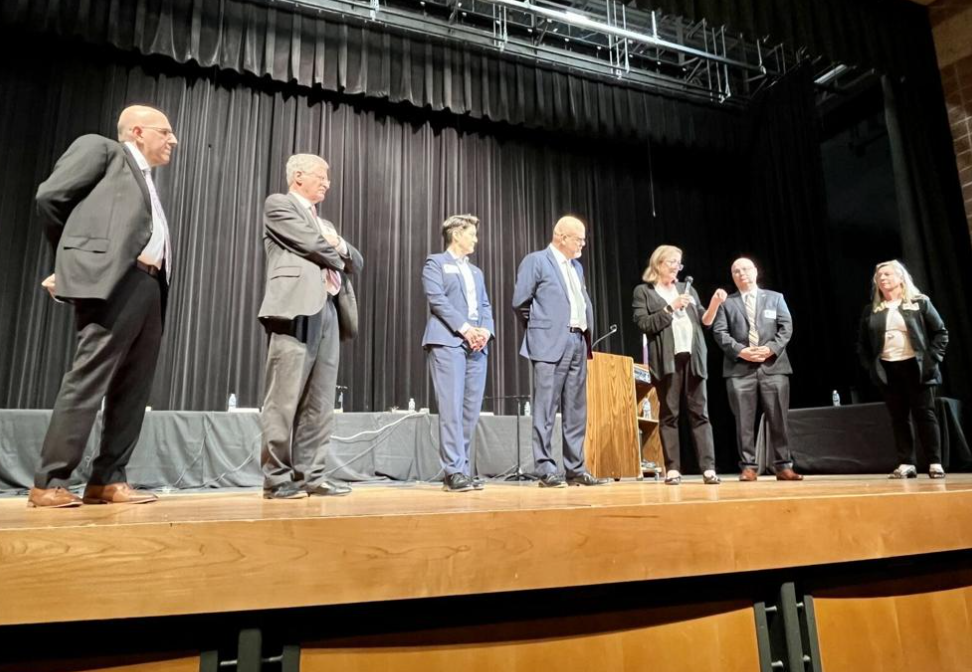
The Colorado Supreme Court heard arguments on Monday about whether a woman’s 29-year prison sentence for causing a fatal drunk driving accident was constitutionally excessive, but also considered tinkering with the procedure for how judges approach claims of “gross disproportionality” in sentencing.
The Eighth Amendment’s prohibition on cruel and unusual punishment means sentences cannot be grossly disproportionate to the crime. When judges in Colorado examine the constitutionality of a sentence, they first consider whether the offense was grave and serious, then assess the harshness of the punishment. The Supreme Court has recognized that if an offense is “per se” grave and serious — meaning serious in all scenarios — and the sentence is within the authorized limits, it is “nearly impervious” to a challenge.
During oral arguments, however, the state’s justices wondered if defendant Kari Mobley Kennedy was correct to advocate for abolition of the per se grave and serious designation.
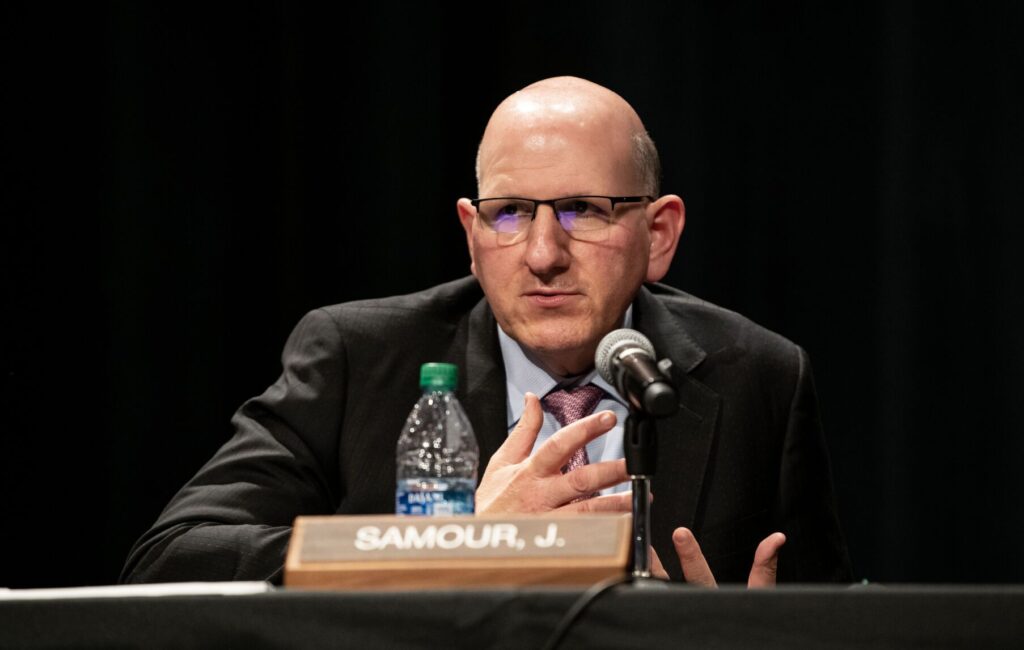
That label “is a Colorado thing. This is not a United States Supreme Court concept,” said Justice Carlos A. Samour Jr. “This is something that Colorado came up with at some point along the way.”
“This argument that what does this per se ‘shortcut’ really get us? …. Should we maybe jettison it?” wondered Chief Justice Monica M. Márquez.
Yet, Justice Brian D. Boatright pointed out that Kennedy’s case did not squarely raise the issue of altering Colorado’s special process for reviewing the constitutionality of sentences.
If it did, “it would draw a lot of attention, would you agree?” he asked Kennedy’s lawyer.
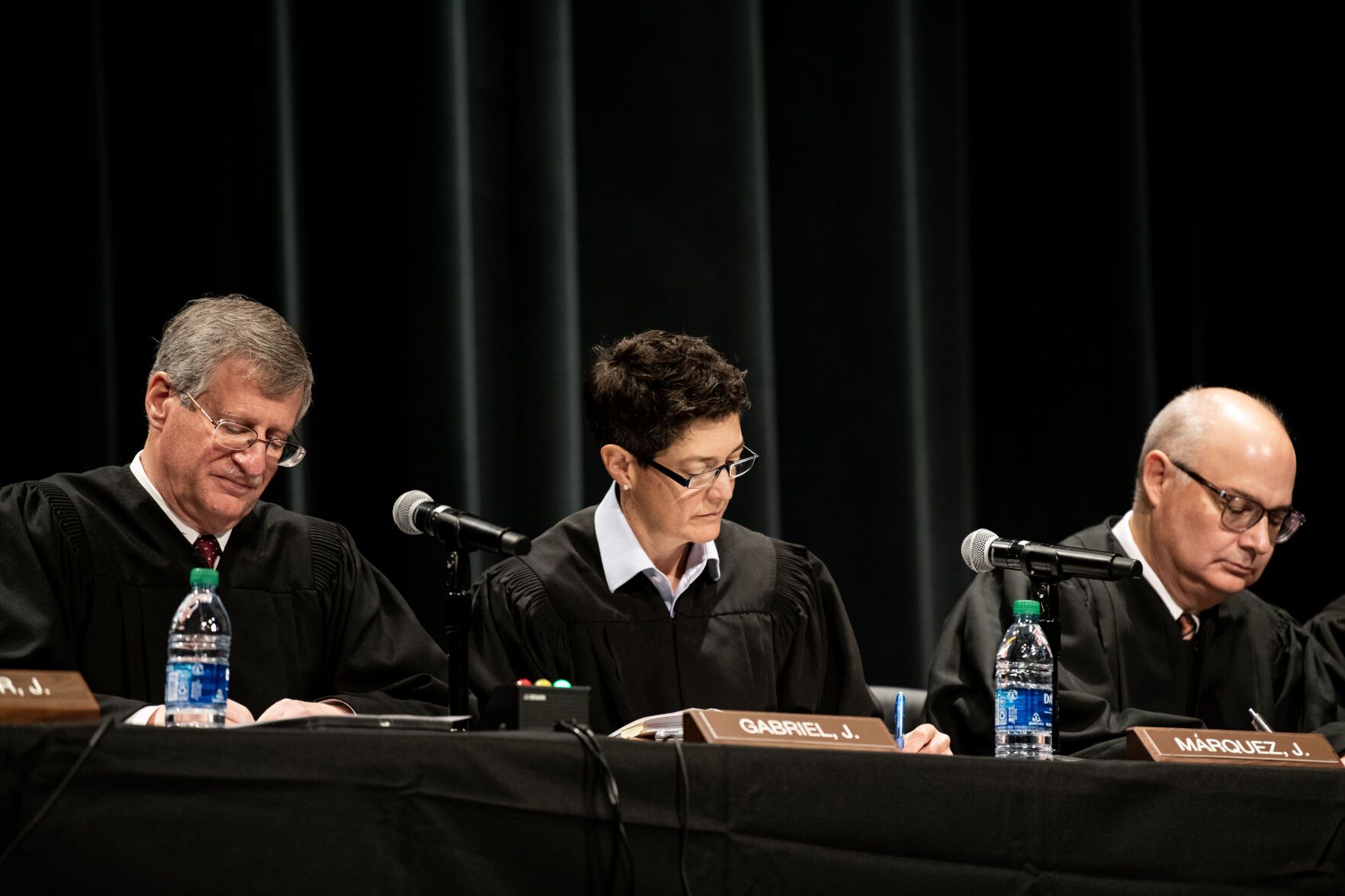
Kennedy was driving extremely intoxicated in Larimer County when she hit another car head-on and killed Benjamin Shettsline. She pleaded guilty to DUI-based vehicular homicide and vehicular assault, with the prosecution and defense agreeing that Kennedy’s maximum sentence for both counts would be 33 years in prison.
Chief Judge Susan Blanco sentenced Kennedy to 24 years for vehicular homicide and five years for vehicular assault, citing Kennedy’s prior drunk driving offenses, her repeated bond violations and the danger she presented to the community. Kennedy then petitioned for Blanco to reconsider, alleging the sentence was unconstitutional.
Blanco responded that vehicular homicide caused by intoxication is a per se grave and serious offense because it involves a person’s death, and she further concluded the 24-year sentence imposed for the crime was not grossly disproportionate.
A three-judge panel for the Court of Appeals partly agreed. It parted ways with Blanco’s characterization of Kennedy’s vehicular homicide charge, believing it was “not one of those rare crimes” that is always grave and serious.
“By way of example, imagine an individual who exceeds the prescribed dosage of a prescription medication and then crashes a golf cart into an infirm, elderly man thereby causing his death,” wrote Judge Terry Fox. “Now imagine another individual with a history of drinking and driving who intentionally drinks to the point of severe intoxication before driving his car and fatally running over that same man.”
She elaborated that the different ways of committing the same crime weighed against deeming it grave and serious in all circumstances. The panel concluded, however, Kennedy’s particular offense was extremely serious and the sentence Blanco imposed was constitutional.
Both sides appealed to the Supreme Court. Senior Assistant Attorney General Melissa D. Allen advocated for deeming Kennedy’s offense grave and serious across the board.
“Every single time, someone dies,” she told the court.
Justice Melissa Hart noted that careless driving resulting in death is not a felony offense, and someone who happens to cause a fatal drunk driving accident may have tried to take steps to be responsible.
“What if someone, not this situation — absolutely not this situation — but what if someone had two glasses of wine,” she said. “Waited for an hour, thought they were OK, but was at .08” blood alcohol content?
“Doesn’t matter,” said Allen, because Colorado’s DUI vehicular homicide law is “strict liability,” meaning someone’s mental state is irrelevant to whether they are guilty.
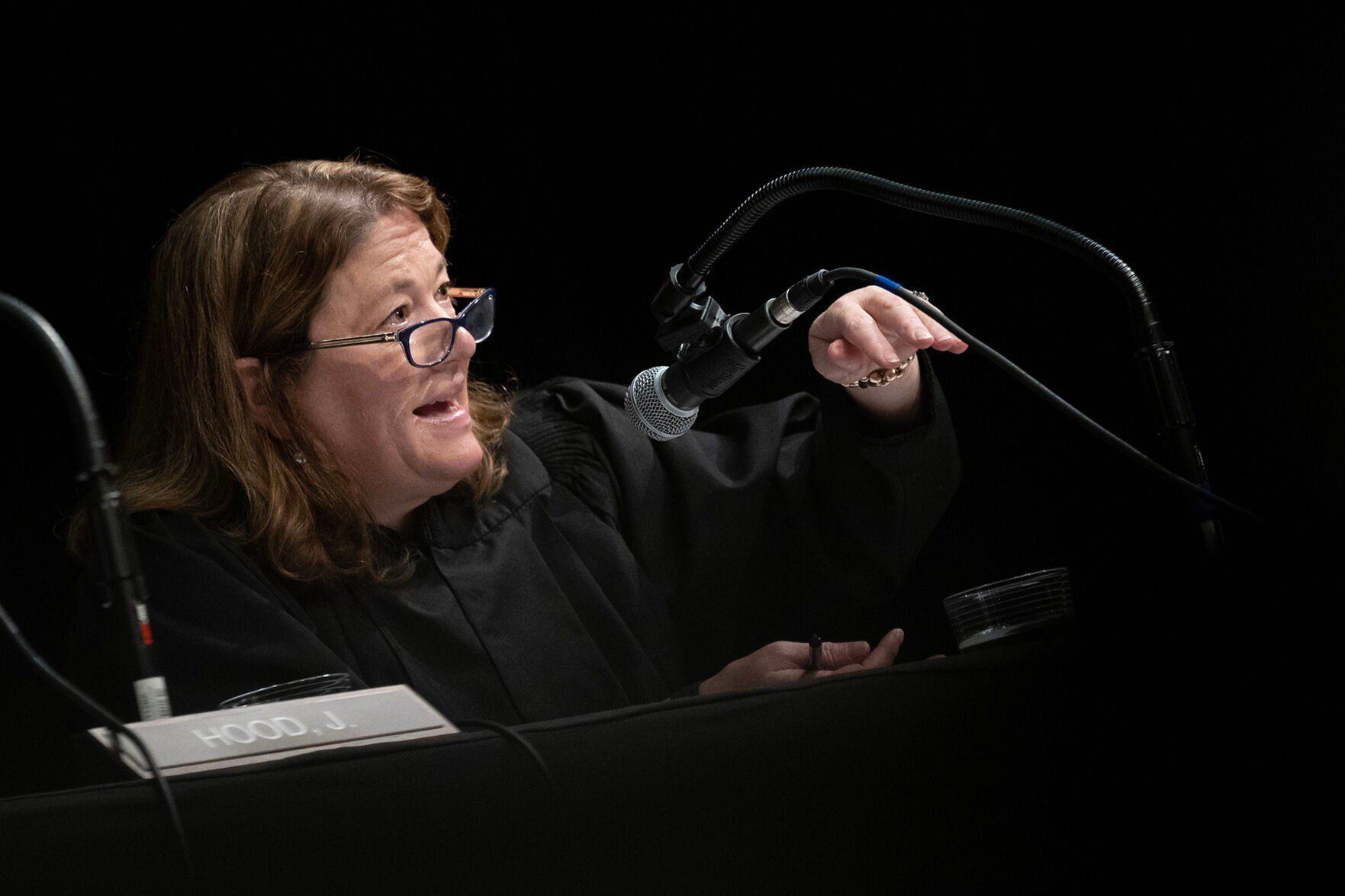
In response to a question from Justice William W. Hood III, Allen conceded she could not recall another strict liability crime that courts have deemed per se grave and serious.
“The only difference between a DUI and a vehicular homicide DUI is that in the latter case, you get in an accident and someone dies. But the conduct is the same,” observed Samour.
Kennedy’s lawyer argued the absence of any intent to commit the offense and the fact that the legislature treats careless driving resulting in death more leniently suggested Kennedy’s crime was not grave and serious across the board. Multiple justices countered that Kennedy’s actions, specifically, justified her prison sentence.
“It’s not just the death,” interjected Márquez. “It’s the choice to drink. The choice to get, while intoxicated, behind the wheel of a car. And that resulting in death.”
“What was wrong with saying that ‘Given you are unable to control this particular aspect of your conduct, given that you killed someone and severely injured another person, given that you were driving with an extraordinarily high BAC, I’m sentencing you at the upper end of what you agreed to in your plea agreement?’” added Hart. “Where’s the gross disproportionality in that?”
In discussing whether to abolish the designation of per se grave and serious offenses, Allen conceded it was “a weird concept anyway.” But she noted it was even odder in Kennedy’s case, where the same judge who just sentenced her also was tasked with reviewing the constitutionality of that sentence.
Allen said the concept of per se grave and serious makes more sense under Colorado’s “three-strikes law,” where prior offenses are used to lengthen a subsequent sentence.
“SCOTUS doesn’t do this. We’ve created, arguably, a little bit of a cottage industry around what constitutes per se,” said Hood.
Allen responded that the benefit to designating certain offenses as always grave and serious is that it reduces the time for judges to analyze whether a sentence is so extreme as to violate the Eighth Amendment.
“One issue with per se analysis is the sentence is gonna be upheld as constitutional in virtually every case when we get there,” said Justice Richard L. Gabriel. “I’m not sure what the harm would be to say, ‘You know what? The defendant has rights here. Make the court go through the analysis to say this is not grossly disproportionate.'”
The case is People v. Kennedy.

El Paso County defendant’s speedy trial rights violated, Colorado justices find in overturning convictions
Michael Karlik
michael.karlik@coloradopolitics.com
Updated 38 minutes ago
The Colorado Supreme Court concluded on Monday that an El Paso County prosecutor made an unjustified decision to file a mid-case appeal, pushing the trial beyond the legal deadline and requiring that the defendant’s convictions be overturned. In Colorado, the...

SCOTUS decides Colorado case, state’s newest justice authors first opinion | COURT CRAWL
Michael Karlik
michael.karlik@coloradopolitics.com
Updated 2 hours ago
Welcome to Court Crawl, Colorado Politics’ roundup of news from the third branch of government. The nation’s highest court decided a First Amendment case out of Colorado, plus the state’s newest justice issued her first opinion since joining the Colorado...
Federal judge sides with Mesa County school district in ex-student’s First Amendment claims
Michael Karlik
michael.karlik@coloradopolitics.com
Updated 3 days ago
A federal judge concluded last week that Mesa County Valley School District 51 and three of its administrators did not violate the First Amendment rights of a former student when they imposed minor discipline in response to disruptive behavior. In...

Colorado Supreme Court intervenes in 4 ongoing cases
Michael Karlik
michael.karlik@coloradopolitics.com
Updated 3 days ago
The Colorado Supreme Court recently moved to intervene in four ongoing cases, including two criminal prosecutions, a civil lawsuit, and a child welfare proceeding. At least four of the court’s seven members must agree to hear a case outside of...

Federal judge releases man immediately as consequence for immigration judge disobeying orders
Michael Karlik
michael.karlik@coloradopolitics.com
Updated 3 days ago
A federal judge ordered a man’s immediate release from immigration detention on Thursday after finding an immigration judge disregarded his prior orders requiring a bond hearing. For the past year, Colorado’s federal district court has faced a flood of “habeas corpus”...

Denver judge denies Gov. Polis request to dismiss ICE-related records case
Marianne Goodland
marianne.goodland@coloradopolitics.com
Updated 2 days ago
A year after blocking the release of state records to federal immigration agents, a Denver judge has now denied Gov. Jared Polis’ effort to end the lawsuit at the center of the dispute. The lawsuit filed against the governor in...
Colorado justices accept appeals on Netflix taxation, children pursuing neglect cases
Michael Karlik
michael.karlik@coloradopolitics.com
Updated 3 days ago
The Colorado Supreme Court announced on Monday that it will decide whether Netflix subscriptions are subject to the state’s sales tax as “tangible personal property.” At least three of the court’s seven members must agree to hear an appeal. The...
Letecia Stauch murder conviction in stepson Gannon’s death overturned by Colorado appeals court
Nick Smith
nick-smith@coloradopolitics.com
Updated 3 days ago
An El Paso County woman convicted of killing her stepson in 2020, shoving his body in a suitcase, then dumping it in Florida, is getting a new trial. The Colorado Court of Appeals published a 52-page ruling on Thursday, stating...

10th Circuit grants rare all-judges’ review of Colorado banking regulation
Michael Karlik
michael.karlik@coloradopolitics.com
Updated 3 days ago
The Denver-based federal appeals court announced on Thursday that it will hold a rare all-judges review of a recent decision that permits Colorado to require out-of-state banks to abide by the state’s maximum interest rates when they lend to in-state...
Colorado appeals court orders new sentencing for Tina Peters, upholds convictions
Michael Karlik
michael.karlik@coloradopolitics.com
Updated 4 days ago
Colorado’s second-highest court determined on Thursday that a trial judge improperly sentenced former Mesa County clerk Tina Peters based upon her exercise of protected speech, while at the same time upholding her convictions. The three-judge Court of Appeals panel also...
PREV
PREVIOUS

Colorado human services agency faces buzzsaw at state Supreme Court as justices critique non-disclosure argument
Several members of the Colorado Supreme Court pushed back on Monday against the state’s position that it could not disclose the number of child abuse reports at individual group living facilities because doing so would improperly reveal a person’s address — even though such addresses are already in the public domain. The Colorado Department of […]

ACLU sues ICE over plans to expand agency’s detention capacity
The ACLU of Colorado filed a lawsuit Tuesday against Immigration and Customs Enforcement (ICE) seeking records on the government’s plans for expanding its detention capacity in the state. “Already, our previous requests and subsequent lawsuit have revealed how ICE may spend some of its record $45 billion budget intended for immigration detention,” said Tim Macdonald, ACLU […]